
Determining Crossover Values in Capped Participating Preferred Venture Capital Structures
Preferred investors convert to common stock when common pro-rata ownership yield exceeds capped liquidation preference payouts.

Ceiling
Liquidation preferences in venture capital transactions define how exit proceeds distribute before common equity receives payment. A primary distinction exists between non-participating preferred equity, uncapped participating preferred equity, and capped participating preferred equity. Non-participating preferred equity grants the investor a choice upon exit: receive the initial preference multiple or convert to common stock to share in proceeds pro-rata.
Uncapped participating preferred equity allows the investor to collect the preference payment first and subsequently take a proportional share of all remaining proceeds alongside common stockholders. Capped participating preferred equity combines these mechanics by allowing initial participation alongside common equity, but halting that participation once the total preference and participation return reaches a specified multiple of the original investment.
Preferences dictate early distribution. The capped participating preferred form serves as a middle ground during term sheet negotiations. Institutional investors request participation to guarantee a return on downside exits, while founders seek caps to prevent double-dipping when company valuations reach large outcomes.
The cap limits the extra yield drawn from the participation phase. Once the total return reaches the defined ceiling, every dollar of remaining proceeds flows exclusively to common shareholders and uncapped classes until common stock returns match the preferred yield per share.
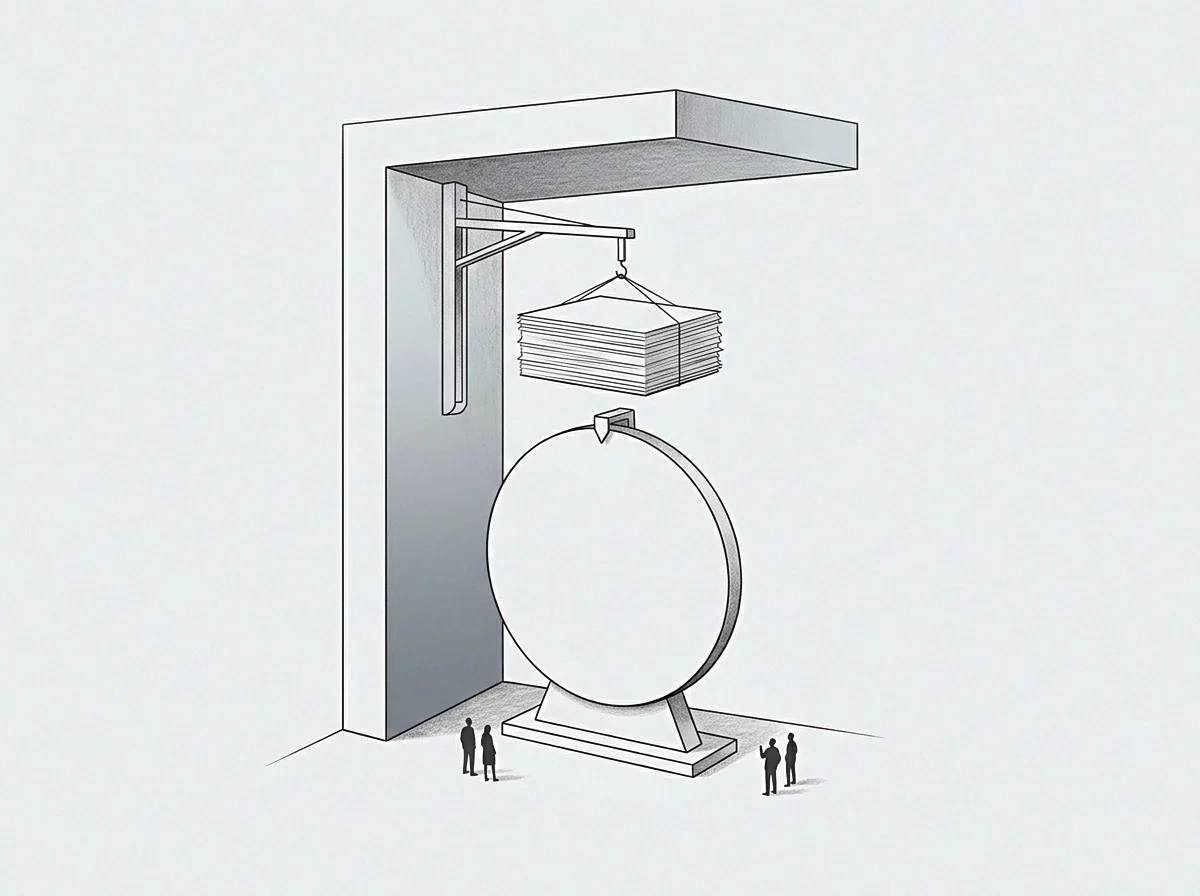
Understanding these instruments requires isolating the economic boundaries built into the certificate of incorporation. The participation cap creates three distinct payout regions during a liquidity event. In the first region, total exit proceeds fail to exceed the initial preference amount, leaving common equity with zero payout.
In the second region, exit proceeds exceed the initial preference, triggering the participation clause where preferred and common equity share remaining dollars according to fully diluted ownership percentages. In the third region, the investor return hits the cap, pausing preferred distributions until common payouts rise to an equivalent valuation threshold.
The Mechanics of Preferred Participation Caps
A standard capped participating preferred instrument defines its ceiling as an aggregate multiple of original investment, typically set between two times and four times. If an investor commits ten million dollars for twenty percent of a company with a one-time preference and a three-time participation cap, the absolute payout limit for that preferred class under participation equals thirty million dollars. The initial ten million dollar preference counts toward this thirty million dollar total, leaving twenty million dollars available through the participation allocation phase.
Capped participation caps investor preference upside while preserving initial downside liquidation protection.
The transition between payout regions affects capital allocation during merger and acquisition transactions. When total exit proceeds sit slightly above the preference threshold, preferred holders take their preference and absorb a percentage of remaining distributions. As total transaction size expands, the dollar yield to preferred holders rises until the cumulative payout hits the designated ceiling.
At this exact transaction value, the participation right freezes. Additional proceeds flow entirely to common stockholders, diluting the effective payout percentage of the preferred class relative to the expanding enterprise value.

Structural Separation of Liquidation and Common Payouts
Capital structures often contain multiple series of preferred stock with varying preferences and caps. Senior preferred classes may hold higher multiples or priority payout rights over junior series. When junior series hold capped participation rights, their caps trigger at different absolute enterprise valuations based on their respective investment entry prices and ownership stakes.
Common shares absorb residual value. The mathematical structure of capped participation ensures that preferred holders eventually reach a point where continuing as preferred stock yields less money than converting to common stock. Preferred stock contracts include an explicit right to convert to common stock at a one-to-one ratio at the holder’s option prior to an exit event.
This election converts the investor rights from a preferred claim with preferences and caps into a simple common share holding with no preference and no ceiling.
Failing to account for preferred participation caps during early round engineering results in unexpected option pool dilution and reduced common distributions during middle tier acquisitions.

Trigger
The participation cap creates an economic boundary known as the cap breakpoint. At this enterprise valuation, the investor preference plus their pro-rata distribution reaches the hard dollar ceiling defined in the charter. Calculating this trigger point depends on four specific variables: the preference dollar amount, the preferred ownership percentage, the defined cap multiple, and the total preference capital ranking senior or pari passu to the class in question.
The cap halts participation. Assuming a single series of preferred stock with no senior claims, the mathematical formula for the enterprise value at which the participation cap triggers sets the total investor proceeds equal to the cap ceiling. Let I represent total initial preference dollars, M represent the cap multiple, and P represent the preferred ownership percentage.
The total cap amount equals I multiplied by M. The formula for the cap trigger exit value isolates the total proceeds required for preferred holders to extract their cap through preference plus participation:
Cap Trigger Exit Value = I + (( (I M) – I ) / P)
Applying standard transaction figures illustrates the mechanism directly. Take an investment of five million dollars purchasing twenty-five percent fully diluted ownership with a one-time preference and a three-time cap. The total cap amount is fifteen million dollars.
The required participation return to hit the cap is ten million dollars, calculated as fifteen million minus five million. Dividing ten million dollars by the twenty-five percent participation rate yields forty million dollars of secondary proceeds. Adding the initial five million dollar preference puts the cap trigger exit value at forty-five million dollars.

Calculating the First Breakpoint at Participation Limit
Between an exit value of forty-five million dollars and higher enterprise valuations, the preferred holder receives exactly fifteen million dollars if they remain participating preferred stock. The remaining common holders absorb one hundred percent of every dollar paid above forty-five million dollars. The investor share of total exit proceeds drops continuously in percentage terms as exit values scale through this zone.
The waterfall dictates liquidation order. The table below details the exact contractual components that establish participation limits and trigger thresholds across preferred equity agreements.
- Liquidation Preference Multiple defines the exact cash multiplier that preferred shares extract before any junior distribution occurs.
- Participation Percentage Rate dictates the percentage of remaining exit dollars allocated to preferred holders prior to hitting the cap ceiling.
- Aggregate Return Cap sets the upper dollar boundary on total preferred proceeds collected through preference and participation combined.
- Optional Conversion Right enables investors to surrender preference rights and participation limits to share common distributions pro-rata.

How Does the Cap Create Misaligned Exit Incentives?
A distinct structural dead zone emerges immediately above the cap trigger exit value. In this zone, preferred investors derive zero incremental return from higher acquisition prices because their payout remains stuck at the cap ceiling. If an acquisition offers forty-eight million dollars instead of forty-five million dollars, the preferred investor holding the cap described above receives fifteen million dollars under both outcomes.
An frozen investor payout zone above the cap trigger creates transaction incentive friction between preferred and common shareholders.
Common shareholders capture the full three million dollar increase in enterprise value between those two acquisition levels. Investors lack financial incentive to approve transactions inside this dead zone if alternative options exist to grow the firm toward a full conversion threshold. Conflict arises when common shareholders prefer a smaller exit inside the dead zone while preferred holders demand higher valuations or liquidation outcomes that force equity conversion.
The certificate of incorporation defines the preference cap as a fixed dollar limit based on original purchase price rather than fair market enterprise valuation.

Parity
The crossover value, or conversion threshold, defines the exact total exit valuation where converting participating preferred stock into common stock yields a payout identical to retaining the capped participating preferred stock. Beyond this precise enterprise value, electing common conversion generates higher cash distributions to the investor than holding preferred shares up to their cap ceiling.
Investors calculate payout maxing. At the conversion threshold, the investor ownership percentage multiplied by total exit proceeds equals the maximum capped preferred payout. The mathematical formulation simplifies directly.
Let C represent the total dollar cap on the preferred class, calculated as initial investment multiplied by the cap multiple. Let P represent the preferred fully diluted ownership percentage upon conversion. The crossover value equation states:
Crossover Enterprise Value = C / P
Continuing with the previous parameters where an investor holds a fifteen million dollar cap ceiling and twenty-five percent fully diluted ownership, the crossover value equals fifteen million dollars divided by zero point two five. The resulting enterprise valuation is sixty million dollars. At an exit value of sixty million dollars, a twenty-five percent common equity holder receives exactly fifteen million dollars.
At sixty-one million dollars, twenty-five percent common ownership yields fifteen million two hundred fifty thousand dollars, exceeding the capped preferred limit.

Mathematical Derivation of the Conversion Threshold
Comparing outcomes across varying preferences clarifies how capped participating stock performs against alternative structural terms. Enterprise valuations generate wildly different equity splits depending on whether preferred stock contains participation rights, capped participation limits, or pure conversion preferences.
| Exit Valuation | Non-Participating Preferred (1x) | Uncapped Participating Preferred (1x + 20%) | Capped Participating Preferred (1x + 20%, 3x Cap) |
|---|---|---|---|
| $10,000,000 | $5,000,000 | $6,000,000 | $6,000,000 |
| $30,000,000 | $6,000,000 | $10,000,000 | $10,000,000 |
| $55,000,000 | $11,000,000 | $15,000,000 | $15,000,000 |
| $80,000,000 | $16,000,000 | $20,000,000 | $16,000,000 |
| $100,000,000 | $20,000,000 | $24,000,000 | $20,000,000 |
The table displays payout figures for a five million dollar investment at twenty percent ownership with a three-time cap of fifteen million dollars. Under non-participating preferred rules, conversion occurs as soon as twenty percent of exit proceeds exceeds five million dollars, which happens at twenty-five million dollars total valuation. Under uncapped participating terms, the investor collects five million dollars plus twenty percent of all remaining funds without limit.
Under capped participating terms, payout rises until reaching the fifteen million dollar cap at fifty-five million dollars of total valuation, stays flat at fifteen million dollars until sixty-five million dollars of total valuation, and then matches the common pro-rata rate above seventy-five million dollars after electing common stock conversion.

Valuation Zones Across Liquidation Cascades
Analyzing payout profiles across enterprise values exposes three distinct financial states for capped participating preferred shares. The threshold dictates equity choices.
State one covers exit values from zero up to the cap trigger exit value. In this zone, the investor keeps preferred status and collects preference plus full pro-rata participation. State two spans from the cap trigger exit value to the crossover enterprise value.
In this flat region, the investor keeps preferred status because their capped payout exceeds their common share of total exit proceeds. State three begins above the crossover value, where the investor surrenders preferred status and converts entirely to common equity.
Crossover thresholds mark the precise valuation where common share ownership yields superior returns to preference allocations.
When common share valuation exceeds capped allocation limits, economic alignment between preferred holders and common holders completely realigns.

Scale
To evaluate how crossover mechanics alter capitalization table outcomes, consider a worked situation with declared structural parameters. Assume a company completes a Series A round raising ten million dollars from an institutional investor for thirty percent fully diluted ownership. The Series A preferred stock carries a 1x liquidation preference and a 2.5x participation cap, setting the absolute preferred return limit at twenty-five million dollars.
The founding team and employee option pool hold seventy percent common equity, representing seven million shares out of ten million total shares issued.
Participation ends at the cap. The step-by-step sequence below traces how proceeds distribute across progressive acquisition pricing models.
- An acquisition at eight million dollars yields eight million dollars to the Series A preferred investor due to the senior preference, returning zero dollars to common equity holders.
- An acquisition at twenty million dollars pays the ten million dollar preference first, leaving ten million dollars to participate thirty percent to preferred and seventy percent to common, yielding thirteen million dollars total to Series A and seven million dollars to common.
- An acquisition at sixty million dollars distributes ten million dollars in preference, leaving fifty million dollars to participate, yielding fifteen million dollars preferred participation for a total preferred return of twenty-five million dollars, hitting the 2.5x cap. Common equity receives thirty-five million dollars.
- An acquisition at seventy-five million dollars leaves Series A capped at twenty-five million dollars if remaining preferred, while common equity collects fifty million dollars.
- An acquisition at eighty-four million dollars represents the exact crossover threshold, calculated as twenty-five million dollars divided by thirty percent ownership, yielding twenty-five million two hundred thousand dollars to Series A whether holding preferred or converting to common.
- An acquisition at one hundred million dollars forces Series A conversion to common stock, yielding thirty million dollars to Series A and seventy million dollars to common equity holders.

Payout Schedules Under Varying Exit Proceeds
Common returns scale linearly. The worked situation shows how common shareholders capture accelerated upside inside the dead zone between sixty million dollars and eighty-three million dollars exit valuations. Inside this window, every single additional dollar paid by an acquirer flows directly to common equity holders because Series A participation remains locked at the twenty-five million dollar ceiling.
Uncapped common absorption zones allow common equity holders to regain ownership proportion after preferred participation halts.
This dynamic shifts leverage during M&A negotiation cycles. Founders holding common equity achieve rapid financial scaling inside the dead zone. Investors holding capped preferred stock recognize that moving an exit price from sixty-five million dollars to eighty million dollars yields zero profit for their fund unless the price crosses eighty-three point three million dollars, forcing a conversion decision.

Sequential Waterfall Calculations for Complex Capitalization Tables
Complex capitalization tables containing Series A, Series B, and Series C shares require sequential waterfall calculations to evaluate crossover points across stacked preferences. When multiple preferred rounds carry different participation caps, senior preferred classes impact the secondary capital available for junior participation.
Calculating junior participation limits requires deducting senior preferences from gross transaction value before applying participation percentages. If Series B holds senior priority over Series A, Series A cap trigger points shift higher up the enterprise valuation curve. Junior crossover values expand accordingly, requiring much higher total company acquisition prices before junior preferred classes voluntarily convert to common equity.
Preferred shareholders expect common conversion decisions to execute automatically upon reaching defined valuation milestones in contract terms.

Return
Transaction documentation manages crossover points through automatic conversion provisions embedded in the certificate of incorporation. Standard charter language states that preferred stock automatically converts into common stock immediately prior to the closing of a qualified public offering or upon the written election of a specified majority of preferred holders. In merger transactions, conversion is frequently deemed to occur automatically if the net payout per common share exceeds the payout per preferred share under preference waterfall clauses.
The crossover point resolves conflict. Legal counsel drafts liquidation preference provisions to calculate payouts under both preferred participation and common conversion states automatically. Modern closing waterfall spreadsheets utilize logical nested statements to select the higher payout value between capped preferred proceeds and pro-rata common allocations for each investor class.
This contractual automation prevents holdout preferred shareholders from stalling acquisitions to demand preference allocations when common conversion delivers superior economic returns.

Drafting Crossover Provisions in Certificate of Incorporation
When drafting participating preferred provisions, clear language must establish whether the participation cap includes or excludes the initial preference payment amount. A 3x cap including preference means a ten million dollar investment yields a maximum twenty million dollars of participation for thirty million dollars total return. A 3x cap excluding preference permits thirty million dollars of participation on top of the ten million dollar preference, establishing a forty million dollar total payout ceiling.
Capital structures dictate exit splits. Ambiguity in cap terminology creates severe litigation exposure during exit distribution routines. Legal disputes center on whether cap definitions apply individually per share or in the aggregate across an entire preferred series.
Defining caps on a strict per-share basis ensures uniform treatment across distinct stockholders regardless of secondary market transfers or partial share conversions.

Negotiation Dynamics in Series A Term Sheets
In venture financing negotiations, participation caps serve as a primary trade-off variable against initial company valuation. Founders resisting high valuation demands from investors often accept capped participating preferred structures in exchange for higher nominal pre-money valuations. Investors gain downside protection through the preference and moderate upside through participation, while founders preserve common upside above the crossover enterprise value.
Ownership percentages govern total returns. Capped participating preferred equity arrangements reflect a precise balance between early capital protection and late-stage equity sharing. Resolving the mathematical crossover threshold allows both investors and founders to model exit payouts accurately across all enterprise valuation scenarios.
Whether market conditions will favor common friendly non-participating structures or shift back toward investor friendly capped participation terms during upcoming venture capital financing cycles remains uncertain.