
Isolating Personal Goodwill in Generational Internal Equity Transfers
Isolating personal goodwill requires adjusting historical earnings for founder replacement costs to value transferable enterprise cash flows during internal equity buyouts.

File
Internal equity transfers within owner-managed firms routinely fail because internal buyouts confuse the earnings capacity of an individual founder with the transferable value of the enterprise. Personal goodwill resides within the individual operator. It consists of personal client relationships, specialized technical skill, individual industry reputation, and unwritten operational habits held in a single mind.
Enterprise goodwill resides within the corporate structure. It consists of standardized operational workflows, institutionalized customer relationships, proprietary assets, commercial contracts, and broad brand equity functioning independently of any single person.
When an internal transfer evaluates equity by capitalizing historical earnings without isolating personal goodwill, the valuation inflates. The incoming generation receives shares backed by earnings that vanish the moment the founding operator exits the building. Enterprise value outlasts the operator.
Tacit relationships resist transfer. Equity buys future cash flow.
Enterprise goodwill exists only when operational processes generate earnings without the founder present at the desk.
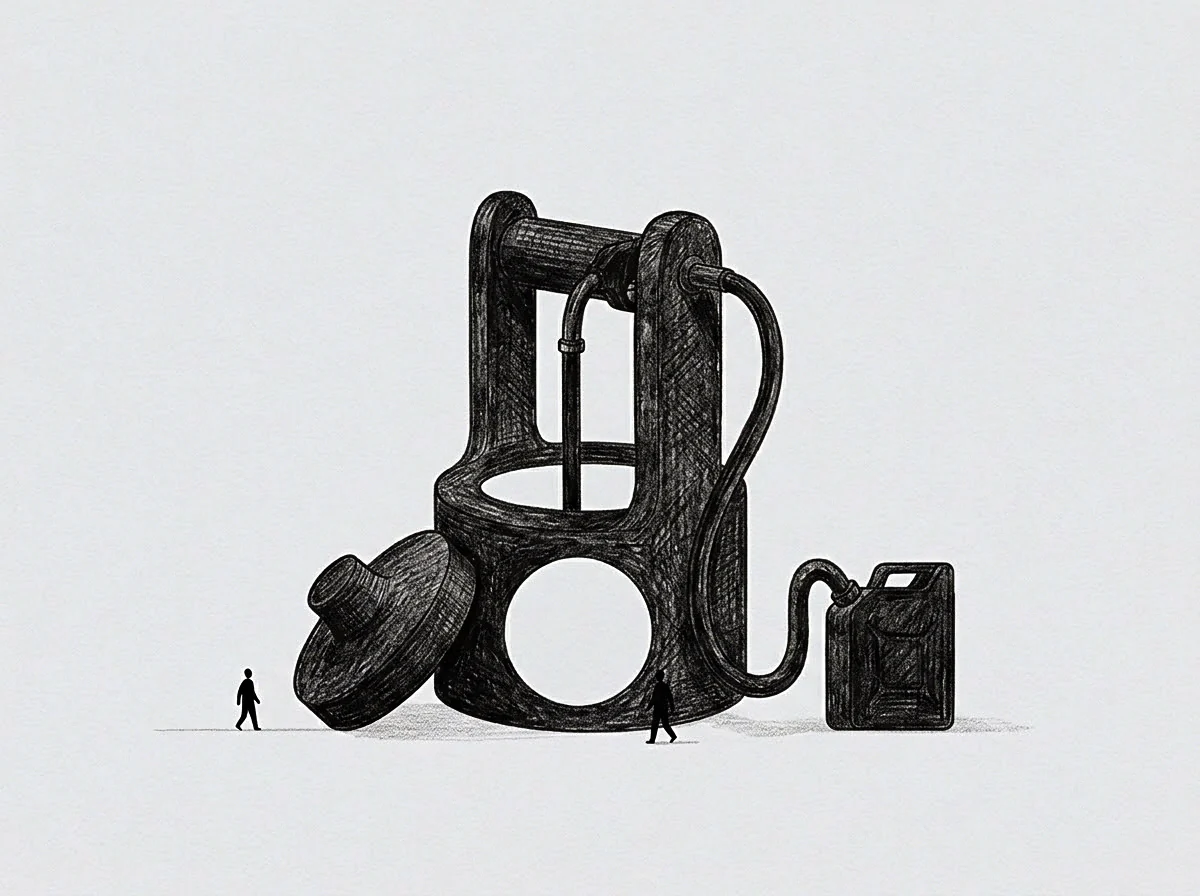
Goodwill Reclassification in Internal Equity Buyouts
Transferring equity to internal successors, whether family members or senior key employees, requires a strict division between these two asset classes. An internal buyer lacks the third-party capital reserves of an external acquirer and relies on future company distributions to service seller notes or bank financing. When personal goodwill remains embedded in the transaction price, the cash flow supporting the purchase debt dissipates during the leadership transition.
Isolating personal goodwill shifts the transaction focus from historic revenue generation to post-transfer earnings durability. Isolating this component establishes what the firm actually owns versus what the founder lends to the company during active tenure. The incoming operator cannot service purchase obligations using revenues dependent on a founder who has stepped away from daily operations.
Margin
Operational cash flow in an owner-managed business carries hidden labor subsidies. Founding operators frequently perform work across three distinct seats simultaneously: technical delivery, managerial supervision, and executive governance. In many private firms, the operator draws a single salary below market rate or takes volatile owner distributions that understate the true cost of operating the management layer.
Isolating personal goodwill begins by adjusting historic earnings to reflect replacement compensation for every seat the founder occupies. Replacement labor cuts net earnings. Personal authority inflates past margins.
Normalized earnings reveal true equity.
Adjusting Operational Cash Flow for Owner Compensation
Calculating the true margin available for enterprise equity value demands a rigorous wage assignment. If a founding operator works sixty hours a week performing lead sales, technical quality control, and executive management, replacing that capacity requires hiring external staff or allocating higher compensation to successor employees taking on those responsibilities. Deducting full market compensation for these technical and managerial roles reduces historical operational cash flow to normalized cash flow.
Subtracting market compensation for founder labor from historical cash flows isolates the true enterprise earnings available for equity debt service.

A Worked Valuation Allocation Model
Take an owner-managed engineering firm generating 1,000,000 dollars in annual operational cash flow before owner compensation. The founding owner works as lead technical engineer and general manager, taking an annual draw of 200,000 dollars. Unadjusted cash flow suggests an earnings base of 800,000 dollars.
Applying a five-times valuation multiple yields a preliminary firm equity valuation of 4,000,000 dollars.
Reallocating the owner’s labor reveals the true distribution. Replacing the owner’s lead technical engineering capacity requires an annual market salary of 220,000 dollars. Replacing the general management capacity requires an annual market salary of 180,000 dollars.
Total replacement labor cost equals 400,000 dollars per year.
- Deconstruct historical roles into technical delivery, management oversight, and executive oversight seats to measure actual operational effort expended.
- Benchmark replacement costs against current industry compensation data for dedicated professional managers and technical leads.
- Deduct benchmarked compensation from historical operational earnings to isolate normalized operational cash flow.
- Apply capitalized valuation multiples solely to residual normalized cash flows to determine enterprise equity value.
Deducting 400,000 dollars in market replacement compensation leaves a normalized enterprise cash flow of 600,000 dollars. Applying the five-times multiple to normalized cash flow yields an enterprise equity value of 3,000,000 dollars. The remaining 1,000,000 dollars of original calculated value represents personal goodwill tied directly to the founder’s personal productivity.
Purchasing internal equity based on unadjusted margins forces the incoming generation to service purchase debt using revenue streams that collapse the moment compensation normalizes.

Ledger
The contractual mechanics of an internal transfer reflect the physical separation of personal goodwill from enterprise assets. Tax regulations and corporate valuation standards recognize that personal goodwill belongs directly to the individual shareholder when built upon personal relationships and technical expertise, provided no long-term restrictive covenant transferred that value to the corporate entity previously. Enterprise goodwill belongs directly to the operating business entity.
Contracts fix the boundary. Tax law separates personal assets. Stock sales convey corporate claims.

Contractual Mechanisms for Value Separation
Separating these assets changes the legal architecture of the buyout. Enterprise goodwill passes through corporate stock redemptions or direct share purchases by incoming internal buyers. Personal goodwill transfers through separate individual contracts executed directly between the departing founder and the acquiring parties or the firm, such as personal non-competition covenants, client transition consulting agreements, and direct intellectual property assignments.
| Attribute | Personal Goodwill | Enterprise Goodwill |
|---|---|---|
| Valuation Basis | Individual operator reputation, direct client affinity, unwritten operational skill | Institutionalized brand, standardized operating systems, binding client contracts |
| Transferability | Transfers through personal transition services and non-compete agreements | Transfers directly through corporate equity stock transfers or asset sales |
| Tax Treatment | Taxed as personal capital asset or ordinary income via direct consulting fees | Taxed as corporate or shareholder equity gain under entity redemption rules |
| Internal Financing Security | Unsuitable as note collateral due to rapid dissipation upon operator departure | Secures internal seller notes through ongoing predictable enterprise cash flow |
Executing an internal equity transfer without formalizing this separation creates tax and legal risk. If tax authorities determine that personal goodwill was sold by the corporate entity without a previous transfer agreement, the transaction risks double taxation: once at the corporate level upon asset sale, and again at the individual shareholder level upon dividend distribution. Allocating personal goodwill directly to the selling shareholder avoids double taxation while accurately pricing the corporate stock purchased by the incoming internal team.
Allocating value to a personal non-competition covenant reduces corporate equity redemption costs while protecting the incoming successor from client loss.
A non-competition agreement signed directly by the departing founder shifts asset value into personal contract allocations only when structured as an arm-length covenant prior to corporate equity redemption.
Scale
The transition of internal equity requires an equivalent migration of working authority. When equity shifts to incoming internal buyers while daily operational dependence remains centered on the founder, the firm enters structural role strain. The manager seat carried by the successor expands in financial risk while remaining constrained in operational authority.

Where Does Personal Reputation Stop and Enterprise Value Begin?
Delineating the border between individual reputation and corporate value requires auditing customer touchpoints. If clients condition contract renewals on the direct personal involvement of the founder, that revenue stream reflects personal goodwill. When client retention relies on company delivery protocols, standardized service-level agreements, and multi-person account teams, the underlying earnings represent enterprise goodwill.
Relationships require structured handovers. Authority moves slower than equity. Process replaces personal presence.
Equity transfers execute on schedule when operational authority migrates before equity shares change hands.

Structural Risks in Internal Equity Transitions
Failure to transfer operational authority ahead of equity conveyance produces predictable failure modes inside internal buyouts.
- The dual authority deadlock occurs when the departing founder retains client relationships while transferring majority voting shares to the internal successor.
- The uncompensated labor deficit emerges when incoming partners discover post-sale distributions fail to cover market salaries for their new managerial duties.
- The tacit process collapse happens when undocumented workflows vanish as the founding operator steps away from daily oversight.
Converting personal goodwill into enterprise goodwill demands systematic knowledge extraction. The founder must move out of the technical lead seat, documented processes must replace personal oversight, and client relationships must be reassigned to junior delivery staff long before the final tranche of equity stock changes hands.
Enterprise value grows only as fast as client trust transfers from the individual founder to the firm operational workflow.

Gate
Internal equity transfers rely heavily on seller financing, earn-out structures, and dividend-funded promissory notes. Unlike external buyouts funded by institutional private equity or commercial loan packages, internal buyers rarely possess liquid assets sufficient to acquire a substantial equity block outright. Transaction structures must align debt service directly with the enterprise cash flows remaining after market compensation is paid to the new management team.
Debt service demands real cash flows. Seller financing absorbs valuation errors. Dividend split structures protect margins.

Financing Structures for Internal Transferred Equity
When the valuation excludes personal goodwill, the resulting stock price permits realistic debt amortization schedules. The firm redeems a portion of the founder’s equity using a corporate promissory note secured by ongoing enterprise cash flow. Concurrently, the incoming successor purchases a minority equity stake directly or receives equity grants tied to performance milestones, gradually increasing their ownership percentage as the corporate debt amortizes.
Payment for personal goodwill, if included in the overall exit package, is segregated into consulting contracts or contingent earn-outs tied directly to customer retention metrics during the transition period. If key clients remain with the firm following the founder’s departure, earn-out distributions complete the personal goodwill purchase. If clients leave despite transition efforts, the contingent payments cease, protecting the successor from paying for personal value that failed to materialize into enterprise stability.
The ultimate durability of an internal equity buyout rests on whether customer retention holds steady after the founder ceases active consultation and turns off the office phone for the final time.