
Contractual Risk Mitigation Mechanisms for Uncodified Operational Heuristics in Closely Held Transitions
Conditional holdbacks, set-off seller notes, and phased shadowing covenants mitigate the loss of uncodified operational heuristics during closely held transitions.
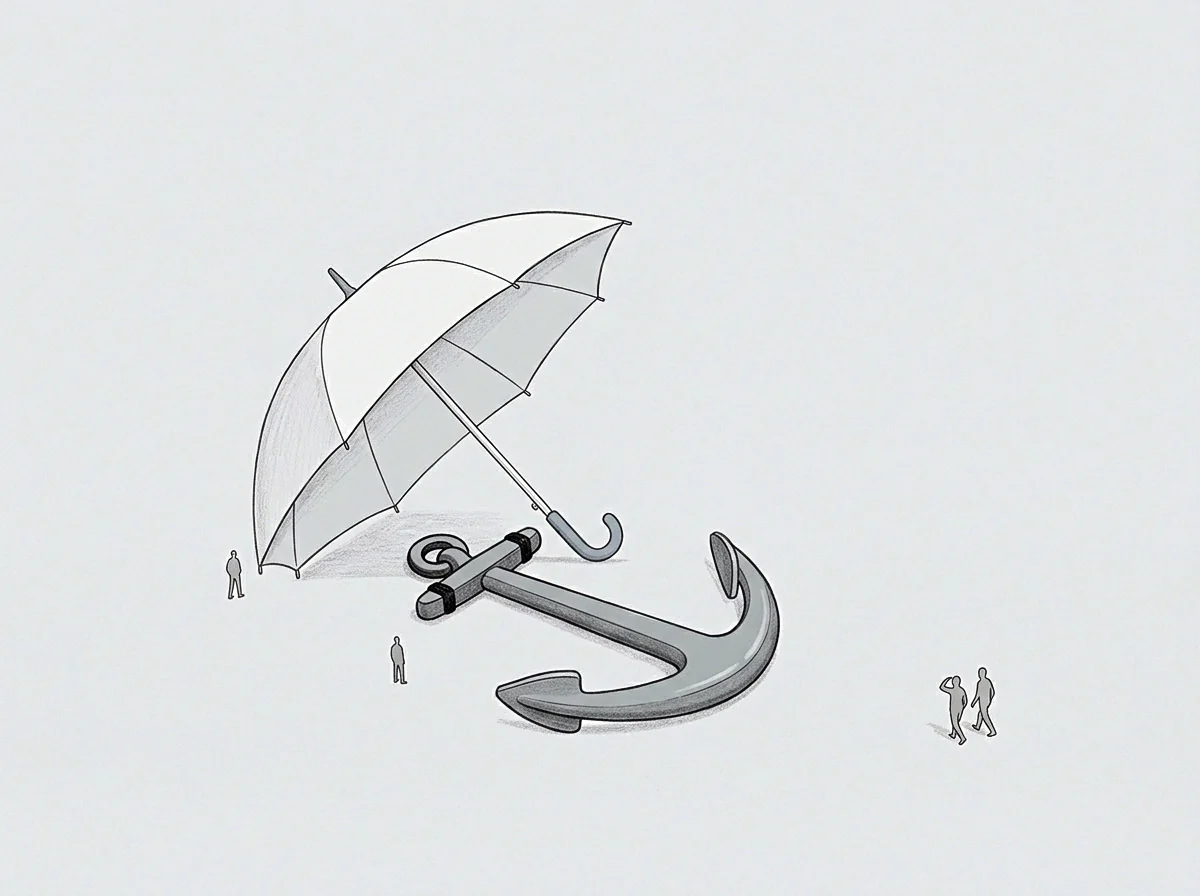
Friction
An operator closes a green ledger at dusk and drops a ring of unmarked keys onto a steel desk. The filing cabinet beside the desk holds twelve folders of audited financial statements, tax filings, environmental assessments, and standard employment contracts. Every representation and warranty scheduled in the purchase agreement matches the documents in those drawers.
The outgoing owner knows that the second-largest customer receives an undocumented three percent credit whenever freight arrivals slip past noon on Thursdays. That adjustment appears nowhere in the formal customer agreement, nowhere in the enterprise software, and nowhere in the disclosure schedules. The buyer has acquired legal title to the balance sheet while the logic that preserves gross margin remains locked inside the seller’s memory.
Uncodified operational heuristics represent the informal rules of thumb, preferential adjustments, and triage habits that govern daily survival in a closely held business. In transactions involving owner-operated enterprises, standard purchase agreements rely on backward-looking representations of operational conformity. Such representations certify that the business operated according to written contracts and ordinary courses of trade.
They fail to bind the instinctive micro-decisions that protect operating cash flow.
A purchase agreement preserves financial remedies only when unstated operating choices produce measurable deviations in trailing gross margin.
When an unwritten heuristic disappears, enterprise value degrades silently. The new owner discovers the missing protocol only after a long-standing supplier cancels credit terms or a key account moves to a competitor following a rigid, contractually compliant billing cycle. The buyer experiences this gap as operational fraud.
The seller views it as common sense developed across twenty years of local trading. Traditional contract structures struggle to address this divide because legal drafting demands verifiable definitions, whereas heuristic judgment derives from pattern recognition that the practitioner cannot readily translate into text.
Agreements demand verifiable metrics. When an operational habit escapes language, legal covenants cannot easily mandate its execution. The resulting tension generates post-closing disputes that arbitration clauses rarely resolve with speed.
The buyer assumes the purchase price bought an automated machine, but discovered at dawn that the machine requires manual adjustments that the manual forgot to mention.
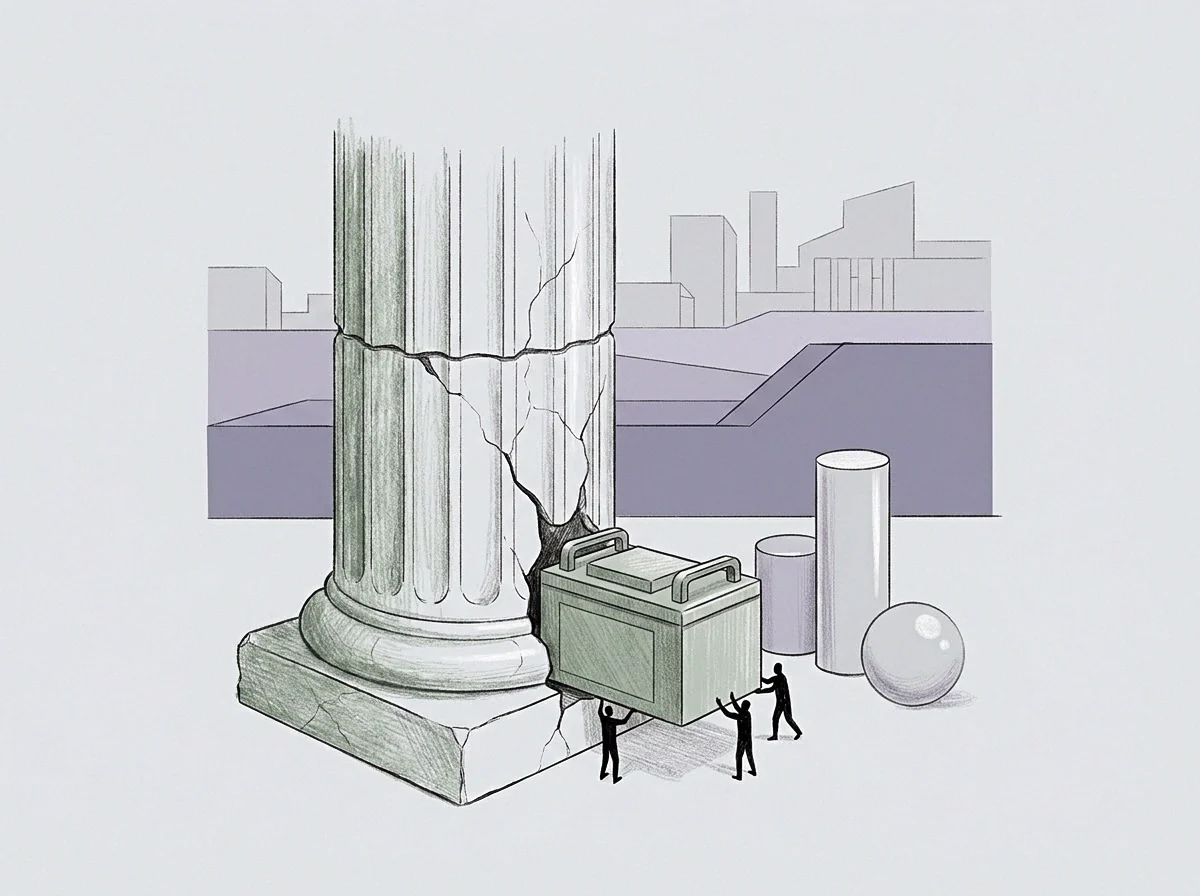
Wedge
Legal documentation treats corporate capability as an inventory of transferable assets. Real operational capacity exists as a composite of explicit systems and personal muscle memory accumulated by key personnel. This distinction creates a severe governance wedge during the transition of private equity portfolio additions or closely held family enterprises.
Tacit operating routines resist capture in standard operating procedures because the practitioner performs them without conscious deliberation.
A machine shop founder adjusts spindle speeds by listening to the harmonic vibration of an aging milling bed. A regional distributor routes freight through alternate county roads based on morning humidity and local roadwork schedules. An owner of a chemical mixing plant alters chemical reagent ratios by assessing the scent of an open vat.
None of these routines appear in the formal compliance manual. The file contains no notes.
Researchers in knowledge transmission define this operational residual as tacit knowledge, distinguishing it from codified protocols that easily populate digital training databases. In closely held enterprises, operational heuristics reside within the specific social and physical context of the founding operator. Once that individual steps away from daily supervision, the internal control environment experiences severe functional decay.
- Tacit customer accommodation allows account managers to grant unilateral delivery extensions that bypass credit holds without defaulting.
- Informal supplier forbearance secures favorable raw material allocation during market shortages through personal promises rather than binding purchase orders.
- Unwritten machine calibration compensates for mechanical wear on legacy production lines through manual operator intervention during shifts.
- Heuristic inventory sorting prioritizes order fulfillment based on undocumented client payment rhythms rather than automated warehouse queue protocols.
Transferring an owner-managed business demands explicit contractual mechanisms that bridge the cognitive distance between the seller and the incoming management team. Standard transition service agreements treat the post-closing handover as a period of passive advisory access. The buyer pays for continuity.
Yet without structural economic pressure to actively demonstrate, translate, and test unwritten habits, the seller defaults to presence without engagement.
Unwritten trade habits evaporate from daily operations the moment economic accountability disconnects from observational training.
The outgoing founder arrives at the office, reads correspondence, answers direct questions with monosyllabic accuracy, and watches the successor flounder. The successor cannot ask about a procedure whose existence remains unknown. Tacit rules resist plain text.
Knowledge that stays in the hand leaves with the body.

Holdback
Protecting the enterprise against the deterioration of tacit operating habits requires financial architecture that links purchase consideration directly to heuristic retention. Standard indemnity escrows protect against historical breaches of representations and warranties. They do nothing to compensate an acquirer for the gradual operational erosion that occurs when uncodified routines vanish.
Sophisticated transaction structures deploy dynamic deferred consideration mechanisms that penalize operational atrophy during the transition window.
Consider an industrial distributor generating five million dollars in operating earnings where thirty percent of high-margin volume depends on custom parts sourcing managed exclusively through personal contacts of the principal. An acquisition structured with ninety percent cash at closing transfers the entire risk of supplier defection to the buyer. Structuring the purchase price with specific operational holdbacks rebalances this exposure.
| Mechanism | Structural Trigger | Valuation Protection | Operator Friction |
|---|---|---|---|
| Milestone Holdback | Successful replication of heuristic tasks by successor without owner intervention | Retains ten to twenty percent of consideration against operational failure | Moderate friction requiring clear demonstration hurdles and independent audit |
| Operational Earnout | Gross margin maintenance within legacy customer accounts over twenty-four months | Subordinates final valuation to preservation of customer-level unit economics | High friction due to shared operational control and accounting interpretation |
| Set-Off Seller Note | Direct offset against principal balance upon documented client loss from unstated policies | Provides self-executing liquidity defense without third-party escrow delays | Low initial friction with substantial litigation exposure upon execution |
| Consulting Clawback | Failure to deliver verified heuristic manuals and completed shadowing cycles | Recovers upfront advisory fees upon abandonment of knowledge transfer duties | Minimal capital protection serving primarily as an administrative discipline |
The milestone holdback operates by placing fifteen percent of the headline transaction value into a specialized escrow account managed under rigid release conditions. Release does not turn on the calendar. Instead, release conditions require the incoming general manager to execute thirty distinct operational cycles without input from the departing seller.
These cycles encompass raw material purchasing, customer discount authorizations, shift scheduling, and equipment preventive maintenance. If gross margin slips beyond an agreed band during the demonstration phase, the escrow agreement directs the escrow agent to distribute the held funds directly to the buyer as a purchase price adjustment.
A holdback escrow converts qualitative heuristic transfer into an enforceable ledger adjustment by conditioning release on margin continuity.
The seller note provides an equivalent defense through unilateral set-off rights. When negotiated properly, the subordinated promissory note includes express provisions permitting the maker to cancel outstanding principal if an undocumented supplier agreement terminates within eighteen months of the closing date. The ledger remains silent.
The operator works alone. The escrow holds the difference.
Under Section 4.2 of the Supplementary Escrow Agreement, the final tranche of deferred consideration cancels entirely if customer retention falls below eighty-five percent during the twelve-month observation cycle.

Tenure
Retaining capital through contractual holdbacks creates economic motivation, but structure alone does not codify intuition. The purchase agreement must govern the physical presence and collaborative cadence of the parties post-closing. Traditional consulting agreements fail because they define tenure by duration rather than interaction density.
A six-month advisory agreement that mandates twenty hours per week of availability yields sporadic telephone conversations that never uncover the seller’s instinctive decision trees.
An effective transition agreement builds an active scaffolding protocol based on cognitive apprenticeship models. The arrangement establishes three distinct operating phases: passive observation, dual execution, and independent verification. Each phase shifts the burden of operational heuristics from the outgoing owner to the incoming operator while both parties remain under contract.
- Shadowing covenants compel the departing owner to permit the successor to observe all pricing conferences, customer negotiations, and internal operational assessments for an uninterrupted ninety-day window.
- Reverse-shadowing obligations mandate that the successor make operational determinations while the departing owner observes in silence, providing corrective feedback only during scheduled end-of-day post-mortems.
- Heuristic logging requirements condition monthly advisory payments on the cooperative production of decision trees that document discretionary adjustments across every core business line.
During the dual execution phase, friction frequently peaks. The outgoing owner experiences immense strain watching a successor execute tasks inefficiently. Paper cannot replace presence.
The successor encounters operational situations where formal manuals provide no guidance, forcing real-time reliance on the founder’s unwritten models. If the contractual tenure lacks daily co-location mandates, the founder retreats to home offices, leaving the business vulnerable to sudden heuristic drift.
The transition contract must explicitly define negative covenants that prevent the seller from making unilateral adjustments without the successor present. When an owner circumvents the successor to resolve an undocumented client crisis, the heuristic stays uncodified. The successor remains an observer rather than an operator.
How much personal operational intuition can contractual covenants extract before the outgoing owner disengages entirely from cognitive exhaustion?
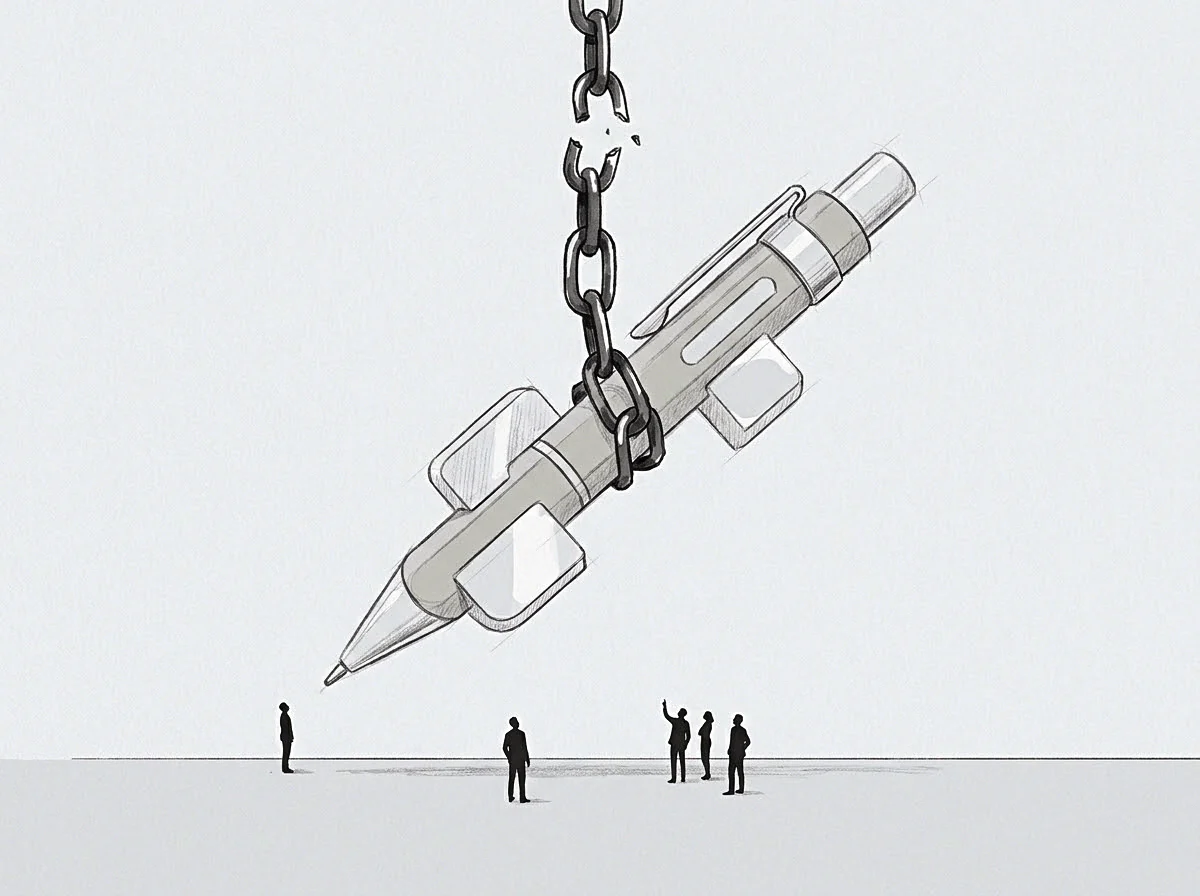
Remedy
When uncodified heuristics fail to transfer, litigation under general breach of contract theories provides negligible financial recovery. Traditional indemnification provisions require proof of an untrue representation of fact existing as of the closing date. The absence of an unwritten rule of thumb does not constitute a misrepresentation unless the agreement specifically warrants the comprehensive codification of all operational discretion.
Proving legal damages presents insurmountable evidentiary hurdles. An acquirer cannot easily prove that the departure of an undocumented customer pricing habit caused an aggregate enterprise decline.
The discount absorbs the unknown. The price reflects the loss. Sophisticated acquirers resolve this problem by drafting operational covenants backed by liquidated damages or self-executing purchase price adjustments.
These clauses bypass the need to prove fraudulent omission or material breach by attaching financial penalties directly to objective performance degradation.
If an uncodified heuristic concerning machine maintenance vanishes, equipment failure rates increase within ninety days of transition. Rather than litigating whether the seller failed to disclose poor maintenance habits, the purchase agreement links equipment breakdown occurrences directly to warranty reserve claims. The seller covenants that the production line will achieve a verified uptime percentage under successor operation.
Failure to achieve that uptime triggers an automatic indemnity distribution from the indemnification escrow, shifting the financial burden back to the party who failed to convey the operating heuristic.
Margin collapses without warning. The seller leaves the building. The second year costs more.
The failure to secure enforceable contractual mechanisms for tacit knowledge transfer forces the buyer to repurchase lost operating competence through emergency hiring, margin compression, and customer churn that standard indemnity covenants never reimburse.