
Managing Legacy Founder Board Scopes Before Downturns Erosion Hits Authority
Codifying founder board parameters into explicit committee charters before liquidity drops preserves formal governance and prevents contentious fiduciary removals.

Post
An unsigned unanimous written consent sits on an oak conference table beside three cold cups of coffee at midnight. The corporate originator of the enterprise signs corporate approvals out of habit, yet the executive title passed to an incoming chief executive six months ago. Outside the window, late delivery vans idle at the loading bay, operating under logistics systems designed four years ago by that same person.
Habitual authority remains strong within the room while revenues expand at thirty percent annually. Board meetings during expansion cycles function largely as ceremonial ratifications of executive vision, lubricated by unallocated cash reserves and rising equity valuations.
Corporate boards require statutory alignment. When market conditions reverse, the structural ambiguity between historic personal stature and codified fiduciary duty turns hazardous. Informal influence decays rapidly.

Informal Deference Masks Legal Exposure
During periods of abundant liquidity, institutional directors grant significant latitude to retired founders holding non-executive directorships. These legacy operators often direct operational staffing choices, product direction, and vendor negotiations through casual remarks delivered over dinner before formal quarterly meetings. Management teams routinely accede to these preferences to maintain internal peace.
The legal minute book records unanimous votes, giving no indication of the backchannel interventions that shaped the agenda.
A legacy seat retains authority only while capital markets supply unallocated cash to the enterprise.
This deference rests upon an unwritten social pact supported by rising valuation multiples. Outside capital tolerates ambiguous boundary lines when equity performance exceeds commercial benchmarks. Investors accept founder dominance on board committees because questioning that involvement introduces friction into an expanding enterprise.
Once macroeconomic growth falters, this permissive accommodation vanishes.

Fiduciary Division In Expanding Markets
Company law establishes a rigorous division between the governance remit of a board of directors and the execution remit of corporate officers. Directors maintain a fiduciary obligation to the corporate entity and its stockholders across long horizons. Officers execute daily commercial tactics under the direction of the sitting chief executive.
When a retiring founder occupies a board post without a precise charter, these two remits bleed together.
The registry stays closed. Silent agreements dissolve under scrutiny. A legacy director who issues direct instructions to subordinate vice presidents exposes the corporation to severe governance liabilities.
The incoming management team finds its formal accountability diluted, while the company incurs legal exposure when strategic directives bypass the executive chain of command.
The current management team runs the business, and legacy directors vote strictly on charter matters without intervening in monthly operational decisions.

Strain
Market contractions expose structural weaknesses that loose capital concealed. When quarterly subscription renewals drop and secondary share transactions discount corporate equity by forty percent, investor patience collapses. Outside directors demand specific boundaries.
When enterprise valuation drops below liquidation preferences, board authority shifts from common equity voting pacts to statutory preferred investor consent.
Directors representing institutional preferred stock suddenly inspect historical corporate actions with forensic scrutiny. The friendly atmosphere of early board sessions yields to formal legal motions and demand letters. In this environment, an uncodified founder board scope transforms into a primary flashpoint.

Deceleration Strips Unwritten Privileges
Economic downturns force painful balance sheet adjustments, including workforce reductions, real estate consolidation, and product line cancellations. These retrenchment moves inevitably target initiatives launched by the corporate originator during previous operational tenures. A legacy director viewing these cutbacks as repudiations of personal architectural legacy frequently resists through informal vetoes and emotional appeals to legacy employees.
Operational commands cease at the boardroom. Preferred blocks override historical sentiment. When legacy founders attempt to rally staff against difficult executive decisions, management faces an intolerable governance split.
- Protective veto overextension occurs when the originator blocks emergency credit facilities because the restructuring modifies original common stock voting rights.
- Informal operational overrides trigger executive departures when the previous chief gives verbal counter-orders to engineering directors.
- Information request weaponization consumes corporate counsel time during bridge negotiations through demands for granular transaction ledgers.
These actions exhaust organizational energy at the precise moment external solvency demands absolute cohesion. The successor chief executive cannot execute turnarounds while defending internal choices against a predecessor sitting in an undefined board seat.
Preferred stock protective provisions eliminate historical director courtesy the moment working capital drops below quarterly payroll commitments.

Capital Allocators Assert Statutory Enclosures
As venture debt covenants tighten and bridge rounds become mandatory, preferred stockholders exercise contractual rights that override common equity preferences. Institutional investors introduce legal counsel into boardroom discussions to enforce strict parliamentary compliance. The written minute controls authority.
Unstated expectations produce governance disputes. When a board must negotiate emergency financing featuring heavy liquidation preferences or down-round warrants, the legacy founder often finds their equity stake heavily diluted. Under Delaware or comparable corporate statutes, directors face personal fiduciary liability if they approve restructuring terms that unjustifiably enrich or penalize specific share classes.
Outside institutional directors immediately demand the recusal of legacy directors whose personal shareholdings conflict with the enterprise solvency mandate.
Unchecked ambiguity during a liquidity contraction results in an emergency equity restructuring that strips the legacy director of voting equity and board representation simultaneously.

Draft
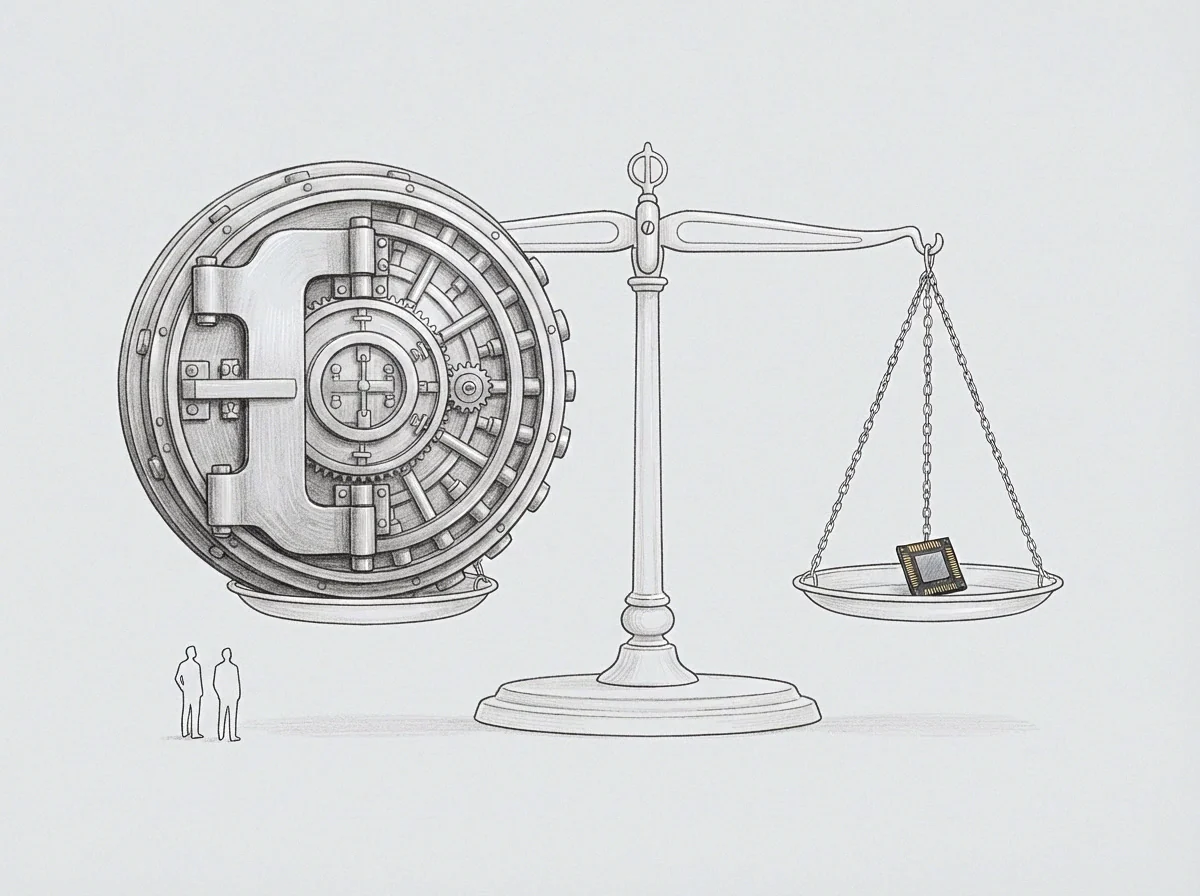
Preemptive structural codification prevents governance collapse during downturns. The board must formalize boundaries while the company remains solvent and capital relations stay amicable. Contractual terms outlast personal standing.
Establishing clear charters, committee jurisdictions, and observer boundaries provides the incoming management team with autonomous operational terrain. At the same time, this codification preserves an honorable, focused advisory post for the corporate originator.
Codified Special Committee Charters
A legacy director possesses institutional memory, technical background, and commercial relationships that remain valuable to the firm. These contributions must be channeled through bounded structures rather than open-ended board intervention. A dedicated technical advisory charter or strategic capital committee defines exact advisory parameters.
Consider a typical governance dispute during commercial contraction. Take an enterprise where an originator holds fifteen percent of common equity, two investor directors hold forty-five percent of preferred equity, and an independent director holds the deciding vote. Assume gross margins decline by twenty percent over two quarters.
Without a codified charter, the legacy director attempts to attend engineering sprint planning sessions, confusing line managers and alienating the vice president of product. When the board implements a codified advisory remit, the originator reviews product roadmap milestones once each quarter, reporting observations exclusively to the board rather than issuing direct instructions to staff.
| Governance Dimension | Informal Originator Seat | Codified Committee Directorship |
|---|---|---|
| Operational Intervention | Direct verbal instructions to operating vice presidents | Formal quarterly advisory memos delivered to board |
| Corporate Information Access | Unrestricted daily inspection of internal accounts and channels | Standard distribution of statutory financial board packages |
| Financing Negotiations | Bilateral lobbying of legacy investors against dilution | Mandatory recusal from conflicting preferred equity restructuring |
| Agenda Setting Power | Informal founder veto on strategic discussion topics | Joint agenda construction by lead director and executive officer |
| Staff Communication | Unscheduled attendance at departmental all-hands meetings | Communications mediated through executive leadership team |
Cash reserves determine real leverage. Clean charters protect corporate value. By defining the exact scope of board service, the corporation eliminates ambiguity before commercial stress arrives.

Board Observer Parameters And Information Flow
In many succession processes, transitioning the legacy founder from a voting director seat to a formal board observer post offers optimal clarity. An observer maintains access to discussions without exercising statutory voting powers or incurring director fiduciary liabilities.
The observer agreement fixes attendance. A properly structured agreement specifies the exact terms of participation:
- Committee scope delimitation binds the legacy director to external advisory projects without direct reporting lines from current vice presidents.
- Information entitlement schedules restrict data requests to quarterly financial reviews and statutory audit distributions, preventing day-to-day administrative burdens.
- Recusal trigger clauses remove interested founders from discussions regarding executive compensation adjustments, down-round financings, and recapitalization terms.
A formal recusal covenant signed during solvent quarters secures corporate board enforceability against future insolvency challenges.
The audit committee holds jurisdiction. When these documents are executed while the enterprise maintains twelve months of forward cash runway, the emotional friction associated with boundary definition remains minimal. The legacy founder views the process as routine institutional maturity rather than a personal vote of no confidence.
A designated lead independent director clause transfers the meeting agenda control to a neutral trustee, ending bilateral executive disputes.

Shelf
Statutory duties govern insolvent enterprises. When balance sheets contract to liquidation margins, the legal responsibilities of all board members pivot toward creditor satisfaction. At this stage, personal historical contributions carry zero statutory weight in corporate deliberations.
The transition from creator to institutional director concludes when operational residue fully clears the corporate ledger. A legacy founder who gracefully accepts this legal evolution protects both their reputation and their accumulated equity value. The enterprise secures the operational agility required to navigate adverse commercial cycles without executive paralysis.

Fiduciary Equilibrium After Operational Exit
An orderly board scope leaves the successor chief executive in complete command of operating expenses, staffing models, and product prioritization. The corporate originator retains a high-level governance vantage point, offering perspective during formal deliberations while avoiding operational sabotage. Capital contraction removes informal deference.
Board votes require statutory alignment. Independent directors operate with greater effectiveness when legacy founders honor committee boundaries. Institutional investors can negotiate distressed recapitalizations or strategic acquisitions with confidence, knowing that governance procedures comply with corporate law standards and resist minority common equity litigation.

Preserving Enterprise Longevity
Companies endure commercial downturns through decisive operational cuts and capital discipline. Undefined board scopes introduce friction that delays restructuring choices until insolvency becomes unavoidable. Clear governance fences protect the enterprise from internal conflict.
When the boardroom functions as a disciplined fiduciary forum rather than an emotional arena for historic grievance, the corporate entity preserves its survival capacity. The founder architecture moves from informal individual dominance to permanent institutional governance. What remains on the corporate records is clean title, undisputed voting minutes, and structural longevity.
Directorial authority survives market contractions through written governance contracts rather than historical corporate gratitude.