
Measuring Uncodified Cognitive Residue Following Executive Scaffold Removal Protocols
Executive scaffold removal reveals uncodified cognitive residue through diagnostic divergence between documented procedures and real-time operational choices.

Floor
Written repositories record operational outputs while leaving executive decision logic unstated. When a founder or senior leader exits a seat, standard handover protocols systematically document explicit workflows: software credentials, vendor contracts, organizational charts, and scheduled reporting cadences. The underlying mental models, risk thresholds, tacit trade-off rules, and real-time diagnostic instincts remain held within the departing individual.
These unwritten operational mental models constitute uncodified cognitive residue. The structured process of withdrawing advisory access, shadow reviews, and sign-off interventions is the scaffold removal protocol. When that support framework comes down, the floor of operational capability is revealed.
The gap between documented standard operating procedures and actual executive capability becomes visible only after scaffold extraction. Executive scaffolding functions as an operational buffer. It absorbs errors, clarifies ambiguous signals, and supplies unwritten context during high-stakes decisions.
When this scaffold stays in place too long, it masks structural deficits in the successor’s baseline diagnostic competency. When removed abruptly, the organization experiences immediate friction as uncodified heuristics fail to transfer through static documentation.

Codified Scaffolding Versus Implicit Heuristics
Standard operating manuals detail routine workflows across predictable environments. They define step-by-step actions for baseline scenarios, such as processing quarterly budgets or onboarding vendor channels. Uncodified cognitive residue governs non-routine exceptions.
This includes recognizing when a key client’s communication cadence signals churn risk, or how to balance gross margin preservation against strategic market entry during supply shocks. Explicit manuals document static procedures. Implicit taste dictates trade-off choices.
Cognitive residue consists of three distinct layers:
- Relational Instincts define unwritten expectations regarding counterparty reliability, team dynamics, and institutional trust thresholds.
- Diagnostic Heuristics operate as compressed mental shortcuts used to isolate root causes within complex operational noise.
- Risk Asymmetry Models govern how an executive evaluates catastrophic downside versus bounded upside during capital allocation decisions.
Scaffolds accelerate initial baseline execution. However, relying on persistent executive intervention prevents these three implicit layers from transferring to the incoming operator. Tacit rules govern edge cases.

The Substrate of Unstated Decision Logic
Outgoing executives retain non-linear risk parameters accumulated through years of operational exposure. This accumulated intuition forms an unwritten substrate. During active operations, the departing leader applies these parameters unconsciously, approving capital investments or vetoing product changes based on pattern recognition that has never been articulated in writing.
When the scaffold removal protocol commences, the incoming operator receives the operational structure without the underlying decision engine.
When transitional sign-off authority drops to zero before tacit diagnostics are observed in live operations, operational error rates increase in direct proportion to decision novelty.
Measuring this residue requires observing how the incoming executive handles ambiguous events once formal support ends. If the successor defaults to rigid adherence to written documentation when external parameters shift, the underlying decision models remain unappropriated. The outgoing leader’s uncodified residue remains locked in their personal mental framework, leaving the host seat structurally vulnerable to novel environmental volatility.
Withdrawal of transitional support prior to tacit transfer converts unwritten executive logic into systemic operational debt.
Sequence
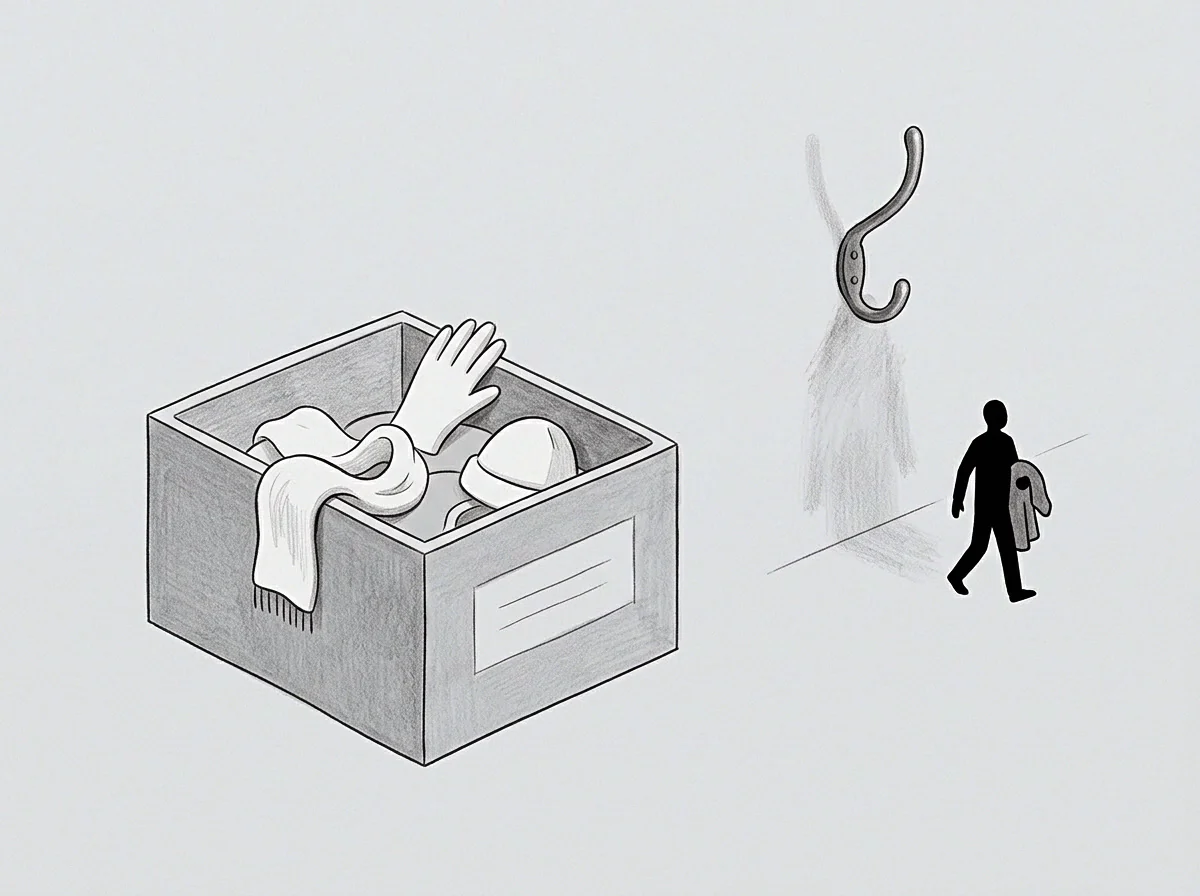
Transitional protocols require structured phaseouts across clear operational boundaries. A poorly designed scaffold removal protocol relies on arbitrary timeline dates, such as ending advisory access precisely thirty days post-transition. Effective scaffold removal follows a diagnostic sequence dictated by the incoming operator’s demonstrated mastery of uncodified decision logic.
The phaseout sequence transitions through four distinct stages: Active Co-Execution, Passive Observation, Exception Escalation, and Complete Structural Detachment.
Throughout this sequence, the transitional state known as the grip stage manifests. During the grip stage, the incoming executive holds the formal title and exercises administrative authority, yet relies on the outgoing executive for implicit decision validation. Managing the grip stage requires deliberate structural tapering rather than abrupt detachment.

Phased Withdrawal of Executive Support Structures
Initial transition stages pair incoming operators with outgoing leadership during live asset allocation decisions. In the Active Co-Execution phase, the outgoing executive states their thought process aloud during real-time choices, explicating the unwritten criteria behind vendor selections, talent evaluations, and risk assessments. This stage forces implicit heuristics into explicit dialogue.
The sequence shifts into Passive Observation when authority flips. The incoming leader makes primary decisions while the outgoing executive monitors without immediate intervention, intervening only when proposed choices breach defined downside limits. Calendar dates obscure diagnostic readiness.
Phase transitions depend strictly on behavioral validation.

Diagnostic Thresholds During the Grip Stage
Formal title transitions frequently precede full operational autonomy by several quarters. During the grip stage, operational friction occurs primarily at the boundary between written guidelines and uncodified exceptions. If the scaffold removal protocol proceeds without objective diagnostic checkpoints, structural vulnerabilities develop.
Common failure modes during this phase phaseout include:
- Premature Scaffold Truncation occurs when advisory access ends based on calendar dates rather than demonstrated diagnostic competency, leaving edge-case handling unverified.
- Ghost Authority Retention emerges as the outgoing leader continues reviewing uncalibrated decisions informally, preventing the successor from internalizing downside exposure.
- Documentation Reliance Drift appears whenever operators follow written scripts without understanding underlying trade-offs, causing systemic fragility during market shifts.
Informal consultations preserve operational dependence. To prevent ghost authority, scaffold tapering demands structured reduction of communication channels. As the transition advances from Exception Escalation to Complete Structural Detachment, direct communication routes are restricted to scheduled, formal auditing windows.
The outgoing partner noted that every emergency escalation call after month three marked a failure of the written manual.

Count
Quantifying uncodified cognitive residue relies on observing real-time operational divergence. Rather than relying on qualitative surveys or self-reported confidence metrics, objective measurement tracks variance in decision execution following scaffold reduction. Three quantitative metrics quantify the volume and impact of residual tacit knowledge: Exception Escalation Frequency, Variance in Edge-Case Latency, and Unwritten Path Divergence.

Can Unstated Decision Logic Be Measured Quantitatively?
Empirical measurement tracks the specific variance between predicted operational paths and executed choices. Exception Escalation Frequency measures how often an incoming leader seeks external validation from the departing executive for non-standard events. A declining escalation curve indicates successful tacit knowledge assimilation.
Exception rates measure uncodified leakage.
Variance in Edge-Case Latency records the speed differential between how quickly the outgoing executive resolved complex, uncodified operational dilemmas versus the incoming operator’s execution speed. High latency variance indicates missing heuristic models. Variance signals unstated diagnostic paths.
Unwritten Path Divergence calculates the percentage of strategic decisions where the incoming leader’s chosen execution path diverges from the path the outgoing executive would have taken under identical parameters. Divergence itself is not inherently negative; however, uncalibrated divergence stemming from missing contextual data signals unabsorbed cognitive residue.

Metrics for Tacit Operational Leakage
Systemic evaluations measure how effectively implicit judgment moves across functional boundaries. Tracking these parameters across each scaffold removal phase establishes clear operational baselines for executive readiness.
| Scaffold Removal Phase | Exception Escalation Frequency | Edge-Case Latency Variance | Unwritten Path Divergence |
|---|---|---|---|
| Active Co-Execution Phase | 15 to 25 instances per month | +120 percent relative to baseline | 35 to 50 percent path variance |
| Passive Observation Phase | 5 to 10 instances per month | +45 percent relative to baseline | 15 to 25 percent path variance |
| Complete Detachment Phase | 0 to 2 instances per quarter | +10 percent relative to baseline | Under 10 percent path variance |
| Data reflects typical variance profiles across owner-operator succession sequences in middle-market operational entities. | |||
A lingering exception escalation rate above five percent past ninety days indicates that foundational risk thresholds remain uncodified in operational documentation.
Systematic measurement transforms an abstract transition into an empirical operational audit. When quantitative indicators exceed threshold limits during the passive observation phase, the scaffold removal sequence pauses. Extending the transition timeline without empirical criteria increases payroll expense without guaranteeing tacit transfer.
Specifying a maximum ten percent Unwritten Path Divergence threshold in the transition protocol obligates the outgoing executive to document tacit evaluation models before equity release.
Drain
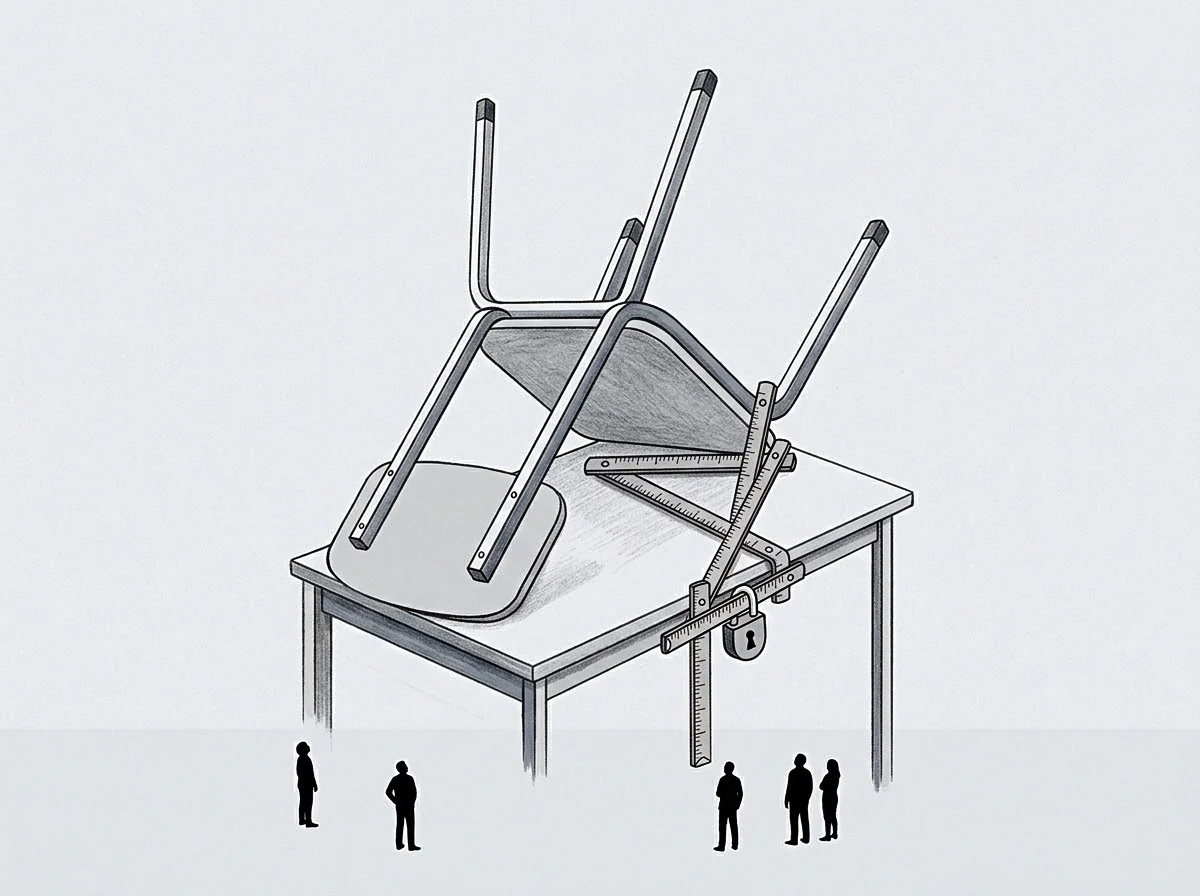
Uncodified operational gaps create persistent friction across executive functions. When executive scaffolds drop before tacit transfer occurs, organizational capacity drains rapidly. This capacity drain manifests as operational rework, delayed capital deployment, misaligned vendor negotiations, and organizational paralysis during market volatility.
Uncoded heuristics consume executive capacity. Rework cycles erode transition equity.
The financial and operational price of unabsorbed cognitive residue accumulates across multiple organizational layers. While administrative salaries remain fixed, the hidden operational expenditure escalates through inefficient execution and missed market windows.

Capacity Arithmetic of Uncodified Knowledge Gaps
Executive time tracking demonstrates how incomplete knowledge transfers consume operational resources. Consider an operational scenario where a founder exits an executive seat within a mid-sized firm, leaving undocumented credit allocation criteria:
- The incoming executive encounters an undocumented boundary condition during asset reallocation and halts execution for seven calendar days.
- Informal escalation routes bypass designated operational leads, consuming founder attention hours outside the transitional agreement.
- Decision paralysis spreads across functional teams as historical implicit heuristics fail to guide novel vendor selections.
- Retrospective audit sessions reveal systemic variance between intended risk parameters and executed agreements.
In this sequence, the direct cost includes seven days of frozen capital deployment alongside twenty-five hours of unbudgeted founder intervention. The indirect cost involves degraded team confidence and extended decision cycles across adjacent departments.

Operational Friction Following Support Tapering
Organizational output slows when incoming leaders lack implicit diagnostic mental models. Misinterpreting historical organizational norms leads to redundant strategic pivots. The new operator frequently dismantles effective informal communication channels simply because their underlying operational purpose was never codified in the transition documentation.
The hours consumed by post-exit intervention always exceed the time required to demonstrate unstated heuristics during the active handover.
When unwritten cognitive residue remains unmeasured, executive transition outcomes degrade into friction-filled negotiation loops between departing founders and incoming leaders. The outgoing executive perceives the successor as indecisive, while the incoming operator views the predecessor as an obstructive presence. Uncodified cognitive residue dissipates only when the successor experiences direct operational downside from unguided decisions.

Bridge
Structuring executive transition agreements requires coupling advisory exit terms to verified cognitive transfer. Traditional executive employment contracts and founder buyout schedules rely heavily on time-based vesting cliffs. Time-based structures incentivize departing executives to pass days on a calendar rather than systematically explicating their unwritten decision logic.
Exit contracts require performance-based scaffold removal terms.
Designing a bridge between scaffold withdrawal and verified cognitive transfer demands incorporating objective competency milestones directly into equity release clauses, severance agreements, or advisory retainer contracts.

Designing Exit Clauses for Uncodified Tacit Transfer
Legal transition schedules move from fixed dates toward competency-based milestones. By anchoring financial disbursements to quantitative residue metrics—such as achieving target limits on Exception Escalation Frequency and Edge-Case Latency Variance—the financial interests of the outgoing executive align with thorough heuristic codification.
Contractual milestones require behavioral validation. Stated terms replace informal assumptions. Effective transition covenants specify exact diagnostic obligations:
- Live Stress-Test Executions mandate that incoming leaders independently navigate simulated environmental shocks while outgoing leaders evaluate diagnostic accuracy against unstated criteria.
- Heuristic Audit Requirements condition final equity block releases on the departing officer conducting structured debriefs for all non-standard operational decisions made during the co-execution phase.
- Escalation Cap Clauses convert post-exit advisory calls into hourly financial clawbacks against retainers if inquiry volume exceeds defined threshold limits.

Structural Alignment of Scaffold Phaseouts
Contractual retainers align executive incentives with deliberate heuristic codification. When exit contracts fail to define explicit parameters for scaffold phaseouts, the host organization absorbs all operational risk associated with cognitive residue loss. Incorporating empirical residue measurement into succession governance ensures that executive authority transitions only when operational diagnostic capability has fully transferred.
Contractual exit dates reflect administrative convenience while cognitive transfer follows the speed of operational exposure.
The final exit of an executive seat marks the formal end of administrative authority and the complete withdrawal of structural support. When uncodified cognitive residue is tracked, quantified, and structurally managed through diagnostic scaffold removal protocols, the incoming operator assumes the seat with verified operational clarity. Whether quantitative cognitive residue thresholds can completely replace subjective executive sign-offs remains unresolved across early-stage equity transitions.