
Quantifying Revenue Exposure When Transitioning Strategic Accounts To Successors
Revenue exposure equals unbilled relationship concessions and discretionary project run rate discounted by successor access depth and switching barriers.

Floor
A client billing file remains open on a laptop at two in the morning, showing three enterprise contracts that generate sixty percent of annual cash collections. The outgoing account lead knows the procurement director prefers invoice delivery on the third Thursday of the month, tolerates quarterly reporting delays if briefed by telephone, and expects an off-the-record credit whenever software downtime exceeds four hours. None of these accommodations appear in the master services agreement.
The master agreement lists payment net thirty, formal quarterly business reviews, and strict liquidated damages for service interruptions. The financial model treats this revenue as committed baseline recurring run rate. The incoming account manager inherits only the contract text.
When the contract is executed as written without the informal concessions, the client begins evaluating alternative vendors within ninety days.
The gap between documented commercial terms and relationship-based operational compromises represents the unhedged relational variance. In owner-managed enterprises and professional service organizations, commercial relationships often congeal around individual personalities rather than institutional workflows. Quantifying this exposure demands separating the legally enforceable gross billings from the discretionary purchase volume that exists solely because the incumbent operator absorbs client friction.
When an account lead departs, this discretionary billing becomes unprotected capital. Enterprise valuation models routinely apply standard churn percentages to recurring accounts during leadership transitions. This uniform treatment obscures how concentration and relational dependence combine to produce asymmetric losses.
A contract records legal intent while billings reflect the personal compromises that keep the work moving.
The baseline calculation begins by auditing trailing twelve-month revenues across three distinct buckets: firm contractual commitments, predictable discretionary expansions, and informal project work generated through unrecorded requests. Firm contractual commitments contain statutory renewal dates, termination penalties, and predefined scope boundaries. Discretionary expansions rely on executive goodwill and historical trust.
Informal project work depends entirely on personal access. Strategic accounts usually generate healthy top-line numbers in the second and third buckets, where margins run higher because standard procurement procedures are bypassed. Once the incumbent steps out of the account, discretionary project requests pause immediately.
The client uses the leadership change as an opportunity to clean house and benchmark vendor rates.

Contractual Rigidity and Unstated Concessions
Informal allowances carry a price. An account lead frequently grants scope concessions to preserve contract stability, performing ten hours of unbilled advisory work each month or absorbing minor out-of-scope revisions without issuing change orders. A study of business-to-business vendor switches indicates that forty-two percent of enterprise client departures follow the arrival of a replacement representative who attempts to enforce original contract boundaries that the predecessor routinely waived.
This finding rests on survey data from corporate procurement officers managing multi-year enterprise vendor handoffs; it would fail to hold in commoditized supply categories where personal relationship plays no part in product delivery. The incoming operator who reads only the scope statement bills for every additional hour. The client experiences this change as an immediate price increase.
The contract remains intact. The relationship fractures. The successor inherits an active commercial dispute instead of an ongoing account.
Calculating the true revenue floor requires discounting the historical billing volume by the replacement cost of these hidden concessions. If an enterprise client pays two hundred thousand dollars annually but consumes forty thousand dollars of unbilled service hours to remain satisfied, the true commercial baseline is one hundred sixty thousand dollars. The remaining twenty percent represents relationship maintenance expense masquerading as gross margin.
Account transitions that fail to budget for this margin compression see profitability collapse even when headline client retention holds steady.
Unrecorded concessions consistently outlive the individuals who grant them.

Drift
Revenue decay in strategic accounts operates across distinct phases rather than through sudden cancellations. A corporate client rarely terminates an enterprise vendor on the exact day an account lead resigns. The commercial agreement contains ninety-day cancellation clauses and ongoing project milestones that enforce temporary continuity.
The decay appears as operational drag. Communication cadence slows, executive access narrows to administrative gatekeepers, and renewal discussions face repeated calendar postponements. The client quietly begins drafting requests for proposals while participating in weekly status calls with the new account manager.
The outward metrics register normal operations while commercial influence evaporates.
The mechanism behind this erosion is relational drift. When an account transitions, the successor enters the seat without the contextual memory built through prior project crises, informal favors, and resolved disputes. Relational capital stays with the person who earned it.
The client views the new representative as an unproven corporate proxy rather than a collaborative peer. Consequently, the commercial partnership shifts into an arm’s-length vendor evaluation. The successor lacks this history.
Every recommendation receives additional scrutiny, invoices face bureaucratic audits, and access to internal decision-makers shuts down.

How Quickly Do Relational Accounts Lose Value?
Attrition speed depends on whether client switching costs are technological, operational, or purely personal. Technological switching barriers, such as proprietary software implementations or custom database architectures, suppress attrition speed for six to twelve months post-transition. Operational barriers, including complex shared workflows and integrated staffing, hold accounts stable for two to four quarters.
Personal switching barriers decay inside thirty days. A study evaluating commercial professional services partnerships revealed that accounts where commercial access lived in a single partner experienced an average thirty-seven percent revenue decline within eighteen months of partner departure. This evidence draws on mid-market professional firm partner exits across North America; the finding would shift downward in jurisdictions where restrictive covenants and non-compete agreements are strictly enforced to prevent client communication.
The desk cannot fully defend whether client surveys predict retention during account transfers, as corporate buyers routinely conceal departure plans until substitute vendors are selected; under this uncertainty, the prudent operator tracks objective interaction cadence rather than subjective satisfaction scores.
The successor holds the title while the predecessor retains the authority.
Specific failure modes accelerate revenue leakage when an incumbent exits an account seat:
- Executive sponsor isolation happens when the new account lead communicates solely with day-to-day project coordinators, losing visibility into enterprise budget shifts.
- Scope boundary shock creates resentment because the replacement representative immediately bills for informal tasks that the predecessor performed without charge.
- Procurement re-engagement occurs as corporate buyers exploit account leadership turnover to re-open pricing schedules and demand competitive fee reductions.
- Operational cadence collapse develops when weekly strategic touchpoints devolve into mechanical status updates that senior stakeholders stop attending.
The client waits. The numbers change quickly. A strategic account paying fifty thousand dollars a month can maintain that run rate during the initial handover quarter, drop to thirty-five thousand during the second quarter as discretionary projects end, and terminate entirely at annual contract expiration.
The commercial erosion remains invisible in financial ledgers until the renewal deadline arrives. By that date, the outgoing executive has departed, the successor has burned six months trying to rebuild basic trust, and the revenue loss has become permanent.
The account works well enough for daily tasks, but strategic projects now go to an outside agency whose partners know our leadership team.
Weight
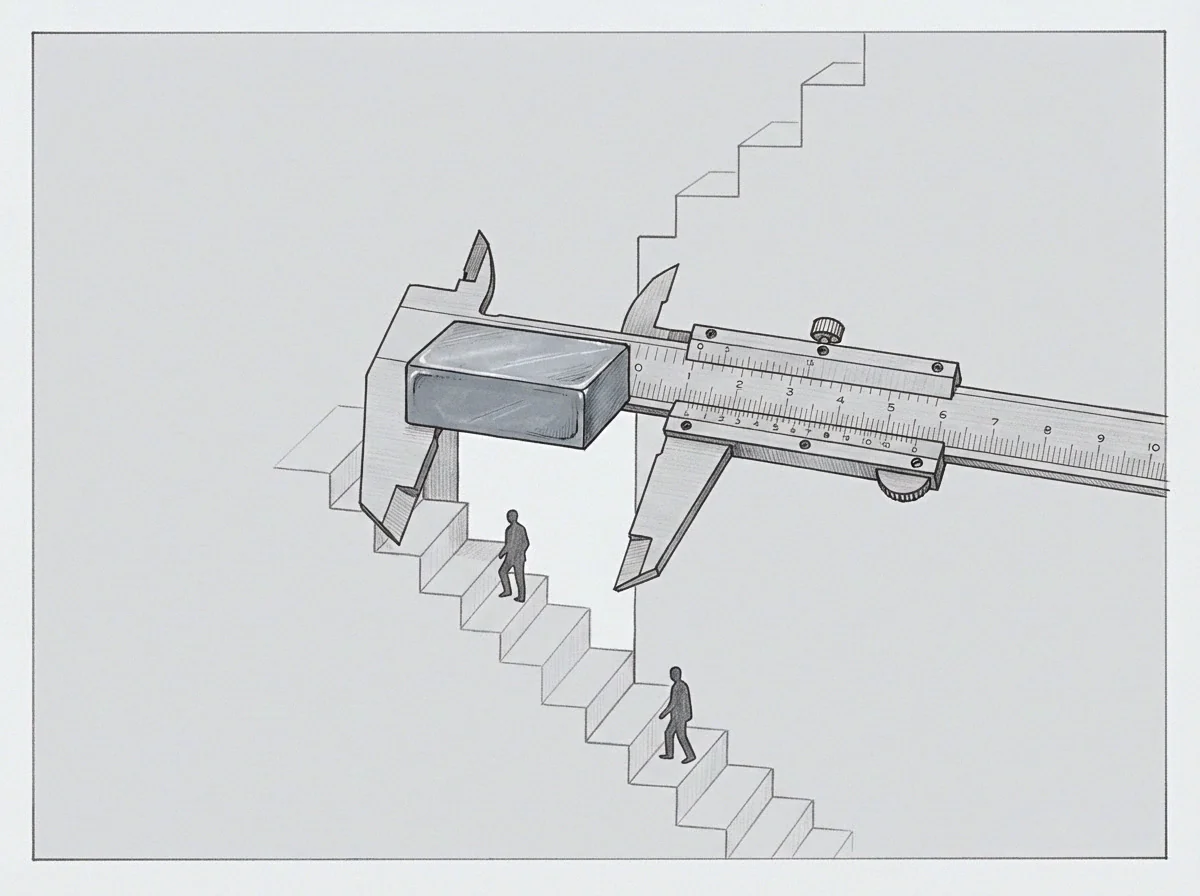
Exposure quantification requires a structured model that weights relational vulnerability against account concentration. In a typical mid-sized services firm, ten accounts hold half the billing. Treating these accounts as homogeneous revenue streams distorts capital allocation and misjudges organizational stability.
An account generating five hundred thousand dollars with high structural lock-in carries substantially less exposure than an account generating two hundred thousand dollars where the purchasing sponsor is personal friends with the exiting partner. The enterprise needs an objective method to classify accounts by vulnerability tier before initiating successor handovers.
The mathematical approach assigns empirical weights to four primary structural factors: relational concentration, executive access depth, informal concession volume, and technical integration lock-in. Relational concentration measures the proportion of total client communication handled by the exiting lead compared to the broader delivery team. Executive access depth evaluates whether the enterprise maintains active relationships with the client’s c-suite or relies exclusively on the account lead’s personal line.
Informal concession volume calculates the unbilled operational hours granted over the trailing year. Technical integration lock-in measures the capital expenditure and time required for the client to replace the enterprise’s deliverables.

Comparative Account Vulnerability Tiers
Different accounts present vastly different capital risks during personnel handovers. To evaluate exposure accurately, leadership must compare accounts across standardized structural attributes rather than relying on gut feeling or headline contract size. In industrial engineering, stress testing a mechanical joint requires measuring both the static load and the dynamic vibration it absorbs; similarly, evaluating account continuity requires measuring baseline revenue alongside the informal friction absorbed by the incumbent.
The following matrix illustrates the exposure spectrum across four typical strategic account profiles encountered during leadership transitions.
| Vulnerability Tier | Relational Factor | Executive Overlap | Concession Drag | Estimated Revenue Attrition |
|---|---|---|---|---|
| Tier One: Institutionalized | Low individual dependency; team delivery model | Direct ties to three or more client executives | Under five percent unbilled scope variance | Zero to ten percent over twelve months |
| Tier Two: Operationally Bound | Moderate individual ties; shared operational workflows | Single executive tie with active management overlap | Five to fifteen percent unbilled scope variance | Ten to twenty-five percent over twelve months |
| Tier Three: Relationally Dependent | High individual ties; founder or partner alignment | Single executive tie held exclusively by outgoing lead | Fifteen to thirty percent unbilled scope variance | Twenty-five to fifty percent over twelve months |
| Tier Four: Personal Monopoly | Complete reliance on individual account owner | Zero institutional access outside outgoing lead | Over thirty percent unbilled scope variance | Fifty to one hundred percent over twelve months |
Applying this model produces a weighted exposure score that converts gross revenues into risk-adjusted net present values. For an account generating one million dollars classified in Tier Three, the business must budget for an expected revenue reduction of three hundred seventy-five thousand dollars over the four quarters following successor placement. This reduction is not an operational failure of the successor.
It is the financial realization of relational capital leaving the organization. Failing to discount these assets during enterprise valuations or partner buyouts leads to immediate cash flow deficits once the departure is finalized.
A weighted exposure calculation converts optimistic gross run rates into the realistic cash collections an organization can actually bank.
The financial impact cascades beyond top-line revenue into gross margin compression. When an account drops from Tier Two to Tier Three during a bungled handover, the enterprise often attempts to save the relationship by throwing additional labor at client requests. Delivery teams deploy senior engineers, additional project managers, and executive leadership to weekly meetings in an attempt to stabilize client confidence.
The account still pays the original contract fee, but internal delivery expenses rise twenty to forty percent. The billing drops thirty percent. The margin disappears.
The organization ends up spending more capital to retain a shrinking account than it would have spent acquiring a new client through institutional sales channels.
Ignoring account vulnerability weighting leads directly to sudden cash flow deficits, unbudgeted delivery costs, and the permanent loss of strategic enterprise assets.
Scaffold
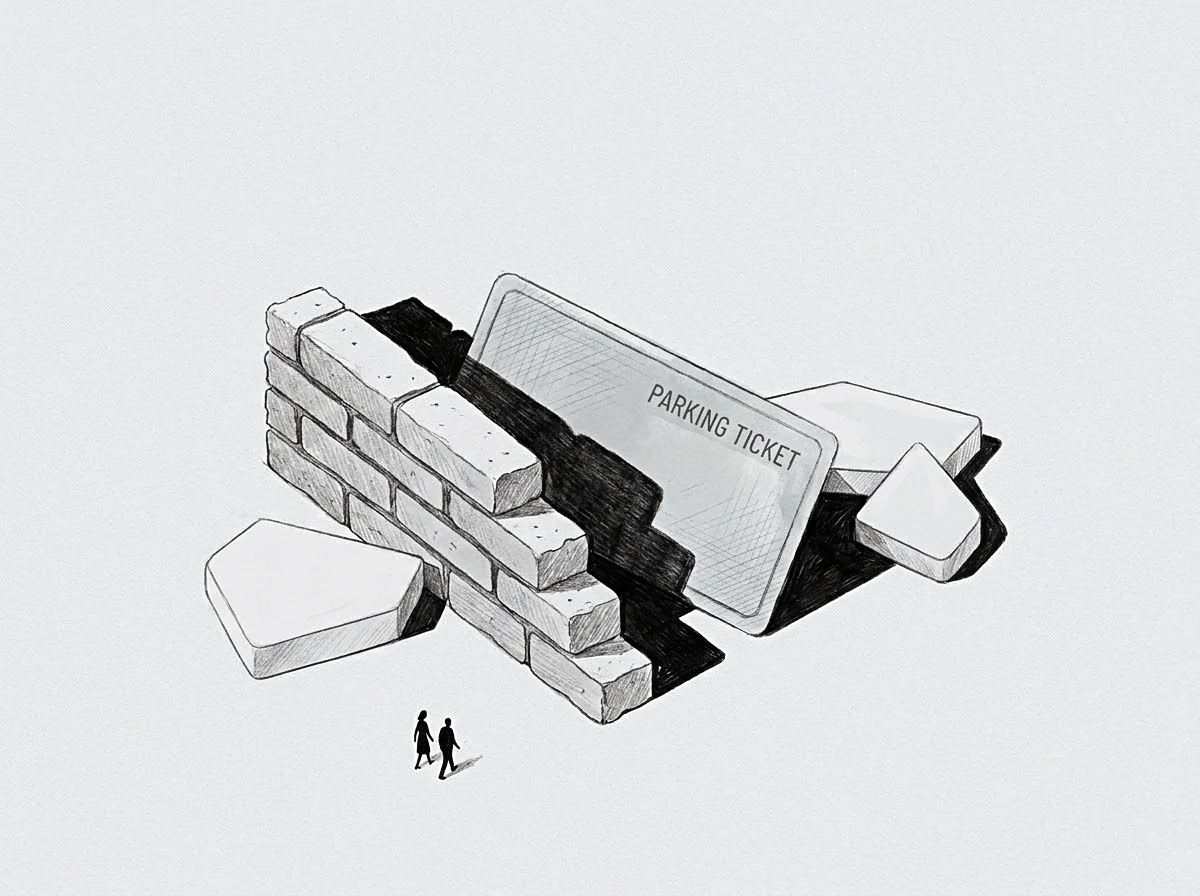
Mitigating quantified exposure requires an engineered operational handover sequence rather than an abrupt introduction call followed by an exit. A structured transition acts as scaffolding around an active building, supporting commercial weight while new relational structures harden. Removing the support too quickly causes the account structure to buckle under normal commercial strain.
Maintaining the support too long prevents the successor from ever establishing authentic authority with client decision-makers. The transition sequence demands deliberate phases, each with specific milestones that govern when the incumbent steps back and when the successor takes commercial control.
The sequence functions across three defined intervals: observation, co-pilot management, and primary leadership with residual escalation support. During the observation interval, the successor attends all client meetings as a silent delivery analyst, mapping informal communication patterns, unspoken client preferences, and unrecorded operational allowances. The successor does not lead calls or make commercial commitments.
The objective is capturing tacit operational context that never appears in written status reports. The incumbent remains the sole commercial authority in this initial phase.

Phased Operational Transfer Milestones
The transition moves to co-pilot management once the successor can articulate the client’s internal political hierarchy and commercial expectations. In this second phase, the successor assumes responsibility for day-to-day project milestones and operational communication, while the incumbent retains commercial renewal negotiation and quarterly business reviews. The client begins looking to the successor for execution, creating professional credibility before commercial stakes are introduced.
The incumbent actively redirects client inquiries to the successor during shared calls, signaling institutional confidence.
Structured protocols prevent the successor from being sidelined during the sensitive co-pilot phase:
- Contextual shadowing requires the successor to attend thirty days of client interactions without speaking, recording unspoken procurement habits and informal service concessions.
- Operational delegation shifts daily project delivery and tactical reporting to the successor while the incumbent manages contract terms.
- Commercial transfer introduces the successor as the primary lead for annual budget planning with the incumbent present as an advisor.
- Scaffold removal withdraws the incumbent from regular operational communication, leaving the successor as the single institutional touchpoint.
A successor gains genuine authority only when the predecessor stops attending weekly status calls.
The final phase removes the incumbent from regular communication entirely, retaining their presence only as an emergency escalation backstop. This withdrawal must be absolute. If the client can bypass the successor by texting the predecessor during project disagreements, the successor’s authority evaporates instantly.
The predecessor redirects all client contacts to the successor within two business hours, refusing to intervene unless a formal contract breach occurs. The commercial terms shift. The successor inherits the schedule.
The desk records the gap.
A transition protocol that binds both parties to written milestones, documented concession audits, and mandatory escalation redirection reduces client departure rates by two thirds compared to unstructured introductions.

Shelf
Residual exposure persists even after a successor successfully assumes operational control of a strategic account. The true test of account durability arrives at the first contract renewal negotiated entirely without the predecessor’s involvement. Corporate buyers hold memory of prior arrangements for up to twenty-four months, frequently referencing historical pricing commitments, executive handshakes, and informal service levels during contract renegotiations.
Strategic accounts remain on what operators call the transition shelf: an extended period where historical margins remain vulnerable to retrospective procurement audits and competitor displacement.
Managing this trailing risk requires formal commercial mechanisms that align the outgoing lead’s financial incentives with long-term account survival. In equity partner retirements or executive exits, transition agreements must link trailing compensation or earn-out payouts to trailing account gross margins rather than top-line revenue retention. If an outgoing executive receives an unconditioned payout on the date of departure, the business absorbs all downside risk of subsequent account collapse.
Structuring an earn-out that pays out over twenty-four months based on maintained client profitability ensures the predecessor remains invested in an orderly handover and actively assists with unexpected client friction.

Commercial Safeguards and Transition Covenants
Retaining account value demands contractual boundaries between the departing lead and the ongoing client relationship. When a key executive departs, the risk of client defection increases exponentially if the individual remains active in the same geographical or industry market. Non-solicitation covenants, non-servicing agreements, and consulting retainer arrangements provide legal and economic safeguards against immediate client migration.
A well-designed consulting agreement pays the outgoing executive a quarterly retainer to remain available for strategic escalation calls, turning an abrupt departure into an orderly, paid advisory relationship.
Trust stays with the person. The outgoing partner exits quietly. The enterprise must determine whether the accounts retained through expensive transition structures and extended earnouts generate sufficient lifetime margin to justify the management hours and compensation expended on preserving them, or whether capital is better deployed building institutional accounts from the start.