
Resolving Latent Operational Dependencies Across Protracted Founder Handover Sequences In Closely Held Firms
Latent operational dependencies in private firm handovers are resolved by systematic audit, explicit approval boundaries, and calendar-driven scaffold removal.

Desk
An owner of a closely held manufacturing firm sits in a late-night operational review, attempting to reconcile a sudden purchasing halt. Suppliers stopped shipments despite active purchase orders because the outgoing lead had personally guaranteed cash settlements over informal telephone calls for fifteen years. Commercial terms written into corporate contracts had never governed those vendor relationships.
The firm depended on personal trust networks tied to one individual rather than formal enterprise credit limits. During multi-year leadership transitions, hidden reliance on an outgoing lead surfaces across core administrative functions.
When leadership handovers extend past eighteen months, staff members routinely bypass new management structures. Employees default to historical escalation routes whenever client disputes or operational bottlenecks emerge. Tacit routines resist documentation.
Shadow Escalation Paths
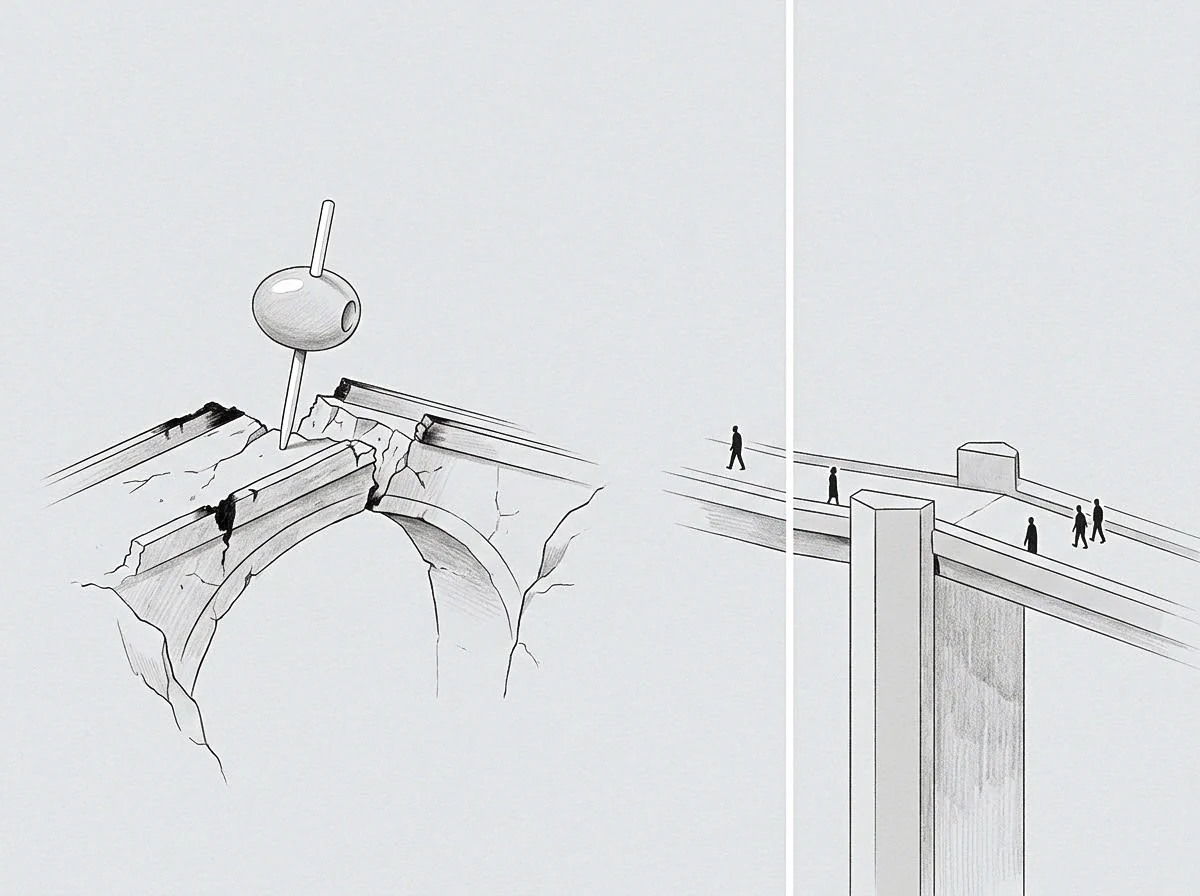
Informal authority structures re-solidify during protracted exit sequences. Employees recognise that the original owner possesses ultimate veto power over expenditure, hiring, and strategic pivots. This recognition creates parallel administration channels inside the firm.
Middle operators seek informal verbal confirmation from the originating owner before executing decisions formally approved by the incoming executive. Operational velocity drops during handovers.
Operational authority remaining with an outgoing owner creates parallel administration channels that delay true successor autonomy.
The persistence of these secondary approval channels weakens the position of incoming managers. Department heads learn that formal policy can be overridden through direct appeals to the originating owner during casual interactions. Over time, operational routines become split between official written protocols and actual uncodified practices.
The historical owner continues to settle emergency supplier disputes because vendors refuse to accept purchasing commitments signed by anyone else.

Knot
Operational entanglements in private enterprises rarely stem from explicit job descriptions. They originate in unwritten habits developed across decades of closely held ownership. Consider a regional engineering business undergoing a twenty-four-month succession sequence, where forty percent of project risk evaluations rely entirely on unwritten safety thresholds stored in the founder’s personal memory.
Standard operating procedure manuals exist on paper, yet technical personnel consult the originating principal directly whenever non-standard technical specifications arise. Unwritten rules govern credit.
To analyze how these implicit workflows compromise operational stability, latent dependencies are categorized by their underlying mechanisms and diagnostic patterns. The structure of these dependencies dictates the specific intervention needed during a transition sequence.

Taxonomy of Undocumented Operational Levers
Diagnostic evaluation of closely held businesses reveals distinct operational areas where informal owner authority overrides systemized procedures. These areas require separate identification before effective transfer can occur.
| Dependency Class | Operational Mechanism | Diagnostic Indicator | Transfer Protocol |
|---|---|---|---|
| Commercial Credit Overrides | Personal guarantees issued verbally to key material suppliers. | Invoices exceeding contracted credit caps without written authorization. | Formal legal novation of credit agreements to corporate accounts. |
| Custom Software Bypasses | Manual database modifications performed exclusively by the owner. | System errors resolved without logged technical tickets. | Full system audit and script codification into standard workflows. |
| Informal Client Risk Triage | Unwritten pricing discounts granted to long-standing partners. | Margin variance across client accounts lacking policy justification. | Standardized fee schedules approved by the incoming board. |
| Sole-Signatory Escalations | Unpublished sign-off authority for critical operational emergencies. | Unresolved operational halts during owner absences. | Mandated authority escalation matrix assigned to executive roles. |
Informal authority overrides policy. Custom patches obscure failures. Vendors demand historical contacts.
When an outgoing lead retains unmonitored administrative rights, incoming executives operate with incomplete control over core functions. The presence of these latent dependencies forces the firm into recurring operational halts whenever the historical lead leaves the office.
Operational shortcuts remain invisible until transaction volume exceeds the manual processing threshold of the incoming management team.

Structural Entanglement in Private Governance
Organizational performance during an extended transition depends heavily on resolving these undocumented operational levers. When an outgoing owner intervention occurs outside formal board governance, middle operators experience conflicting directions. The incoming manager issues directives based on standard documentation, while the prior owner countermands those directives through informal verbal instructions.
Allowing unwritten approval rights to persist past the initial transition phase inflates administrative costs by forcing duplicate reviews on every standard contract.

Clock
Authority transfer timelines demand a systematic reduction of founder intervention rights. Handovers fail when support systems are withdrawn abruptly or maintained indefinitely. A structured sequence enforces gradual scaffold removal, transferring operational responsibility across defined phases while preserving institutional stability.
Explicit limits define boundaries.
Removing operational scaffolding before establishing explicit approval boundaries forces personnel to recreate informal escalation channels.

Sequential Scaffold Deconstruction
Transition sequences demand deliberate stages that progressively restrict the founder’s direct operational involvement while establishing the successor’s independent authority.
- Systematic Shadow Audit Conducting a comprehensive ninety-day mapping of all informal sign-offs executed outside enterprise software systems to identify unwritten approval habits.
- Delegation Threshold Indexing Codifying spending limits and operational sign-offs into written corporate resolutions to eliminate informal owner veto privileges.
- Parallel Decision Execution Requiring the successor to lead daily operations while the outgoing lead observes without intervening in real-time management actions.
- Complete Scaffold Removal Revoking administrative system access and formal sign-off authorities on a fixed date to compel internal teams to address operational issues to new management.
Adherence to this sequence prevents the re-emergence of shadow administrative channels. Each stage establishes operational milestones that operating teams fulfill before advancing to the next phase. Written protocols replace personal memory.
A mandatory sole-signatory transition clause in the corporate governance agreement legally redirects all commercial counterparty queries to the new operating lead on the specified effective date.

Draft
Implicit founder knowledge becomes explicit organizational standards through systematic documentation of tacit routines. Founding executives often execute complex decisions based on intuitive pattern recognition developed over decades. Capturing these operational rules involves observing actual decision-making events rather than interviewing the founder after the fact.
Documented workflows preserve stability.
Formalizing internal processes reduces reliance on personal intervention. When operational standards are captured in written form, incoming managers can replicate complex workflows without seeking owner input. Parallel governance creates friction.

When Do Hidden Bottlenecks Require Structural Severance?
If an outgoing founder continuously overrides established operating standards, active intervention becomes necessary to protect administrative integrity. The transition process separates operational documentation into actionable stages.
- Observe real-time operational exceptions during standard business cycles to record unwritten recovery steps.
- Draft explicit operational standard manuals containing precise decision trees for emergency overrides.
- Test codified manuals during mandatory owner absence periods to verify operational completeness.
Retaining informal override privileges during standard process documentation ensures that procedural manuals remain inaccurate.
Process documentation alone cannot guarantee successful knowledge transfer if the outgoing owner retains unwritten approval rights. Structural barriers are necessary to prevent historical intervention habits from undermining documented standards. Transition timelines impose structural clarity.
Documentation built while the prior lead holds real-time intervention rights reflects ideal workflows rather than actual operational recovery paths.
Vault
Finalizing a leadership succession sequence in a closely held enterprise requires isolating equity ownership from operational management authority. Outgoing founders frequently confuse major shareholding rights with day-to-day administrative control. While equity ownership entitles the owner to board representation and dividend distributions, operational authority resides exclusively with the designated operating lead.
Governance clauses bind equity holders. Veto rights restrict operational leads.
Establishing clear legal boundaries prevents residual equity power from disrupting executive operations. Operating agreements define explicit limits regarding shareholding intervention in routine business execution. Formal voting rights determine control.

Separation of Equity Ownership from Operational Control
Corporate governance structures in closely held businesses delineate the precise boundary between owner oversight and executive execution. Board resolutions specify that individual shareholders, regardless of equity percentage, possess no direct management authority over staff, purchasing, or commercial contracting.
When equity rights remain conflated with operational management, the firm risks permanent governance gridlock. Successors spend critical capacity managing shareholder interference rather than leading operational execution. Securing operational independence for incoming management ensures long-term operational viability after the founder’s complete departure.
Whether closely held firms can maintain institutional stability when an outgoing founder retains major equity ownership while completely surrendering operational veto power remains dependent on individual board governance design.