
Resolving Residual Owner Veto Authority During External Operator Transitions In Growth Companies
Resolving residual owner veto authority requires establishing explicit operational delegation schedules, legal sunset provisions, and structured board governance to transition growth enterprises from founder control to executive autonomy.

Gate
Legal ownership rights in growth enterprises operate on equity thresholds, whereas residual veto authority functions as an operational intercept mechanism. Founders who transfer the chief executive seat to an external operator often retain legal negative controls through voting shares, board seats, or reserved matters clauses. Equity control creates structural leverage.
The operational seat requires autonomy. Conflict occurs when mechanisms intended to protect capital investments become instruments for directing weekly managerial choices.

Distinguishing Equity Ownership From Operational Authority
Ownership confers ultimate economic claims and structural rights over major corporate alterations. Operational authority governs resource deployment, organizational design, and execution timelines. In founder-led growth companies entering executive transition, these domains overlap when shareholder agreements grant individual owners explicit veto powers over operational contracts, hiring commitments, or expenditure ceilings.
When an external operator takes accountability for operating performance, retained owner vetoes split the reporting structure of the enterprise.
Research in corporate governance indicates that retained negative controls held by equity founders alter executive behavior. External operators facing unpredictable owner vetoes reduce long-term capital investments and delay strategic initiatives. Strategic tempo drops as managers seek informal pre-approval for baseline operational choices.
The formal equity board structure becomes secondary to informal negotiation between the operator and the controlling shareholder.
Supermajority approval clauses executed without quantitative financial caps revert operational governance to founding equity holders.

The Anatomy of Reserved Matter Overreach
Reserved matters lists in corporate charter documents routinely mandate owner approval for equity issuance, debt facilities, and corporate restructurings. Overreach develops when these lists expand into operational domains. Common operational additions include approval thresholds for key executive compensation, vendor contracts exceeding minor financial metrics, and product strategic pivots.
The operational seat retains accountability for commercial outcomes while losing control over the inputs required to produce those outcomes.
The structural friction manifests when market conditions demand rapid reallocation of working capital. An operator evaluating a supplier contract modification encounters a charter requirement demanding shareholder sign-off. The delay introduced by shareholder review compromises commercial negotiations and signals to counter-parties that the executive seat lacks final contracting power.
The resulting dynamic destabilizes executive retention and confuses internal organization heads regarding decision finality.
A threshold governance clause capping owner approval to commitments exceeding twenty percent of total annual revenue transfers day-to-day strategic discretion to the appointed executive.

Desk
The daily execution environment reveals how informal channels undermine formal executive appointment. An external chief executive who assumes control finds that corporate communication lines often bypass the executive office. Long-standing personnel continue consulting the founding owner on operational decisions, operational adjustments, and internal disputes.
Informal channels bypass official authority.

Shadow Governance and Informal Escalation Channels
Shadow governance operates through unstructured owner intervention. Employees accustomed to founder leadership escalate operational disputes directly to the equity owner, bypassing appointed vice presidents and the chief executive. The owner who responds to these escalations validates the secondary management path.
Ambiguity paralyzes executive action. The external operator attempts to enforce accountability structures while subordinates maintain back-channel remedies with controlling shareholders.
This dynamic creates dual operating instructions within the growth enterprise. Executives issue directional mandates aligned with board-approved targets. Founding owners simultaneously issue informal directives during individual conversations with key technical or sales personnel.
The organization experiences structural friction as teams attempt to comply with contradictory guidance.

Structural Friction in Capital Allocation Decisions
Capital allocation demonstrates where operational friction turns into organizational gridlock. An external operator proposes reallocating capital from legacy product lines into higher-margin growth verticals. The founding owner, retaining informal veto rights or board negative control, rejects the allocation based on historical affinity or subjective risk tolerance.
Capital allocation reflects ownership intent. When ownership intent conflicts with market analysis, the executive seat loses its primary governance function.
| Governance Dimension | Informal Veto Regime | Formalized Covenanted Regime |
|---|---|---|
| Capital Expenditure Authority | Unbounded owner consent required for arbitrary thresholds | Pre-approved annual operational budgets with executive variance bands |
| Executive Staffing Control | Direct owner intervention in senior hiring and compensation | Chief executive hiring mandate subject to annual board review |
| Vendor Contracting | Individual contract review by controlling equity holders | Delegated signing limits linked to balance sheet scale |
| Strategic Direction | Ad-hoc founder intervention based on operational preference | Formal board strategy sign-off with quarterly milestone reviews |
The transition from owner control to executive control requires explicitly severing informal escalation loops. Managers attempting to route decisions through founding equity holders must meet consistent structural redirection back to the executive chain of command. Without this behavioral discipline, formal corporate documentation fails to establish true operational autonomy.
Unilateral owner interventions in executive hiring create parallel authority paths that invalidate official managerial structures.
Failing to define explicit operational boundary limits produces executive resignation within twelve months of transition.

Paper
Formal instruments determine whether an external executive transition survives its first operational crisis. Articles of incorporation, investor rights agreements, and voting trusts establish the legal boundaries between shareholder protections and operational discretion. Written covenants replace informal trust.
Converting vague owner expectations into explicit legal provisions stabilizes the management environment during periods of market stress.

Sunset Clauses and Threshold Recalibration
Sunset clauses provide a structural timeline for dissolving founder negative controls. Growth enterprises often institute governance provisions that automatically expire owner veto rights upon achieving specified operating metrics. Metrics include net revenue targets, trailing EBITDA figures, total capital raised, or time elapsed since executive appointment.
As the enterprise scales, the owner veto rights contract automatically, expanding the external executive scope of authority without requiring renegotiation during operational friction.
Threshold recalibration adjusts reserved matters lists dynamically based on company size. A ten-thousand-dollar spending approval threshold appropriate for an early-stage startup severely restricts a growth enterprise generating tens of millions in annual revenue. Legal instruments must embed dynamic financial ratios tied to revenues or operating assets, maintaining owner protections for genuinely enterprise-threatening decisions while shielding routine operations from shareholder intervention.
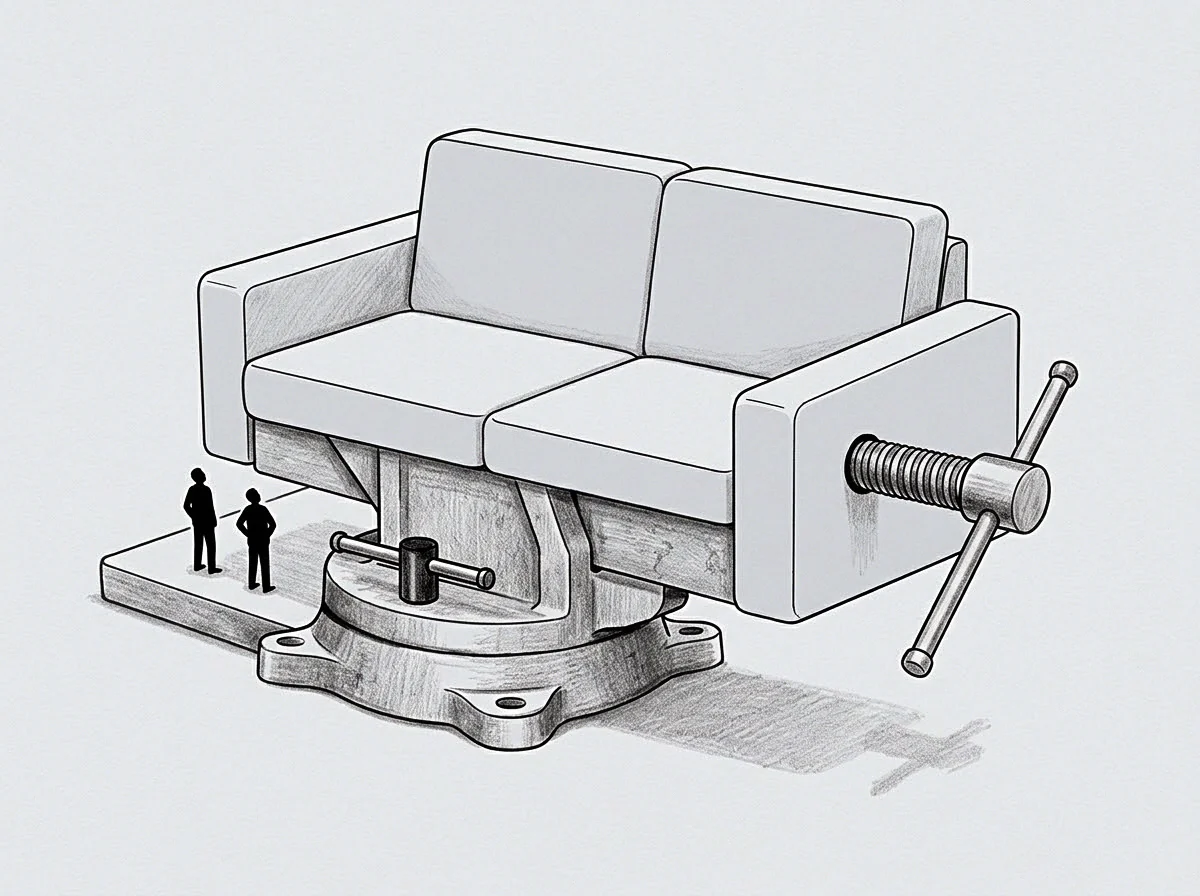
Threshold Delegation Schedules for Operational Expenditures
Legal agreements define the transition envelope through structured operational delegation schedules. Failure modes emerge when governance documents lack precise operational boundaries.
- Amorphous Approval Thresholds create continuous disputes over whether routine operational investments constitute major asset deployments requiring shareholder consent.
- Unbounded Board Reserved Powers allow equity owners to freeze executive appointments, corporate strategy, or software asset purchases arbitrarily.
- Asymmetric Information Access Covenants grant individual equity owners real-time access to operational management systems, enabling continuous micro-intervention.
- Indefinite Founder Negative Controls preserve early-stage owner vetoes indefinitely regardless of institutional investment, executive performance, or enterprise scale.
Structured legal documentation replaces personal relationships with institutional mechanisms. When shareholders agree to contractual delegation schedules, the scope of executive authority becomes explicit, measurable, and legally enforceable. Board seats govern structural decisions.
Operational management governs daily execution.
Clear boundary covenants protect equity valuation better than unwritten personal assurances between shareholders.

Engine
Tacit knowledge transfer represents the most fragile phase of operator transition. A founding owner carries years of unwritten operational heuristics, customer context, and risk assessment filters. When the owner steps out of the operational seat while retaining veto rights, the owner often exercises vetoes because the external operator lacks access to these uncodified decision models.

How Does Tacit Authority Transfer Without Conflict?
Transferring decision-making capability requires converting implicit founder criteria into explicit strategic frameworks. Founding owners frequently evaluate operational choices using internal mental models developed over years of enterprise building. When an external chief executive makes a decision that violates an unstated founder filter, the owner reacts by deploying legal or informal veto power.
The operator perceives this intervention as micro-management, while the owner perceives it as necessary risk management.
Resolving this friction requires formalizing the strategic criteria used by the founder. Documenting market risk parameters, brand boundary conditions, and key customer parameters translates tacit founder intuition into codified corporate policy. Once documented, the external operator executes within those boundaries, removing the justification for surprise owner intervention.

Codifying Intuitive Strategic Filters
Codification begins by dissecting historical founder choices. Examining past investments, product cancellations, and key hires reveals the operational principles that governed early corporate growth. Veto rights enforce historical preferences.
Explicit frameworks transform those preferences into actionable operational parameters for the incoming team.
The codification process exposes assumptions that no longer serve the growth enterprise. As market conditions evolve, early founder heuristics may limit expansion. Formalizing these filters allows the board and executive team to evaluate their continued validity objectively, replacing personal owner biases with data-driven operational criteria.
Operational continuity requires transferring the criteria for strategic decisions rather than requiring prior approval for individual actions.
Regular strategic alignment meetings replace daily operational oversight. By establishing structured cadence reviews, the enterprise shifts owner involvement from real-time operational intervention to periodic performance evaluation against agreed metrics.
The board approved a strategic directive, yet every operational hire remains subject to an informal secondary review.

Cost
Unresolved residual veto authority inflicts measurable financial and organizational damage on growth companies. Executive authority decays under interference. The accumulation of governance friction degrades operational execution, damages market reputation, and ultimately erodes equity valuation.
Shareholder friction reduces market valuation. Establishing clear structural resolution mechanisms protects capital value and enterprise continuity.

Quantifying Governance Gridlock in Growth Enterprises
The financial consequences of governance gridlock manifest across several core operational dimensions. Delayed product launches resulting from owner approval bottlenecks directly impair market share acquisition. Executive turnover costs spike as qualified external leaders exit environments characterized by split authority structures.
Capital efficiency declines when strategic adjustments are stalled by equity owner hesitation.
Institutional investors discount enterprise valuation when governance audits reveal active shadow management or broad owner negative controls. Equity markets demand a governance premium for clean management structures. Companies plagued by unresolved founder vetoes struggle to execute secondary financing rounds or strategic sale transactions due to counter-party concerns over shareholder approval risk.

Staged Decoupling of Founder Control
Resolving residual veto authority demands a systematic, phased transition architecture. The decoupling sequence must move through distinct legal and operational stages.
- Audit all existing charter documents, shareholder agreements, and informal practices to identify explicit and implicit owner veto points.
- Establish dynamic financial delegation thresholds that automatically scale spending authority alongside enterprise revenue growth.
- Implement formal sunset provisions that terminate specific owner negative controls upon achieving operational and financial milestones.
- Recalibrate board composition to transition from founder-dominated committees to independent governance structures aligned with executive oversight.
Governance clarity restores operational tempo. By executing a structured decoupling roadmap, growth companies convert founder intuition into institutional capacity. The enterprise secures the operational agility necessary to navigate expanding markets while preserving shareholder value across executive generations.
Executive autonomy decays rapidly when shareholder veto power extends into mid-level vendor contracting.
The remaining structural uncertainty centers on whether growth enterprises can survive the initial governance transition when founding equity holders retain thirty-four percent voting blocks indefinitely.