
Resolving Structural Governance Frictions When Legacy Leaders Retain Advisory Veto Capacity In Succession
Informal advisory vetoes in succession are resolved by converting discretionary founder consultation into time-bound, contractually bounded advisory terms.

Board
A chief executive officer presents a three-year growth strategy to equity partners during a scheduled quarterly conference. The predecessor, seated at the table under a non-executive advisory title, raises informal objections regarding market expansion timing. Voting stalls immediately.
Equity partners defer the decision to allow informal reconciliation between the operating leader and the founder. This pause breaks the formal command structure of the organization. Executive officers notice the hesitation and begin clearing operational initiatives with the advisory founder prior to committee reviews.
Dual reporting lines emerge whenever informal advisory roles carry implicit blocking power. The incoming chief executive holds operational liability while the legacy leader retains political influence over voting blocks. Operating teams split their administrative focus between meeting strategic benchmarks and managing legacy preferences.
Capital deployment slows as project leads wait for dual clearance on ordinary operating expenditures. Informal vetoes circumvent established governance mechanics, leaving executive appointees exposed to accountability without functional autonomy.
Informal veto channels disrupt corporate hierarchy by creating dual reporting structures.
The grip stage of succession deepens when advisory capacity remains undefined in charter documents. Legacy leaders often interpret advisory rights as continuous oversight over operational direction. Successors operate under constant administrative friction, unable to execute strategy without implicit founder sanction.
The room forgets that advisory titles hold no statutory management power. Structural governance requires explicit boundaries between non-binding opinion and executive authorization.
Whether monetary incentives alone can fully detach an originator from operational governance remains an open question across family-owned and sponsor-backed enterprises.
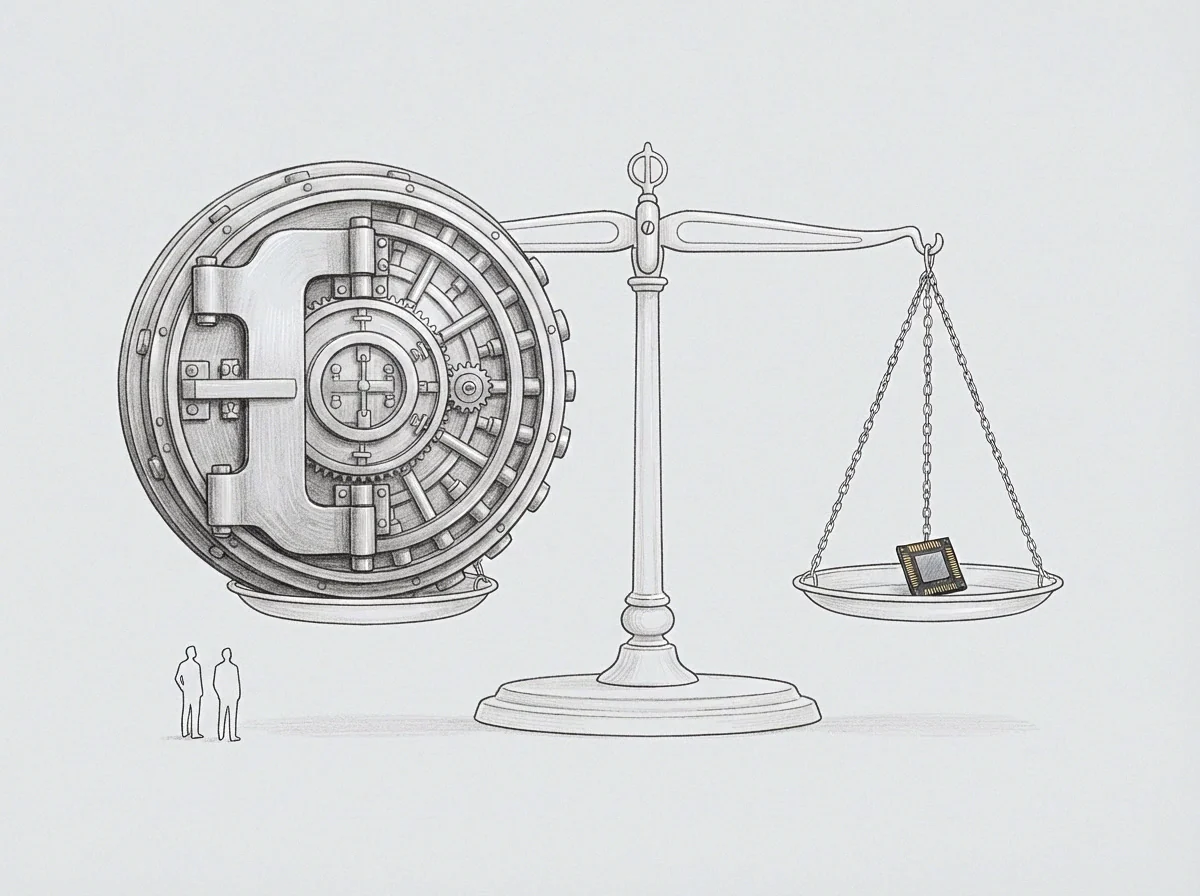
Asymmetry
Information flow splits unevenly between formal executive chairs and informal advisory positions during corporate transitions. Legacy leaders leverage historical relationships with middle management to gather internal operational intelligence outside formal reporting channels. This private intelligence network permits advisory leaders to challenge executive proposals during board reviews using unvetted data.
The operating chief executive spends critical capacity defending operational metrics against informal commentary rather than executing approved strategy.
Advisory roles lack statutory authority. The formal seat holds liability. Operational accountability rests entirely with appointed executives, yet advisory interventions alter execution timelines without formal board minutes recording the shift.
When financial targets miss projections, legal responsibility falls on the operating team. The legacy founder remains insulated from statutory accountability while directing tactical choices through private governance channels.
| Operating Dimension | Formal Governance Rights | Advisory Veto Channel | Structural Outcome |
|---|---|---|---|
| Capital Expenditure | Board approval via metric thresholds | Informal founder review delays fund release | Budget freeze and delayed project launch |
| Executive Hiring | Chief executive final selection power | Legacy leader blocks officer alignment | Role vacancy and executive search attrition |
| Strategic Realignment | Shareholder vote and director resolution | Advisory dissent triggers shareholder pause | Strategic paralysis and lost market timing |
| Vendor Contracting | Operational officer sign-off authority | Predecessor overrides vendor selection | Contractual ambiguity and operational cost |
Separating decision rights from ultimate capital liability shifts operational risk onto executives who lack approval power.
Uncodified influence destabilizes executive succession across growth equity firms. Successors who fail to establish structural boundaries find their strategic authority steadily eroded by legacy interventions. Tactical adjustments become political negotiations rather than analytical operational decisions.
Enterprise velocity declines as managerial teams wait to assess founder reactions before acting. Structural governance frictions persist until legal agreements separate advisory rights from operational oversight.
Authority settles where legal accountability rests once informal backchannels close.

Authority
Converting informal founder veto capacity into bounded, formal consultation protocols restores operational execution speed. Board directors must define explicit negative covenants that restrict advisory involvement to specific strategic events. Defining consultation parameters in written charters prevents legacy leaders from asserting operational control over routine administrative choices.
Successors operate with authority only when advisory boundaries are clearly stated and enforced by equity partners.

Which operational boundaries isolate advisory intervention?
Structural friction manifests across distinct operational dimensions during executive succession processes. Unclear governance arrangements create recurring administrative failures that impair execution. Identifying these failure modes permits legal counsel to draft precise organizational boundary clauses.
- Dual Executive Signaling Executive teams receive conflicting operational priorities from governance meetings and private founder reviews.
- Capital Freeze Dynamics Investments stall because advisory members withhold approval without presenting formal written dissents.
- Deferred Accountability Drift Successors delay strategic corrections by attributing operational shortfalls to advisory interference.
- Informal Bypass Routing Subordinate managers direct operational disputes to legacy leaders to override executive decisions.
Governance contracts clarify operational limits. Unclear boundaries destroy operational tempo. Capital stays stagnant during disputes.
Executives demand single reporting lines. Clean transitions demand written boundaries.
Tacit knowledge extraction requires structured interaction without granting operational intervention rights to advisory figures. Legacy founders possess contextual market history that benefits strategic planning sessions. Retaining this knowledge base without compromising executive autonomy demands explicit meeting schedules and pre-agreed agendas.
Non-binding advisory opinions must enter governance proceedings strictly through written memoranda submitted prior to formal board meetings.
Explicit governance contracts eliminate uncodified founder intervention by defining specific negative covenants.
Formal charter amendments establish clear lines of executive control. Board observers holding advisory status lose access to direct management channels under properly structured corporate charters. Operating decisions remain strictly within the purview of appointed executive officers.
Equity holders protect enterprise valuation by ensuring the successor retains sole operational execution rights.
Ambiguous advisory parameters force the enterprise into institutional paralysis while operational personnel hedge against conflicting administrative commands.

Scaffolding
Transition sequences require graduated scaffold removal to insulate executive decision-making from legacy founder influence over time. Initial succession stages often include temporary founder consultation rights to reassure institutional investors and major client accounts. Leaving these advisory structures in place permanently guarantees governance friction.
Phase-out schedules convert open-ended advisory access into finite, project-specific consulting assignments with explicit expiration dates.
Graduated scaffold removal follows a strict chronological order designed to transfer full governance authority to the new executive leadership team.
- Establish written criteria defining mandatory advisory consultation subjects.
- Transition legacy leader participation from operational updates to annual strategic reviews.
- Remove advisory voting rights on capital expenditures exceeding pre-set thresholds.
- Convert advisory retainers into time-bound project consulting agreements.
Tacit knowledge stays with the founder unless codified during early transition phases. Operating procedures, customer relationship contexts, and historical vendor agreements must move into shared institutional repositories. Leaving critical operating knowledge uncodified grants legacy leaders perpetual informal leverage over succession candidates.
Knowledge codification enables successors to make informed decisions independent of legacy input.
Scaffold removal succeeds only when operational access decreases alongside consulting obligations.
Shadow governance creates institutional paralysis. Informal vetoes circumvent formal oversight. Executives require uninterrupted strategic authority to execute business turnarounds or expansion initiatives.
When advisory leaders retain permanent observer seats, organizational clarity declines. Timed phase-outs protect succession capital by establishing a clear terminal date for founder involvement.
The advisory predecessor maintains that unbudgeted interventions prevent inexperienced executive teams from misallocating enterprise reserves.

Gate
Legal firewalls provide absolute operational separation between advisory roles and executive authority. Shareholder voting agreements must explicitly state that advisory board members possess zero voting rights regarding operational budgets, executive compensation, or corporate restructuring. Legal agreements missing these explicit exclusions allow legacy leaders to assert implied veto capacity through informal voting blocs.
Advisory opinion remains purely non-binding. Structural clarity restores operational speed. Sunset clauses bind consultation rights.
Equity buyouts eliminate residual veto capacity permanently. Clean severance terms secure governance stability.
A legally binding sunset clause on advisory consultation rights transfers absolute operational control to the successor on the designated calendar date.