
Allocating Financial Restatement Oversight Between Audit And Executive Compensation Committees
Financial restatement oversight divides accounting error quantification under the audit committee from incentive overpayment recapture under the compensation committee.

Table
Financial restatement oversight divides cleanly into two distinct legal and operational operations. The first operation determines whether reported financial statements contain material misstatements under accounting rules, quantifies the restatement metrics, and files the necessary corrected accounting reports with regulators. The second operation evaluates how those corrected financial metrics alter executive performance targets, recalculates previously awarded incentive compensation, and executes recovery procedures for unearned payments.
Corporate board architecture assigns these operations to two separate bodies. The audit committee holds exclusive authority over financial reporting integrity, internal controls over financial reporting, and engagement with external independent auditors. The executive compensation committee holds authority over executive officer incentive plans, performance metric selection, award determinations, and clawback enforcement.
Conflating accounting error quantification with incentive clawback execution introduces jurisdictional gaps that undermine board governance during financial restatements.
A joint governance charter specifying an automatic notification clause shifts clawback evaluation from discretionary board inquiry to an immediate mandate upon any accounting revision filing.
Consider a typical corporate structure evaluating a fourteen million dollar revenue recognition overstatement across three past fiscal quarters. The audit committee leads the investigation, engages forensic accounting advisors, determines whether the reporting error constitutes a material misstatement requiring a formal Big R Restatement or a non-material Little r Revision, and approves the restated SEC filings. The audit committee does not calculate executive bonus recoveries or interpret compensation clawback terms.
Once the audit committee certifies the revised net income figures, the compensation committee takes ownership of the financial figures to calculate the precise dollar amount of unearned cash bonuses and unvested Performance Share Units subject to recovery. The separation preserves auditor independence while protecting incentive plan enforcement from accounting disputes.

Accounting Determination Scope
The audit committee operates as the primary accounting authority of the board. Governance guidelines assign the committee direct oversight of independent auditor reports, internal audit functions, and financial disclosure accuracy. When internal control deficiencies or accounting errors emerge, the audit committee determines the temporal scope of the error, evaluates accounting materiality under regulatory guidance, and directs management to issue corrected financial statements.
The committee maintains final decision-making authority over GAAP compliance and audit opinions.

Compensation Enforcement Scope
The compensation committee governs executive remuneration agreements, equity grant documentation, and clawback policies. Statutory standards under SEC Rule 10D-1 require listed companies to adopt policies recovering erroneously awarded incentive compensation from current and former executive officers. The compensation committee applies the corrected accounting figures supplied by the audit committee against historical grant math to measure overpayments.
The committee manages communication with executive officers, coordinates clawback enforcement actions, and reports recovery progress in proxy statement compensation disclosures.

Partition
Corporate governance guidelines and committee charters define the jurisdictional boundaries of board oversight. The partition between audit and compensation functions relies on clear documentary handoffs. Audit committees conclude their work by issuing certified restatement numbers.
Compensation committees begin their work only when those certified numbers arrive.
| Restatement Phase | Audit Committee Authority | Compensation Committee Authority | Primary Governance Document |
|---|---|---|---|
| Error Identification | Directs internal review and engages independent accounting experts. | Monitors potential impact on active executive performance metrics. | Audit Committee Charter |
| Materiality Determination | Classifies accounting adjustment as Big R restatement or Little r revision. | Pauses pending equity vestings tied to contested financial metrics. | SEC Form 8-K Item 4.02 Guidelines |
| Financial Certification | Approves restated financial statements and auditor restatement opinion. | Receives restated financial data from audit committee chair. | Restated Form 10-K / 10-Q |
| Overpayment Calculation | Provides baseline GAAP metric adjustments to compensation advisors. | Recalculates earned performance shares and cash bonus allocations. | Incentive Compensation Recovery Policy |
| Clawback Execution | Confirms financial disclosures reflect recovered incentive figures. | Issues demand letters and executes equity grant forfeitures. | Executive Employment Agreements |
Federal regulations eliminate compensation committee discretion regarding executive misconduct. Under SEC Rule 10D-1 and listing exchange standards, restatement clawbacks operate on a no-fault basis. Recovery applies automatically whenever an accounting restatement occurs, regardless of whether executive officers caused or contributed to the error.
The audit committee establishes the accounting fact of the restatement, while the compensation committee executes mandatory recovery across a three-year lookback period.
Discretion remains limited to specific narrow impracticability exceptions defined by regulatory rules. Compensation committees may forgo clawbacks only if direct enforcement costs exceed the recoverable sum or if recovery violates home country law based on independent legal opinion. The audit committee holds no vote over these impracticability determinations, preserving the division of operational roles.

Recapture
Accounting adjustments directly alter the quantitative inputs that determine executive incentive payouts. When an accounting restatement reduces historical net income, earnings per share, or operating cash flow, incentive payouts calculated from those inflated metrics become unearned compensation. Recapture represents the mathematical process of stripping unearned value from executive accounts.
No-fault recovery policies enforce the return of unearned incentive pay regardless of officer culpability or responsibility for financial reporting errors.
The mechanics of clawback calculations depend on the nature of the compensation metric. Quantitative financial metrics like operating income or revenue permit straightforward mathematical recalculation. Stock price metrics and Total Shareholder Return targets require sophisticated economic estimation to determine how historical accounting errors influenced equity valuations during performance periods.
- Annual Cash Incentives require recalculation of annual bonus pools by substituting restated performance metrics into original board-approved bonus formulas to yield exact cash overpayment values.
- Performance Share Units tied to cumulative earnings per share require adjusting performance achievement percentages, reducing vested share counts, and recovering settled share proceeds.
- Stock Option Grants with performance-based vesting criteria require cancelling unvested options or recovering net cash profits realized from exercised options granted during restated fiscal years.
- Restricted Stock Units With Financial Targets require cancelling unearned equity units that vested based on misstated operational targets.
Assume an executive officer received a two million dollar cash performance bonus based on reported revenue of one hundred million dollars. An audit committee investigation later restates historical revenue down to eighty-five million dollars, dropping performance achievement below target thresholds. The compensation committee applies the restated calculation to show the officer earned five hundred thousand dollars.
The unearned balance of one million five hundred thousand dollars becomes a direct debt owed by the executive back to the corporation.
Executive clawback calculations resting on restated GAAP metrics proceed on quantitative recalculation, whereas market-based metrics require independent economic modeling before board enforcement.

Friction
Operational alignment between board committees frequently degrades during active financial reviews. Audit committee investigations proceed under rigorous forensic protocols, frequently requiring months to establish final restatement numbers. Meanwhile, executive equity vesting dates, option exercise windows, and bonus payout cycles continue on fixed corporate calendars.

Where Does Audit Oversight Hand Off to Compensation?
The critical handoff occurs the moment the audit committee formally concludes that previously issued financial statements can no longer be relied upon. This determination triggers SEC Form 8-K Item 4.02 reporting duties. The audit committee chair must immediately notify the compensation committee chair upon reaching this conclusion.
Notification requires the compensation committee to suspend all incentive compensation distributions tied to pending financial statements until the audit committee approves restated filings.
Timing asymmetry creates friction. Audit committees prioritize thorough forensic evaluation over speed. Compensation committees face executive pressures regarding delayed equity vestings and statutory reporting requirements.
Premature compensation recalculations based on draft audit figures risk secondary adjustments if audit findings change. Delayed compensation actions expose the board to shareholder criticism over slow clawback enforcement.
Consider a scenario where an audit committee investigates inventory valuation errors across two historical reporting cycles. While forensic accountants review warehouse records, a scheduled performance equity vesting date arrives for executive officers. If the compensation committee releases the equity without waiting for audit resolution, the board risks distributing shares that must be immediately clawed back upon restatement publication.
If the compensation committee freezes equity vestings without formal audit findings, executive officers may assert breach of contract claims under employment agreements. Shared directors sitting on both committees serve as communication anchors to navigate these timing gaps.
Audit timelines for quantifying accounting errors rarely match the statutory disclosure windows for executive compensation adjustments.
Executive officers facing clawbacks routinely assert that unearned compensation calculations derived from preliminary audit adjustments remain premature until the auditor issues a final restated financial statement.
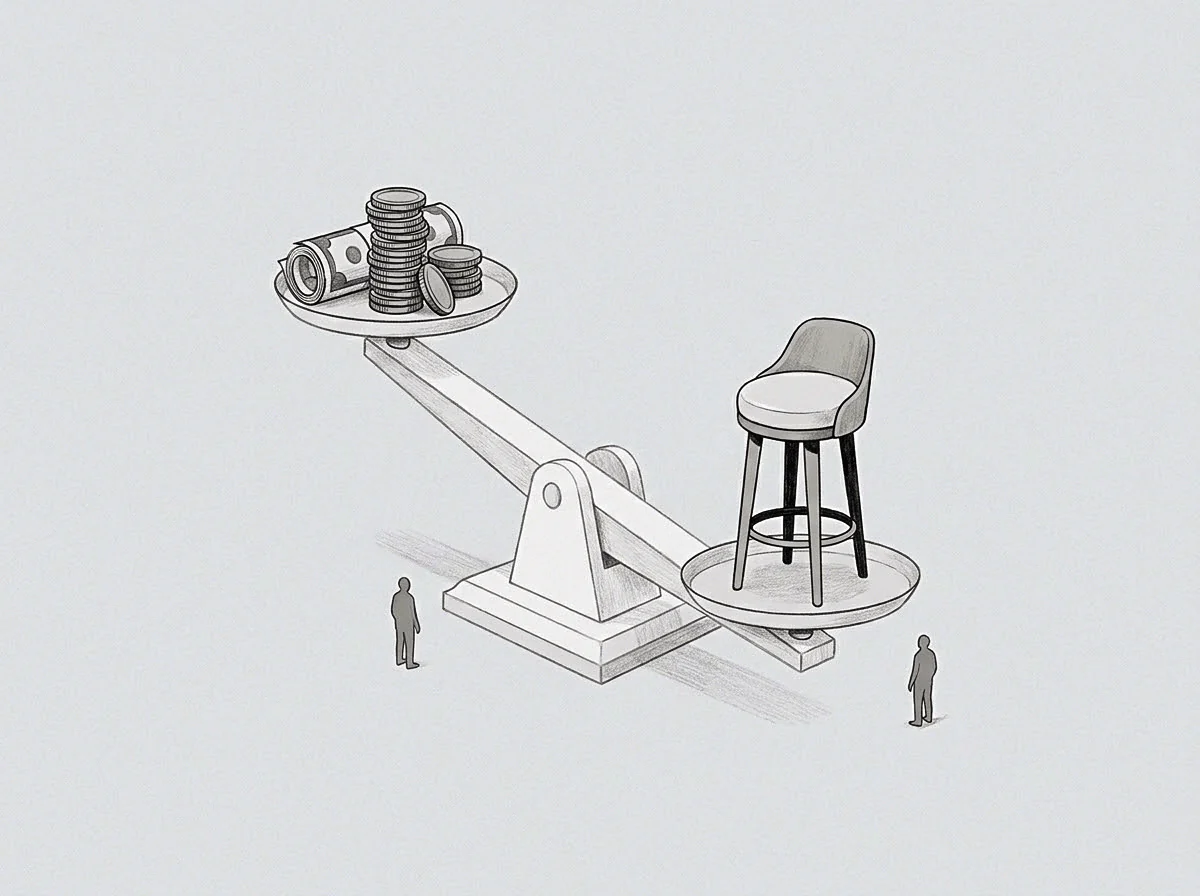
Frame
Board governance structures require explicit documentary alignment to integrate accounting findings with compensation decisions. Clear committee charters reduce operational confusion when financial restatements occur. Integrating audit and compensation oversight prevents governance lapses during high-stress reporting events.
Effective charter alignment includes formal cross-committee communication protocols. Charters specify mandatory joint meetings upon the initiation of material financial investigations. Joint governance terms mandate that the compensation committee retained independent legal and compensation consultants receive direct access to audit committee findings upon restatement certification.
- Audit committee formally approves restated financial metrics and files SEC Form 8-K.
- Audit committee chair transmits certified restatement schedules to compensation committee chair.
- Compensation committee convenes to calculate unearned cash and equity incentive amounts across lookback periods.
- Compensation committee delivers formal recovery demand notices to affected current and former executive officers.
- Executive officers settle clawback obligations through cash repayments or equity forfeitures.
- Compensation committee discloses recovery details in annual proxy statement filings.
The lookback period for recovery spans the three completed fiscal years immediately preceding the date the board concludes that a restatement is required. Establishing this trigger date accurately prevents legal disputes regarding which historical equity grants fall within clawback scope. The board preserves corporate rights by maintaining synchronized governance charters across both committees.