
Dual Holding Entity Architectures for Cross Border Founder Intellectual Property Protection
Dual holding architectures separate intellectual property ownership from operating liabilities by licensing code across borders through distinct entities.

Split
A company operating across borders exposes its software, patents, and proprietary workflows to legal claims originating in every market where it sells. When an operating entity signs vendor agreements, hires regional staff, and accepts client liability under local law, every trade secret and line of source code registered to that entity sits inside the enforcement radius of local courts. A single contract dispute, regulatory fine, or employment lawsuit in a secondary market can lead to asset freezing orders that impound core software repositories.
Dual entity architecture separates asset ownership from operational exposure. The primary holding company, located in an asset-friendly jurisdiction with established corporate case law, retains exclusive legal title to all patents, code, design marks, and trade secrets. A distinct operating company, formed in the target commercial market, licenses those assets to conduct day-to-day business.
The operating company owns client contracts and local bank accounts, while asset ownership remains isolated in the holding structure. Local claims touch local assets. The core repository stays clean.
Decoupling operational revenue from underlying intellectual property alters the structural dynamics during investor due diligence and acquisitions. Investors purchasing shares in the holding entity acquire clear title to the core technology without inheriting unresolved regional tax claims or employment liabilities generated by overseas sales units. Dividends follow equity ownership.
An operating entity that holds title to code forfeits asset protection the moment a local court issues a prejudgment attachment order.
Establishing this separation before commercial launch prevents tax authorities from treating intellectual property transfers as taxable dispositions. Transferring established software from an operating enterprise into a new offshore holding structure triggers capital gains tax based on fair market valuation at the date of transfer. Assigning code to the holding entity at creation avoids this tax friction, as the holding company funds early development directly.
Title remains with the holding entity.

Structural Division of Corporate Rights
The split between asset ownership and commercial operations requires assigning distinct corporate functions to separate entities. The holding company focuses on asset maintenance, trademark registration, and foreign patent filings. The operating company focuses on customer acquisition, regional regulatory compliance, and service delivery.
The table below outlines how responsibilities and risk exposures differ across a single entity structure compared to a dual holding entity architecture.
| Evaluation Dimension | Single Operating Entity Architecture | Dual Holding Entity Architecture |
|---|---|---|
| Legal Claim Exposure | Operating claims directly threaten ownership of underlying patent and code assets. | Litigation against operating entities stops at the intercompany license boundary. |
| Tax Treaty Flexibility | Royalty streams compound with local revenue, restricting treaty shopping options. | Holding jurisdiction leverages double-taxation treaties to optimize withholding rates. |
| Capital Allocation | Reinvesting cash co-mingles operating revenue with asset development funds. | Licensing fees segregate IP maintenance capital from regional operating cash. |
| Founder Exit Structuring | Asset acquisition requires selling the operating entity along with historical liabilities. | Acquirers purchase the clean holding entity while leaving regional operating liabilities behind. |
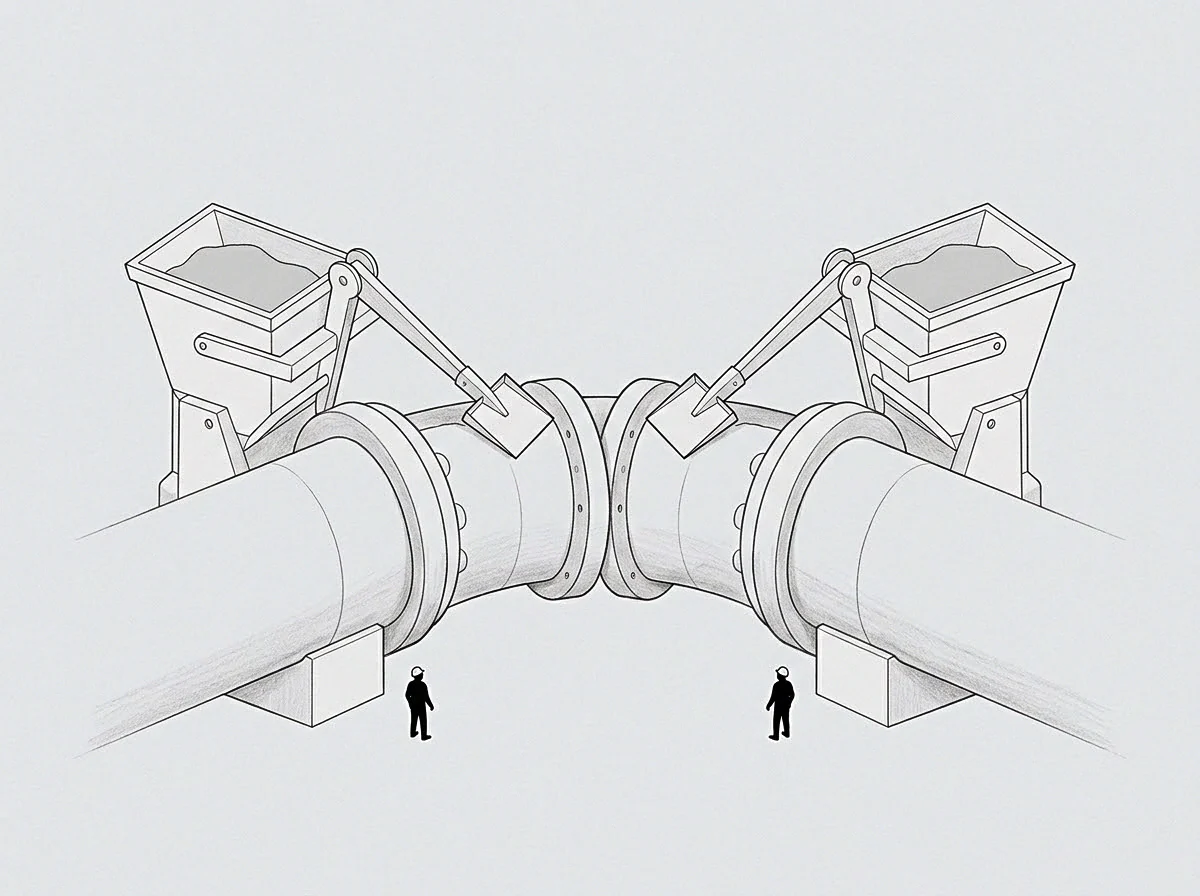
Con-founding intellectual property title with operating liabilities leaves the primary intangible asset exposed to every regional dispute that escalates to litigation.
Wall
Isolating proprietary assets behind a legal boundary demands rigorous corporate formality across both jurisdictions. Setting up a legal entity in Delaware, the Cayman Islands, Singapore, or the Netherlands provides zero protection if management treats the entity as a paper conduit. Tax tribunals and regional civil courts look past corporate registration when documentation fails to show real operational distinction.
Establishing economic substance requires local governance infrastructure. The holding entity maintains independent bank accounts, executes formal board resolutions for technical allocations, and pays external vendors directly for registration fees. Board minutes prove independent management.
Operating managers in the trading entity cannot sign asset transfer contracts on behalf of the holding entity without explicit power of attorney granted by holding company directors.
Substance decides tax treatment. When revenue authorities review cross-border structures, they look for local director activity, physical office space, and documented strategic oversight. A shell company lacking physical presence or decision-making autonomy runs the risk of classification as a pass-through entity, which invalidates tax treaty benefits and exposes royalty payments to full domestic withholding rates.
A license agreement between parent and subsidiary fails to protect assets when corporate records show identical directors signing without independent resolution.
The legal boundary relies on four primary operational requirements that protect asset assignments from administrative challenges:
- Core Assignment Instrument executes prior to any regional commercial software release, transferring equitable and legal title directly to the holding entity.
- Economic Substance Demonstration requires local board meetings, independent decision records, and active oversight of asset maintenance expenses.
- Arm’s-Length Master License defines explicit grant terms, royalty schedules, and termination events triggered by regional entity default.
- Perfection of Title Filings takes effect upon registration with patent and trademark registries across target legal jurisdictions.
Paper outlives verbal agreements. Every software commit contributed by founders, employee software engineers, or external contractors contains contractual assignment language referencing the holding entity as the sole recipient of intellectual creation. If an engineer working for the regional operating entity writes code without a foreign direct assignment clause, local labour laws often automatically vest original ownership in the regional entity.
Re-assigning that code overseas later creates an unnecessary tax event and a potential break in the chain of title.
Inserting an automatic reversion covenant into the intercompany license converts an operating entity insolvency into an immediate termination event that returns commercial rights to the holding structure.

Flow
Moving economic value between an operating enterprise and an asset owner triggers scrutinizing oversight from revenue authorities in both territories. When the operating company collects subscription fees from local customers, a portion of that revenue moves to the holding company as compensation for using the software, patents, or trade secrets. The pricing of this intercompany fee must follow international transfer pricing standards to prevent tax adjustments.
Transfer pricing policies rely on documented valuation studies. The holding entity grants a non-exclusive or exclusive license to the operating unit in exchange for a royalty fee calculated as a percentage of gross revenue or net operating margin. Revenue authorities require this percentage to reflect market rates negotiated between unrelated parties.
If the operating entity pays an inflated royalty rate to shift profits to a lower-tax holding jurisdiction, local auditors disallow the tax deduction and assess retroactive penalties.

How Does Intercompany Royalty Pricing Survive Tax Audits?
Surviving pricing audits requires establishing a comprehensive transfer pricing study before setting license terms. Independent economic benchmarks establish acceptable royalty bands based on comparable licensing deals in the same industry sector. The holding entity documents all development costs, technical risk assumptions, and maintenance expenditures to demonstrate that the economic return matches the entity’s functional profile.
Tax authorities challenge static valuations. Updating benchmarking calculations every two to three years maintains legal defensibility.
Operating cash flows stay offshore. Royalty payments flowing overseas face foreign withholding taxes unless reduced by double-taxation treaties between the operating and holding jurisdictions. Selecting a holding jurisdiction with an extensive treaty network minimizes cash leakage at the border.
The operating company deducts the royalty expense locally, reducing its taxable income, while the holding entity receives the licensing income under the favorable tax rules of its home country.
Setting royalty rates outside documented benchmark ranges invites tax authorities to recharacterize licensing transfers as disguised dividend distributions.
Cross-border cash transfers demand precise invoicing and accounting execution. Every quarterly royalty transfer requires a formal invoice issued by the holding company referencing the master license agreement. The operating entity remits withholding tax directly to its local revenue agency and sends tax receipt documentation to the holding company to claim foreign tax credits where applicable.
Revenue streams follow contract terms.
Regional tax examiners assert that effective management occurred within local borders whenever local executives make final product development decisions.

Control
Founder equity retention relies on aligning voting structures across both tiers of the dual architecture. Holding an operating title while ceding holding entity equity exposes founders to unexpected removal from governance seats. Early-stage founders often focus on product execution in the operating unit, forgetting that corporate authority flows down from the holding company board of directors.
Decoupling voting control from economic distribution protects founder decisions during venture capital rounds. Issuing dual-class share structures at the holding entity level allows founders to hold Class B common stock carrying ten votes per share, while investors receive Class A preferred stock carrying one vote per share alongside liquidation preferences. The holding seat retains vetoes.
The operating board remains accountable to the holding company board, ensuring that strategic decisions regarding code licensing, asset sales, and global expansion stay with the founders.
Managing voting leverage across dual entity tiers involves sequential governance controls:
- Drafting holding entity bylaws with super-voting equity classes secures strategic asset vetoes regardless of dilution at the operating tier.
- Assigning minority observer seats at the operating board keeps financial investors informed while restricting asset disposition decisions to the holding board.
- Executing defensive option agreements allows holding directors to issue replacement licenses if operating managers experience deadlock.
Control stays in the owner seat. When an operating entity accepts local venture funding, local investors often request board seats on the operating company board. Founders manage this risk by limiting the operating board’s statutory powers through amended articles of association.
Major corporate actions, including asset assignments, intellectual property encumbrance, intercompany license modifications, and structural mergers, require explicit approval from the holding entity board of directors.
Whether foreign regulatory authorities will respect super-voting rights held by overseas founders remains subject to local corporate law interpretations during systemic restructuring.

Lock
Securing intellectual assets against catastrophic litigation requires structuring enforcement terms before dispute arises. When a commercial operating unit faces financial stress, regional creditors seek access to every corporate asset within reach of the local court. A properly drafted intercompany structure ensures that the underlying software remains entirely outside the operating entity’s bankruptcy estate.
Insolvency terminates the sub-license. The master intercompany agreement specifies that the license granted to the operating company terminates automatically upon the filing of an insolvency petition, appointment of a receiver, or assignment for the benefit of creditors. Upon termination, all rights to use the software, trademarks, and customer databases revert immediately to the holding entity.
Local creditors can liquidate local office equipment, accounts receivable, and regional inventory, but they cannot force a sale of the core technology platform.
Reserving exclusive jurisdiction in a neutral international arbitration tribunal prevents regional bankruptcy courts from modifying intercompany asset licenses.
Arbitration clauses fix the venue. Choice-of-law provisions inside the intercompany agreement must select an neutral international arbitration jurisdiction, such as London, Singapore, New York, or Zurich. If a regional commercial dispute arises, the operating entity’s counterparty cannot drag the asset-holding entity into local courts.
The holding company relies on international legal frameworks like the New York Convention to enforce arbitration awards and protect its asset title across more than one hundred and sixty countries.
Jurisdiction governs asset enforcement. Combining structural asset isolation, intercompany licensing rules, and international arbitration forms an asset lock that protects founder equity and proprietary technology from operational shocks. The physical build occurs in regional markets, but the asset security resides in the corporate structure designed to protect it.
Assets maintained under independent title in neutral jurisdictions survive the total insolvency of regional trading entities.