
Protecting personal inventions when forming venture backed operating companies
Personal inventions stay protected when founders exclude them on initial corporate schedules and grant operating entities exclusive field-of-use licences instead of title assignments.

Paper
The founder signs a standard Proprietary Information and Inventions Agreement at a desk at midnight, face to face with an empty prior inventions schedule. That silence operates as a legal presumption that every line of code, design sketch, and underlying method belongs to the newly incorporated entity. Paper creates the record.
Standard incorporation documents contain broad, forward-looking assignment provisions that sweep prior personal work into the corporate hull unless that work is explicitly named and excluded at formation.
Institutional equity financing hinges on clean intellectual property asset ownership. When an operating company accepts venture capital, investors inspect the chain of title to ensure no third party, former employer, or founder retains a lingering claim on the core technology. The standard contract language assigns both future creations and any unlisted pre-existing inventions that relate to the company’s prospective business.
Defining personal property prior to incorporation requires detailed, objective documentation rather than retrospective claims of intent.
Excluding a pre-existing asset from a venture assignment requires written identification on the formation schedule before corporate resource consumption begins.
The prior inventions schedule functions as a fence. By listing specific patent numbers, code repositories, physical schematics, or written domain descriptions on this exhibit, the founder establishes a documentary boundary between personal capital and corporate property. Leaving the schedule blank to expedite incorporation transfers the equitable title of prior personal inventions to the enterprise as soon as corporate activity relies on those inventions.
Uncertainty surrounding personal ownership deepens when a founder creates an invention prior to corporate formation but continues refining it after incorporation. The law distinguishes between the foundational baseline asset and derivative improvements engineered on company time. Without an explicit, contemporaneous line drawn on paper, the entire asset merges into the operating entity under general assignment covenants.
What remains unsettled is whether a generic descriptive summary on a prior inventions schedule holds up against institutional diligence when the underlying technology constitutes the sole operating asset of the startup.

Wall
Physical and temporal boundaries determine whether a personal invention remains individual property during company operations. Statutory protections in major startup jurisdictions protect inventions developed entirely on an individual’s own time without using company equipment, supplies, facilities, or trade secret information. The statutory wall breaks the moment company resources touch the invention.
The asset remains outside. Mixing personal development with company operations destroys individual claims. Using a company-issued laptop to commit code to a personal repository, storing design files on corporate cloud storage, or conducting personal research during standard operational hours establishes a material nexus between the invention and the business entity.

Resource Contamination and Corporate Claims
Corporate contamination occurs through operational overlap. When an owner-operator relies on company infrastructure to maintain a personal patent portfolio, the operating entity gains an equitable right or shop right in the underlying asset. A shop right grants the enterprise a non-exclusive, royalty-free licence to use the invention across its operations, even if the individual retains legal title.
Labor yields to assignment. A clear operational separation requires separate physical machines, isolated network environments, and documented personal hours outside corporate operational schedules.
Using corporate hardware or cloud repositories to build personal software grants the enterprise an irrevocable claim over the resulting assets.
Moonlighting statutes protect individual builders only when strict criteria are maintained continuously throughout the operating entity’s life cycle:
- Equipment Isolation maintain dedicated personal hardware, cloud infrastructure, and local networks for all non-corporate development.
- Temporal Separation execute personal research exclusively outside corporate working hours and recorded operational duties.
- Scope Division restrict personal inventive activity to domain applications distinct from the operating company’s current and planned product lines.
The operational wall is maintained by absolute discipline regarding corporate scope. An invention that directly relates to the operating company’s actual or demonstrably anticipated research and development automatically falls under the company assignment covenant, regardless of whether personal equipment was used. Personal inventions must inhabit a distinct technological domain to survive structural scrutiny.
Separation maintained in daily practice beats written declarations executed after the dispute begins.
Split
Separating the underlying invention from the operating company requires choosing between outright assignment and structural licensing. Equity grants buy corporate upside, whereas asset retention preserves baseline ownership. When a founder assigns a personal invention to an operating company in exchange for common stock, the asset becomes corporate property accessible to corporate creditors and preference shareholders upon liquidation.
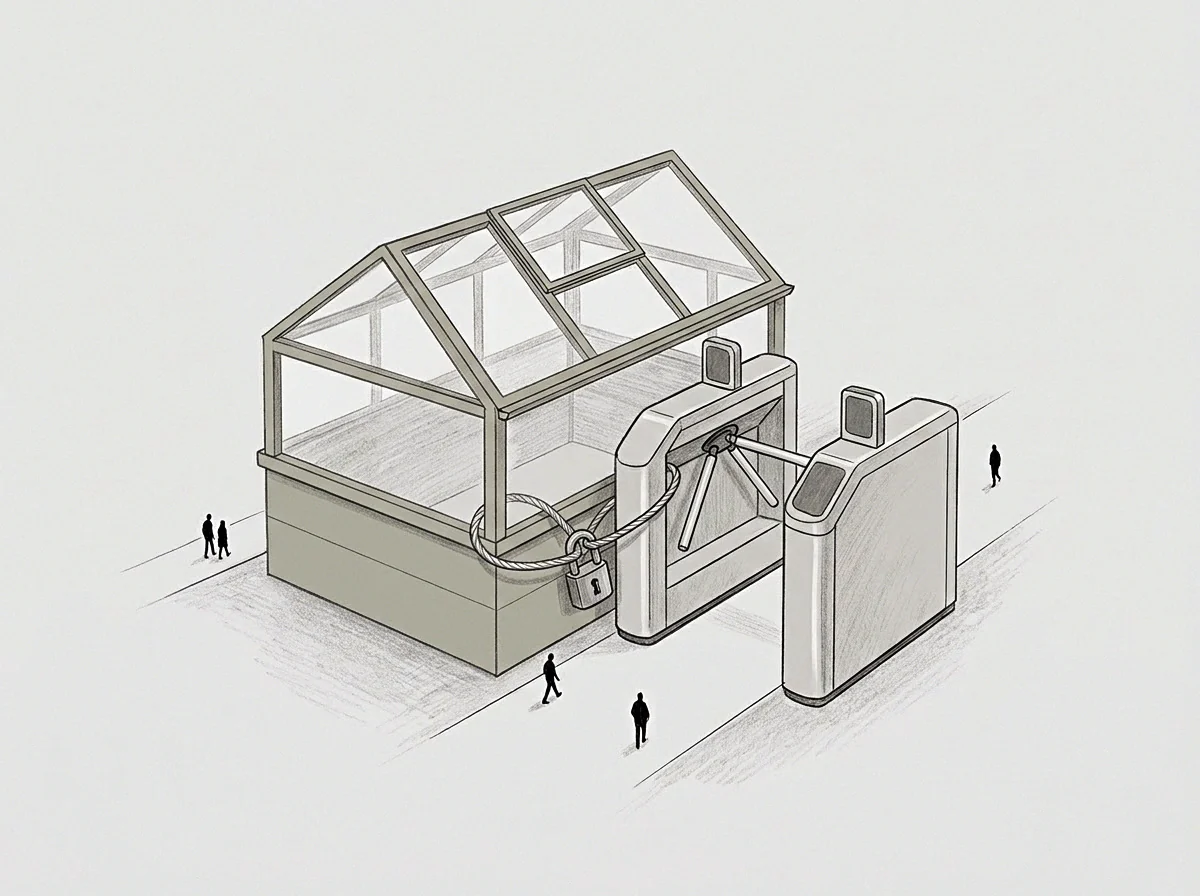
Control follows the paper. Founders who seek to protect foundational inventions often explore licensing structures instead of outright assignment. In a licensing model, the founder retains legal title to the core asset personally or within an isolated holding vehicle, granting the operating company specific rights to commercialize the technology.
How Does Exclusive Field Licensing Retain Core IP?
An exclusive field-of-use licence splits ownership from commercial exploitation rights. The operating company secures the sole right to commercialize the invention within a specified market sector, while the founder retains legal ownership and all commercial rights in unrelated industries. This arrangement insulates the underlying asset from corporate insolvency while granting the operating entity the commercial exclusivity required by institutional venture investors.
| Structure Form | Legal Title Holder | Institutional Investor Acceptability | Insolvency Protection for Founder |
|---|---|---|---|
| Full Corporate Assignment | Operating Entity | High standard requirement | Asset liquidated with enterprise |
| Exclusive Field Licence | Founder or Holding Vehicle | Conditional upon firm term guarantees | Asset retained outside enterprise scope |
| Non-Exclusive Licence | Founder or Personal Vehicle | Low standard rejection | Asset completely isolated |
Licensing structures introduce structural friction into venture financing rounds. Venture capital investors routinely resist licensing arrangements for core, foundational technology, viewing them as asset-stripping risks or potential hold-up vectors by the founder seat. Silence forfeits the asset.
A founder who licenses core technology to an operating entity without standard corporate remedies risks equity devaluation during institutional financing rounds. Venture capital firms routinely condition funding on converting exclusive licences into full corporate assignments. Retaining an unassigned core invention while accepting institutional equity capital creates an operational conflict that typically resolves through total assignment or transaction failure.
Refusing to assign a foundational asset when the business entity requires institutional capital forces the enterprise into an early structural recapitalization or liquidation.

Clause
Venture capital diligence scrutinizes every link in the intellectual property chain of title before executing financing documents. Institutional investors deploy legal counsel to verify that all founders, employees, and independent contractors have executed comprehensive assignment contracts. Any unassigned personal invention that intersects with the corporate product roadmap creates an asset deficit that must be cured prior to closing.
Representations and warranties in term sheets require the company to affirm clear, unencumbered ownership of all intellectual property used in the business. The operating entity must disclose all prior inventions carved out by founders during incorporation. Diligence reveals the gap.
Venture capital investment terms mandate complete corporate asset ownership as a condition precedent to capital disbursement.
When diligence identifies an unassigned foundational asset, the investment syndicate demands specific contractual remedies before releasing funds. The holdout loses leverage.
An institutional financing round mandates specific contractual conditions to resolve prior invention ambiguity:
- Confirmatory Assignment Execution signing explicit assignment documentation that sweeps all prior disputed technology into corporate title retroactive to the incorporation date.
- Waiver of Retained Claims releasing all personal residual rights, moral rights, and fee demands associated with past development efforts.
- Vested Equity Re-allocation subjecting founder share blocks to extended vesting schedules tied to complete intellectual property delivery.
In investors’ view, the company must own its core asset outright rather than rent it from an executive’s personal portfolio. Execution binds the asset.
Institutional funding requires the operating entity to hold total legal title to every line of code and patent powering its commercial model.

Form
Designing an enterprise structure that isolates personal inventions while accommodating corporate growth demands a deliberate choice of legal entities. The traditional venture architecture relies on a single Delaware C-Corporation holding all operational contracts, employee relationships, and intellectual property title. To protect personal inventions that extend beyond the startup’s operational mandate, builders can establish a dual-entity architecture prior to engaging third-party capital.
Under a dual-entity model, a personal intellectual property holding company owns the baseline patent portfolio or master code line. The operating company is established separately to handle commercial activities, raise venture capital, and employ operational staff. The holding entity grants an irrevocable, worldwide, exclusive field-of-use licence to the operating company, circumscribing the operating entity’s rights to a clearly defined market application.
Consider a worked situation. A software engineer invents a novel cryptographic database architecture on personal time. The engineer intends to form an operating company focused exclusively on enterprise healthcare record management.
Rather than assigning the underlying database engine to the healthcare startup, the engineer forms a personal holding company that retains legal title to the core database asset. The personal holding company then executes an exclusive, royalty-bearing licence to the healthcare operating entity, restricted strictly to the healthcare administration sector.
The operating entity scales. The healthcare company raises two million dollars in venture capital to build client-facing applications on top of the licensed database engine. Because the licence is restricted by field of use, the engineer retains complete individual ownership of the database architecture for financial services, supply chain tracking, and consumer applications.
The enterprise venture investors secure complete commercial exclusivity within their market sector, while the foundational asset remains protected within the personal holding vehicle.
Dual-entity architectures isolate baseline intellectual property within a personal vehicle while licensing defined commercial fields to venture-backed operating companies.
The dual-entity structure holds only when the licence agreement between the holding vehicle and the operating company contains precise insolvency and bankruptcy provisions. If the operating company enters bankruptcy, an improperly drafted licence can be treated as an executory contract rejected by a bankruptcy trustee, or the licence rights might be auctioned to corporate creditors. Including explicit ipso facto clauses, clear termination conditions for non-payment of royalties, and restrictions against transferability isolates the personal holding company’s core asset from the operating company’s financial distress.
The foundational technology stays protected when the operating entity holds only a contractually bounded field-of-use licence that terminates automatically upon corporate insolvency.