
Calculating The True Economic Replacement Cost Of Technical Founder Craft
True economic replacement cost sums the market payroll of all disaggregated operational seats plus the organizational drag of lost tacit architecture.

Inventory
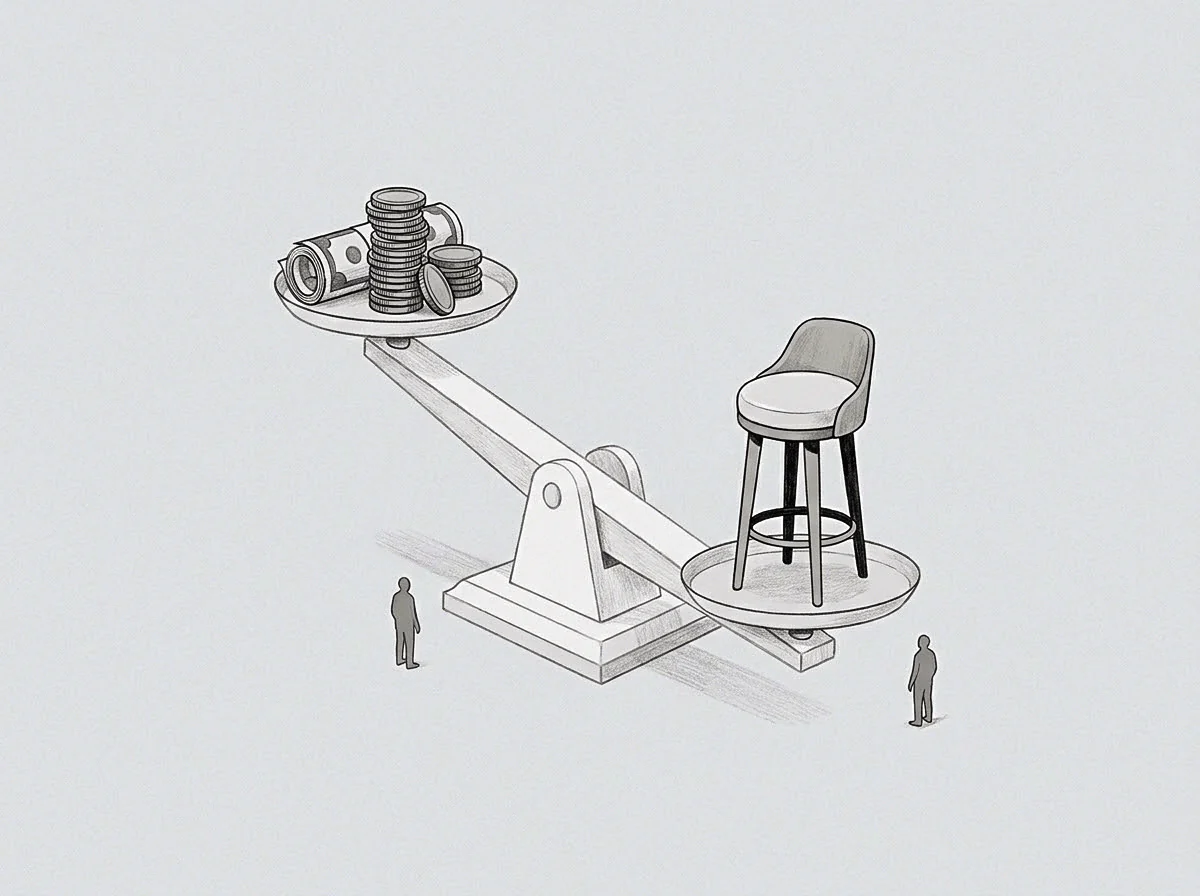
The Midnight Git Commit
The founder pushes code at two in the morning to patch an unhandled exception in the payment webhook. An hour later, the same person updates server provisioning scripts, adjusts pricing copy, and answers an enterprise customer upset about a delivery delay. The company pays this person sixty thousand dollars a year, alongside common stock with no liquid market.
On the books, technical development looks cheap. The income statement shows a modest operational burn, obscuring how much of the underlying architecture depends on unbilled, manual intervention.
Most companies begin on unpriced labor. When a technical founder fills the technician, management, and ownership roles at the same time, the accounting treats those functions as a single compressed line item. The business looks viable because operating statements omit the going rate for systems architecture, outage response, and basic maintenance.
Replacing that work means going to an open market where nobody accepts illiquid common stock instead of a paycheck.
Replacing a technical founder requires hiring market participants who do not accept illiquid equity in lieu of cash.
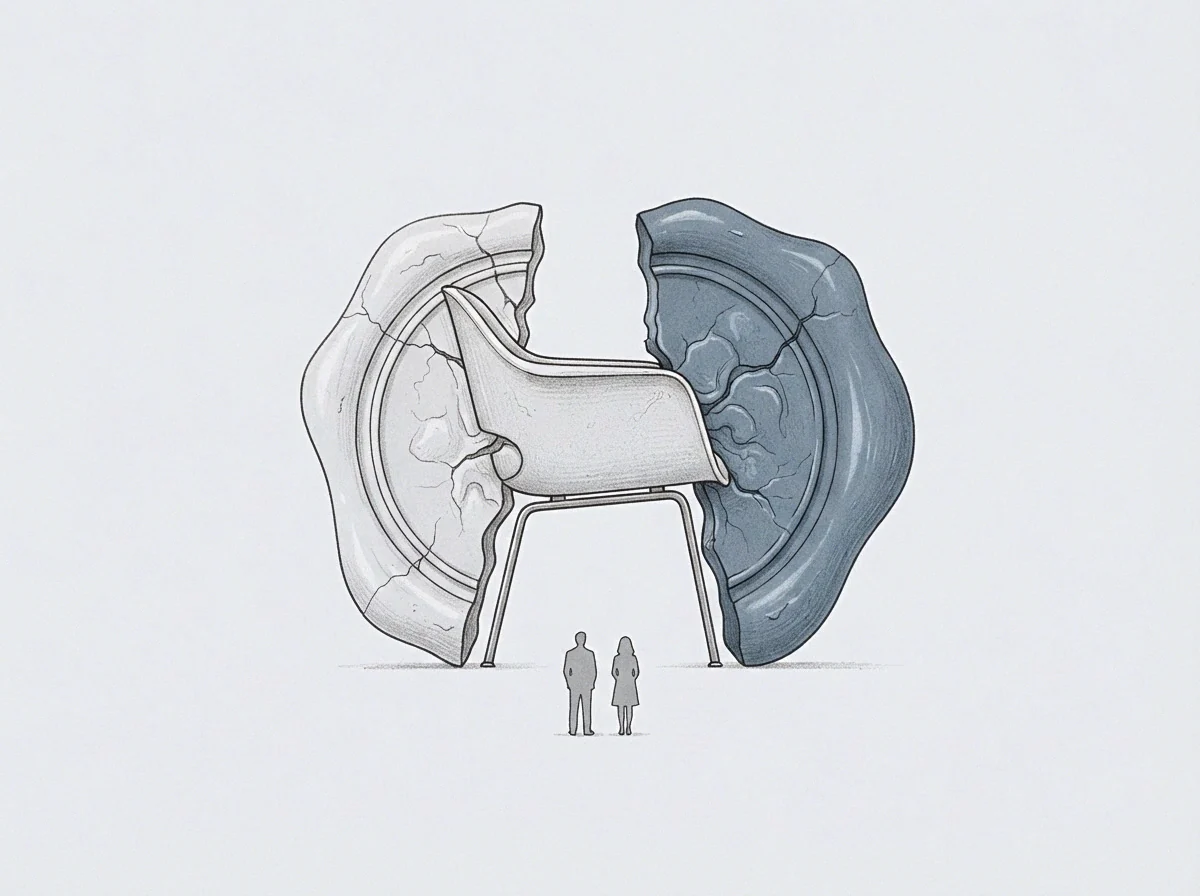
Decomposing Combined Operational Seats
Labor economists examine work by function rather than formal title. A technical founder rarely does one job; the day divides across three distinct categories of work, each with its own market clearing rate, managerial overhead, and replacement constraints.
- The Technician Seat covers day-to-day execution: writing software, running infrastructure, running schema migrations, and handling triage during production outages. Replacing it requires a salary pegged to senior and principal software engineers.
- The Manager Seat handles team coordination, vendor selection, sprint planning, direct reports, technical hiring, and project delivery. Market compensation here tracks engineering directors or technical project managers who work within defined hours.
- The Executive Seat sets capital allocation, technological direction, architectural risk, and equity value. The market compensates this role through chief technology officer packages with substantial base salaries, bonuses, and liquid equity.
Holding all three seats creates structural strain. Attention constantly pulls between immediate production outages and long-term architecture. The company runs on an artificial subsidy, funding three full-time commercial roles through the physical endurance of one person.
Finding the real replacement cost starts by separating these seats. When a board, buyer, or co-founder attempts to replace an incumbent engineer, they usually find that a single hire cannot take on all three areas without burning out the same way.
Tally

Market Compensation Realities
Determining the true replacement cost means swapping internal founder payroll figures for external market rates. The open market does not yield candidates willing to write code eighty hours a week while setting technical strategy and managing a team for below-market pay. Replacing that contributor means breaking the working week into its component market rates.
Take an enterprise software business generating three million dollars in annual recurring revenue. The technical co-founder draws ninety thousand dollars in salary while maintaining distributed infrastructure, writing core integrations, managing a four-person engineering team, and overseeing compliance. The company records reflect ninety thousand dollars in annual payroll for the seat.
The open market charges full cash compensation for duties previously funded through unpaid founder exhaustion.
Replacing that person on the open market requires hiring several specialists. A technical director demands a competitive base salary, performance bonus, and employment taxes. A staff architect requires similar cash outlay.
A compliance manager adds retainer costs. The market charges capital for what had previously been covered by personal endurance.
| Functional Labor Category | Founder Nominal Cost | Market Replacement Role | Base Cash Market Rate | Fully Loaded Cost (Taxes, Benefits, Overhead) |
|---|---|---|---|---|
| Core Architectural Engineering | 30,000 USD (allocated) | Staff / Principal Engineer | 210,000 USD | 273,000 USD |
| Systems Operations and On-Call | 15,000 USD (allocated) | Senior Site Reliability Engineer | 175,000 USD | 227,500 USD |
| Engineering Management | 25,000 USD (allocated) | Director of Engineering | 220,000 USD | 286,000 USD |
| Product and Technical Strategy | 20,000 USD (allocated) | VP of Product / Chief Technology Officer | 250,000 USD | 325,000 USD |
| Total Annual Expenditure | 90,000 USD | Four Specialized Full-Time Positions | 855,000 USD | 1,111,500 USD |

The Multiplier Effect of Overhead
Base salaries understate the actual cash requirement. Salaried employees introduce statutory payroll taxes, health benefits, recruiting fees, hardware, software licenses, bonuses, and onboarding downtime. In mature labor markets, fully loaded overhead adds twenty-five to thirty-five percent on top of base compensation.
Search fees for retained recruiters bring immediate upfront costs. Agencies routinely charge twenty-five to thirty-three percent of first-year base salary for senior technical hires. Bringing in three specialized leaders to replace a single founder can generate over two hundred thousand dollars in recruiting fees before any new code gets written.
A company budgeting technical payroll at ninety thousand dollars suddenly faces an annual run rate above one million dollars. Operating margins compress, and capital earmarked for growth goes toward maintaining existing payroll instead.
A business model sustained by underpaying its founder is structurally deficient, regardless of reported margins.
Drag

Tacit Architecture and Context Deficits
A standard balance sheet fails to account for tacit architectural knowledge. Organizational literature separates explicit knowledge, stored in documentation, design systems, and runbooks, from tacit knowledge, held in human memory, working habits, and unwritten context. Technical founders operate largely on the latter.
When an outside team takes over a codebase, undocumented decisions create operational drag. The founder knows why the caching layer skirts the database on specific payment flows: an unrecorded workaround resolved a race condition eighteen months earlier. Incoming engineers view that workaround as poor practice, spend weeks refactoring it, and unintentionally bring back the outage the compromise prevented.
These discovery costs add up quickly. New hires spend weeks parsing old commits, tracing idiosyncrasies, and puzzling out business logic that was never documented. Shipping speed drops sharply while they map the system.
Product releases can stall for two quarters while new engineers find their footing. The lost business momentum during that freeze often exceeds what the company pays them in salary.
Cognitive Switching and Role Friction
When someone who moved easily between product design, database administration, and customer support departs, communication slows down. Work that once happened without coordination now requires cross-functional check-ins, written briefs, Jira tickets, and consensus meetings.
Coordination costs grow non-linearly with headcount. Internal communication channels expand according to the formula n multiplied by n minus one divided by two, where n represents the number of team members. Replacing one generalist with four functional leads increases direct coordination channels from zero to six.
- Bringing in four specialists multiplies coordination channels, introducing communication drag into sprint cycles.
- Unclear boundaries between staff engineers and product leads create authority disputes that delay releases.
- Engineering speed declines because incoming staff need lengthy briefings to work through ambiguities the original builder solved by instinct.
- The company spends working capital managing administrative process rather than acquiring enterprise accounts.
Operating speed drops. Work that once took an evening of quiet focus now takes three weeks of stakeholder discussions. The overhead of coordination acts as an ongoing drag on momentum.
The business absorbs that cost in lost flexibility and depleted capital reserves.

Shift

Should Succession Occur Incrementally?
Founders and boards often disagree on how to handle the transition. One approach favors a hard cutoff: the founder steps away on a specific date, handing repositories and credentials to a new chief technology officer. The other favors a gradual transition, handing off operational seats one at a time across twelve to eighteen months.
Abrupt handovers tend to fail quickly. A sudden exit exposes the tacit knowledge gap all at once. Outages increase because new hires lack institutional context, which leads to platform downtime and customer churn.
A phased handover mitigates that operational risk. The founder first vacates the technician seat by hiring senior engineers to take over feature work. Next, they hand over management duties to an engineering lead who runs standups, reviews, and direct reports.
The founder keeps high-level strategy until the new team proves it can manage the infrastructure independently.
Systematic seat devolution succeeds only when operational duties are stripped away before strategic authority is surrendered.
A phased transition demands careful oversight. The company carries duplicate payroll while roles overlap. If the founder lingers with ill-defined authority, new leaders struggle to establish control, and staff inevitably bypass new managers to seek informal approval from the creator.
Transition costs rise with every month the founder operates as an informal backchannel.

Designing the Stated Transition Scope
A smooth handover requires converting tacit technical knowledge into documented organizational assets. The company must set aside dedicated time for writing operational runbooks, drawing architectural diagrams, and improving system observability. Without a structured timeline, the founder defaults to daily firefighting, keeping critical knowledge locked in personal memory.
Documentation is an asset transfer, not an administrative chore. Every subsystem, third-party dependency, API quirk, and deployment script needs to be written down before the founder steps back from day-to-day operations.
The board needs clear terms for this handover window. The agreement should define concrete deliverables: detailed architecture maps, automated deployment pipelines, disaster recovery plans, and a thirty-day silent period where the founder does not commit code or respond to alerts.
If the business cannot run for thirty days with the founder completely hands-off, the transition remains incomplete.
The company stays dependent on an unpriced contributor who has already mentally moved on.

Ledger

The True Enterprise Valuation Impact
When a business approaches an institutional fundraise, secondary sale, or buyout, diligence analysts quickly discount the valuation for key-person risk. If an enterprise reports one million dollars in annual EBITDA while relying on a founder working eighty hours a week at low pay to run the stack, that earnings figure does not reflect reality.
Diligence teams normalize earnings by factoring in true market compensation. They adjust operating expenses to account for the staff engineers, managers, and product leads needed to keep the platform running without the founder. Under that review, the reported million-dollar earnings shrink dramatically.
Valuation multiples decline in proportion to operational risk. Acquirers rarely pay premium multiples for software that requires keeping a burned-out founder locked into an earn-out to remain stable. The resulting valuation haircut typically exceeds whatever the company saved by underpaying its founder over the prior five years.
Capital allocators discount enterprise value the moment operational continuity depends on undocumented founder heroism.
Relying on founder overwork produces only phantom savings. That unpaid effort acts like an off-balance-sheet liability that surfaces during acquisition talks. Unpriced labor turns out to be deferred expense that must eventually be accounted for.
A company either pays market rates to build sustainable engineering capacity as it grows, or absorbs an equivalent discount on its valuation during a sale.
The economic count settles in the end.