
Structural Mechanics of Unbundling Founder Officer Seats and Voting Rights
Unbundling separates executive employment, board oversight, and equity voting through charter sunsets, proxy transfers, and distinct governance contracts.
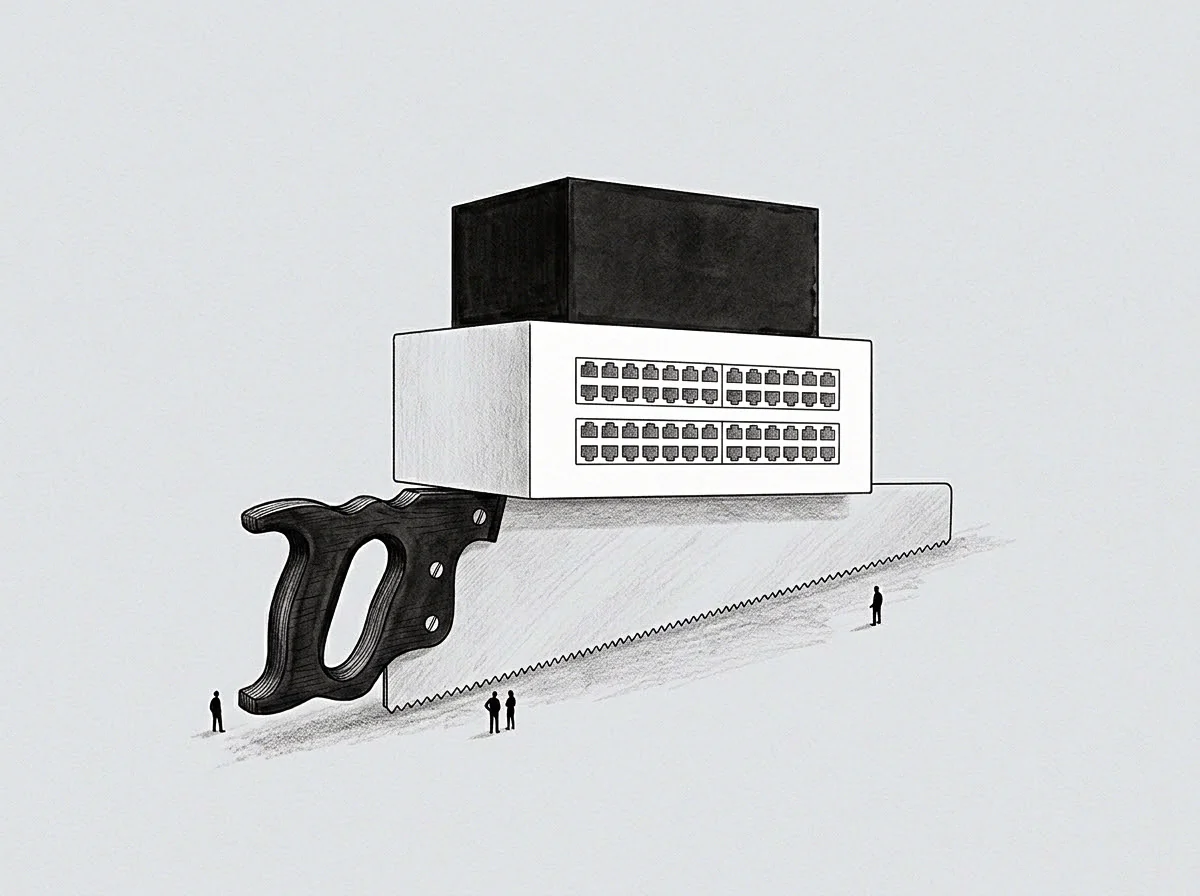
Knot
Three corporate capacities merge into a single signature line during the incorporation of an enterprise. The same person signs the bylaws as chief executive officer, takes appointment as the sole director, and receives eighty percent of the common stock. This compression creates no friction while one person handles every task.
Friction appears later, when growth forces the three underlying legal instruments to operate on their own terms. An officer holds an employment relationship terminable by directors. A director occupies a fiduciary seat subject to shareholder vote.
A shareholder holds property governed by class voting rules.
Early governance agreements routinely treat these roles as an indivisible package. Founders assume operational tenure stems directly from equity ownership. Investors agree to board designation covenants that name an individual rather than an equity series.
When operational strain arrives, the confusion deepens: constituents try to cure managerial problems by adjusting ownership percentages, or try to protect an executive job through voting rights. Each layer belongs to a distinct body of law.
A governance agreement binds corporate authority when it evaluates officer duties, director obligations, and shareholder rights through separate contractual schedules.
Separating these authorities requires disentangling three specific mechanisms:
- Officer appointment covenants determine executive employment, day-to-day administrative authority, reporting lines, and operational termination conditions under employment law standards.
- Directorship designation rights govern board composition, fiduciary liability, strategic oversight, and removal procedures through corporate charter provisions.
- Super-voting equity classes control shareholder consent thresholds, proxy voting protocols, and capital transactions through stock transfer agreements.
Setting these tiers apart early heads off governance deadlocks. The operational layer requires flexibility. The fiduciary layer requires oversight.
The ownership layer protects capital. Power bundles during company formation because counsel relies on boilerplate drafted for quick setup. Charters assign common shares ordinary voting power alongside executive titles.
When operational friction emerges, these terms pull in opposite directions. Authority breaks down when a board tries to dismiss an officer who holds majority voting control as a shareholder.
The holder of high-vote equity who acts as an executive officer balances conflicting duties daily. Management reports to the board, while the board answers to the voting equity. If the person holding all three seats burns out, the business stalls.
Unbundling isolates management accountability from share ownership, protecting the firm while leaving the founder intact as an owner.
Equating share ownership with operational tenure brings organizational paralysis whenever operational competence diverges from equity control.

Desk

Operational Authority Separation
Executive management is an agency relationship between the corporation and an employee. The title of chief executive officer grants statutory authority to sign commercial contracts, direct staff, and spend capital within boundaries set by the board of directors. The position remains an employment role.
It carries no automatic entitlement to board representation or perpetual control over governance. Removing an underperforming officer requires a simple majority vote of the board, assuming the employment contract contains no language to the contrary.
Under standard bylaws, officers serve at the pleasure of the board. When an executive contract ties employment to a board seat, managerial accountability fails. The board cannot address operational shortfalls without instigating a broader governance dispute.
A clean separation removes board designation clauses from executive agreements, leaving the contract to address duties, compensation, spending limits, severance terms, and protocols for termination without cause.
Employment contracts carry performance conditions; board seats do not. Conflating the two forces an enterprise to tolerate managerial drift to keep peace on the board, or enter costly litigation to unseat an executive. With an independent employment agreement, the board can replace the chief executive officer while leaving equity holdings untouched.
The executive steps down from management, but the ownership remains.
Managing day-to-day operations absorbs roughly sixty hours each week during early growth. Fiduciary oversight takes roughly four hours each month. An individual trying to defend executive decisions while also setting board policy expends considerable cognitive energy.
Daily operations push aside long-term assessment. Unbundling relieves the executive from day-to-day triage, preserving the underlying value of the equity.
Terminating an executive officer leaves shareholder ownership intact when employment agreements contain no automatic share forfeiture clauses.
When an enterprise leaves executive employment terms dependent upon voting agreements, a routine managerial dismissal triggers protracted shareholder litigation, frozen bank accounts, and lost commercial contracts.

Board

Fiduciary Duty and Director Tenure
Corporate directors owe fiduciary duties of loyalty and care to the corporate entity and its aggregate shareholders. This standard differs from the self-interested posture permitted to an owner. A shareholder may vote shares entirely for personal financial advantage.
A director cannot vote on board resolutions to benefit themselves over other investors. When an unseated executive stays on the board, these duties clash immediately.
Separating the director role from operational work requires explicit governance documents. Investors regularly condition capital on voting agreements that dictate board composition. These agreements assign specific seats to particular share classes: one to series seed preferred investors, two to common shareholders, and one to an independent industry expert.
Disputes intensify when a voting agreement designates an individual by personal name instead of assigning the seat to the chief executive officer ex officio. If the document specifies a person, they remain on the board even after termination from operational duties. The new officer then operates outside the boardroom, answering to a body that includes their predecessor.
Fiduciary tensions mount quickly under those terms.
| Capacity | Governing Instrument | Fiduciary Standard | Removal Mechanism | Primary Resource Consumed |
|---|---|---|---|---|
| Officer Position | Employment Agreement and Corporate Bylaws | Agent duty of obedience, loyalty, and care | Simple majority vote of board of directors | Executive time and operational focus |
| Director Seat | Voting Agreement and Certificate of Incorporation | Entity-level duty of care and unyielding loyalty | Shareholder class vote or removal for cause | Governance oversight and institutional memory |
| Voting Equity | Investor Rights Agreement and Stock Purchase Contract | None, barring controlling shareholder oppression limits | Contractual sunset, conversion, or equity redemption | Capital risk and economic dilution |
Removing a former officer from the board means amending or triggering terms in the underlying voting agreement. Preferred stockholders can withhold waivers on protective covenants until the seat passes to the incoming chief executive officer. Where the charter defines the directorship as an ex officio seat attached to the executive role, termination of employment vacates the directorship automatically.
The successor assumes the seat without a gap, while institutional memory can be retained through observer rights instead of a voting seat.
Board observers attend meetings and read board packs, but they carry no vote and bear no formal fiduciary liability. Transitioning a former executive to an observer seat maintains historical background without exposing the governing body to operational friction. Fiduciary responsibilities stay clear, and the incoming team can direct company strategy without managing a predecessor’s dissent.
The enterprise functions best when its board speaks with independent authority, rather than acting as a defensive trench for past managerial decisions.

Vote

Where Does Equity Sever From Operational Direction?
Equity ownership confers financial rights to dividends and liquidation proceeds, along with voting rights on structural transactions like charter amendments, mergers, board elections, and asset sales. High-growth enterprises often issue dual-class common stock to keep voting power with initial founders. Class B common stock carries ten or twenty votes per share, whereas Class A stock carries one vote per share.
This structure insulates strategy from short-term investor pressures.
Complications arise when a founder steps down from active management but keeps high-vote stock. The company is left with an inactive controlling shareholder who influences board elections without participating in daily operations. New investors hesitate to back businesses where an inactive former executive retains outright control.
Detaching high-vote stock from operational participation resolves that problem.
A dual-class equity conversion triggers immediately upon executive departure when the corporate charter contains an operational sunset covenant.
Three main governance mechanisms handle this equity adjustment:
- Charter sunset provisions convert Class B high-vote equity into single-vote Class A shares immediately upon the holder ceasing to provide full-time operational services.
- Voting trust instruments assign the voting power of departed executive equity to the current board of directors or an independent voting trustee while retaining economic dividend rights.
- Irrevocable proxy covenants transfer proxy voting discretion to the current chief executive officer on all matters except designated fundamental transactions such as company liquidation.
Sunset clauses operate automatically under Delaware corporate law. When an officer leaves, the charter executes the reclassification without needing shareholder approval. The equity holder keeps their economic stake, and their shares appreciate alongside active holdings.
High-vote control ends. The operating team secures the voting flexibility required to raise future rounds, expand the option pool, and hire replacement executives.
Dual-class recapitalizations require careful drafting. Ambiguous sunset triggers lead to appraisal challenges and review under the entire fairness doctrine. If a contract defines departure purely as voluntary resignation, an officer removed by the board could keep ten-to-one voting control indefinitely.
Thorough drafting defines termination across voluntary departure, termination for cause, death, permanent disability, and failure to perform assigned operational duties.
Under a mandatory equity conversion clause, the departed executive trades governance control for passive liquidity protection, maintaining ownership value while relinquishing the right to veto future corporate financings.

Tether

The Residual Posture of Inactive Ownership
Unbundling leaves a meaningful equity stake with an inactive shareholder. The founder becomes an institutional investor with considerable economic weight, which reshapes communication with management. Everyday operational questions are no longer shared discussions.
Information rights drop back to statutory floors or formal contractual disclosure schedules; the company issues quarterly financials rather than real-time Slack updates.
A non-operating founder holding twenty percent of common equity sits in an unusual position. That ownership can cause anxiety as company direction shifts. New product lines supersede original codebases, and early client accounts pass to professional sales teams.
Lacking operational authority or a board seat, the former executive watches these adjustments from the outside. Reaching out to staff creates internal friction, which is why sound unbundling agreements prohibit operational meddling through clear non-interference and non-disparagement covenants.
Repurchasing unbundled equity presents liquidity issues for private firms. Early-stage businesses rarely have the cash reserves to acquire large blocks of common stock. Mandating an immediate buyout drains working capital and risks financial distress.
Secondary market transactions offer an alternative by allowing outside funds to buy the inactive founder’s shares, while right of first refusal agreements let the company and remaining shareholders manage who joins the cap table.
Vesting schedules dictate the amount of retained equity. An executive who departs in year two of a four-year vesting cycle keeps only the vested portion. Unvested shares return to the corporate equity pool, where they can be reassigned to recruit incoming leadership.
The vested shares remain on the cap table as passive common stock, participating in future valuation growth while the company operates under clean governance lines.
A passive equity holding produces sustainable alignment only when governance covenants bar the inactive owner from contacting operational staff.
The separation succeeds when the three seats operate independently. The executive manages execution. The board sets corporate strategy and maintains fiduciary oversight.
The equity holder bears investment risk and shares in the upside. Each capacity stays within its legal lane. The company moves forward because authority resides in established corporate offices rather than personal history.
The unresolved tension centers on whether an enterprise can ever fully protect its long-term strategic mission when founder voting control converts completely to institutional investor preferences before commercial profitability arrives.