
Quantifying Structural Friction Points When Transferring Architectural Veto Rights To Executive Successors
Transferring architectural veto rights requires replacing discretionary founder negative votes with quantitative system thresholds and escalating capital liabilities.

Friction
A successor may hold formal authority over product, engineering, and capital deployment, yet core engineering choices stall before release. The tension surfaces when a technical originator retains a negative vote on structural system changes and uses it from a board seat or advisory role. Architectural veto rights give that originator the power to block changes to data contracts, deployment topologies, or system boundaries.
When this authority sits outside the operating hierarchy, major architectural proposals slow down while engineering teams anticipate an informal rejection. An incoming executive absorbs this drag as an unpriced operational friction that turns predictable engineering schedules into extended negotiations.
Measuring this friction requires distinguishing operational disagreement from structural constraint. Executive authority becomes nominal when technical governance stays centralized in an outgoing founder. In software and deep-tech companies, the architectural blueprint directly shapes business strategy.
If a former operator keeps the power to block changes to that blueprint, the new executive ends up acting as a coordinator rather than an operational lead. The impact shows up in execution latency, missed deployment windows, and engineering turnover.
The negative vote exercised outside the operating hierarchy converts structural authority into informal diplomacy.
Calculations of technical handover friction isolate three distinct friction indices across the technical organization:
- Review Latency Inflation measures the delay between an engineering lead submitting an architectural decision record and the veto holder issuing a final ruling.
- Premature Consensus Overhead quantifies the hours senior staff spend in informal alignment meetings before filing formal system architecture proposals.
- Defensive Architecture Debt captures the capital spent on temporary software shims and adapters written only to avoid touching subsystems protected by the reserved negative vote.
These metrics expose how an unceded negative covenant restricts operational velocity. The successor carries the administrative burden of driving momentum while the originator controls irreversible system decisions. This arrangement creates an unstable governance structure where the operating executive is held responsible for execution failures, while the veto holder retains strategic control without operational accountability.
An unpriced reservation leaves the incoming operator with an impossible mandate.

Lock

The Mechanics of Structural Inertia
A negative vote over system interfaces functions as a structural lock on the balance sheet. In enterprise software companies, the structure of code mirrors the internal communication lines of the organization. When an originator holds a veto over changes to primary schemas, core protocols, or hardware layouts, the new executive cannot alter organizational topology.
Changing a team structure requires changing system interfaces; blocking the interface change halts the reorganization.
Friction compounds because the originator evaluates proposals against historical system assumptions, while the successor evaluates them against market expansion. The technical originator built the system under specific economic and computational constraints that may no longer exist. When an enterprise shifts from custom on-premises installations to multi-tenant cloud operations, the tenancy abstractions need complete replacement.
Retaining an absolute veto over core schema changes preserves the historical codebase at the expense of commercial viability.

Latency Metrics Across Successive Approvals
Quantifying this friction requires tracking decision cycle durations before and after succession. In an unencumbered organization, an architectural escalation resolves through standard executive channels within five business days. Under an active veto held outside operations, escalations detour into informal advisory reviews.
Timelines stretch according to the veto holder’s availability, risk tolerance, and subjective criteria.
Retaining architectural negative control outside operations severs the structural link between operational accountability and execution authority.
Senior engineering staff recognize this dynamic quickly. When engineers see executive proposals repeatedly blocked by a non-operating founder, they circumvent both parties. Teams build parallel systems, introduce undocumented message queues, and duplicate databases to deliver required features without triggering formal reviews.
The company ends up paying for two architectures: the official, ossified platform protected by the veto, and the shadow infrastructure built around it.
| Evaluation Metric | Retained Founder Negative Vote | Fully Transferred Operating Authority |
|---|---|---|
| Escalation Resolution Duration | Fourteen to forty-five business days through bilateral offline conferences | Three to five business days resolved through formal technical governance committees |
| Engineering Workaround Frequency | High volume of defensive abstraction layers and duplicated service boundaries | Low incidence of shadow systems with refactoring prioritized in sprint allocations |
| Principal Staff Attrition Vector | Resignations driven by political negotiation fatigue and veto ambiguity | Standard departures linked to compensation, market changes, or geographic moves |
| Capital Efficiency of Architecture | Substantial capital spent maintaining compatibility shims for locked services | Capital concentrated directly on throughput, infrastructure consolidation, and scale |
A manufacturing plant shows the same pattern when an outgoing chief engineer retains sole authority over mechanical retooling while a new plant manager remains responsible for monthly output. Production sits idle while drawings move between the factory floor and an offsite office. This operational friction produces measurable downtime, yet executive leadership often attributes the shortfall to the successor’s leadership rather than the divided control structure.
A governance covenant reserving unilateral veto authority over foundational interfaces strips the executive successor of baseline operating agency.

Ledger

Direct Capital and Opportunity Valuation
The financial cost of an incomplete technical handover spans several operational lines. Unresolved architectural reviews create direct carrying expenses. When an engineering division of eighty developers pauses major service migrations to wait on a veto decision, full compensation continues while productive output drops toward zero.
If a core architectural decision stalls for six weeks, the loaded burn rate of the affected engineering pods represents direct capital loss.
The calculation of this friction points directly to specific operating lines:
- Blocked Engineering Compensation represents the sum of prorated salaries paid to engineering teams idling or writing throwaway shims during an open veto deliberation period.
- Successor Administrative Dilution tabulates the percentage of executive hours redirected from commercial expansion, customer acquisition, and governance toward managing the negative vote interface.
- Delayed Time to Market Penalty models the lost recurring revenue attributable to scheduled product releases postponed by technical governance gridlock.
A typical scenario clarifies the arithmetic of this operational tax. Assume a mid-sized enterprise software company generating forty million dollars in annual recurring revenue with a core engineering payroll of one million two hundred thousand dollars per month. The product roadmap requires unbundling a centralized relational database into distributed service nodes to support international multi-region compliance.
The incoming chief executive officer and vice president of engineering present an execution design. The founder, retaining life-tenure veto rights over architectural alterations through a separate class of shares, refuses authorization based on historical preferences for data consistency. The decision remains frozen through a ninety-day review cycle.
During this period, thirty percent of the senior engineering organization works exclusively on temporary caching layers designed to keep the aging monolithic database operational under increasing load.
A three-month delay on a foundational system refactor destroys operating margin through defensive engineering salaries long before revenue effects appear.
The defensive engineering work consumes three hundred sixty thousand dollars per month in direct payroll costs, totaling one million eighty thousand dollars in pure preservation expense. Concurrently, enterprise deals requiring overseas data residency stall, deferring two million four hundred thousand dollars in new contract values. The total friction cost across that single quarter exceeds three million four hundred thousand dollars.
This financial loss stems entirely from an unpriced governance mechanism that gives non-operating personnel control over operational architecture.
This arrangement transfers market and operational risks to the business while concentrating absolute systemic discretion in a party insulated from day-to-day performance.

Split
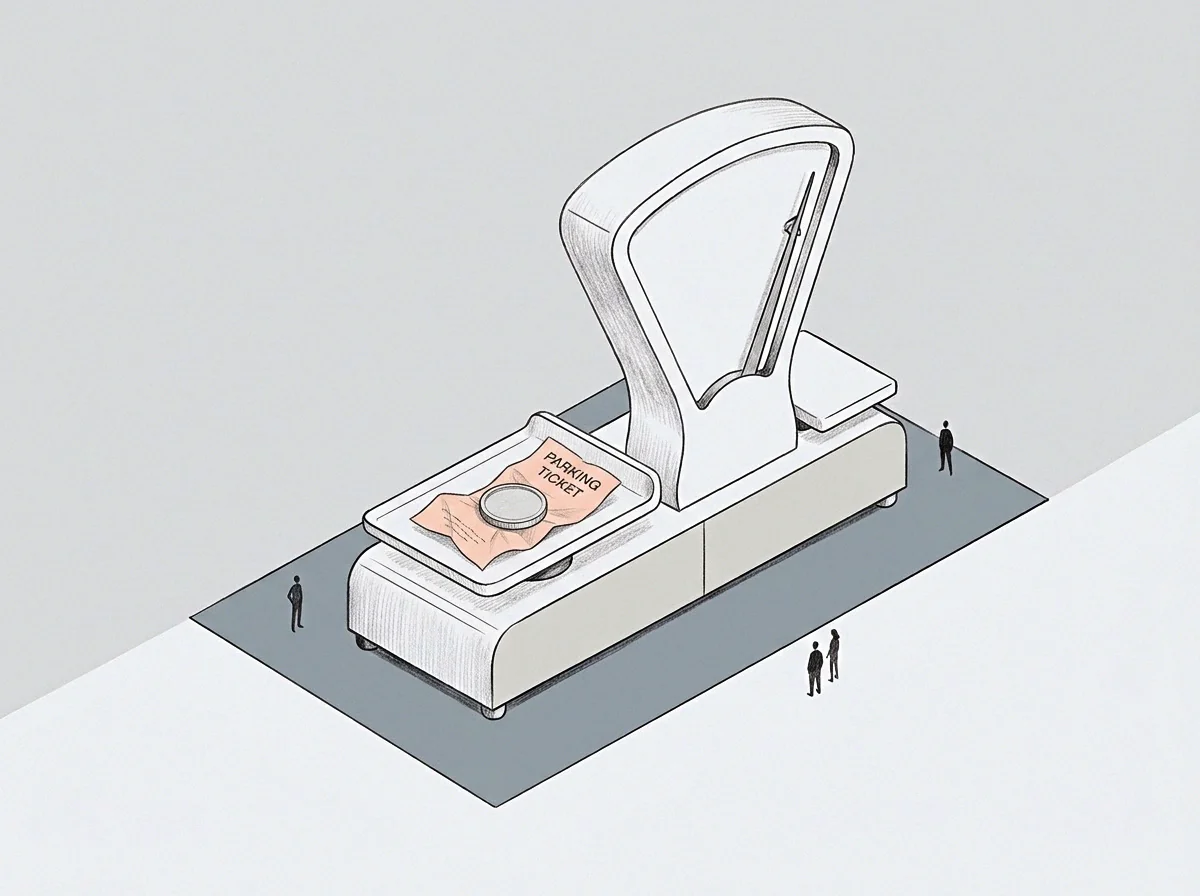
Decomposing the Technical Governance Mandate
Resolving this friction requires breaking architectural authority into distinct functional areas. Most succession agreements err by treating architectural veto power as a single, indivisible rights package. Governance spans several operational areas: protocol definition, capacity planning, security posture, interface stability, and capital efficiency.
An executive successor can operate effectively under clear constraints, provided those constraints rely on quantitative thresholds rather than discretionary negative votes.
When a founder acts as the technical conscience without explicit terms, every engineering decision becomes an existential referendum. The successor cannot tell which choices need consultation and which sit within the operating line. That ambiguity forces the new executive to either risk a public veto or surrender operational autonomy.
Unclear jurisdictional boundaries accelerate managerial fatigue and reduce decision-making confidence across executive teams.

Threshold Governance Versus Discretionary Rejection
Replacing discretionary negative control with threshold-based governance restores operational movement. Under this model, defined boundary covenants replace the architectural veto. The incoming executive retains complete design freedom as long as proposed changes stay within pre-agreed limits.
These metrics include maximum acceptable downtime, latency budgets across public interfaces, capital expenditure caps per compute cycle, and backward-compatibility guarantees.
A founder concerned with system integrity does not need veto power over language selection, database models, or container infrastructure. What the founder needs is verifiable assurance that the system will not drop transactions, violate service level agreements, or exceed infrastructure expenditure ratios. Expressing these requirements as quantitative performance covenants maintains technical reliability without subjecting the operating team to arbitrary vetoes.
Shifting from personal veto rights to explicit operating tolerances turns a struggle over corporate legacy into objective performance tracking.

Pact

Contractual Deprecation of Negative Covenants
Resolving succession friction permanently requires a structural phase-out of the negative vote. Open-ended veto rights inevitably lead to operational paralysis. A succession pact needs an explicit deprecation schedule tied to calendar milestones or system stability metrics.
An incoming executive requires a clear timeline showing when system authority transfers fully to the operating team.
A robust transition agreement uses an escalating threshold for materiality. During the first two quarters, the retained veto covers modifications affecting more than twenty-five percent of core data structures or services. In quarters three and four, the threshold rises so the veto applies only to decisions involving full database platform abandonments or complete migrations.
At twenty-four months, the negative covenant terminates automatically, placing system governance fully within the standard corporate hierarchy.
The contract must also specify a formal dispute resolution process for the interim transition period. If the veto holder exercises a negative vote against an executive proposal, that vote cannot act as a unilateral block. Instead, exercising a veto triggers an independent technical audit by an agreed-upon external engineering authority.
The audit evaluates the disputed proposal against industry stability baselines, total cost of ownership, and strategic goals.
If the audit confirms the commercial and operational soundness of the proposal, the veto dissolves unless the veto holder personally assumes the capital liability of maintaining the legacy architecture. Attaching financial accountability to negative power changes the dynamic immediately. An outgoing founder reconsiders discretionary vetoes when blocking a proposal requires funding the necessary workarounds out of personal capital.
The terms must state that exercising a unilateral negative vote without funding the associated defensive architecture immediately voids the retained architectural reservation.