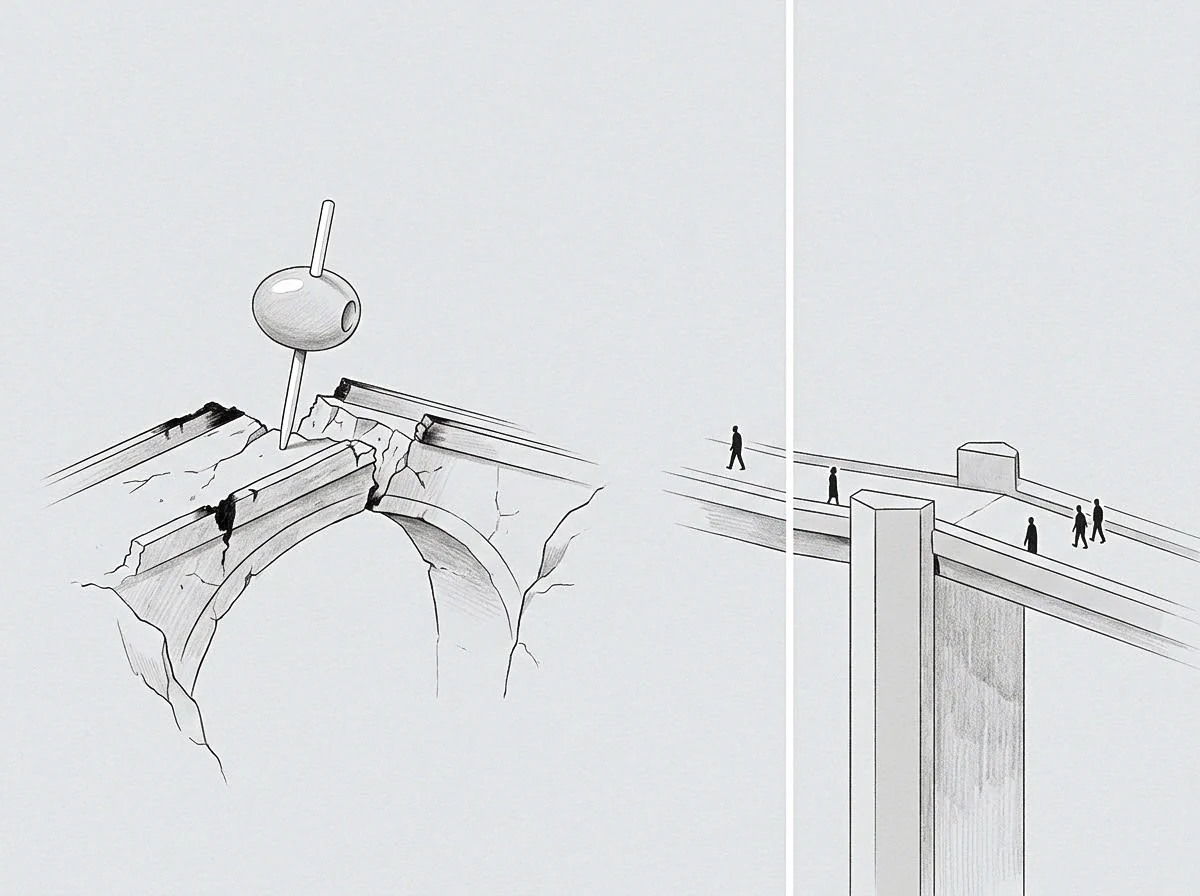
Meaning
Structural deadlock occurs within a board of directors or among voting shareholders when equal allocations of authority or mutual veto rights prevent authoritative business decisions. A state of governance paralysis arises frequently in fifty-fifty founder equity splits or after venture capital financings that grant extensive negative controls to incoming minority investors. Paralyzed entities cannot approve annual operating budgets, hire executive officers, allocate capital or authorize debt refinancings.
Without internal dispute resolution mechanisms, the corporate vehicle freezes functionally while operational burn rates continue unchecked.
Founder Entrapment
Operational leaders caught inside deadlocked boards absorb tremendous administrative friction and personal exhaustion while trying to manage daily commercial operations without valid authorizations. Living inside continuous governance paralysis forces executives to either pause necessary payroll and vendor commitments or act unilaterally, exposing themselves to breach of fiduciary duty lawsuits from hostile co-directors. The energy required to manage internal board stalemates pulls attention away from product development and commercial execution.
This internal friction rapidly consumes operational stamina.
Contractual Deadlocks
Conflicting contractual rights, such as protective provisions, supermajority thresholds and reciprocal voting agreements, systematically produce non-functional boards. When strategic visions diverge between initial operators and later capital providers, standard governance paralysis manifests as routine motions fail to attain the required approval margins. Corporate bylaws lacking clear tie-breaking mechanisms, shotgun buy-sell clauses or external mediation requirements turn simple disagreements into permanent administrative impasses.
Formal corporate action becomes completely blocked.
Involuntary Liquidation
Protracted gridlock that threatens corporate solvency pushes distressed entities toward statutory judicial dissolution or emergency receiverships. When shareholders cannot break the deadlock to elect new directors, governance paralysis strips the venture of its commercial value, forcing fire-sale asset dispositions or defensive intellectual property liquidations. The destruction of equity value harms minority and majority holders alike, demonstrating how balanced authority without tie-breaking clauses leads directly to entity failure.