
Calculating Enterprise Account Decay Risk During Principal Delegations
Enterprise account decay risk is calculated by measuring counterparty decision latency, successor discretionary authority, and principal dependency ratios.

Tether
Enterprise procurement executives bind commitments to individual authority rather than corporate logos. When a founder or principal manages a Tier-1 enterprise account, the commercial agreement rests on informal credit. The principal absorbs friction, overrides operational delays by personal decree, and grants commercial concessions without committee approvals.
This direct access creates an invisible subsidy. The buyer receives executive responsiveness without paying an advisory premium, while the supplier retains revenue concentration on uncodified relational goodwill.
The structural vulnerability surfaces the moment the principal initiates delegation. Enterprise counterparties interpret the substitution of an account director as a unilateral downgrade in vendor commitment. Decision cycles lengthen.
Discretionary allowances evaporate. The enterprise client begins to evaluate delivery through strict contractual language rather than interpersonal indulgence.
Enterprise accounts maintain contract parity only while the counterparty executive perceives equivalent decision authority in the delegated successor.
Social capital remains bound to the individual voice. Counterparty executives rarely transfer deference between seats. They spent years accumulating informal leverage against the founder.
They know which phone call produces weekend engineering interventions, and they recognize that an incoming commercial manager lacks equivalent internal clearance. The counterparty tests this boundary early.
Disengagement changes how friction registers. Small errors once absorbed through personal trust turn into formal remediation demands. Without direct principal intervention, the supplier faces margin compression from defensive re-work, compounding internal service delivery costs, and heightened vulnerability during renewal cycles.
Gap
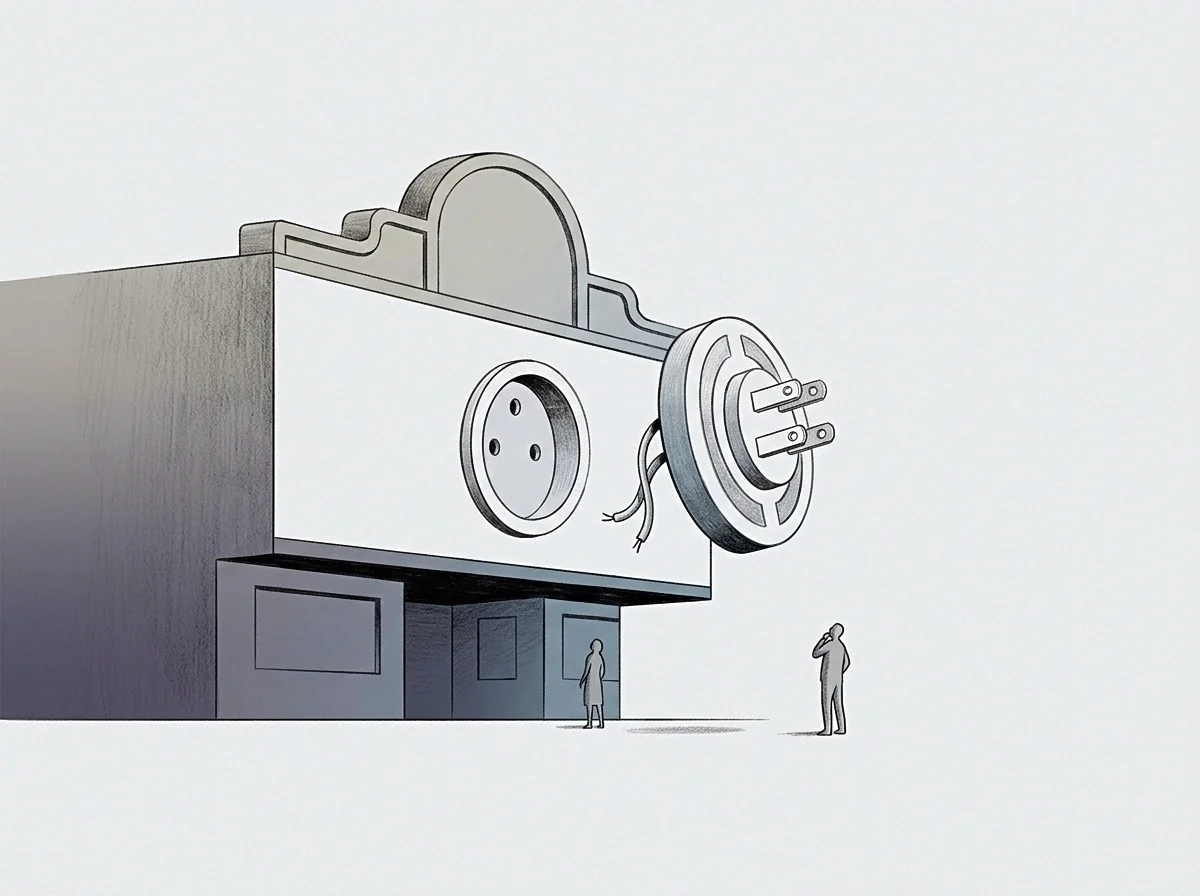
Account transitions expose the discrepancy between codified protocol and informal governance. The incoming operator receives historical billings, technical architecture documentation, and relationship logs. None of these records convey the unspoken boundaries negotiated across dinners or private escalations.
The successor steps into a room where every participant possesses institutional context except the individual assigned to lead it.

Does Sponsor Replacement Trigger Immediate Contract Renegotiation?
Counterparty procurement monitors vendor delegation as an arbitrage event. The replacement of an executive sponsor signals operational reassessment inside the supplier organization. Enterprise buyers exploit this interval to recalibrate commercial boundaries, re-tender long-standing master service agreements, and claw back historical pricing concessions.
Tacit authority does not survive delegation binders. The principal attempts to summarize five years of relational leverage in a three-hour briefing. Crucial operational instincts remain unvoiced.
The principal leaves the seat, carrying the relational memory that prevented minor service faults from escalating into commercial default.
Execution stalls across three primary structural vulnerabilities during uncalibrated successions:
- Escalation Latency creates immediate client frustration when the successor lacks administrative authority to authorize operational scope adjustments without secondary approvals.
- Commercial Asymmetry exposes the organization to aggressive renegotiation when the client executive realizes the new account custodian cannot offer reciprocal corporate concessions.
- Informal Protocol Dissolution forces routine tasks through rigid ticketing systems, removing the bespoke responsiveness the enterprise buyer previously treated as baseline service.
The client detects the hesitation within weeks. Requests for product adaptations stall in governance reviews. The personal channel that once bypassed middle management is closed.
The account enters decay long before revenue drops appear on financial statements.
The client executive summarizes the structural shift flatly to their board: the previous arrangement dissolved when the founder stopped attending the monthly operational review.

Gauge
Account decay functions as a measurable decay curve rather than an instantaneous collapse. Risk quantification requires evaluating the Principal Dependency Ratio alongside counterparty structural mobility. When principal involvement drops from complete custody to zero across ninety days, contract retention probability falls along a predictable hazard rate.
Calculations begin by isolating three discrete variables. First, the Principal Dependency Ratio measures the percentage of account decisions requiring founder authorization during the preceding twelve months. Second, the Successor Discretionary Index assesses the replacement operator’s written budget limit for unilateral concessions.
Third, the Counterparty Mobility Factor tracks the availability of equivalent substitute vendors in the enterprise procurement database.
When delegation occurs without written variance allowances, enterprise counterparties renegotiate terms at the first renewal boundary.
A rigorous decay risk model combines these inputs into an annualized account decay coefficient. The formula establishes the expected baseline erosion over twenty-four months:
Decay Risk equals Principal Dependency Ratio multiplied by the quotient of Counterparty Mobility over Successor Discretionary Index, adjusted for communication latency. When Successor Discretionary Index remains low, the decay coefficient climbs exponentially regardless of the successor’s technical competency.
| Delegation Model | Principal Dependency Ratio | Successor Discretionary Limit | Mean Decision Latency | Annual Churn Probability |
|---|---|---|---|---|
| Abrupt Substitution | 0.85 | Low Discretion | 14 Business Days | 0.48 |
| Shadow Custody | 0.55 | Medium Discretion | 6 Business Days | 0.26 |
| Phased Authority Transfer | 0.20 | Full Discretion | 2 Business Days | 0.07 |
Assume an enterprise contract yields two million dollars in recurring annual net revenue. Under an abrupt substitution model, the Principal Dependency Ratio sits at 0.85. The incoming manager holds ten thousand dollars in unilateral concession authority against historical client demands that average fifty thousand dollars per incident.
Decision latency stretches from twenty-four hours under the founder to fourteen business days through operational layers.
The enterprise client experiences immediate systemic friction. By month four, delivery delays accumulate. By month seven, the client issues a formal vendor improvement notice.
By month ten, procurement opens a competitive tender. The decay calculation accurately forecasts the forty-eight percent probability of total contract loss within twelve calendar months.
The cost lands directly on corporate equity. Replacing a lost enterprise logo requires three to five times the capital expenditure required to maintain existing baseline volume.

Bridge
Preventing decay requires constructing an intentional scaffolding period that transfers authority rather than tasks. True delegation transfers the mandate to fail, the budget to settle mistakes, and direct exposure to the client executive. The principal remains accessible exclusively as an escalation backstop, deliberately silent during operational forums.
Successful structural transfers deploy bilateral stabilization protocols over six to nine months:
- Co-Custody Operation pairs the principal and the successor in executive sessions while explicitly assigning all verbal client commitments to the successor.
- Discretionary Budget Escrow grants the incoming operator a defined capital reserve to resolve client friction without obtaining internal principal permissions.
- Executive Counterpart Realignment introduces the successor directly to the client economic buyer, establishing clear functional parity between organizational seats.
Principals routinely confuse personal deference from client leadership with corporate vendor fidelity.
The transition fails whenever the founder breaks silence to resolve an awkward pause in client discussions. That intervention destroys the successor’s emerging authority instantly. The client notes the dynamic, realizes the true seat of power has not shifted, and resumes routing all significant communications around the new operator.
The handover protocol requires contractual boundaries.
The contractual transition clause fixes this dynamic by establishing a hard date after which the principal may not communicate with client executives without the successor present on the record.
Pact
Long-term contract durability rests on institutionalizing delivery boundaries that survive human departures. Enterprise accounts decay when individual personalities serve as substitutes for explicit service specifications. When account governance becomes systematic, client counterparty executives no longer depend on personal relationships to guarantee performance.
The exit from an account seat requires cold assessment of uncodified residual leverage. The founder leaves behind the technical systems, the reporting channels, and the commercial baseline. The private rapport built across late-night deployments remains with the individual who departs.
A durable firm prices this reality into its commercial contracts long before the founder steps aside.
Contract decay accelerates during the silent intervals between principal disengagement and official account reassignment.
Succession requires discipline. True transfer demands that the principal allow an enterprise account to absorb minor operational turbulence without intervening to preserve personal vanity. When leadership resists the impulse to personally rescue client relationships, the successor acquires genuine executive standing.
The firm that codifies its operational tolerances preserves value through succession while the firm relying on personal charisma pays for every principal withdrawal in lost enterprise logos.