
Designing Governance Firewalls Against Informal Shareholder Meddling In Operating Teams
Governance firewalls isolate operational execution from investor interference by channeling all shareholder communications through a designated executive office.

Trench
An engineering director receives a direct message at nine on a Tuesday evening from a non-executive board observer who holds eight percent of the equity. The message asks for a custom feature build to satisfy a prospective client account the observer met over lunch. The director knows the chief executive set product priorities during the Monday management review, and this feature sits outside the quarterly commitment.
Responding to the observer feels unavoidable because the individual holds major equity and wrote much of the early codebase before leaving operations two years prior. The director spends three hours drafting a technical memorandum to explain why the work cannot enter the current sprint, diverting time set aside for sprint management. The chief executive remains unaware of the exchange until sprint velocity drops by twenty percent during the mid-quarter review.
Informal shareholder intervention typically arrives as unrouted messages to mid-level operating staff. These approaches target engineering, product, sales, and design leads who lack the standing to turn down requests from major owners. While a non-executive shareholder may view an off-band request as an informal suggestion, an operating employee reads it as an operational mandate.
That ambiguity lets owners steer tactical work without taking responsibility for the delivery schedule.
Unrouted shareholder communications divert engineering capacity away from executive priorities toward unvetted individual preferences.
Unrouted questions create immediate operational friction. A mid-level manager receiving an off-band request faces an awkward trade-off: declining to answer risks alienating an equity holder with direct board access, while answering sets up a shadow reporting channel outside executive oversight. When several shareholders use this kind of backchannel at once, staff end up splitting their time between company milestones and informal stakeholder requests.
The chief executive loses track of genuine team capacity as hours disappear into private email threads and chat channels.
The non-executive shareholder expected an immediate engineering update because equity ownership implied direct oversight rights.

Conduit
Informal interference follows predictable paths in owner-managed and venture-backed firms. Early on, companies rely on loose communication patterns where founders and seed investors share direct Slack channels, document folders, and open access to early staff. As the company hires professional management, those backchannels often remain open unless leadership deliberately closes them off.

Why Do Informal Backchannels Bypass Formal Board Protocols?
Founding habits often outlast the flat structures that spawned them. When an investor backs a seed round, casual access to the technical team is usually part of the arrangement. As headcount grows, those investors keep reaching out to lead engineers out of routine.
Operating leads sometimes welcome the contact as well, using private lines to investors to protect their team budgets or build internal leverage.
Shareholders utilize specific informal mechanisms to influence daily operations outside formal board resolutions:
- Direct Technical Inquiries directed to software architects regarding infrastructure choices, code architecture, or vendor selection without engineering vice president authorization.
- Informal Design Reviews conducted by non-executive founders who comment directly on user interface prototypes in shared design repositories.
- Off-Band Sales Coaching provided by investor representatives directly to regional account executives, creating conflicting sales methodologies.
- Informal Compensation Advisory where individual board members discuss salary benchmarks and equity grants with senior staff outside the compensation committee.
Operating personnel who field direct shareholder inquiries leave the executive team managing blind. A chief executive cannot track delivery schedules when working priorities shift through off-the-record conversations with line managers. Research in organizational role strain demonstrates that employees subjected to conflicting directives from formal managers and informal authority figures exhibit reduced productivity and elevated turnover intentionality.
Unclear communication protocols between investors and management cause operational misalignment across middle management layers.
Ownership rights and operational control require clear boundaries. Shareholders retain specific legal rights: they inspect quarterly financial statements, vote on major corporate transactions, and elect directors at annual meetings. They carry no statutory authority to assign tasks to employees, access internal issue trackers, or sit in on departmental standups.
When investors blur these lines, engineering and commercial planning quickly unspool.
Bypassing formal governance channels creates parallel priorities, fractures internal authority, and exhausts middle managers who attempt to satisfy competing directives.

Lattice
Designing effective governance firewalls involves constructing structural barriers that isolate operating personnel from direct shareholder contact while preserving legitimate information rights. A practical firewall pairs clear investor covenants with strict technical permissions and escalation steps that route investor questions directly to the executive suite.

Information Barriers and Access Isolation
Internal software tools frequently turn into conduits for shareholder meddling. Leaving non-executive founders or investors provisioned on engineering repositories, company messaging platforms, or CRM databases practically invites operational commentary. A workable setup revokes administrative access for non-operating owners, restricting them to investor relations portals that host formal quarterly numbers, board materials, and scheduled company announcements.
| Governance Level | Authorized Contact Point | Permitted Information Scope | Operational Mandate | Enforcement Instrument |
|---|---|---|---|---|
| Formal Board Resolution | Chief Executive Officer | Strategic approvals, capital expenditures, executive compensation | Binding corporate direction | Bylaws and charter provisions |
| Investor Information Right | Chief Financial Officer | Quarterly financials, annual audited statements, cap table reports | Non-operational reporting | Investor rights agreement |
| Board Observer Inquiry | Corporate Secretary | Board deck clarifications, meeting agenda requests | Observation only | Observer agreement charter |
| Informal Shareholder Request | Designated Investor Contact | Approved press releases, public market updates | Zero operational standing | Governance firewall protocol |
Contractual terms set the legal ground rules for shielding staff. An investor rights agreement needs to state plainly that holding equity gives an investor no entitlement to contact operating employees about daily work. Any inquiry covering product development, financial runs, or commercial pipeline must go through the chief executive officer or an assigned investor relations representative.
Excluding non-executive equity holders from real-time operational communication tools prevents unauthorized project redirection.
Board observers present distinct administrative problems. Observers attend meetings to track an investment rather than vote on company business, but an open-ended observer charter lets individuals turn boardroom presentations into post-meeting research projects aimed at department leads. The underlying agreement should specify that observer rights terminate if the observer contacts non-executive personnel without explicit written approval from the chief executive.
Inserting an explicit information request protocol into the investor rights agreement restricts individual shareholder inquiry rights to designated quarterly financial reports.

Seat
Protecting the executive seat requires practical operational protocols that mid-level managers execute when targeted by informal shareholder communication. Management teams implement a strict escalation procedure to handle off-band inquiries without burning relationships with key equity holders.

Executive Escalation Architecture
When an employee receives an off-band request from a shareholder, founder, or fund representative, they need an agreed protocol to redirect the person without creating personal friction. The process removes the burden of refusal from individual engineers and managers, giving them a standard channel to fall back on.
Implementing an escalation firewall involves sequential operational steps executed across management levels:
- The operating employee logs the informal communication in the central governance registry within two hours of receipt.
- The operating employee sends a standardized response informing the shareholder that company policy routes all shareholder inquiries through the chief executive office.
- The operating employee forwards the complete exchange to the corporate secretary and the employee direct supervisor.
- The chief executive officer evaluates the inquiry and determines whether the request warrants an official management response.
- The chief executive officer contacts the shareholder directly to reaffirm communication boundaries and address legitimate underlying concerns.
Standardized wording takes the heat off the person receiving the message. When an engineering manager tells an investor that governance policies require inquiries to pass through the front office, the boundary becomes an administrative standard rather than a personal refusal. The investor cannot easily treat the response as an individual slight when the protocol applies across all teams and equity classes.
Operating leads answer to executive managers, while investors direct inquiries strictly to the board chair.

Margin
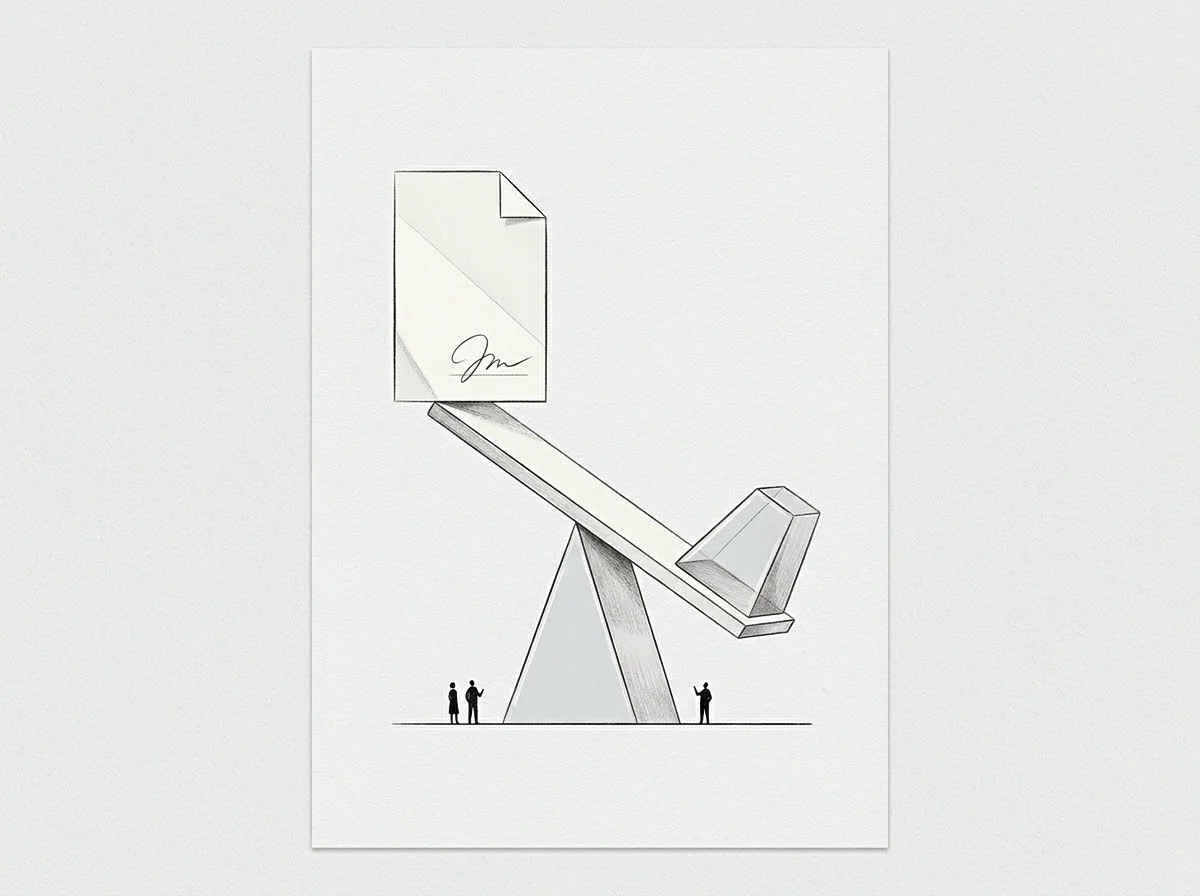
Maintaining governance firewalls carries concrete organizational costs that executive teams evaluate carefully. Strict boundaries may generate temporary tension with early investors who view structural distance as an erosion of trust or influence. Shareholders accustomed to direct access may perceive formal communication firewalls as bureaucratic obstruction designed to hide operational inefficiency.
Friction Accounting in Investor Relations
The time spent enforcing communication firewalls represents an operational cost that protects larger technical and commercial margins. Managing investor frustration requires consistent, high-quality formal communication through approved channels. When formal quarterly reports provide clear, accurate metrics on business performance, shareholders experience less temptation to seek informal updates from operating personnel.
Transparency in formal governance reduces the demand for informal backchannels.
Long-term organizational stability depends on maintaining absolute clarity regarding where equity ownership ends and executive authority begins. Allowing shareholders to bypass established governance structures compromises management integrity and divides operational capacity. Executive teams that enforce precise communication firewalls preserve focus, maintain authority structures, and ensure that operational execution remains aligned with board-approved strategy.
The open inquiry remains whether an executive team can maintain strict governance firewalls before early investors interpret structural distance as deliberate operational concealment.