
Measuring Operational Drift When Founders Leave Daily Operations
Operational drift measures the non-financial divergence between founder standards and successor execution through decision latency, quality variance, and exception velocity.
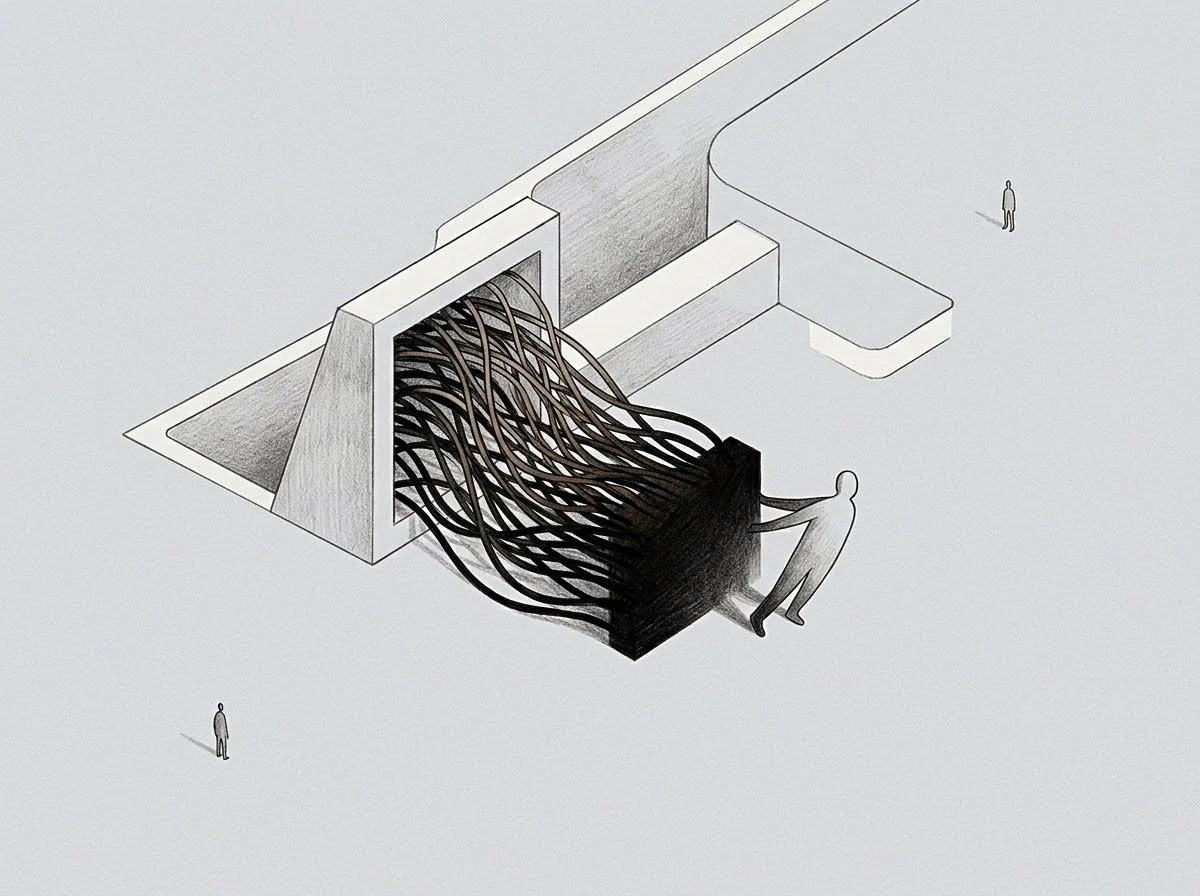
Variance
Financial accounting tracks capital allocations and net revenue, while operational accounting captures the exact divergence between designed execution and real shop-floor behavior. When an owner-operator departs from daily management, this divergence emerges immediately in non-financial parameters long before revenue figures alter. Tacit standards, accumulated through years of real-time correction, begin to soften at the edges.
Employees face trade-offs without the founder present and substitute formal guidelines with local convenience. The shift is subtle at first, manifesting in extended cycle times, compromised exception criteria, and diluted quality thresholds.
Operational drift is the systematic accumulation of unmonitored compromises that occur when daily supervision transitions to professional operators. Founders frequently confuse operational stability with organizational autonomy. An organization appears stable because throughput volumes remain unchanged.
Beneath the surface throughput metrics, the qualitative choices governing product standards, vendor selection, and customer friction resolution slowly realign around ease of execution rather than performance excellence.

Unstated Selection Criteria and Decision Decay
Every business operates on two operational codebases: written operating procedures and unwritten selection preferences. Written procedures detail sequential actions, such as entering an order, running a quality check, or processing a refund. Unwritten preferences dictate how employees resolve competing priorities when instructions conflict.
A founder automatically prioritizes long-term client retention over short-term processing efficiency. A professional manager, evaluated on monthly operating expenses, frequently reverses that priority.
The margin compresses quickly. When a founder vacates the daily operating chair, the team loses the active feedback loop that preserved unstated preferences. Tacit criteria decay silently.
Consider a recurring quality trade-off in a specialty manufacturing facility. The written standard specifies a tolerance window of five microns for a high-precision component. Under founder management, any part reaching three microns of deviation triggered an immediate tooling inspection, despite officially passing inspection.
The founder held an unwritten preference for absolute precision to prevent downstream assembly drag. Upon the founder’s departure to a board role, machine operators revert strictly to the written five-micron limit. Yield counts increase in the short term, but downstream assembly labor costs escalate three months later due to minor fitting friction.
The formal system recorded high efficiency while operational integrity degraded.
Systematic drift accelerates when success metrics prioritize immediate output volumes over structural adherence to unwritten quality standards.
This operational divergence follows a predictable decay sequence across post-founder teams. The breakdown occurs in distinct stages as initial founder habits dissolve into bureaucratic compliance.
- The team relies on direct memory of founder decisions during recent edge cases, maintaining historical performance standards without active enforcement.
- Unclear scenarios force middle managers to interpret intent, introducing variance between different operational departments.
- Formal documentation replaces direct judgment, reducing complex operational trade-offs to rigid checklist compliance.
- Local optimization replaces end-to-end efficiency, as department heads protect internal metrics at the expense of product integrity.
Measuring this shift requires tracking the specific points where informal preferences override written standards. If middle management cannot state the underlying trade-off logic behind a founder’s past operational choices, the organization has already entered active drift. Leaving these interpretation gaps unmeasured forces the business to absorb compounding systemic friction until customer churn reveals the damage.
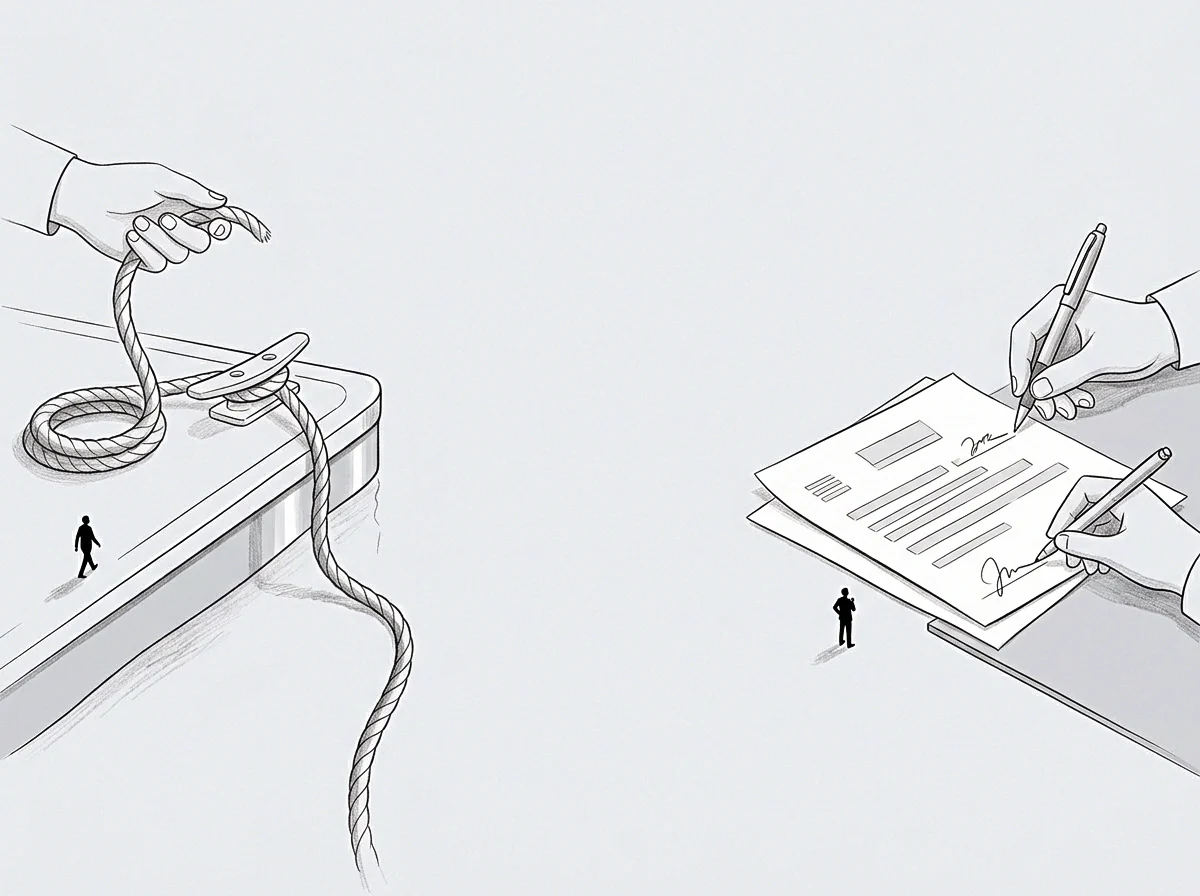
Gauge
Tracking operational drift demands quantitative metrics that capture behavioral changes before financial reports reflect organizational decay. Standard accounting statements act as trailing indicators, revealing structural losses only after customer relationships or operational capacities suffer permanent damage. Leading indicators sit entirely within daily execution cadences: approval turnarounds, exception frequency, and internal rework hours.
A primary diagnostic metric measures the velocity of minor exceptions. In founder-led environments, exceptions to policy receive immediate review, resulting in either a procedure update or a strict enforcement correction. When founder oversight ends, exception rates typically spike while resolution times lengthen.
Managers approve policy overrides locally to keep queue sizes low, creating informal precedent without updating baseline standards. Every exception creates precedent.

Which Diagnostic Thresholds Reveal Hidden Operational Decay Before Financial Metrics Shift?
Early measurement systems must focus on four specific non-financial vectors: operational friction, decision latency, quality variance, and escalation patterns. Tracking these operational channels establishes an objective measurement layer across daily operations.
Decision latency tracks how long a non-standard operational issue sits before resolution. Under direct founder leadership, decision latency remains short because a single authority holds full resolution power. Following a transition, cross-departmental coordination delays resolution as managers attempt to hedge accountability.
A steady increase in decision latency indicates that middle leadership lacks either the clarity or the authority to execute trade-offs decisively.
Quality variance measures the range of deviation across output batches or customer interactions. While average quality scores may remain within acceptable bounds, a widening statistical distribution signals that different staff members are applying divergent standards. Baseline metrics obscure the decay.
The expansion of variance represents the true physical footprint of operational drift.
Widening statistical variance in daily output reveals operational drift far earlier than aggregate performance averages.
Internal rework hours serve as a sensitive measure of procedural breakdown. Rework occurs when an employee completes a task, only for a downstream team member to correct or re-do part of the output to meet unwritten requirements. A surge in rework hours indicates that tacit expectations survived in downstream teams while upstream teams ceased fulfilling them.
The weekly cadence breaks.
Escalation pattern changes track the nature of questions reaching senior management. In a healthy post-founder transition, escalations consist of novel strategic choices. Under active operational drift, escalations revert to routine execution problems that lower management hesitates to resolve.
This reversal indicates systematic erosion of management confidence and operational clarity. Establishing an explicit drift measurement index calculated from these four vectors provides board members with direct visibility into daily execution health without requiring continuous physical presence in the plant or office.

Seat
The transition of an operational position depends heavily on the physical infrastructure of knowledge transfer. When an owner-operator steps out of a position, they vacate a seat that combines explicit administrative tasks with implicit tacit routines. Documenting explicit tasks into manuals creates an illusion of complete handover while leaving the implicit engine behind.
The physical space, software permissions, and direct communication lines associated with the seat undergo immediate transformation.
Tacit knowledge transfer remains the primary hurdle in founder departures. Tacit knowledge consists of pattern recognition built through repeated exposure to rare operational scenarios, vendor negotiations, and employee performance nuances. This knowledge cannot be transferred solely through standard operating manuals or short exit interviews.
It resides in real-time execution.

Documented Workflows and the Execution Gap
The gap between written documentation and actual execution wide instantly when a replacement operator takes over. Handover manuals routinely describe ideal conditions, assuming standard inputs and predictable workflows. Daily business operations, however, consist of constant small disruptions, input anomalies, and resource constraints.
The seat remains occupied, yet execution stumbles.
The successor in the seat quickly encounters scenarios omitted from written guides. Lacking the founder’s historical context, the successor defaults to literal procedural interpretation or seeks compromise solutions that alter the organization’s risk profile. Documented steps remain unread when crisis situations demand rapid, intuitive responses.
- Tacit Threshold Decay occurs when a new operator fails to recognize minor operational anomalies that the founder previously identified and corrected intuitively.
- Protocol Substitution manifests when managers replace missing operational context with heavy administrative approval gates, slowing overall organizational cadence.
- Informal Network Severance develops as internal and external stakeholders bypass the new seat holder to seek historical authority figures or alternative paths.
- Contextual Ambiguity emerges when written guidelines lack explicit guidance for resolving competing organizational trade-offs under tight deadlines.
Effective handover requires a structured shadowing model focused on edge-case exposure rather than routine workflow walk-throughs. The founder and the incoming operator must work alongside each other through live operational stress, allowing the founder to explicitly explain the rationale behind real-time choices. Removing the founder’s support scaffold without this shared operational experience guarantees rapid operational drift within ninety days of transition.
The work gets completed, but the standard applied bears little resemblance to the original design.
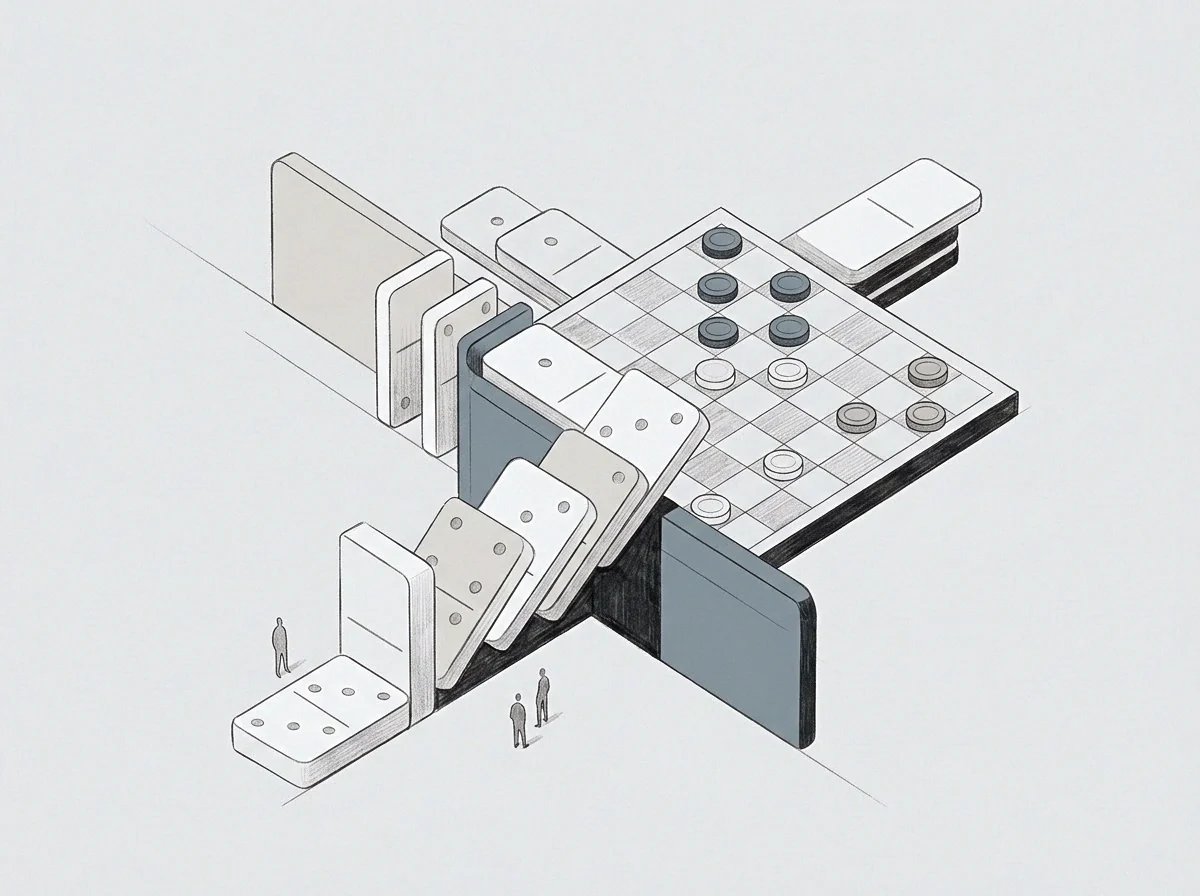
Margin
Managing operational drift requires clear intervention bounds and structural governance checkpoints. Establishing formal tolerance windows allows organizations to grant operational autonomy to professional management while maintaining strict boundary controls over core standards. Without defined intervention bounds, owners risk either micromanaging the new executive team or discovering catastrophic drift after financial value has eroded.
Intervention bounds establish specific quantitative triggers that require board or founder consultation. These boundaries must span operational metrics, financial authority, and policy alterations. Setting explicit parameters prevents incremental operational drift from becoming permanent organizational culture.
The table below compares three distinct governance models used to control operational drift during founder transitions, evaluating their structural mechanisms and operational trade-offs.
| Governance Model | Primary Control Mechanism | Operational Latitude | Drift Detection Window | Primary System Cost |
|---|---|---|---|---|
| Threshold Enforcement | Fixed variance caps on operational KPIs and spending limits | Moderate; bounded strictly by predefined numerical bands | 14 to 30 Days | Administrative overhead to track non-financial variances |
| Shadow Governance | Parallel review of non-standard operational choices by founder | Low; high founder visibility over daily trade-offs | Real-Time (1 to 7 Days) | Executational friction and delayed management autonomy |
| Cadence Auditing | Periodic deep-dive reviews of random operational batches | High; operators exercise full authority between audits | 30 to 90 Days | Risk of undetected drift accumulating between audit cycles |
Intervention Bounds and Governance Thresholds
Designing an effective governance structure requires selecting the appropriate balance between operational speed and drift prevention. Threshold enforcement provides clear numerical boundaries for incoming management. For example, an operator might hold full authority to modify customer schedules, provided overall delivery variance remains within a two-percent window and unit cost changes stay below a fixed dollar threshold.
Crossing either boundary triggers a mandatory review before further operational adjustments occur.
Shadow governance acts as a temporary stabilization mechanism during early handover stages. The incoming executive manages daily execution, but the departing founder retains veto authority over specific policy modifications or contract changes. While this model minimizes early operational drift, maintaining shadow governance too long undermines managerial authority and creates organizational confusion regarding true operational control.
Authority drops to zero if accountability is split indefinitely.
Cadence auditing relies on periodic, rigorous sampling of operational outputs rather than real-time intervention. Auditors examine selected transactions, production runs, or client communications against original founder standards. This approach preserves managerial autonomy while capturing systemic drift before it influences high-level financial reporting.
The system absorbs the shift only when intervention criteria are clear, documented, and consistently enforced across all business units. Defining explicit intervention boundaries ensures that operational evolution remains deliberate rather than accidental.
Set hard operational variance bounds early, enforce them through objective metrics, and allow incoming leadership complete freedom within those limits.
Residue
Every founder exit leaves a permanent operational residue. Complete preservation of founder-era execution is impossible, as new management inevitably introduces different methods, communication styles, and administrative priorities. The strategic goal of tracking operational drift is not to freeze the organization in an immutable state, but to distinguish between healthy operational evolution and destructive quality decay.
Healthy evolution adapts operational workflows to scale requirements while preserving core performance standards. Destructive decay sacrifices quality, customer satisfaction, or long-term efficiency to achieve short-term cost targets or management convenience. Distinguishing between these two outcomes requires continuous measurement of core operational values.

System Capacity After Exit Completion
Once a founder completes their transition out of daily operations, the organization reaches a new baseline state. The room stays silent when historical assumptions are tested. The long-term capacity of this new baseline depends on how effectively tacit principles were embedded into the organization’s culture and structural governance systems.
Organizations that successfully navigate founder exits combine explicit performance boundaries with continuous training focused on core operational priorities. They accept that operational execution will change, while ensuring that core quality thresholds remain non-negotiable across every department.
The ultimate test of a founder handover is whether the organization maintains its competitive advantage and operational resilience three years after the founder’s direct oversight ends. Managing operational drift transforms a business from a founder-dependent enterprise into an institutional organization capable of sustained execution across generations of management.
What portion of the firm’s operational integrity was built into the system itself, and how much walked out the door with the founder on their final afternoon?