
Quantifying Residual Operational Losses in Post Succession Executive Systems
Post succession operational losses quantify the hidden throughput collapse caused when informal exception routing and tacit relational credit vanish with an executive.

Drag
A departing chief executive clears the desk, transfers primary administrative credentials, and surrenders the company token on a scheduled Friday afternoon. Monday morning presents unbroken system uptime, balanced general ledgers, and zero ticket escalations across customer service queues. Three months later, contract approval cycles have drifted from four working days to nineteen, unbudgeted contractor spend has doubled to bypass stagnant cross-department approvals, and senior staff spend thirty percent of their working hours reconstructing precedents that once lived inside a single skull.
Latent operational slippage evades conventional reporting during executive handovers because standard enterprise tools monitor transactions rather than institutional velocity. The baseline throughput of an executive system rests upon informal exception routing, undocumented escalation thresholds, and tacit relational credit built across consecutive operating cycles. When the originating occupant vacates the position, these unrecorded transmission pathways snap simultaneously, forcing subsequent inquiries through nominal formal hierarchies that lack the throughput to process them.
Executive capacity diminishes when undocumented exception channels divert baseline decisions into administrative gridlock.

Latency Manifestation Across Operating Intervals
Measurement of post succession losses begins with decision latency rather than fiscal variance. Standard production line analysis treats output volume as an immediate proxy for operational health. Executive functions, by contrast, operate with protracted feedback loops where the friction of an incompetent or friction-laden handover takes quarters to surface on financial statements.
During the initial ninety days following succession, incoming executives routinely burn relational capital to maintain the illusion of continuity, absorbing procedural drag through unsustainable personal overtime.
The operational deficit deepens as the informal coordination layer decays. Department leaders, accustomed to an unwritten shorthand with the departed executive, submit defensive documentation packets to protect their teams from scrutiny under the replacement regime. Volume metrics remain stable while throughput velocity collapses under administrative weight.
A vendor contract that previously required a ten-minute conversation now generates six rounds of committee redlines. Projects preserve their nominal milestones while shedding internal quality checks to maintain calendar compliance.
Unaddressed procedural erosion compounds across linked operational units until systemic backlog forces emergency restructuring, tripling the original fiscal expenditure of the transition.

Bench
Succession models display vastly divergent loss profiles depending on the operational proximity of the incoming leader. An internal deputy inherits relational proximity yet frequently lacks the executive autonomy to override entrenched procedural disputes without executive sponsorship. An external hire possesses positional authority but operates blind to institutional shorthand, treating every standard exception as an administrative irregularity.
Systematic accounting of residual losses requires categorizing these systemic points of failure against the handover archetype.
| Succession Archetype | Primary Transmission Failure | Mean Cycle Inflation | Residual Drag Horizon |
|---|---|---|---|
| Internal Lateral Transfer | Peer authority parity disputes | Forty percent latency increase | Six to nine months |
| External Executive Placement | Tacit routing ignorance and vendor friction | One hundred twenty percent latency increase | Twelve to eighteen months |
| Founder-Designated Deputy | Shadow governance and unstated veto override | Seventy-five percent latency increase | Eighteen to twenty-four months |
| Emergency Board Appointee | Defensive documentation and asset hoarding | One hundred fifty percent latency increase | Nine to twelve months |

Structural Origins of Friction Variations
Factual investigation of these pathways reveals that external placements incur their highest losses within supplier terms and cross-team concessions. The incoming leader applies generic industry playbooks to historical arrangements, dismantling bespoke operational compromises that kept critical dependencies functioning below market rates. Subordinate personnel respond by strictly working to contract, withholding discretionary effort that previously masked systemic deficits.
The resulting loss accumulates as direct operational expenditure as outside specialists are hired to complete tasks previously resolved through internal goodwill.
Founder-designated deputy successions present an alternate failure mode governed by incomplete authority transfer. Staff continue routing sensitive operational inquiries back to the departed founder via encrypted personal messages, bypassing the formal seat entirely. The replacement executive operates as a symbolic figurehead while actual structural power remains tethered to an off-site director.
This split authority multiplies operating cycles by introducing duplicate validation loops for routine expenditures.
Written transition compacts lose regulatory effect whenever informal communication channels bypass the seated executive.
The formal transition charter dictates whether operational friction subsides within two quarters or hardens into permanent overhead.

Wire
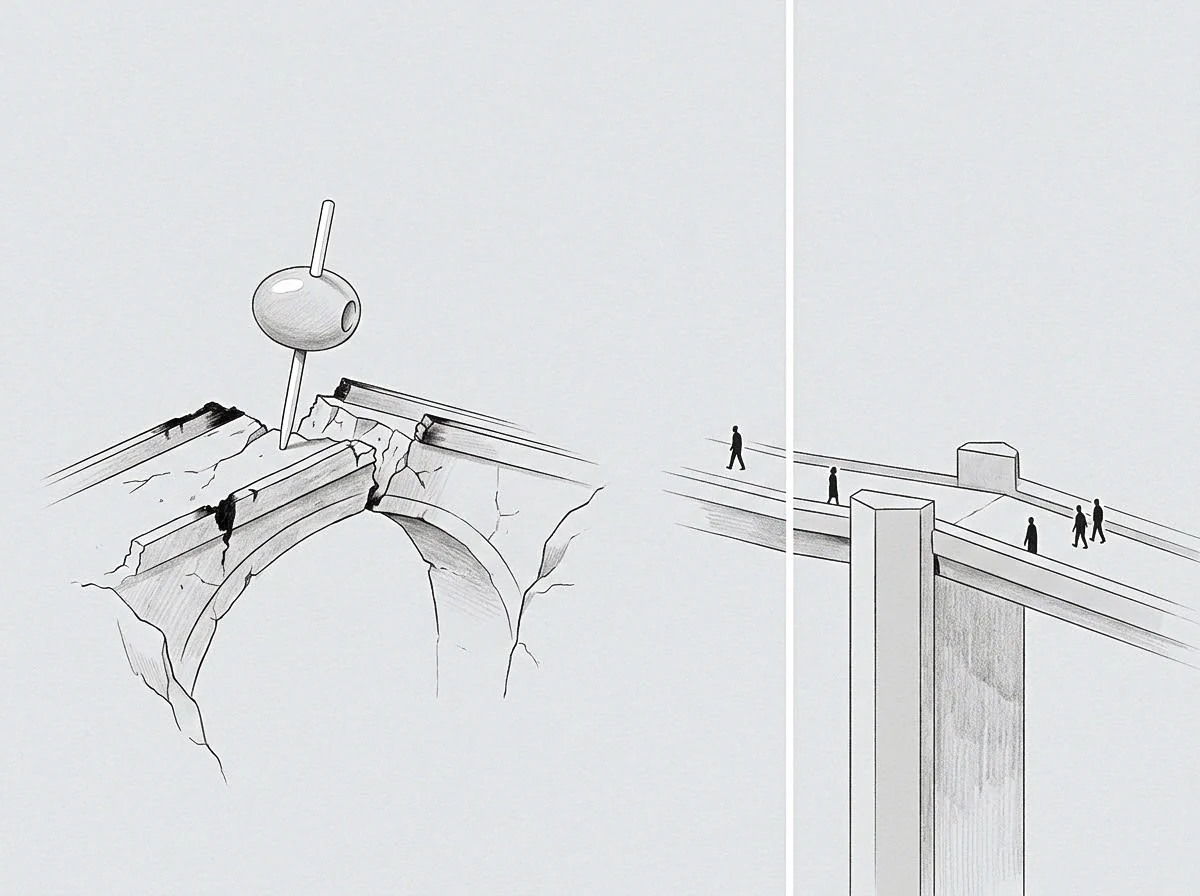
Informal organizational conduits function like hidden electrical lines behind drywall, routing real power while architectural blueprints display empty cavities. A departing officer leaves behind documented standard operating procedures that describe how work theoretically moves through the firm. The actual business, however, survived on undocumented concessions, expedited favors, and instinctive hazard detection accumulated over hundreds of unrecorded crises.
When that officer departs, the physical conduit remains cold, leaving the successor holding live current with zero grounding.
Which Latent Protocols Fail Following Executive Departure?
Analysis of executive operational residue isolates four specific categories of tacit knowledge that evaporate during executive migration:
- Relational Credit Balances represent unwritten reciprocal favors between department heads that permit rapid resource reallocation during production crises without formal budgetary sign-off.
- Tacit Exception Thresholds govern the exact degree of technical debt or procedural non-compliance an executive tolerates to meet quarterly shipping commitments without triggering regulatory non-compliance.
- Informal Veto Topologies trace the actual sequence of off-the-record consultations required to move an executive initiative past hidden organizational resistance before a public committee vote.
- Historical Precedent Vaults house the undocumented reasons why specific operational strategies failed five years prior, preventing the organization from repeating bankrupt operational experiments.
Loss quantification across these four categories demands measuring the sudden proliferation of committee assemblies. When an executive cannot rely on tacit authority, committees proliferate to distribute personal liability across groups. Every uncodified protocol that leaves the building with an outgoing leader converts directly into recurring calendar meetings for the remaining leadership tier.
The calendar audit exposes the shift. Department leaders spend twelve additional hours weekly sitting in consensus meetings because no individual holds the unwritten precedent required to decide unilaterally. Operational velocity drops proportionately.
Routine production releases slip behind scheduled deadlines while engineering directors debate trivial policy interpretations previously settled by executive nod. The business pays for uncodified wisdom in direct wage overhead and missed commercial opportunities.
The file is complete on paper, yet nothing moves without three signatures that nobody knows how to secure.
Tally
Quantifying operational losses requires translating institutional friction into standardized fiscal units. Standard governance assessments fail here because they measure financial variance against arbitrary annual forecasts rather than against pre-succession baseline throughput. A rigorous quantification methodology measures three distinct components: transaction elongation penalty, administrative bypass tax, and redundant asset expenditure.
Isolating these factors allows an organization to calculate the true cost of executive displacement with mathematical precision.
Consider an operating unit generating one hundred million dollars in annual revenue with an executive compensation envelope of two million dollars. Following an executive transition, the board calculates the cost of succession as the recruiter placement fee, the departing officer buyout, and the sign-on premium of the incoming leader. This calculation overlooks the systemic operational drag occurring three layers below the executive suite.
When transaction cycles elongate by forty percent, working capital commitments expand to support stalled inventory and extended procurement timelines.

Formulaic Isolation of Operational Residue
The mathematical representation of residual operational drag treats the post-succession executive apparatus as a degraded transmission system. Let base operational velocity be defined by standard throughput per labor hour across primary administrative workflows. When executive succession takes place, throughput velocity degrades according to a quantifiable friction coefficient reflecting uncodified institutional dependencies.
Take an enterprise operating with an executive oversight span covering four core operational value streams. Assume the successor requires six months to achieve basic contextual literacy across legacy vendor commitments, during which operational exception handling drops by fifty percent. If the baseline throughput velocity of the enterprise processes two hundred complex client allocations per calendar month, a forty percent elongation in cross-department sign-offs results in eighty stalled customer implementations across the primary operational quarter.
Direct labor costs escalate linearly as internal teams mobilize redundant meetings to compensate for missing executive arbitration. If twenty senior managers expend ten hours weekly resolving jurisdictional disputes previously settled by executive authority, the enterprise bleeds over two hundred hours of executive capacity every five business days. Calculated against a fully loaded managerial rate of one hundred seventy-five dollars per hour, this single friction point drains thirty-five thousand dollars weekly in direct labor value, totaling over four hundred thousand dollars across a single operational semester.
Total operational loss equals the product of systemic latency expansion and the fully burdened cost of delayed execution cycles.
Secondary losses manifest through defensive resource stockpiling. Middle managers, uncertain of the incoming executive’s operational priorities or survival prospects, hoard contingent operating budget and delay capital deployment. Projects sit half-funded.
Discretionary development pipelines freeze while department heads assess whether the new leader will survive the board’s initial annual performance audit. The cost of this systemic paralysis surpasses the entire annual compensation package of the executive seat itself.
What portion of this measured administrative slippage stems from inherent cognitive onboarding limits versus deliberate political obstruction by passed-over internal peers?

Graft
Stabilizing an executive handover requires treating the transition as an operational transplant where connective tissue must knit before external weight is applied to the limb. Organizations that successfully minimize residual losses abandon the illusion of the immediate clean break. Instead, they build structural scaffolding that explicitly preserves uncodified knowledge pathways while systematically transferring informal relational credit to the successor seat over scheduled operating intervals.
The outgoing executive cannot hand over an operational system through passive documentation binders. Codification captures rules; it cannot capture the exceptions that make rules workable in high-stress production environments. Minimizing residual loss requires an active shadowing cadence during which the incoming executive observes live exception arbitration without intervention, followed by a secondary phase where the successor arbitrates while the outgoing officer acts as silent structural insulation against systemic shock.
Structured Phasing of Structural Decoupling
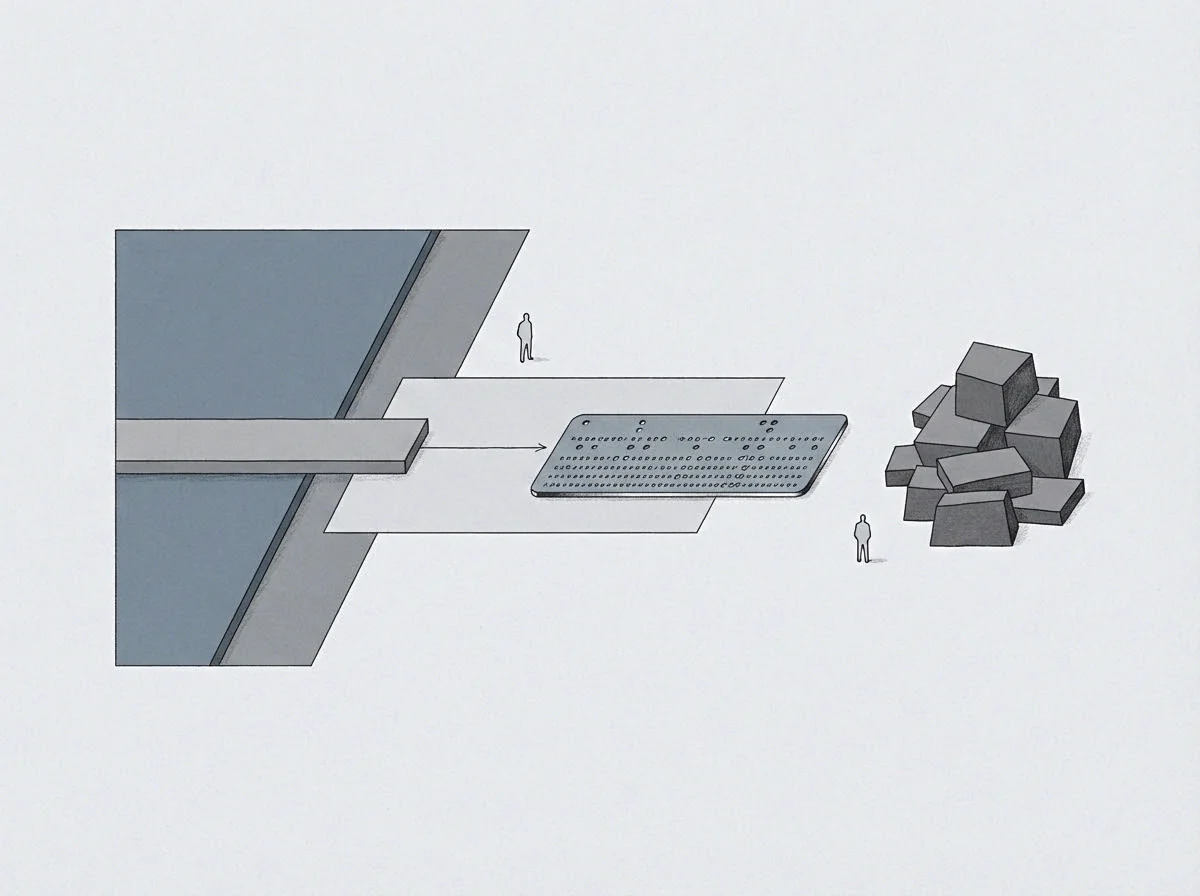
Decoupling must proceed in deliberate phases to prevent organizational vertigo. The first phase preserves historical escalation routes while the successor audits exception patterns. The incoming leader attends all external partner negotiations and internal governance reviews as an analytical observer, charting informal power nodes and unwritten veto dynamics without altering operational protocol.
Subordinate staff continue operating under established precedents, preventing the defensive documentation panic that paralyzes unmanaged transitions.
The second phase transfers active execution authority while retaining the outgoing leader on a structured advisory tether dedicated exclusively to exception analysis. During this interval, the successor makes every operational adjudication, while the outgoing officer reviews stalled decisions twice weekly to surface hidden organizational tripwires before they detonate cross-department cooperation. This dual-seat arrangement absorbs operational shock, allowing the new executive to build authentic relational equity without destroying systemic throughput velocity.
Operational stability returns only when the successor successfully executes emergency exceptions without external precedent consultation.
True executive transfer concludes when unwritten arbitration matches the speed of the original system without relying on the memory of the person who built it.