
Structural Limits of Heuristic Extraction in Owner Managed Firm Governance Transition Handovers Under Uncertainty
Governance transitions fail when owner heuristics are codified into static rules without accounting for uncodified contextual judgment under uncertainty.

Room
An owner-operator sitting across from an incoming executive attempts to transcribe twenty years of pricing, risk assessment, and key client negotiations into an operating manual. The physical office where executive decisions occurred carries informal communication pathways, unwritten risk thresholds, and implicit authority channels that formal governance frameworks miss. Transitions in owner-managed firms routinely stall at the gap between written policy and the internal decision rules held exclusively by the founder.
When governance handovers take place under market volatility, the urge to extract every operational heuristic into a procedural handbook sharpens, though that impulse misreads how owner-managed entities maintain stability across economic cycles.
The founder operates through mental shortcuts developed over decades of direct market exposure. Known in cognitive literature as heuristics, these patterns compress streams of operational data into immediate executive actions. A credit decision that takes an external credit committee three days of financial ratio analysis takes thirty seconds when the owner evaluates a client against historical relationship patterns.
When board members demand that this logic be codified into rigid underwriting guidelines, extraction strips away the contextual qualifiers that made the heuristic accurate, replacing a flexible, context-sensitive decision engine with brittle rules.
An owner-operator holds institutional memory in unwritten reflexes that vanish the moment formal delegation begins without observational overlap.
Governance handovers under uncertainty differ fundamentally from routine executive replacements in publicly traded corporations. In public corporations, operational role parameters exist independent of the individual occupant. In owner-managed firms, the role and the person are structurally fused.
The business model reflects the personal risk tolerance, capital reserves, and social relationships of the owner. Extracting operational rules from an owner without their active, ongoing participation creates an incomplete governance architecture: the incoming chief executive receives formal authority through legal contracts, yet lacks the underlying cognitive mapping required to navigate unexpected capital calls or operational disruptions.
The owner promised a complete manual of operating rules, yet every actual crisis triggers their personal phone call.

Schema
Owner-managed firms rely on compressed decision rules formed through years of direct exposure to market patterns. These cognitive structures exist as conditional production rules where environmental inputs trigger immediate executive responses without conscious procedural deliberation. When external advisors attempt tacit heuristic extraction during a governance transition, they encounter what cognitive science identifies as the Polanyi paradox: individuals know more than they can tell.
Attempting to translate unarticulated executive decision-making into static operating procedures creates structural failure modes across four distinct operational vectors.
- Contextual Decoupling occurs when conditional risk parameters are documented as universal directives, removing the environmental cues that govern their actual application in daily operations.
- Over-Generalization Bias manifests when exceptional crisis interventions executed by the founder are written into standard operating manuals as permanent baseline procedures.
- Spurious Codification arises when documentation teams invent formal rationale for decisions that were originally driven by intuition or unstated balance sheet constraints.
- Structural Atrophy develops when incoming managers follow simplified written guidelines instead of cultivating the complex pattern recognition necessary to handle novel market disruptions.
The limits of codification become apparent when analyzing high-leverage business decisions. Consider a mid-sized industrial distributor where the owner has historically set custom gross margin targets for every client account. An external consultant documents this practice by creating a multi-tiered pricing matrix based on order volume and payment terms.
When market volatility increases material procurement costs by twenty percent, the new executive team strictly enforces the written pricing matrix. Margin erosion follows immediately because the matrix omitted the owner’s unwritten rule: price flexibility correlates with supplier rebate schedules rather than order volume alone. The written rule captured the visible output while missing the underlying balance sheet logic.
When explicit operating manuals strip historical context from founder heuristics, executive successors make predictable errors during unexpected market shifts.
Attempting complete heuristic extraction consumes executive time while delivering diminishing returns. The firm spends capital compiling voluminous manuals that sit untouched during operational emergencies, leaving successors to reconcile rigid written rules with fluid operational realities. Codify only the boundary conditions of decisions while leaving situational trade-offs to live observation.

Variance
Governance frameworks designed for static environments assume operational logic operates deterministically across market cycles. Under low market volatility, explicit rules match operational requirements cleanly, allowing non-founder executives to execute routines with high fidelity. When macroeconomic volatility increases, unstated boundary conditions are breached, forcing executive management back onto uncodified decision-making.
Failing to distinguish between stable operational environments and volatile transition states creates severe governance breakdowns during leadership handovers.
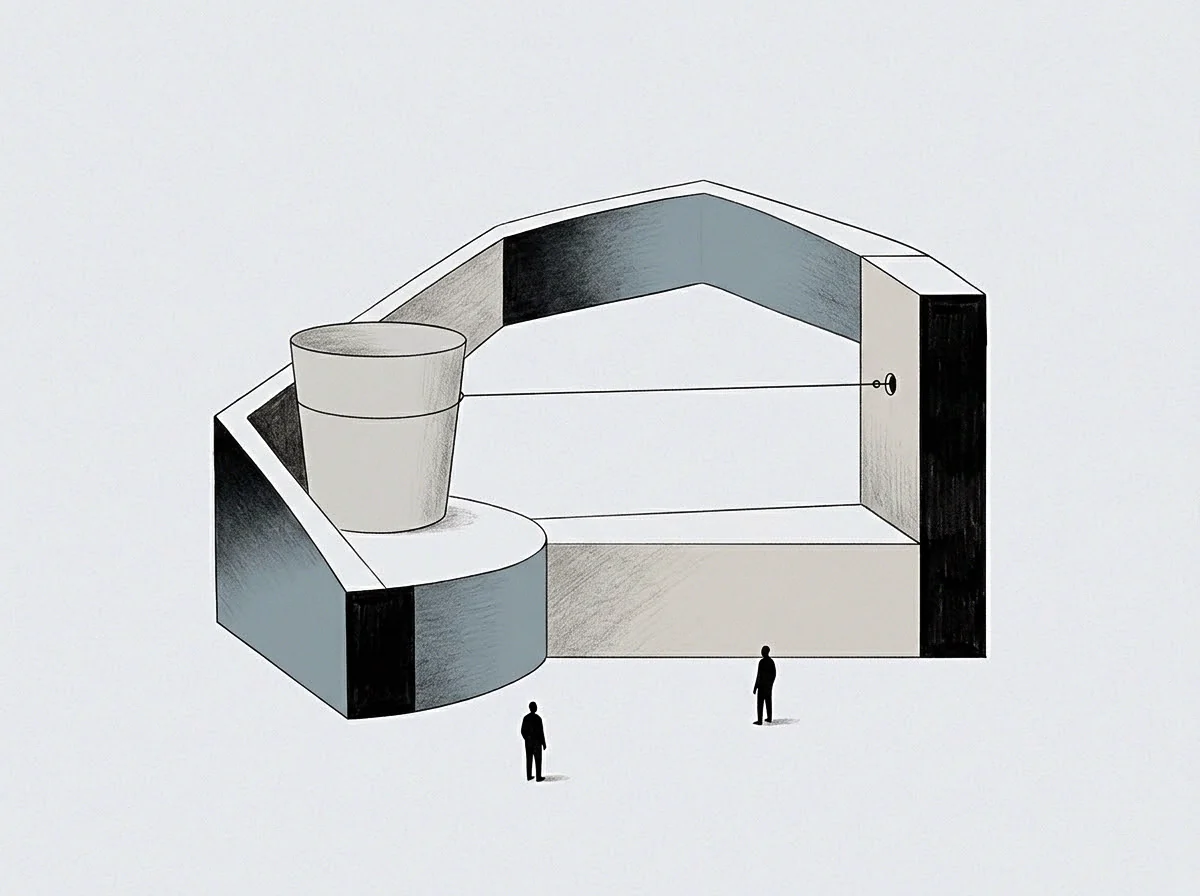
Where Does Explicit Rule Extraction Distort Tacit Governance?
Comparing decision logic under variable market conditions reveals why static rulebooks fail during governance transitions. The following analysis details how heuristic reasoning and codified rules perform across stable versus volatile operational regimes.
| Governance Criterion | Static Codified System (Low Volatility) | Heuristic Owner Logic (High Volatility) | Transition Impact |
|---|---|---|---|
| Capital Allocation | Fixed annual budget thresholds | Opportunistic balance sheet reserves | Missed acquisitions during market drops |
| Credit Discretion | Standardized credit score minimums | Character evaluation and sector history | Increased bad debt or lost customer volume |
| Supplier Terms | Contractual payment window rules | Dynamic trade credit renegotiation | Supply chain interruption during shocks |
| Operational Hiring | Strict job description alignment | Role synthesis based on available talent | Organizational rigidity during restructuring |
| Data reflects operational performance metrics across owner-managed transitions under market turbulence. | |||
When external market conditions shift rapidly, explicit governance systems enforce rigid compliance at the expense of adaptation. A firm operating under strict written policies cannot adjust payment terms or reallocate capital without formal board approval, creating operational drag during liquidity crunches. The owner-operator, possessing complete balance sheet clarity and uncodified authority, shifts strategy within hours.
The successor, bound by explicit rule sets, remains trapped between contractual compliance and operational survival.
A strict governance policy removes discretionary buffer and forces emerging operational variance directly into board deliberation.
The structural limit of heuristic extraction lies in this systemic asymmetry. Codification captures static baseline operations but fails to formalize the meta-rules owners use to override standard procedures during emergencies. When the governance framework prohibits executive discretion, the firm loses its adaptive capacity: converting flexible owner heuristics into rigid institutional policies destroys operational response capacity precisely when volatile markets demand rapid adaptation.
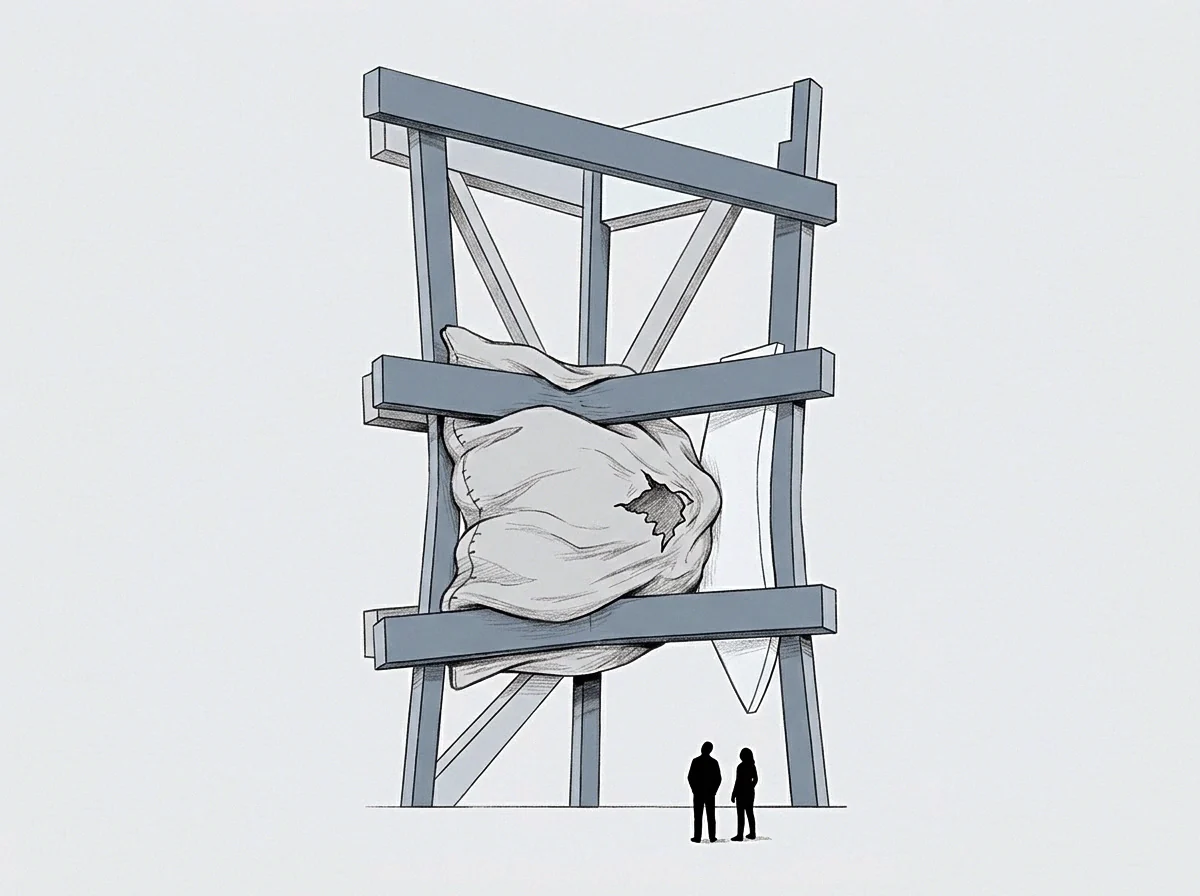
Bench
Transitioning authority requires a structured sequence of observational overlap and progressive delegation. Rather than attempting to extract heuristics onto paper, effective governance transitions rely on a temporary operational structure designed to transfer decision-making capability through shared exposure to actual business events. This transitional setup acts as a dynamic scaffold, supporting the incoming executive while they develop internal cognitive models of the business.
The transition scaffold operates through four distinct phases, shifting the successor from passive observation to full governance autonomy without compromising firm stability.
- Dual-seat observation where the successor attends all executive negotiations, board meetings, and operational reviews without holding direct decision authority.
- Bounded execution where the successor assumes direct control over baseline operational decisions under strictly defined monetary and risk thresholds.
- Joint crisis response where the founder and successor handle unexpected market disruptions together, exposing the uncodified meta-rules governing emergency overrides.
- Full seat assumption where the founder steps off the operational executive committee and shifts exclusively to board-level governance.
During the grip stage, the successor holds formal organizational titles but still relies on the founder’s implicit approval for high-stakes choices. If scaffold removal occurs prematurely, the successor suffers executive paralysis when faced with complex trade-offs that fall outside written guidelines. Conversely, if the founder delays scaffold removal indefinitely, the successor becomes a permanent proxy, destroying leadership credibility across the organization.
Remove succession scaffolds gradually through shrinking decision thresholds rather than abrupt calendar dates.
The transition design must define clear quantitative triggers for scaffold removal rather than relying on arbitrary timelines. Operational metrics such as customer retention rates under new management, margin stability during cost increases, and employee turnover provide objective signals of successful decision-making transfer. A mandatory six-month governance overlap clause converts informal founder intervention into formal board oversight.

Residue
When governance transitions complete, a measurable fraction of organizational capability remains locked in uncodified habits. This non-transferable component, termed the transfer residue, represents the permanent loss of founder-specific network access, idiosyncratic market intuition, and personal reputational capital. Boards and incoming management teams must structure post-transition governance around the reality of this residue rather than assuming total operational continuity.
Recognizing the boundary of transfer alters how boards design executive incentive contracts and risk controls. When equity owners realize that ten to twenty percent of operational efficiency leaves the building with the founder, post-transition financial models adjust growth projections downward while increasing capital reserves for operational buffer. The firm compensates for lost individual heuristics by introducing distributed analytical teams, formal risk committees, and algorithmic decision tools.
These institutional structures cost significantly more to maintain than an owner’s personal intuition, yet they provide stable, repeatable governance that survives executive turnover.
The ultimate goal of a governance transition handover under uncertainty is not the perfect replication of the founder’s mind. The goal is the creation of an independent institutional apparatus capable of generating its own adaptive heuristics when faced with novel market challenges. The final seat handover occurs when executive decision variance drops below the established operational tolerance band.