
Structuring Phased Clawback Escrows for Latent Liabilities in Partner Transitions
Phased clawback escrows protect remaining partners by locking buyout funds into staggered tranches aligned with the statutory decay rate of latent liabilities.

Tranche
A phased clawback escrow splits equity or cash distributions during a partner departure into temporal holds matched to the decay rate of latent liabilities. When an equity partner exits an operating firm, work performed during their tenure carries risks that remain invisible on the balance sheet for quarters. Tax authorities audit historical filings years after submission.
Code bases conceal architectural debt or uncredited third-party software components. Customer contracts signed under earlier authority contain unrecorded rebate obligations or performance guarantees. Holding the entire buyout payment until statutory limitation periods expire stalls the transaction, while paying full consideration at execution transfers structural debt to remaining partners.
Financial escrows solve this temporal mismatch by locking a calculated percentage of settlement capital into segregated holding accounts. The architecture of these holds relies on declining percentage release tiers rather than binary cliff releases. A standard agreement places twenty to forty percent of total transaction value into escrow at closing.
This capital releases in staggered portions at marked milestones, typically twelve, twenty-four, and thirty-six months. Each step aligns with the expiration of specific legal, financial, or operational warranty windows.

Phased Release Schedules and Exposure Curves
Risk exposure follows an asymmetric decay curve. Most operational liabilities surface within the first twelve months of partner departure, as incoming operators audit active systems and run annual reporting cycles. Financial liabilities, including multi-year tax assessments and regulatory compliance checks, require extended observation windows.
Structuring the escrow requires mapping tranche releases against these specific discovery intervals. The initial tranche releases after the completion of the first full annual financial audit following the departure date. The second tranche releases upon the settlement of transactional representations, while the final hold covers statutory tax exposure and indemnification claims.
The holdback percentage drops only when the corresponding audit window closes without an outstanding indemnification notice.
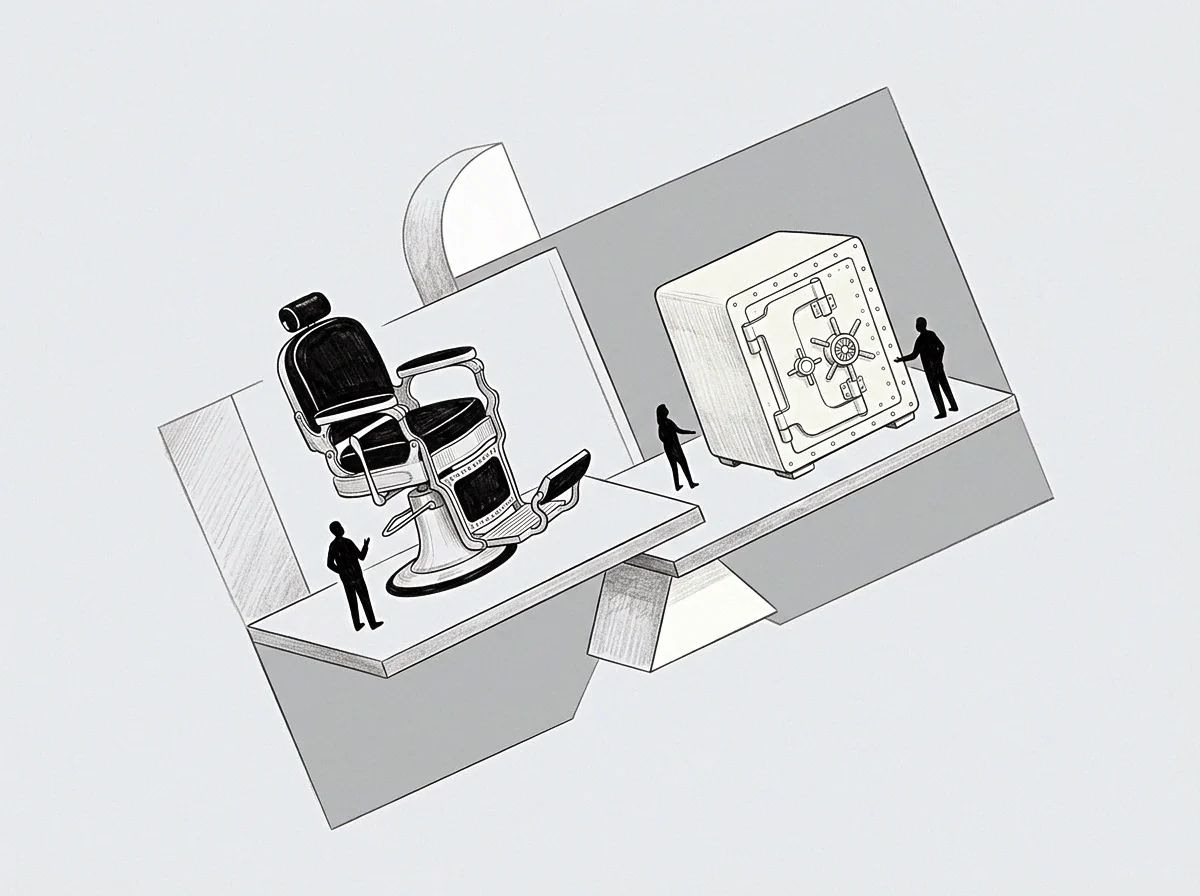
Valuing Latent Claims Against Escrow Pools
Determining the initial capital allocation into an escrow pool requires a precise calculation of historical exposure. Partners often mistake buyout valuation for net distribution capability. If a departing partner oversaw client accounts generating thirty percent of firm revenue, liabilities originating from those accounts dictate the baseline reserve.
The escrow calculation isolates historical gross profit against historical warranty claims, multiplying the resulting liability ratio by the remaining statutory limit duration.
Clawback provisions operate alongside the escrow pool to handle liabilities that exceed funded reserves. While the escrow acts as a pre-funded liquid reserve, the clawback clause creates a contractual obligation for the departing partner to return previously released distribution capital if latent liabilities exceed the escrow threshold. Equity certificates retained as security offer a secondary recovery mechanism when cash reserves prove insufficient.
A structured holdback clause specifying dedicated arbitration for escrow claims changes an unquantified post-exit dispute into a bounded administrative settlement.

Valve
Latent risks are operational, legal, or fiscal liabilities created during a partner’s active seat that remain hidden until specific triggers activate them. Controlling these risks requires structured risk valves within the exit documentation. A risk valve isolates liability categories, assigning individual holdback periods and offset rules to each specific exposure type rather than treating all historical risk as a single pool.

Categorization of Hidden Operational Deficits
Partner departures expose structural weaknesses previously masked by informal authority or uncodified processes. When the person who built a system leaves, defects in that system shift from operational friction to financial liabilities.
- Tax Adjustments surface during state or federal audits of historical revenue recognition practices, creating retroactive tax bills and statutory interest penalties.
- Intellectual Property Defects emerge when undisclosed open-source code libraries or uncredited contractor work products require costly licensing remediation or software replacement.
- Client Contract Defaults trigger when undisclosed side agreements, unrecorded volume rebates, or unfulfilled service level guarantees require cash remediation.
- Regulatory Non-Compliance results in retroactive fines for past labor, data privacy, or jurisdictional compliance omissions initiated during the departing partner’s tenure.

Decay Timeframes for Contractual and Statutory Risk
Each liability category carries an inherent decay timeline defined by statute or commercial reality. Tax liabilities operate on explicit statutory limits, typically running three to six years from the date of tax filing. Contractual warranties expire according to terms set in client agreements or general commercial limitation acts.
Operational debt decays as new operators overhaul inherited code, client structures, and administrative workflows.
Risk valves match escrow releases to these external clocks. The agreement assigns dedicated sub-accounts within the escrow pool to specific liability classes. As each corresponding limitation period expires, the reserved sub-account capital unlocks automatically, provided no written claims remain open.
Unidentified liabilities decay on schedule, but disclosed active claims freeze the corresponding tranche indefinitely.

Residue
Financial escrows capture monetary liabilities, but they cannot absorb the operational residue left by departing partners. When an owner-operator leaves a firm, tacit knowledge, key relationship management habits, and undocumented technical choices vanish from daily operations. The financial escrow protects capital reserves, yet the operational engine deteriorates if handover mechanics depend entirely on balance sheet clawbacks.

Where Does Tacit Knowledge Defeat Escrow Terms?
Tacit knowledge resists codification. A departure contract can mandate the delivery of system documentation, client lists, and process handovers, but it cannot force the transfer of intuitive judgment or client trust. When a client cancels an account six months after a partner exit because the incoming team lacks the historical nuance to manage the relationship, the firm suffers financial loss.
Distinguishing between ordinary commercial churn and loss caused by negligent operational transfer determines whether escrow funds can be legally claimed.
Escrow provisions written without clear definitions of operational breach fail during dispute resolution. Arbitrators routinely reject claims against escrow accounts for lost client revenue unless the exit agreement explicitly links escrow forfeitures to specific, documented handover failures, such as incomplete code repositories or unfulfilled transition hours.
| Exposure Category | Primary Detection Trigger | Remediation Instrument | Escrow Coverage Scope |
|---|---|---|---|
| Financial & Tax Audit | Statutory audit notice or annual tax filing review | Direct cash offset from escrow tranche | Full coverage up to escrow balance |
| Undisclosed Contract Terms | Client invoice dispute or contract renewal failure | Indemnification claim against general pool | Covered if contract executed prior to exit date |
| Software Architecture Debt | System outage or third-party security audit | Remediation cost deduction from technical tranche | Covered under technical warranty covenants |
| Tacit Knowledge Loss | Key client churn or internal process collapse | Service fee reduction or forfeiture of earnout | Excluded unless tied to specific handover metrics |
The gap between financial accounting and operational reality creates legal friction during partner departures. Explicit monetary liabilities easily translate into ledger entries. Operational decay requires behavioral metrics tied directly to tranche release conditions.
A release clause that ties escrow disbursements solely to elapsed time guarantees payment even when system documentation remains incomplete.
Failing to separate explicit financial liabilities from operational performance metrics leaves the remaining partners bearing the full cost of system reconstruction while escrow funds flow out to the departed partner.

Ledger
Evaluating phased escrow structures requires running comparative cap table models under actual exit conditions. Consider an operating firm with three equal equity partners where one partner exits with a buyout valuation of one million dollars. The remaining partners face choices regarding how to structure the buyout settlement and holdback schedule to insulate the business against latent debts.
Assume the firm faces two potential latent liability events: an unrecorded state sales tax audit covering prior operations estimated at one hundred fifty thousand dollars, and a client contractual dispute over legacy deliverables valued at seventy-five thousand dollars. Two structural options illustrate the mechanics of risk distribution.
- Pay seven hundred fifty thousand dollars at closing, placing two hundred fifty thousand dollars into a single flat escrow releasing fully at month twenty-four.
- Pay six hundred thousand dollars at closing, distributing four hundred thousand dollars into three phased tranches of one hundred fifty thousand dollars at month twelve, one hundred fifty thousand dollars at month twenty-four, and one hundred thousand dollars at month thirty-six.
- Audit operational documentation and active client accounts within ninety days of exit to lock in the baseline liability log.
- Issue formal written notices for discovered defects prior to scheduled tranche release dates to legally freeze capital distributions.
Under the flat escrow model, if the sales tax audit surfaces at month eighteen, the firm draws one hundred fifty thousand dollars from the account, leaving one hundred thousand dollars. When the client dispute arises at month twenty-six, the escrow has already fully disbursed, leaving the firm to pursue a direct contractual clawback against the departed partner, incurring legal expenses and recovery risk.
Under the phased model, the first tranche of one hundred fifty thousand dollars releases at month twelve if clear. The second tranche of one hundred fifty thousand dollars at month twenty-four absorbs the tax liability entirely. The third tranche of one hundred thousand dollars remains available at month twenty-six to fully cover the seventy-five thousand dollar client settlement without requiring litigation.
Sequential tranches protect operating liquidity by extending the reserve window across multiple fiscal cycles.
The departing partner expected full disbursement at the two-year mark and views any post-exit hold as an unjustified penalty on earned equity.

Release
Designing effective escrow release mechanisms requires clear contractual provisions detailing claim notices, dispute resolution channels, and set-off mechanics. Ambiguity in the release procedure transforms the escrow account from a protective buffer into an ongoing venue for expensive partner litigation.

Structural Drafting for Dispute Resolution Rules
The exit agreement must explicitly specify how claims against escrow capital are filed, evaluated, and executed. When a latent liability emerges, remaining partners issue a formal Notice of Claim detailing the nature of the liability, the legal or financial basis, and the exact dollar amount sought from the escrow pool.
The departing partner must receive a defined response window, typically thirty business days, to accept or contest the claim. If the departing partner accepts the claim or fails to respond within the window, the escrow agent receives authorization to disburse funds directly to the firm. If the partner contests the claim, the contested amount remains locked in the escrow account while the uncontested balance of the tranche releases on schedule.
Set-Off Rights and Cash Flow Continuity
Beyond third-party escrow accounts, exit agreements should include broad contractual set-off rights. A set-off clause authorizes the firm to deduct verified indemnification claims directly from future promissory note payments, earnout distributions, or advisory fee retainers owed to the departed partner.
Set-off rights operate as a secondary layer of protection when escrow balances prove insufficient or when new liabilities emerge after escrow termination. Combining phased third-party escrows with contractual set-off covenants establishes a resilient defense against latent structural risks without starving the transaction of closing liquidity.
What remains unsettled is how courts treat set-off claims executed against equity buyout notes when the underlying latent liability involves unquantified reputation damage rather than explicit financial loss.