
Uncoupling Enterprise Account Continuity From Unstated Tacit Knowledge Retained by Departing Executives
Account continuity requires converting individual tacit relational knowledge into institutional multi-threaded governance before executive departure.

Anchor
An executive hands in a thirty-day departure notice, and within forty-eight hours an enterprise account representing twelve percent of annual recurring revenue requests an emergency contract review. The account relies on informal concessions negotiated verbally over dinner, unrecorded escalation channels, and custom operational accommodations maintained inside the executive’s personal routine. When that person exits the seat, the account continuity fractures because the business holds the legal contract while the individual retains the working operating model.
Enterprise accounts built through executive-led selling accumulate tacit knowledge over years of interaction. This knowledge consists of unwritten client preferences, internal organizational politics at the buyer firm, private compromise boundaries during service disruptions, and personal trust networks that bypass standard ticketing. When this information stays unstated, account retention rests entirely on individual tenure rather than institutional capability.
Relational Monopoly in Enterprise Accounts
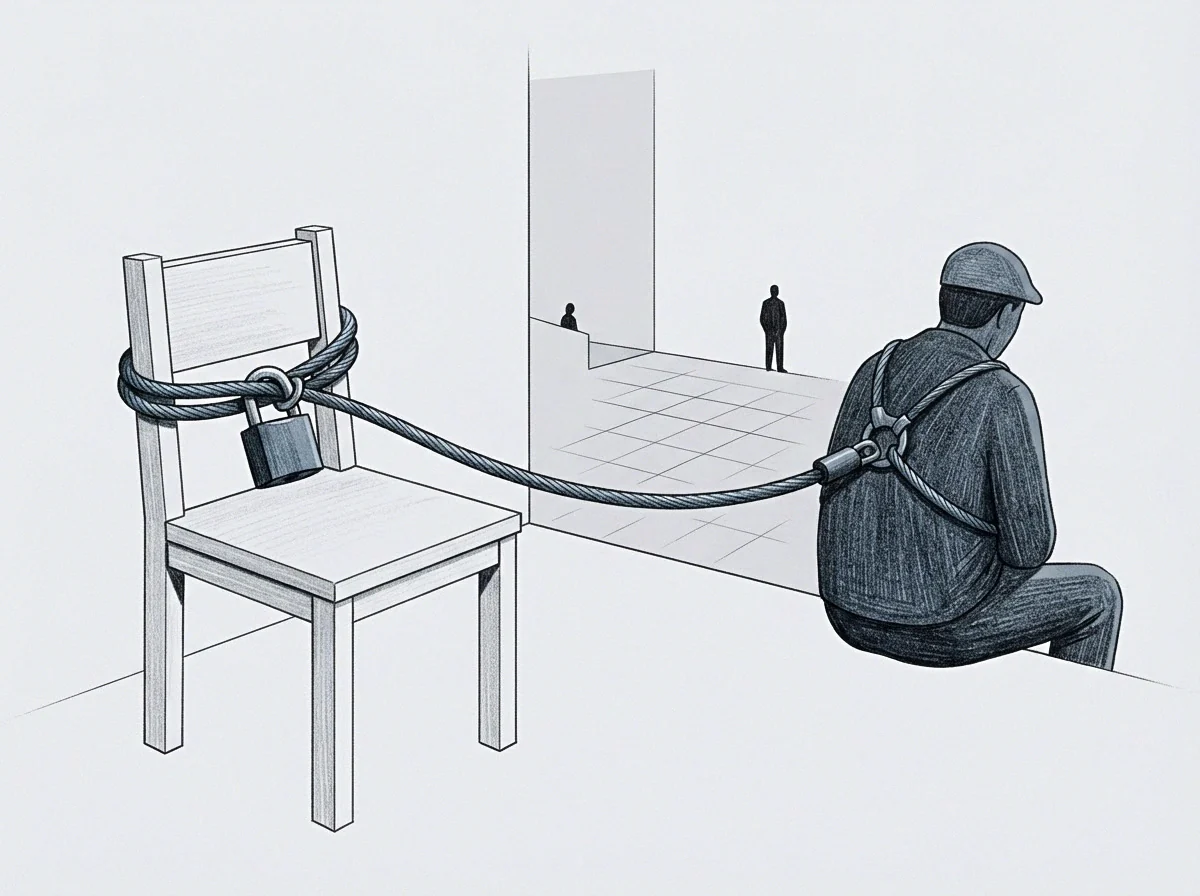
Single-point relational coverage creates structural fragility across commercial portfolios. Enterprise relationships resist rapid extraction. Executive account owners often serve as informal operational buffers, absorbing client friction through unscheduled phone calls and unauthorized service level overrides.
This pattern creates a false signal of account stability: revenue remains predictable only because an individual performs undocumented work to preserve the contract.
Organizations routinely mistake client satisfaction with an executive for institutional account health. The internal reliance on unstated understandings surfaces only when the primary contact leaves the building. At that moment, the client experiences the institutional transition as a drop in service quality, while the buying team realizes their custom accommodations were tied to a person rather than a commercial agreement.
- Informal SLA overrides custom response times granted verbally during crisis events that bypass standard support queues and create unbilled operational drag.
- Implicit concessions negotiated pricing discounts or scope expansions stored in personal email threads rather than central enterprise contract repositories.
- Relational escalation routes direct access paths to senior leadership that bypass mid-tier account managers and distort internal priority prioritization.
- Unmapped influence maps subjective knowledge regarding buyer decision-maker dynamics, internal political rivalries, and unstated personal promotion goals.
The institutional value of an enterprise account drops to its documented baseline the moment personal operational workarounds disappear.
Leaving tacit relational knowledge unmapped creates an immediate revenue re-negotiation event upon executive departure, forcing the enterprise to trade price concessions for lost personal trust.

Deck
Codification literature demonstrates clear boundaries between static operational data and implicit decision rules. Documentation captures only static facts. Standard operating procedures easily store contract terms, renewal dates, past invoice amounts, and formal organizational charts.
These explicit elements constitute the superficial layer of account management.
Implicit decision rules resist simple transcription into database fields. Knowing how a buyer’s vice president reacts to a delayed delivery during their fiscal quarter close cannot be captured in a standardized dropdown menu. Social networks operate without records.
The judgment required to balance client demands against internal margin targets develops through repeated exposure, making standard exit interviews inadequate for knowledge extraction.

Tacit Knowledge Codification Boundaries
Extraction mechanisms must match the cognitive structure of the knowledge being gathered. Attempting to document tacit account knowledge through exit surveys yields low-value generalities. Effective transfer requires passive observation paired with deliberate active questioning during live client scenarios.
| Knowledge Asset Type | Storage Location | Codification Feasibility | Continuity Impact Upon Departure |
|---|---|---|---|
| Explicit Commercial Terms | Central CRM and Contract Repository | High | Low risk; easily transferred via document access. |
| Implicit Relational Preferences | Executive Memory and Private Notes | Moderate | Medium risk; creates operational friction and misaligned communication. |
| Tacit Operational Heuristics | Behavioral Routines and Micro-Decisions | Low | High risk; leads to account churn or immediate margin erosion. |
| Informal Political Networks | Personal Social Connections | Very Low | Critical risk; opens account to competitor displacement during transition. |
Comparative Knowledge Extraction Mechanisms
Systematic extraction separates procedural data from context-dependent judgment. While commercial history belongs in structured databases, operational heuristics require contextual capture. Account history lives in memory.
When organizations fail to systematically convert personal observations into explicit governance rules, the successor operates at a continuous information deficit.
Systematic observation during live commercial operations extracts judgment rules that static surveys consistently miss.
A transition plan specifying ninety days of structured dual-run overlap converts individual behavioral patterns into repeatable corporate processes.
Bridge
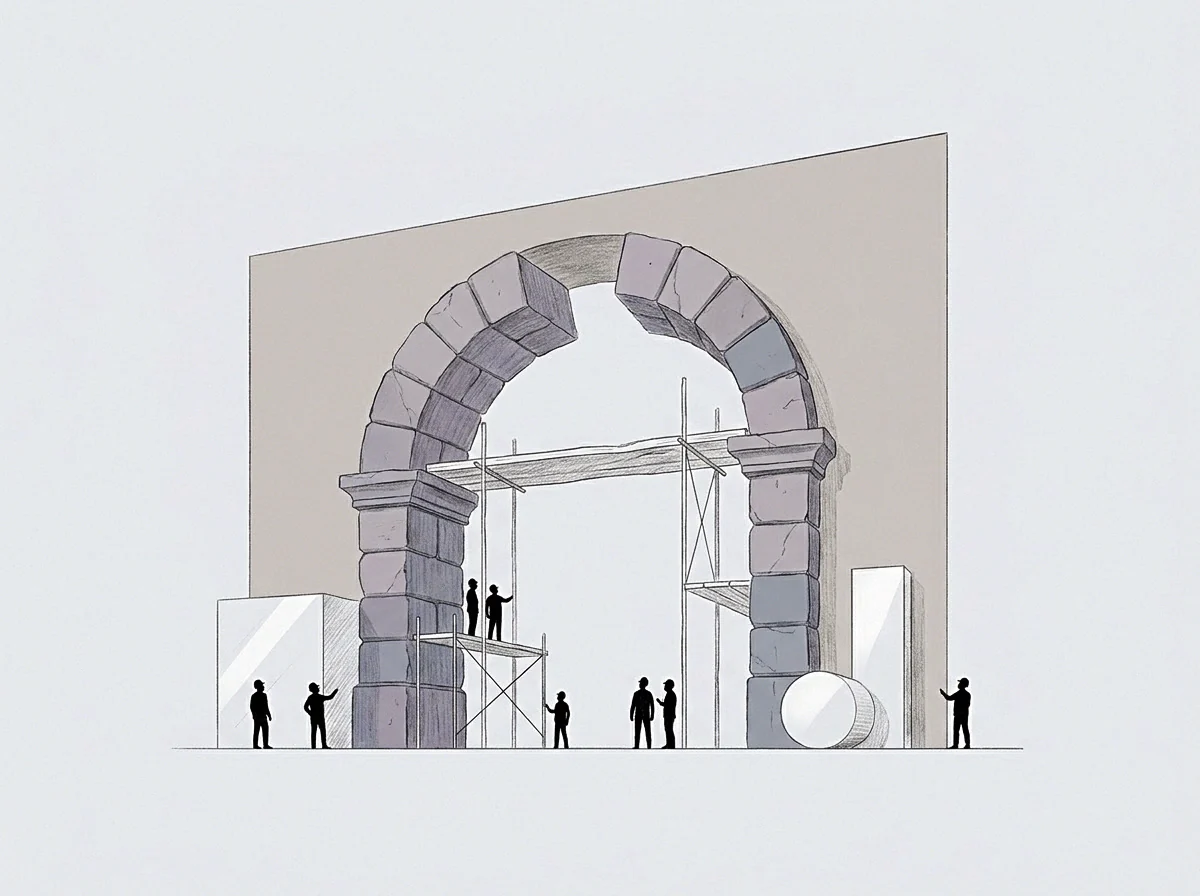
Transferring an enterprise account requires a structured sequence of support removal rather than a single handoff meeting. Account transition plans often fail because the outgoing executive retains client access until their final working day, maintaining personal dominance over the account structure. Effective transition designs introduce the successor as the primary operational lead while the departing executive recedes into an advisory role.
Consider an enterprise account generating two million dollars in annual recurring revenue managed by a single departing vice president. A structured transition assigns a secondary account manager to lead all client interactions sixty days before the exit date. The departing executive attends meetings strictly as an observer, speaking only when invoked.
Shadowing exposes hidden operational handoffs. This format forces the client to direct operational questions to the new lead while the departing executive remains available to correct missteps in real time.
The Shadowing Sequence
Scaffolding functions as a temporary support system that must be dismantled systematically. Single contacts create enterprise fragility. The incoming operator takes ownership of routine communications first, followed by commercial renewals, and finally strategic expansion decisions.
Each phase tests the successor’s grip on the implicit dynamics of the account.
- Initiate passive shadowing during all routine client communications thirty days prior to formal transition announcement.
- Map every unrecorded communication channel, informal concession, and off-book operational commitment into the enterprise repository.
- Transfer primary meeting facilitation and operational decision-making to the successor while the outgoing executive observes.
- Re-bind client communication protocols away from personal mobile devices to centralized enterprise customer success infrastructure.
- Conduct an account risk audit thirty days post-departure to identify unstated service expectations surfacing without individual coverage.
Parallel coverage reveals implicit promises. During the dual-run window, the successor identifies unbilled custom services previously absorbed by the departing executive’s personal time. The client keeps the number.
Institutionalizing these accommodations into formal contract addenda or sunsetting them gracefully protects operating margins after the exit.

Scaffold Deconstruction and Multi-Threaded Governance
Dismantling single-executive account control requires multi-threaded buyer engagement. Enterprise account continuity improves when relationships span multiple organizational levels. Linking executive leadership, product teams, and account managers directly to their client counterparts neutralizes the relational monopoly held by any single departing individual.
Multi-layered contact structures isolate account stability from individual executive tenure.
Succession sequences that enforce primary operational ownership by the successor mid-way through the transition period isolate missing tacit knowledge while support remains available.
Lock
Post-departure account governance monitors residual defection indicators across the twelve months following executive exit. Contractual terms outlive executive presence. Account defection rarely occurs immediately upon departure; instead, subtle signals of erosion appear three to six months later when unstated expectations fail to materialise.
Systems replace individual relationship monopolies. The outgoing executive leaves behind structural gaps where personal goodwill previously compensated for operational defects. Identifying these gaps requires comparing pre-departure account operational metrics against post-transition ticket escalation volumes, response times, and client executive engagement frequency.

Residual Relational Exposure
Monitoring buyer interaction patterns provides early warning of account instability. A sudden decrease in senior buyer attendance at quarterly business reviews indicates that relational ties are fading. Conversely, an spike in formal escalation tickets suggests that implicit workaround mechanisms have collapsed, forcing the client back into official channels without adequate institutional support.
Account stability metrics collected six months post-exit reveal whether enterprise continuity rests on system design or individual memory.
What structural indicators confirm that an enterprise account has fully transitioned from individual relational management to institutional governance?