
Protecting Unpaid Founder Compensation In Early Corporate Workouts
Unpaid founder compensation converts to enforceable claims in workouts only through board-approved debt instruments perfected prior to insolvency.

Arrears
Midnight account audits during corporate contraction reveal an operating balance insufficient to meet next Friday payroll. The executive sitting at the desk built the codebase, closed the initial revenue contracts, and signed commercial leases with personal indemnities attached. For fourteen months, that same executive drew no salary, directing available cash to junior engineers and hosting vendors under the spoken assumption that enterprise valuation would compensate the sacrifice.
The spreadsheet tracking these deferred draws sits on an unbacked local drive rather than the audited financial statements. The company ledger shows nothing.
Early corporate distress converts unrecorded personal deferrals into permanent losses. When corporate insolvency threatens, institutional investors demand debt workouts or structured wind-downs. At that exact juncture, informal wage deferrals collide with legal reality.
Contractual claims require written documentation, statutory payroll classifications, and compliance with federal compensation thresholds. Without an enforceable instrument, months of executive sweat equity dissolve into the general common equity pool.

The Genesis of Unrecorded Payroll Exposure
Informal arrangements between co-founders routinely omit the formal documentation of accrued back wages. Officers frequently forgo regular compensation draws during lean operating cycles, believing their equity holdings represent adequate future consideration. Federal and state labor departments enforce an entirely different standard.
The Fair Labor Standards Act mandates minimum wage and overtime pay for non-exempt operational tasks, regardless of equity ownership or executive titles. When operational officers perform direct technical, administrative, or customer support duties, complete wage forbearance generates legal non-compliance that follows the corporate entity into restructuring negotiations.
Accrued backpay converts into enforceable senior debt only when documented through formal board resolutions and executed employment agreements prior to the onset of corporate insolvency.
Corporate restructuring professionals immediately scrutinize undocumented founder wage claims. Unsecured corporate debt obligations must be substantiated through formal payroll ledger entries, periodic withholdings, and board-ratified employment agreements. When an operating officer asserts a claim for two hundred thousand dollars in unpaid labor without contemporaneous tax documentation, restructuring officers classify the demand as disguised equity.
Equity absorbs every early loss.

Statutory Ceilings on Wage Preferences
Federal bankruptcy rules and state assignment statutes acknowledge compensation debts through specific priority mechanisms. Under Section 507(a)(4) of the United States Bankruptcy Code, employee wage claims earn fourth-tier priority status over general unsecured trade debts. This statutory benefit remains strictly capped per individual and applies exclusively to earnings accrued within the one hundred and eighty days preceding the corporate bankruptcy petition or the cessation of business operations.
Any accumulated compensation exceeding that statutory dollar threshold drops down to the general unsecured creditor tranche.
State receivership frameworks and general assignments for the benefit of creditors enforce comparable limitations on wage protection. Outside a formal bankruptcy filing, an out-of-court corporate workout distributes liquidation proceeds according to rigid contractual hierarchies. If an operating officer fails to segregate accrued executive salary from equity distributions, secured bridge noteholders seize all liquidated corporate cash receipts.
The workout table divides cash.
A failure to segregate operational pay from corporate ownership guarantees that lenders absorb all unpaid executive labor as uncompensated enterprise salvage value.

Priority
Legal waterfalls govern every distressed asset sale and corporate workout. Liquidating transactions distribute cash sequentially down a ladder of established legal standing, paying secured claims, administrative settlement costs, and statutory wage priorities before allocating funds to trade vendors or owners. Operational officers without explicit, perfected security agreements sit at the bottom of this distribution sequence.
The officer stands unprotected.
Senior secured lenders hold blanket security interests across intellectual property, accounts receivable, and equipment. When an early-stage company runs out of runway, these lenders control the sales proceeds generated through Article 9 foreclosures or wind-up asset transfers. An executive seeking payment for deferred operational service must negotiate directly against these senior liens to secure any recovery.

Does Liquidation Preference Subordinate Accrued Operational Fees?
Preferred shareholders purchase explicit liquidation preferences that dictate payout order in mergers, asset sales, and company liquidations. These contractual terms stipulate that preferred capital recovers its initial investment multiple before common equity holders receive a single cent. Unpaid compensation documented purely as equity-based incentives or contingent earnouts falls squarely under this liquidation preference hurdle.
The corporate charter treats those claims as junior equity interests.
Contractual compensation structured as a valid debt obligation operates outside the equity waterfall entirely. A bona fide trade debt or accrued wage claim occupies an enterprise layer above preferred shareholder liquidation preferences. Corporate creditors collect before preferred shareholders receive capital returns.
Preferred investors vigorously contest unrecorded officer liabilities that dilute residual liquidation proceeds, arguing that sudden officer debt claims constitute breach of fiduciary duty or bad-faith equity conversions.
Every dollar left unrecorded on corporate balance sheets shifts directly into the recovery pool claimed by preferred equity holders.

Recharacterization Tests Under Insolvency Scrutiny
Judicial venues and workout fiduciaries apply stringent multi-factor tests to determine whether an insider debt claim represents authentic debt or recharacterized equity. The seminal framework established in Roth Steel Products and affirmed across federal jurisdictions evaluates whether the transaction mirrors an arms-length loan. The core factors analyze the presence of fixed maturity dates, mandatory interest payments, formal debt instruments, right to enforce payment, and the corporate debt-to-equity ratio at the transaction date.
Corporate officers who fund company operations through unpaid wages without promissory notes face near-certain debt recharacterization. If an executive simply lets unpaid salary sit as an open account balance without interest terms or collateral pledges, an assignee or bankruptcy trustee easily reclassifies that sum as a capital contribution. Cash leaves first.
| Instrument Type | Priority Standing | Recharacterization Risk | Enforcement Moment |
|---|---|---|---|
| Unsecured Promissory Note | General Unsecured Creditor | Moderate to High | Upon corporate default or out-of-court composition |
| Senior Secured Note with UCC-1 | Secured Creditor (Asset-Backed) | Low to Moderate | Foreclosure or structured asset liquidation |
| Deferred Compensation Agreement | Priority Wage Claim (Capped) | Extremely Low | Formal payroll execution or administrative claims process |
| Contingent Management Fee Carveout | Contractual Transaction Waterfall | High | Closing of third-party asset sale or workout merger |
A contested point among corporate restructuring practitioners concerns whether unpaid executive salaries can survive recharacterization when deferred during periods of known balance-sheet insolvency. Corporate finance studies examining venture restructurings between 2008 and 2022 demonstrate that insider debt claims fail recharacterization challenges in approximately seventy-two percent of contested adjudications. These findings rest upon reported decisions involving closely held technology enterprises with institutional venture capital backing.
That empirical pattern would shift if state insolvency statutes adopted explicit safe-harbor exemptions for sweat equity conversion in early-stage commercial entities.
Senior debt commands the room. The senior secured bridge lender will state that sweat equity was already purchased through the founder common stock grant, leaving zero dollars for retroactively drafted management fees.

Wall
Distressed corporate environments force a severe separation between the operator seat and the owner seat. An executive managing day-to-day operations owes rigorous fiduciary duties of loyalty, care, and good faith to the corporate entity and its enterprise stakeholders. When the company enters the zone of insolvency, those fiduciary responsibilities expand to encompass the entire pool of corporate creditors.
An officer seeking to preserve back wages must navigate this legal barrier without breaching duties owed to third-party lenders.
Maritime commercial law provides a clear operational parallel in salvage and vessel repair traditions. When an offshore cargo freighter loses power in heavy seas, the vessel engineers who remain aboard to stabilize the hull do not hold unencumbered rights to seize the ship cargo ahead of maritime lienholders. Their labor preserves the floating hull for salvage adjudications, yet their financial recovery remains strictly subordinated to prior port mortgages and fuel claims.
Operational builders face identical boundaries when steadying a failing corporate enterprise.

The Fiduciary Division Between Seats
Holding multiple corporate seats creates acute exposure during workout negotiations. The operational manager possesses non-public knowledge regarding company cash reserves, intellectual property valuations, and creditor concessions. Using that proprietary intelligence to extract personal compensation advantages over third-party suppliers constitutes a fiduciary breach that exposes the officer to personal liability and clawback actions.
Corporate directors must maintain rigorous procedural independence when ratifying executive compensation settlements during periods of distress. An independent board committee, or at minimum an unconflicted board majority, must formally review and authorize any acknowledgment of unpaid officer compensation. Self-dealing resolutions drafted exclusively by the beneficiary invite immediate litigation from unpaid trade vendors.
Unsecured promises pay zero cents.
Executive claims against insolvent corporations survive only when ratified by independent corporate governance mechanisms.
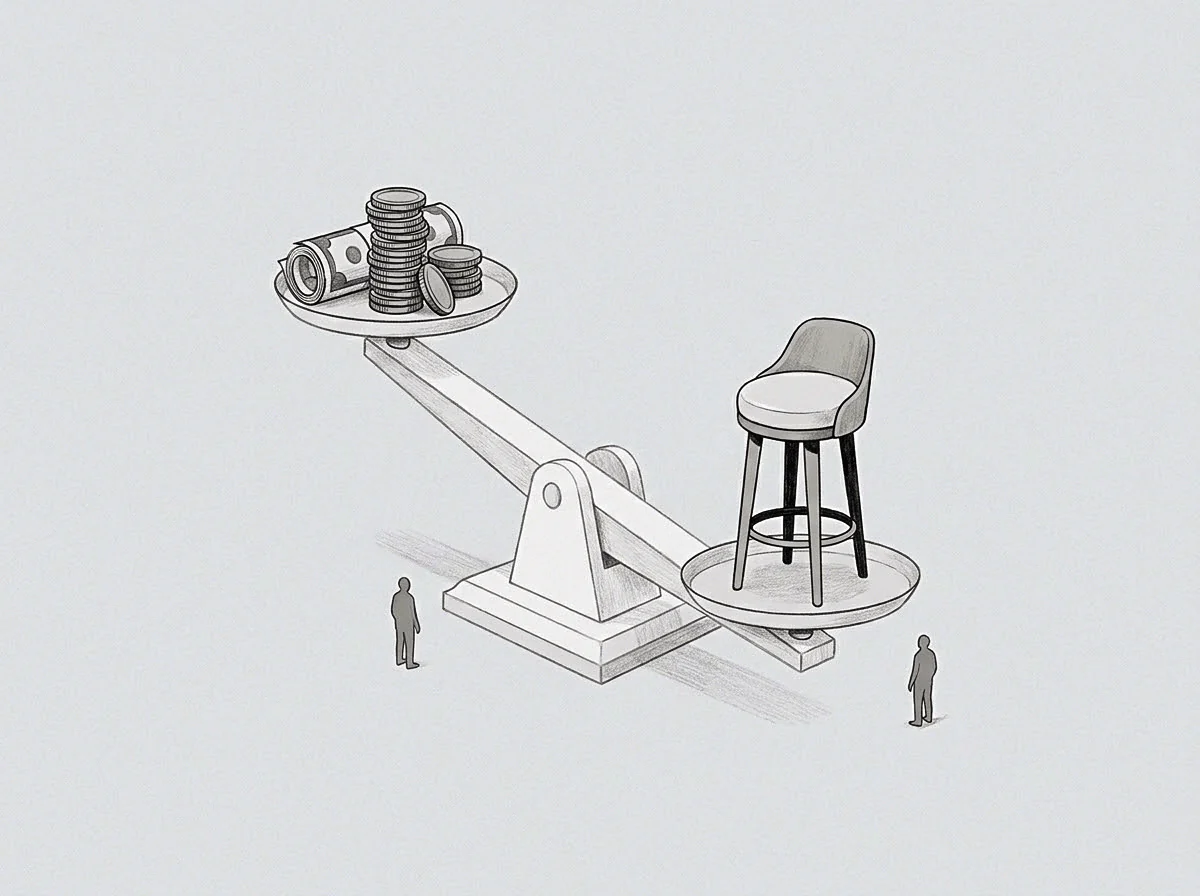
Insider Lookback Windows for Debt Payments
Timing dictates the survival of any compensation extraction during corporate stress. Under federal insolvency statutes, transactions favoring corporate insiders face an extended one-year lookback window for preference avoidance, compared to the standard ninety-day window applicable to ordinary commercial creditors. If an insolvent corporation makes cash distributions to an officer to satisfy unpaid salary notes within three hundred and sixty-five days of an assignment or liquidation petition, a workout trustee can claw back every dollar as a preferential transfer.
State voidable transaction statutes enforce comparable clawback windows against corporate fiduciaries. An officer who orchestrates an emergency payout of back wages while vendors go unpaid creates a prime target for preference recovery. The clock controls the preference.
The desk cannot definitively resolve whether an officer should sign personal releases in exchange for partial wage notes when tax liabilities remain outstanding. An operator confronting that uncertainty retains separate, unconflicted legal counsel to review the transaction before signing away statutory wage rights.
A builder who treats personal compensation as an afterthought during expansion will discover that creditors treat it as a gift during insolvency.

Note
Converting informal wage deferrals into protective legal debt instruments demands precise execution before cash balances reach zero. The operating officer must formalize the accrued balance through a board-approved promissory note paired with a formal security agreement. Verbal assurances between co-founders possess no evidentiary value when institutional lenders appoint turnaround advisors to run the business.
Paper records the time.
A legally enforceable promissory note defines principal sums, interest rates, maturity dates, and events of default. By converting undocumented sweat equity into a commercial debt instrument, the officer establishes fixed debt obligations that exist independently of equity stock certificates. Unfiled liens carry no teeth.

Perfection Through Recorded Security Agreements
Securing a debt note against corporate assets requires public perfection under the Uniform Commercial Code. An unperfected security interest remains completely ineffective against competing secured lenders, bankruptcy trustees, or federal tax authorities. The corporation must execute a formal commercial security agreement granting a lien across designated enterprise assets, such as source code repositories, accounts receivable, or physical laboratory equipment.
Following execution, the creditor-officer files a standard UCC-1 Financing Statement with the relevant secretary of state. This public filing establishes chronological priority against subsequently recorded liens. When senior bridge lenders demand blanket first-position liens, the officer can negotiate a subordinated second-lien position that preserves residual value following senior note repayment.
State receivers respect local filings.

Subordination Carveouts Demanded by Bridge Lenders
Institutional capital providers typically prohibit officers from holding senior or equal-ranking liens during corporate turnarounds. Bridge investors injection notes condition liquidity on the execution of strict intercreditor and subordination agreements. The officer must understand the mechanics of these subordination covenants.
- Intercreditor Standstill Terms restrict the subordinated officer from initiating asset foreclosures or involuntary insolvency petitions for a defined window following corporate payment default.
- Payment Blockage Covenants halt all cash salary amortization payments to the officer the moment the business breaches debt service coverage ratios.
- Collateral Release Provisions automatically strip the officer second-position lien upon the closing of a qualified third-party asset purchase transaction.
- Bankruptcy Voting Waivers attempt to eliminate the officer independent right to vote on reorganization plans during Chapter 11 workouts.
The workout agreement must explicitly include a designated founder compensation carveout provision that exempts a specified percentage of asset disposition proceeds from the senior lender blanket sweep.

Release
Final corporate wind-downs, Article 9 foreclosures, and distressed asset sales terminate in global settlement documents. These agreements define who walks away with cash and who surrenders legal claims against the corporate shell. An operator who worked eighteen months without compensation must view the final closing table as the definitive opportunity to capture backpay consideration.
The debtor retains the asset.
Purchasers acquiring distressed corporate assets demand comprehensive liability releases from all founders, directors, and operational leaders. Buyers require clean title to patents, source code, and customer data, unencumbered by residual labor claims or intellectual property ownership disputes. This buyer mandate provides the operational founder with immediate negotiating leverage.
The founder states the terms of release.
The primary leverage possessed by an unpaid operator during asset liquidation is the personal refusal to sign intellectual property quitclaims without guaranteed compensation distributions.

Tax Penalties Under Deferred Compensation Rules
Structuring the payout of accumulated backpay requires careful coordination with internal revenue statutes. Section 409A of the Internal Revenue Code imposes severe financial penalties on non-compliant deferred compensation agreements. If an executive defers salary without adhering to rigid statutory election timing rules, the Internal Revenue Service assesses immediate ordinary income taxes, an additional twenty percent excise penalty, and punitive interest charges across all deferred sums.
Corporate workouts frequently trigger catastrophic tax liabilities for founders who cancel company debt. When an officer forgives a corporate wage promissory note to facilitate an asset acquisition, the corporate entity recognizes cancellation of debt income. If the company operates as a pass-through partnership or limited liability corporation, that phantom cancellation income flows directly onto the personal tax return of the equity holder.
Tax authorities enforce personal exposure.

Negotiating Personal Recovery in Final Asset Sales
Securing compensation during the sale of an insolvent enterprise requires reallocating consideration from enterprise purchase price into direct executive compensation packages. Sophisticated buyers prefer structuring payments to key operators as transition service bonuses, non-competition payments, or intellectual property assignment fees. These transactional allocations bypass senior lender lien cascades by purchasing personal covenants directly from the operating founder.
Senior lenders routinely challenge transition consulting fees paid to insiders, arguing that consulting agreements divert funds that rightfully belong to secured creditors. The buyer and the operational executive counter this challenge by establishing that the enterprise asset holds zero commercial value without the personal transition assistance and proprietary technical knowledge delivered by the builder. Silence converts labor into donation.
How workout professionals will harmonize statutory wage claims against predatory lender carveouts when artificial intelligence tools automate the liquidation of early-stage enterprise assets remains wholly unanswered across contemporary corporate practice.