
Calendar Block Allocation Rules for Founder Operational Schedules
Calendar block allocation partitions executive working time into discrete, defended durations that isolate technical execution from strategic governance.

Desk
The screen shows twelve color-coded rectangles between nine in the morning and five in the afternoon. An operator opens a code repository at eight, reviews pull requests until nine thirty, answers customer support tickets during an open slot at eleven, and sits through an investor check-in at two. By four in the afternoon, the operational schedule resembles a checkerboard of thirty-minute fragments.
The work of building software requires sustained immersion. The work of supervising staff demands immediate responsiveness. The work of raising capital or directing long-term company governance asks for open contemplation.
When these responsibilities collide inside an unstructured diary, the technician role routinely consumes the hours assigned to governance.
Three operational roles inhabit a single early-stage executive. Role theory identifies the structural strain that emerges when one person attempts to occupy conflicting positions simultaneously. The technician builds the core product, executes daily client deliverables, and resolves immediate operational defects.
The manager coordinates people, designs internal processes, and monitors operational throughput. The executive owner steers strategic resource distribution, evaluates market opportunities, and governs institutional capitalization. An operational diary reflects these demands as competing claims on attention.
A shared timetable reflects the real allocation of power across conflicting company positions.
Without explicit structural allocation rules, the calendar becomes an open market where the most urgent inbound interrupt purchases the executive’s scarce attention. Daily operational noise drives out silent strategic tasks because immediate tasks carry loud short-term feedback loops. An unanswered support ticket generates visible friction within forty minutes.
A delayed strategic partner review produces no perceptible failure for ninety days. Consequently, the technician seat expands until it occupies seventy percent of the workweek, leaving the executive seat hollowed out and operational governance operating on remnants of late-night fatigue.
- Technician block boundaries isolate direct output tasks from inbound interruptions. An uninterrupted duration allows deep cognitive state attainment.
- Managerial operational syncs aggregate internal team reviews into compact, back-to-back sequences. Spreading individual check-ins across multiple mornings destroys continuity.
- Ownership strategy reserves preserve dedicated spans for capital allocation and corporate architecture. These entries stay immune to short-notice operational preemption.
The diary functions as an operating budget expressed in units of human energy. Attention degrades when dragged across disjointed functional contexts. A schedule built without explicit block allocation rules defaults to defensive triage.

Friction
Cognitive switching penalty measures the biological and mental strain incurred when an operator pivots between disparate mental modes. Research in organizational psychology demonstrates that shifting from technical execution to administrative coordination leaves an attention residue. The mind retains active representations of the prior task long after the calendar event concludes.
An operator who interrupts a two-hour system architecture session to conduct a twenty-minute performance appraisal spends thirty additional minutes re-establishing context upon returning to the technical work. The schedule displays an eighty-minute working block, yet real productive output registers forty minutes of fragmented effort.
Task fragmentation compounds across the weekly cycle. The chart of a five-day operational period often shows thirty discrete events under forty-five minutes in length. This distribution creates an operational condition where continuous focus exceeds thirty minutes only twice per week.
The technical output degrades in structural elegance. Operational oversight turns reactive. Strategic planning vanishes into weekend recovery hours.
- Context switching latency consumes productive capacity during functional transitions. The executive attempts to reconcile complex code while processing personnel disputes.
- Asynchronous message saturation breaks continuous calendar reservations through urgent notification alerts. Team members interpret open calendar gaps as implicit licenses for immediate access.
- Fragmented calendar leakage erodes the psychological boundary dividing executive governance from frontline maintenance. Small gaps between meetings produce dead time unsuitable for deep concentration.
Operational drag multiplies when these handoffs recur daily. The executive attempts to absorb the friction through personal physical stamina. Sleep contracts.
Irritability increases. The quality of managerial decisions deteriorates under constant cognitive renegotiation.
Unscheduled operational gaps invite ambient work that exhausts executive stamina without producing strategic velocity.
A schedule dominated by fractional appointments degrades executive capacity, forcing core technical and structural design work into exhausted evening margins where errors multiply unnoticed.
Ration
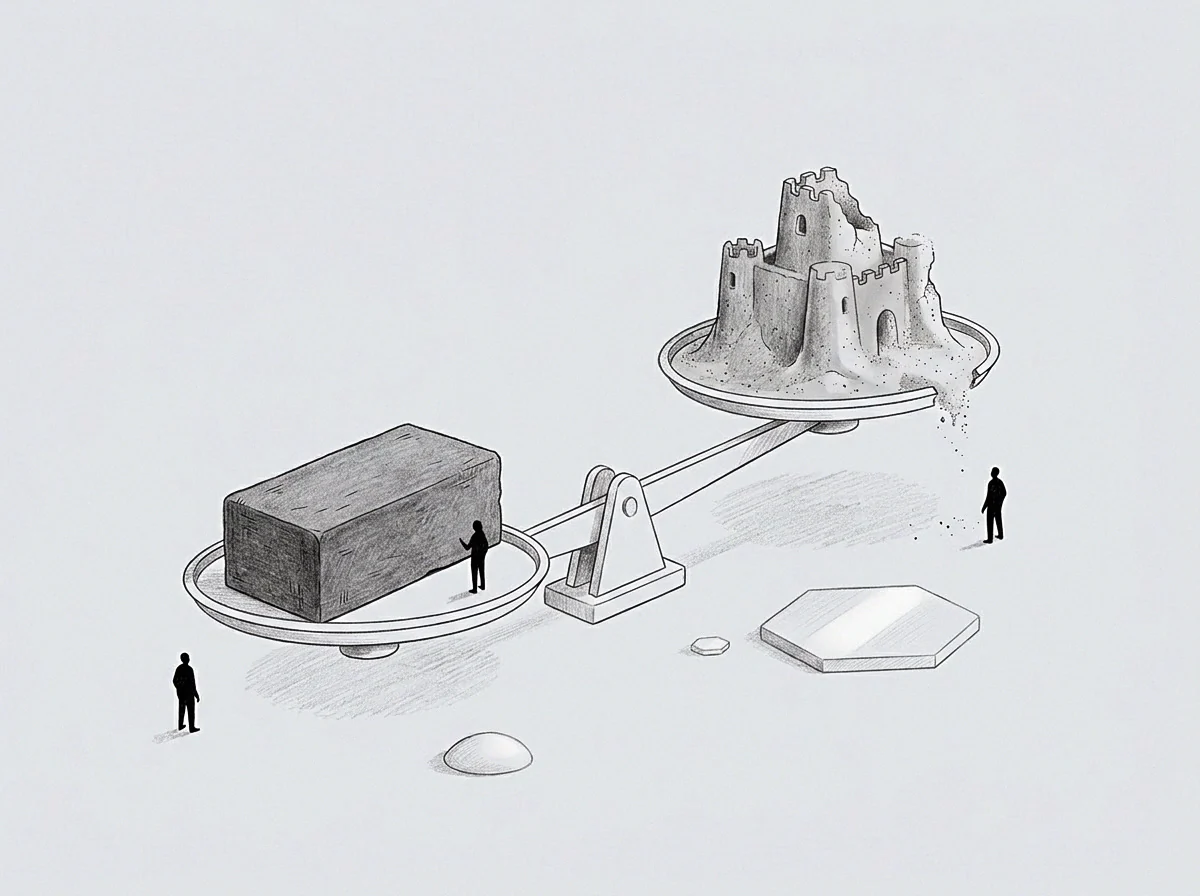
Establishing operational stability demands mathematical distribution rules for weekly working capacity. An executive possesses roughly fifty usable daylight hours per week before cognitive returns diminish precipitously. Allocation rules assign these fifty hours across functional categories according to firm maturity and organizational composition.
A seed-stage venture operating with three engineers requires heavy technical contribution from its original leadership. A growth-stage enterprise with thirty employees demands managerial coordination and institutional capital allocation.
| Firm Stage | Technician Share | Manager Share | Executive Share | Friction Allowance |
|---|---|---|---|---|
| Early Formation (1-5 staff) | 60 percent | 20 percent | 10 percent | 10 percent |
| Operational Build (6-20 staff) | 30 percent | 45 percent | 15 percent | 10 percent |
| Scale Transition (21-60 staff) | 10 percent | 50 percent | 25 percent | 15 percent |
| Institutional Stage (60+ staff) | 0 percent | 30 percent | 55 percent | 15 percent |
The transition between stages requires active calendar restructuring. When a firm expands from five to fifteen employees, managerial demands triple. If the founding operator attempts to preserve a sixty percent technician allocation, internal workflows stall.
Code reviews wait four days. Hiring interviews slip past competitor deadlines. The executive absorbs the deficit by expanding the gross workweek to seventy-five hours, an operational posture that collapses within two quarters.
Allocation ratios must translate into concrete, immovable calendar blocks. A practitioner enforces temporal partitioning through three structural techniques. Day-theming concentrates like-kind tasks into dedicated calendar days, assigning product architecture to Tuesdays and operational coordination to Thursdays.
Half-day clustering isolates managerial appointments into afternoon segments, preserving mornings for sustained output. Reserve ratios establish a twenty percent unallocated buffer to absorb inevitable operational emergencies without breaking core deep-work reservations.
An operational reservation survives unexpected emergencies only when backed by an explicitly scheduled unallocated buffer.
A calendar quota becomes operationally real when written directly into executive performance charters, specifying that managerial blocks cannot exceed eighteen hours weekly without triggering an immediate operational hire.

Shield
Allocation schedules remain theoretical until defended against internal and external claims. Internal teams naturally treat open executive time as an available public good. Unless clear boundary protocols exist, staff schedule check-ins across preserved focus blocks.
External counterparties, including sales leads, investors, and prospective hires, demand calendar flexibility that systematically shatters thematic day structures. The calendar demands an active structural defense mechanism.

Can Scheduled Blocks Prevent Tacit Spill?
Tacit operational knowledge creates persistent scheduling intrusions. When procedural guidelines remain unwritten inside the executive’s head, team members must interrupt strategic blocks to resolve simple exceptions. The solution lies in building operational buffers and delegation gates.
The executive creates an explicit communication contract specifying that scheduled focus blocks represent complete disconnection from internal messaging systems.
Interruption triage relies on categorical isolation. Emergency escalation pathways must exist outside the standard calendar interface. If a true production incident occurs, an automated paging protocol contacts the executive.
Regular operational inquiries wait for designated managerial office hours. Concentrating operational questions into two daily forty-five-minute windows eliminates eighty percent of random calendar interruptions.
External scheduling requires defensive architecture. Self-service booking links must restrict available slots to specific thematic windows, preventing outside parties from scattering thirty-minute meetings across protected mornings. An executive who yields calendar control to external convenience pays for that courtesy with destroyed operational focus.
We need your sign-off before the deployment runs, and the next open appointment on your calendar is three days away.

Transit
Calendar block allocation serves an ultimate purpose beyond immediate operational sanity: facilitating the systematic divestment of operational seats. An executive cannot delegate responsibilities that remain tangled together inside an undocumented fifty-hour week. When technical work, managerial coordination, and executive governance share single calendar days without boundaries, the exact requirements of each position remain invisible to prospective successors.
By enforcing rigid calendar blocks, the operator creates clean structural perimeters around specific jobs. A twenty-hour technician block clearly documents the precise tasks, deliverables, and knowledge bases required to execute that seat. Once the perimeter is established, the executive can hire a specialized replacement to step directly into that twenty-hour block.
The handover occurs through structural subtraction rather than chaotic abandonment.
A position defined by clean temporal margins can be transferred to an operator without destabilizing adjacent operations.
The operator steps out of the technician block first, shifting those twenty hours into strategic oversight and managerial mentoring. Later, as middle management takes root, the manager block is systematically handed to functional directors. The calendar gradually clears until it reflects the pure executive role: capitalization, structural talent acquisition, and long-range corporate governance.
How long can an organization sustain executive leadership that refuses to surrender the daily technical block to competent operational successors?