
Designing Technical Transition Charters for Owner-Operator Corporate Handovers
Technical transition charters transfer operational system authority through documented root credentials, phased deployment controls, and explicit access sunsets.
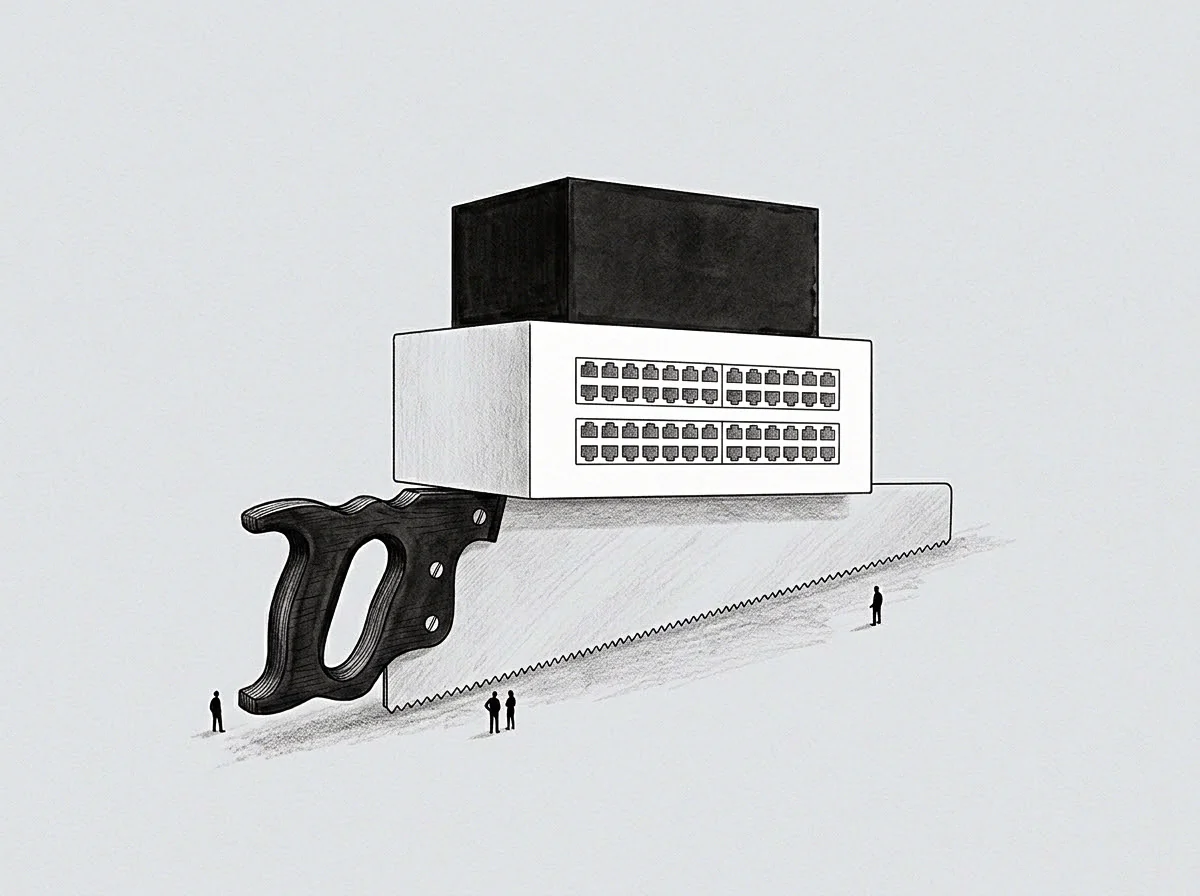
Seat
The individual who builds a corporate technology platform from inception sits across three distinct functional domains simultaneously. The technical domain demands direct manipulation of code, cloud infrastructure, deployment pipelines, and database schemas. The managerial domain demands team coordination, vendor management, resource allocation, and project governance.
The ownership domain demands risk management, asset retention, legal authority, and equity capitalization. During early enterprise growth, these three domains collapse into a single routine. The builder executes code, approves infrastructure expenditure, and holds ultimate shareholder authority without distinguishing between operational labor and asset ownership.
When an enterprise prepares for institutional investment, corporate acquisition, or executive succession, this functional overlap creates immediate organizational friction. Formal corporate governance frameworks assign distinct seats to engineering staff, management teams, and board members. Institutional purchasers expect clear operational boundaries.
They assume technical systems operate through documented procedures rather than personal memory. The system breaks quiet.

Decomposing Owner Operator Technical Authority
A building period blends functional execution with corporate governance until administrative choices become indistinguishable from software architecture. The individual holding root credentials across cloud platforms often manages software deployments through personal workstations. System architecture reflects personal preference rather than standardized corporate patterns.
Unwritten protocols govern release cycles, database migrations, and hotfix deployments.
Role strain emerges when incoming executives assume operational control while the original builder retains root access. Role theory demonstrates that role ambiguity increases significantly when operational responsibilities transfer without a clear redistribution of structural tools. The builder continues to receive emergency alerts, fix production bugs, and approve vendor invoices because no substitute operational pathway exists.
The agreement holds. This dual administrative structure fragments team accountability. Incoming engineering managers find their decisions overridden by legacy practices, while the original owner remains tied to daily operations despite stepping down from management.
An incoming manager holds official accountability while the outgoing owner retains the actual keys to production.

The Hidden Cost of Tacit Administrative Control
Unwritten operational knowledge creates an invisible dependency network that binds system uptime directly to individual memory. Research in corporate knowledge transfer establishes that tacit knowledge resists simple documentation exercises. Tacit operating practices involve implicit diagnostic habits, unmapped database configurations, and undocumented server dependencies.
The original operator resolves system outages through intuition developed over years of building.
Retaining unstated technical authority costs the outgoing operator significant capacity. Hours double quickly. The time spent responding to routine infrastructure questions prevents focused engagement on strategic board governance or new ventures.
For the organization, tacit administrative control generates extreme key-person risk. The corporate entity holds legal title to repository code but lacks the functional ability to deploy, maintain, or secure the application without the founder’s intervention.
The incoming executive team expects full administrative capability without realizing that crucial deployment scripts reside exclusively on a personal machine.
Audit
A formal inventory precedes any legal transfer of technological assets. Technical transitions fail when acquiring organizations rely entirely on software code repositories to define operational state. Software repositories contain application logic, but they rarely capture production environment configurations, domain name system routing, third-party integration keys, or infrastructure management permissions.
A rigorous transition inventory maps every credential, access route, operational routine, and third-party contract supporting the corporate technical footprint. This process transforms implicit operational habits into explicit administrative records. Tacit control remains.
The audit establishes a factual baseline for drafting transition charters.

Cataloging Implicit Dependencies and Root Authority
System mapping reveals unlisted cloud resources, personal credential stores, and secondary domain registrations that bypass standard IT logging. Corporate technology platforms accumulate legacy components during initial development. Early operators routinely connect personal credit cards to sandbox environments, utilize personal domain registrar accounts for staging environments, and store administrative passwords in browser stores.
Cataloging root credentials demands systematic tracing of production data flows. The audit identifies every third-party software application, API token, secure shell key, and administrative console access level. It records payment methods attached to infrastructure services, expiring security certificates, and service-level commitments with vendors.
Completing this inventory protects corporate asset integrity while establishing clear scope for the incoming engineering team.
| Governance Model | Credential Control | Deployment Approval | Advisory Escalation SLA | Equity Retainage Risk |
|---|---|---|---|---|
| Immediate Key Rotation | Transferred on effective date | Unilateral by buyer team | None contractual | Low post-handover liability |
| Phased Shadow Handover | Dual-custody credential stores | Joint release sign-off | 48-hour response window | Moderate operational friction |
| Escrow Retainer Model | Held in third-party vault | Gated by milestone sign-off | 24-hour priority window | High compensation risk |

Can Technical Control Transfer Without Operational Atrophy?
Transferring production capability to incoming engineers frequently exposes gaps between written manuals and live deployment practices. Operational atrophy occurs when incoming staff receive repository permissions without understanding system behavior under stress. A static manual rarely prepares an engineering team for complex database locks or sudden traffic spikes.
Mitigating operational atrophy requires paired execution periods where incoming personnel execute live deployments under original supervision. Knowledge transfer literature highlights that active participation yields significantly higher skill retention than passive document review. The transition charter schedules structured shadow shifts, forcing incoming operators to perform database migrations, system restorations, and infrastructure provisions before final access transfer occurs.
- Unmapped Production Access allows legacy scripts to execute deployments without logging through corporate single sign-on services.
- Orphaned Credential Stores remain tied to personal password managers, creating immediate operational vulnerabilities when access terminates.
- Informal Vendor Relationships result in account suspensions when credit cards associated with departing individuals expire.
- Undocumented System Overrides leave incoming engineering teams unable to resolve production outages during off-hours incidents.
Failing to inventory tacit administrative pathways leads to delayed releases, unauthorized system overrides, and unexpected operational downtime following executive handovers.

Charter
Formalizing the operational transfer into an enforceable agreement creates structural boundaries between equity ownership and daily administration. Technical transition charters govern the explicit handoff of system administration, operational responsibility, and infrastructure control. The contract sets measurable parameters for access termination, emergency support, and post-transfer communication.
Without a written transition agreement, informal support requests consume the departing operator’s schedules indefinitely. Incoming teams default to contacting the original builder whenever unexpected software behavior occurs. The charter stops this pattern by defining formal escalation channels, billable rates for extra-charter support, and hard dates for credential revocation.
Access ends today.

Defining Explicit Transfer Protocols and Escrow Boundaries
Drafting the transition instrument demands clear schedules for key rotation, infrastructure migration, and domain control handoffs. The charter splits the handoff into distinct phases, each tied to objective verification criteria. Initial phases transfer read-only access to monitoring dashboards and staging environments.
Intermediate phases grant deployment rights under oversight. Final phases surrender root administrative authority and terminate secondary access channels.
Production changes daily. Escrow arrangements protect corporate assets during phased transfers. Administrative credentials, source code repositories, and master cryptographic keys reside in secure escrow repositories, released only when both parties verify milestone completion.
This structural protection guarantees that corporate buyers secure complete control while departing owners receive contractual protection against post-handover liability claims.
A defined sunset clause on production access converts informal support requests into billed advisory engagements.

Separating Operational Labor From Equity Retainers
Capital position and salaried execution demand distinct contractual treatment once administrative control passes to professional executive leadership. An owner-operator retaining equity equity equity equity percentage often faces demands to fix production bugs without salary compensation. Corporate buyers frequently argue that equity ownership obligates ongoing technical labor.
Take two corporate entities executing a technical handoff: assume a founding owner-operator who built a multi-tenant cloud platform over thirty-six months, an acquiring executive team holding sixty percent equity, and a ninety-day operational transition period. The contract specifies thirty hours per week of technical handoff labor during the first month, fifteen hours per week during the second month, and five hours per week during the third month. Compensation for this operational labor runs separate from equity distributions.
Any technical work requested after ninety days converts to an advisory consulting retainer billed at commercial market rates. The contract governs.
- Access Sunset Schedules establishing specific dates for the complete revocation of administrative credentials, cloud accounts, and repository write permissions.
- Escalation Latency Limits defining acceptable response times for legacy architecture consultations during the active transition window.
- Repository Rights Transfer securing full corporate ownership of source code, deployment scripts, domain registrations, and third-party SaaS contracts.
Inserting an explicit milestone sign-off clause shifts operational liability directly to the acquiring organization upon credential transfer.
Lever
Governance mechanisms during an operational handover rely on shared control instruments to maintain infrastructure stability. A technical charter establishes dual-authorization requirements for major system changes during the transition period. Dual control prevents uncoordinated code deployments, unauthorized database updates, and abrupt infrastructure alterations.
These governance controls act as balancing mechanisms between outgoing experience and incoming authority. Incoming engineering leaders gain hands-on operational practice while departing builders maintain oversight to prevent catastrophic technical missteps. Authority leaves slowly.

Staging Deployment Authority and Parallel Verification
Dual release approvals allow incoming staff to execute system deployments while outgoing technical leaders retain monitoring visibility. Staging environments serve as testing grounds for evaluating incoming team proficiency. System releases move through strict continuous integration pipelines where release scripts require approvals from both outgoing and incoming technical leads.
Parallel verification runs incoming operations alongside legacy monitoring systems. This parallel operating structure validates that incoming staff follow documented backup routines, security patches, and scaling protocols. The transition stops.
Once the incoming team completes a pre-determined number of successful deployment cycles without intervention, full production authority shifts to the new management structure.
Operational authority follows production access rather than contractual assignment.

Managing Disagreements Over Production Readiness
Disputes over release stability emerge when performance benchmarks lack measurable criteria in the underlying transition contract. Departing operators often express skepticism regarding incoming team capabilities. Conversely, incoming managers frequently criticize legacy code structure to justify operational delays or cost overruns.
Resolving technical disputes requires adherence to contractual metrics established during the initial audit phase. Performance indicators include application response latency, server error percentages, deployment success rates, and backup verification times. When system performance satisfies these predefined metrics, operational readiness is contractually established regardless of subjective opinions.
Engineers step back.
It remains uncertain how long incoming engineering teams can rely on original system architects before technical debt compromises core infrastructure stability.

Floor
Establishing a hard operational baseline prevents perpetual reliance on former technical leadership. Once the charter’s sunset date passes, administrative access terminates permanently. Root credentials rotate, personal authentication tokens revoke, and communication channels redirect to official corporate support desks.
Silence costs time.
This strict boundary forces organizational adaptation. Incoming teams can no longer bypass internal diagnostic procedures by placing informal calls to the original builder. The organization establishes internal technical independence only when safety nets disappear entirely.
The baseline holds.

Defending Hard Operational Cutoffs
Revoking remaining infrastructure credentials on the exact contract date establishes immediate clarity regarding team accountability. Continuing informal access past agreed handover deadlines delays team development and exposes the enterprise to severe cybersecurity compliance risks. The account closes.
Departing operators defend this boundary by directing all technical inquiries to formal corporate intake systems. When technical queries arrive via personal messaging applications or personal email, the departing operator issues standard non-technical responses referring the requester to official corporate support channels. This practice reinforces contractual boundaries and protects personal capacity.
When emergency overrides remain active past the agreed milestone, incoming engineering teams stop taking responsibility for system stability.

Stabilizing Post Transition Governance
Long term corporate health requires incoming technology leadership to operate without emergency access to departing founders. Corporate boards maintain governance through periodic engineering audits, third-party security assessments, and clear executive reporting structures. The former owner-operator interacts with the corporate entity strictly through board meetings or formal advisory engagements.
Separating daily technical execution from asset ownership completes the corporate transition. The former operator holds shareholder value without bearing daily operational stress. Incoming management assumes complete responsibility for system uptime, feature delivery, and infrastructure scaling.
The cutoff applies.
Operational clarity improves when technical administrative access ends permanently on the scheduled handover date.