
Information Asymmetry And Informal Veto In Technical Board Member Transitions
Informal vetoes emerge during technical board transitions when departing founders retain tacit operational authority, requiring formal disengagement boundaries.

Floor

Structural Authority and Tacit Dominance
Formal board governance relies on the assumption that authority resides in voting rights, equity allocation, and fiduciary titles. In technical companies, operational control frequently remains anchored in tacit system knowledge rather than written governance agreements. A departing technical founder who steps out of an executive role into a non-executive board seat creates a structural imbalance between recorded authority and actual execution capacity.
The non-executive seat carries a defined voting share, yet the operational team continues to rely on the former executive for architectural interpretation, deployment sign-offs, and critical system interventions. Governance functions smoothly while alignment holds. The moment strategic divergence occurs between the board and the incoming executive leadership, the unwritten reliance on the former technical operator converts into an unstated veto over board directives.

The Transfer of Formal Power
Board member transitions usually focus on legal documentation, equity vesting modifications, and public announcements. These mechanisms transfer corporate representation without transferring the underlying technical dependencies. When the outgoing technical leader retains unique mental models of proprietary architecture, infrastructure access, or key technical talent relationships, governance oversight becomes decoupled from operational reality.
The new executive leadership assumes responsibility for outcomes while lacking the informal authority required to direct the engineering organization. The board finds its strategic decisions subject to technical friction that appears organic but stems directly from the ongoing reliance on the former founder. Operating in this environment leaves incoming executive leadership carrying legal accountability for systems they cannot alter without the implicit consent of a non-executive director.
Unaddressed technical asymmetry transforms a non-executive director into an unsanctioned operator who invalidates formal board decisions without casting a vote. The operational cost accumulates as delayed software releases, ambiguous organizational reporting lines, and diluted executive authority.
Lever

Operational Dependency as an Unstated Veto
Informal veto power operates through friction rather than direct opposition. A board director who previously built the core technical infrastructure does not need to block a vote to stall an executive initiative. The director simply points out architectural risks, highlights legacy dependencies, or remains silent during critical technical evaluations, allowing the executive team’s uncertainty to halt execution.
This dynamic manifests when the incoming chief executive proposes a modernization plan, a vendor shift, or a product pivot. The executive presents financial models and market analysis to the board. The former technical officer, sitting as a director, raises deep structural objections grounded in proprietary details that other board members cannot independently evaluate.
The rest of the board, lacking technical depth, defers to the former technician’s historical expertise.
A technical director retains functional control over executive strategy whenever operational knowledge is withheld from board reporting structures.

Mechanisms of Informal System Obstruction
Informal vetoes express themselves through distinct operational vectors that paralyze leadership while maintaining the outward appearance of board alignment.
- Architectural Gating occurs when system alterations require explicit consultation with the former technical officer under the premise of risk mitigation.
- Direct Technical Intercession happens when engineering staff bypass executive management to consult the board member on technical decisions.
- Information Selective Translation manifests as the deliberate framing of technical debt to undermine new leadership initiatives during board meetings.
- Key Talent Anchoring appears when core technical staff align their organizational loyalty with the board member rather than executive leadership.
Consider a scenario where a firm completes a leadership transition, moving a founding technical director into a non-executive seat while hiring an external executive officer. Assume the director retains direct access to internal communication channels and holds weekly unmonitored sessions with principal software architects. When the new executive attempts to refactor the platform to enter new markets, the engineering team routes technical objections directly to the director.
The director brings these technical objections into board meetings as objective architectural constraints rather than governance issues. The board side-tracks the strategic shift, effectively allowing the director to exercise an operational veto over executive strategy. The company pays for two executive authorities while securing the progress of neither.
The executive team cannot execute strategy when every technical proposal must pass through an unstated review by a board member who holds no executive responsibility.
Filter

Telemetry Decay in Technical Reporting
Information asymmetry widens rapidly after a technical founder leaves executive duties. During active tenure, technical knowledge flows through continuous daily operations, code reviews, and architectural incidents. Once assigned to a board seat, the individual relies on secondary reporting, periodic board decks, and structured executive updates.
This transition creates telemetry decay, where the director’s mental model of the technology remains static while the actual codebase and operational infrastructure evolve.
A director possessing historical technical knowledge often operates on outdated structural assumptions. This decay produces misaligned board oversight. The director evaluates current executive proposals using system realities from prior years, leading to misplaced interventions or dangerous overconfidence in obsolete architecture.
The board receives filtered data, but the technical director incorrectly believes their historical familiarity compensates for the lack of real-time operational context.

How Does Tacit Architecture Persist Past Board Succession?
Tacit architecture persists because standard board reporting metrics prioritize financial performance, sales pipeline health, and high-level product roadmaps over underlying technical debt and systemic dependencies. Independent directors cannot distinguish between healthy engineering execution and fragile, workaround-dependent maintenance. The outgoing technical director becomes the sole interpreter of technical progress, filtering what the broader board sees and understands.
| Evaluation Dimension | Operational Telemetry | Governance Metric Reporting |
|---|---|---|
| Data Access Depth | Real-time code repos, deployment logs, system latency, active incident channels | Aggregated quarterly slides, high-level milestone status, budgeted capital expenses |
| Veto Surface | Direct pull request rejection, deployment blocking, architectural refactoring mandates | Board vote opposition, committee escalation, executive performance reviews |
| Dependency Identification | Continuous tracing of legacy codebase reliance and individual engineering bottlenecks | Self-reported risk logs, external audit summaries, delayed product milestones |
| Information Latency | Immediate feedback loops measured in minutes or hours during execution | Delayed evaluation loops measured in quarterly board cycles |
The gap between active operational telemetry and quarterly governance updates allows the former technical officer to maintain an asymmetrical advantage over non-technical board members. Non-technical directors rely entirely on the former technician to audit the current executive team’s technical claims. This positioning grants the former technician exclusive control over how technical risk is defined and measured at the governance level.
Technical asymmetry at the board level invalidates independent governance by centralizing risk assessment in a single interested director.
Will the board establish objective, independent technical audits, or will it remain permanently dependent on the legacy perspectives of its former operational founders?
Bargain
Contractual Terms for Operational Disengagement
Resolving informal veto power requires converting tacit operational influence into explicit governance boundaries. When a technical founder moves to a board seat, the transition agreement must explicitly separate board oversight rights from operational system access. Leaving access limits unstated guarantees that informal veto channels will remain active.
A structured transition bargain defines the exact scope of the director’s involvement. The agreement must terminate direct engineering access, prohibit unmonitored communication with non-executive staff, and establish formal channels for technical inquiries. Establishing clear boundaries protects the incoming executive team’s operational authority while preserving the board’s legitimate fiduciary oversight role.
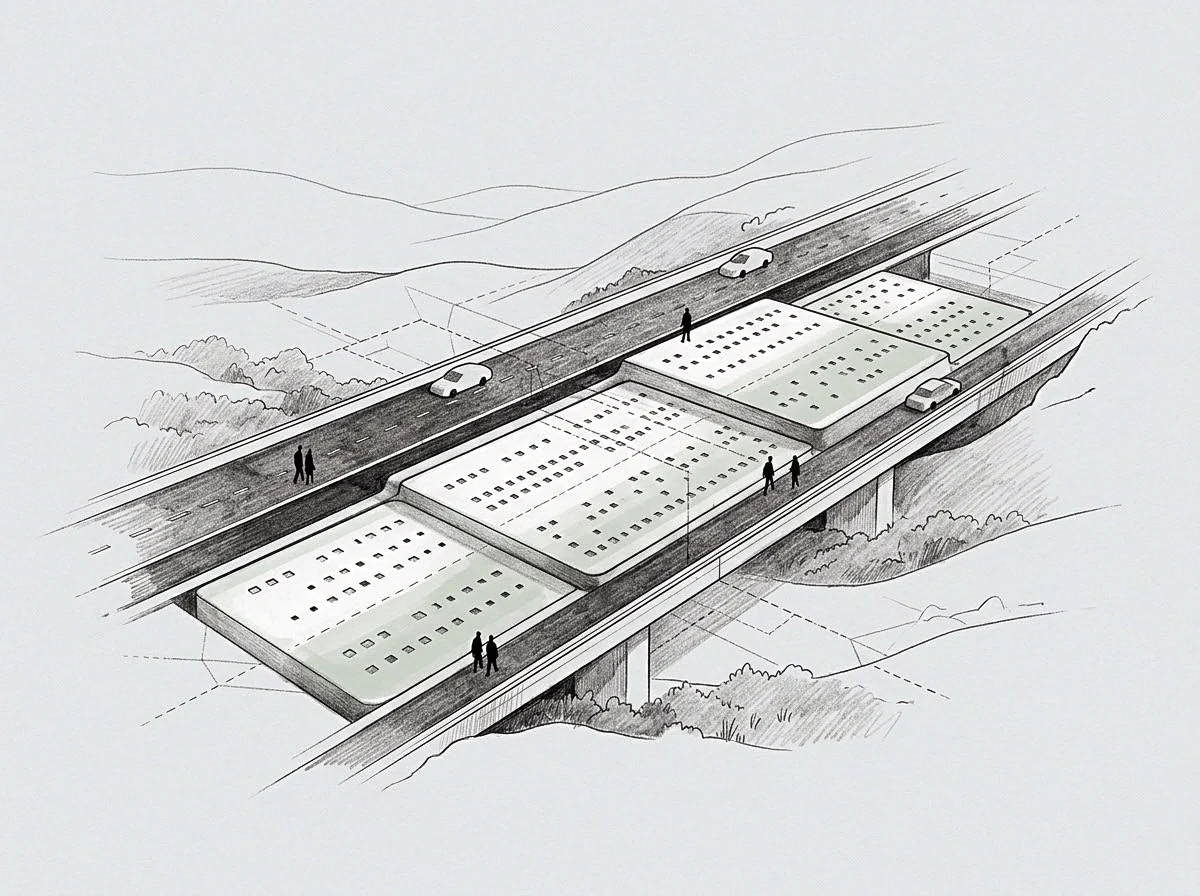
Sequential Dissolution of Tacit Authority
Eliminating informal veto power follows a progressive operational sequence designed to transfer system authority completely to the new leadership structure.
- Revocation of production system privileges, code repository write access, and internal communication channels.
- Establishment of formal board inquiry protocols that route all technical requests through the chief executive officer.
- Commissioning an independent third-party technical audit to baseline platform health without relying on legacy founder perspectives.
- Transition of key client and vendor relationships from the founding director to the incoming executive leadership.
- Formal amendment of board committee charters to define the precise limits of director-level technical consultation.
Boundaries enforced through system access revocation restore executive authority faster than governance agreements left unmonitored.
The transition complete clause takes effect upon the execution of the independent audit, at which point all direct advisory obligations of the former technician convert to standard non-executive board duties.
Relief

The Restructuring of Board Oversight
Restructuring board oversight requires aligning director qualifications with broader strategic requirements rather than historical operational roles. When a former technical founder relinquishes informal veto power, the board recovers its capacity to provide independent strategic guidance. The executive team gains the operational autonomy required to adapt systems, restructure engineering teams, and execute strategic shifts without navigating internal governance friction.
A balanced board distributes technical oversight among multiple qualified directors or engages external advisory boards. Distributing insight prevents any single director from monopolizing technical evaluation. The incoming executive leadership presents operational reports to a board capable of evaluating progress against market standards rather than legacy code implementations.

Capacity Costs of Retained Informal Power
Retaining informal veto structures consumes leadership capacity across the entire organization. Executives spend critical hours building consensus with non-executive directors over routine operational decisions. Engineering teams suffer from ambiguous direction, attempting to satisfy both current executive goals and historical founder preferences.
The cost of unmanaged technical board transitions appears as organizational paralysis, executive turnover, and diminished competitive responsiveness. Clear separation of governance seats from operational work restores accountability, allows incoming leaders to establish authority, and ensures the board operates as a fiduciary body rather than a shadow management team.
Executive autonomy increases in direct proportion to the complete withdrawal of former founders from daily operational channels.
Board seats govern strategic outcomes while operational seats execute system decisions.