
Managing Revenue Team Boundaries During Market Downswings
Market downswings compress revenue roles; setting explicit handoff criteria and qualification gates prevents operational collapse and seller exhaustion.

Spill
A renewal notice sits on a desk at eight in the evening with an unpaid invoice attached. The enterprise account executive who closed the multi-year subscription eighteen months earlier emails an accounting clerk at a troubled client firm to ask about payment schedules. Outbound deal volume dropped forty percent across two quarters.
The manager of customer retention resigned three weeks ago, leaving the account portfolio divided informally among quota-bearing sellers. The company needs cash collections before Friday to meet debt covenants.
Economic contraction forces functional compression inside small commercial organizations. When net new pipeline contracts, revenue personnel drift outside their formal posts to preserve recorded billings. A seller who built pipeline during expansion becomes an ad hoc account collector, technical implementation assistant, and discount negotiator within a single afternoon.
A collapse in outbound transaction volume forces sales personnel into administrative retention duties without formal reassignment.
Role theory defines this state as role ambiguity accelerating into severe role overload. The technician in the sales seat attempts to resolve organizational anxiety through unrecorded operational tasks. Each unstated assignment dilutes the daily hours directed toward qualified pipeline development.

Contracting Markets and Scope Erosion
Market downturns alter client buying patterns and internal operational demands simultaneously. Enterprise buyers freeze commitments, lengthen review cycles, and demand custom contract clauses. Inside the selling firm, executive management asks every revenue employee to stop customer departures at any personal expense.
The salesperson takes incoming support complaints to shield client sentiment. Customer success managers field questions regarding contract expansions without sales enablement training. The boundaries dividing these two disciplines soften under the stress of declining incoming revenue.
Unplanned task acquisition carries an immediate cost in seller capacity. A seller spending twenty hours each week answering technical support tickets produces fifty percent fewer qualified outbound opportunities. Pipeline recovery stalls because the machinery designed to capture future bookings is dismantled to stabilize past transactions.
Stated limits around daily responsibilities disappear when commercial survival replaces operational clarity.
The account rep expects recognition for retaining the client base, while the finance lead expects new business quotas met regardless of operational drag.

Grid
Organizational survival during commercial stagnation depends upon explicit structural divisions. When commercial intake slows, management frequently blurs the division between new logo acquisition and current customer maintenance. That move destroys individual accountability and hides unit economic failures.
The manager seat demands strict division between expansion pursuits and base asset protection. Sales development representatives, account executives, and account managers require non-overlapping operational territories. A territory consists of named corporate accounts, defined contract stages, and explicit criteria for transferring relationships between seats.
A structural limit survives only when handoff milestones between customer acquisition and customer retention carry written criteria.
When an account closes, the technician who secured the signature steps away from daily implementation. Client communication shifts immediately to the customer success seat. The following failure states appear when this structural line breaks during market stress:
- Uncompensated Support Drift occurs when quota-carrying sellers spend working mornings resolving application errors for declining customers to avoid contract cancellations.
- Commission Cannibalization arises when account managers receive incentives for emergency renewals while ignoring mandatory cross-sell discovery conversations.
- Lead Cannibalization develops when inbound specialists pass unqualified inquiries to senior closers because pipeline quotas remain unchanged despite shrinking market demand.
- Founder Intervention Creep manifests as executive leadership entering middle-tier contract negotiations uninvited, undermining team authority to win discounted terms.
These failure states distort operational reporting. Executive management views aggregate revenue numbers without seeing the labor misallocation hiding beneath the line items.

Structural Seat Division Under Market Pressure
Retaining explicit divisions requires documented operational terms for each revenue post. The table below outlines the distribution of scope between customer acquisition and customer retention seats when contract velocity declines.
| Operating Dimension | Account Executive Seat | Customer Success Seat |
|---|---|---|
| Primary Work Objective | Net new contract acquisition | Gross revenue retention and product adoption |
| Weekly Calendar Allocation | Thirty hours outbound prospecting and qualification | Twenty-five hours direct client consultation |
| Pricing Negotiation Authority | Standard terms down to approved discount floor | Service tier modification without price dilution |
| Invoicing and Collections | Zero billing collection duties | Escalation to finance after standard notice window |
| Technical Scope Boundary | Demonstration of verified production capabilities | Coordination with formal deployment specialists |
Maintaining these distinctions stabilizes labor costs and preserves pipeline tracking. Removing sales specialists from service firefighting allows direct identification of market-level demand drops versus internal execution failures. The person in the acquisition seat retains capacity to identify rare market opportunities instead of burning work weeks on post-sale maintenance.
Failure to maintain functional separation between customer capture and contract preservation leads directly to depleted new business pipelines, hidden service overhead, and elevated attrition among top-performing sales staff.
Gate
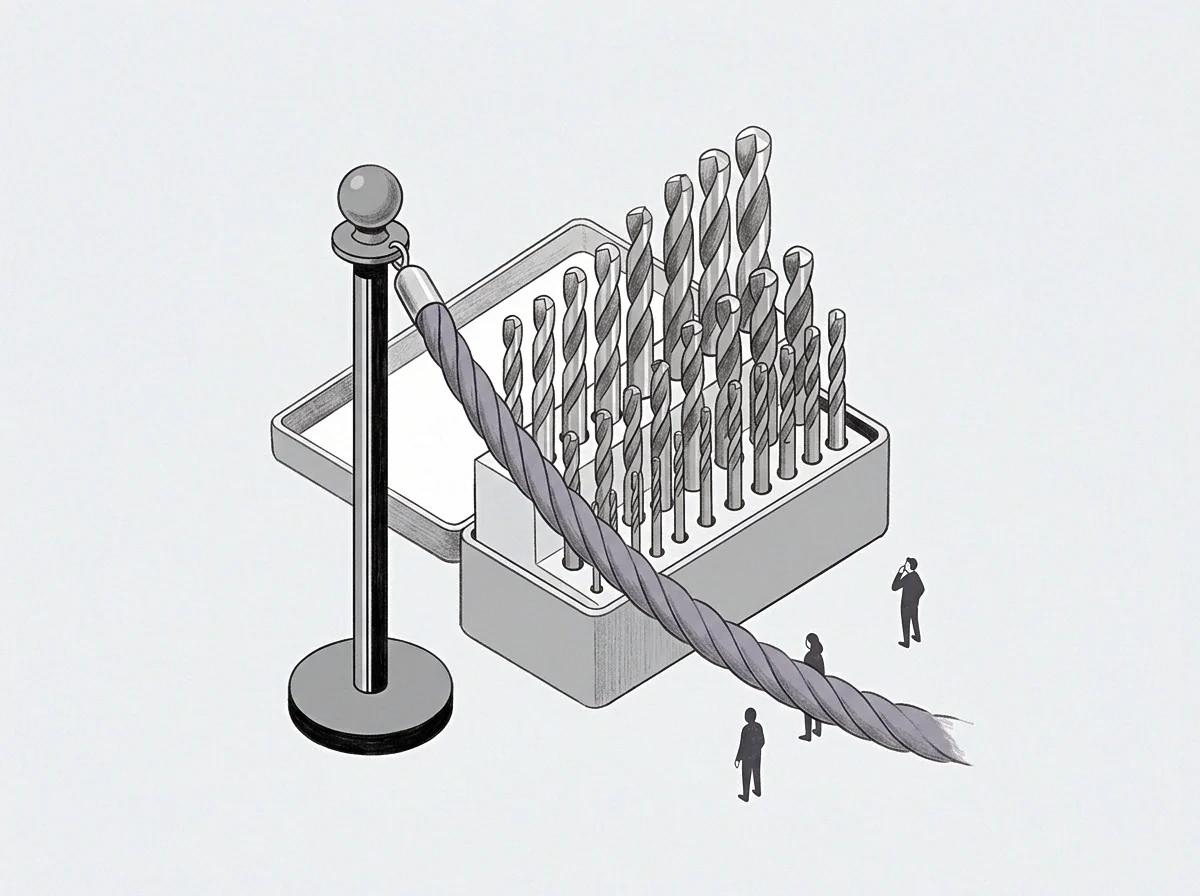
Preserving operational limits requires defensive governance mechanisms. Under financial strain, sales personnel experience intense pressure to sign substandard contracts with non-ideal customers. These arrangements consume excessive technical support labor, demand abnormal customization, and cancel contracts before the firm recoups acquisition expenses.
The solution is an operational barrier governing customer qualification, contract approval, and post-sale onboarding. A gate operates on documented thresholds, removing emotional discretion from deal acceptance. The manager seat protects company cash by rejecting accounts that fail defined economic criteria.
A contract concession granted without operational signoff transfers unbudgeted technical labor onto delivery personnel.
Implementing effective controls requires a sequence of strict procedural checkpoints when evaluating prospective clients during market contractions:
- The prospective buyer verifies technical compatibility with standard system infrastructure prior to product demonstration.
- The commercial lead documents economic justification and executive sponsorship before delivering customized contract proposals.
- Finance personnel audit payment terms and credit risks on all transaction requests exceeding ten percent discounts.
- Implementation leadership evaluates service commitments and signs off on onboarding timelines before final contract execution.
Adherence to these checkpoints prevents revenue personnel from mortgaging future operational capacity to hit immediate sales quotas. Each checkpoint protects specialized teams from unmanageable task volumes.
Does Contraction Pull Sales Into Account Service?
Market stress encourages sales staff to volunteer for onboarding tasks under the assumption that proximity to the customer guarantees account survival. This assumption ignores the cost of switching attention between relational persuasion and technical systems execution. The specialized sales skill set rarely matches the systematic mindset needed for software implementation or process management.
Research across industrial manufacturing and enterprise technology demonstrates that cross-functional role spillover during economic shocks reduces overall team productivity by twenty-five to thirty-five percent. This productivity drop stems from fragmented schedules and unresolved task priorities. The enterprise seller who attempts onboarding management fails both customer satisfaction metrics and pipeline generation targets.
Management protects team members by enforcing explicit restrictions on cross-seat intervention. Stated boundaries must prevent sellers from attending post-sale implementation reviews unless an expansion opportunity is formally declared. The boundary shields the seller from unpaid operational support tasks.
Sales effectiveness increases when client relationship ownership transfers completely at the point of contract execution.
Margin
Stated limits carry an economic price that organizations must accept during prolonged downturns. Enforcing strict customer qualification criteria means turning away marginal cash payments. Refusing to let account executives handle collections may delay short-term cash receipts while waiting for finance operations to execute standard recovery protocols.
A founder frequently feels that saying no to revenue in a depression is reckless. That instinct misjudges long-term survival. Servicing unprofitable customers at the expense of outbound prospecting accelerates organizational failure by burning capital reserves on low-value services.
Operational discipline maintains the unit economic foundation required for rapid expansion when market conditions improve.
A company that preserves its operational divisions during a downswing retains the structural capacity to absorb expansion demand.
Protecting the human capacity of the revenue team prevents quiet departures and personal burnout. When an enterprise closer handles three distinct operational positions simultaneously without adjusted targets, physical and cognitive exhaustion follow within six months. The cost of replacing institutional commercial knowledge during a recession far exceeds the temporary income gained by stretching employees beyond manageable limits of attention and energy.
The manager seat establishes manageable weekly hours and sustainable operational scopes. Clarifying what an employee must drop is as important as assigning new tasks. In deep downturns, leadership must formally eliminate lower-priority initiatives rather than expecting commercial teams to absorb endless market volatility through sheer personal exertion.
Whether executive leadership possesses the patience to defend strict operational boundaries while incoming cash flows dwindle remains an unresolved dilemma for early-stage commercial enterprises.