
Measuring Technical Drag During Engineering Leadership Transitions
Technical drag during leadership transitions represents accumulated delivery latency, unarbitrated architectural debt, and context loss when executive authority vacates.
Friction
Engineering executive transitions expose structural delay points in system governance that previously relied on unwritten personal authority. When a chief technology officer or vice president of engineering leaves a seat, the operational momentum of the engineering organization does not degrade uniformly. Delivery slowdowns concentrate around points of architectural ambiguity, cross-team dependency resolution, and unowned system components.
Measuring this operational decay requires isolating structural systemic friction from ordinary sprint variance.

Structural Mechanics of Deferred System Decisions
In mature engineering organizations, high-level technical leaders spend significant time arbitrating implicit trade-offs between speed, maintainability, and infrastructure cost. When the seat becomes vacant or enters a transition phase, team-level decision authority shifts back to individual contributors or engineering managers who often lack explicit mandate to make cross-domain trade-offs. Decisions halt.
As a consequence, proposals that alter service contracts or database schemas linger in pull request queues.
The immediate symptom of this authority vacuum is an elevation in architectural wait state times. Engineers pause work on complex, multi-service features while awaiting executive endorsement that never arrives. System changes stall.
Sprint commitment burn-down charts may initially display consistent task completion, yet deeper code analysis reveals that teams avoid high-impact architectural modifications in favor of isolated, superficial changes.
Unwritten architectural authority converts into delivery delay when the seat that held it empties.

Tacit Authority Deficits in Product Delivery
Tacit authority consists of the informal trust, legacy context, and unwritten consensus that an outgoing technical leader used to push high-risk deployments through production pipelines. When that individual exits, the organizational memory supporting those shortcuts vanishes. Capacity drops quietly.
Subsystem teams respond by increasing defensive engineering practices. Defensive engineering manifests as redundant testing cycles, extended design doc reviews, and an refusal to modify core shared libraries. The resulting throughput decline reflects the real tax of unanchored leadership transitions: engineering capacity shifts from producing end-user value to navigating internal organizational ambiguity.
The baseline duration required for an incoming engineer to audit unwritten architectural assumptions without halting ongoing delivery remains variable across system types.

Signal
Measuring organizational momentum during an executive handover relies on explicit observation of codebase properties rather than team self-reporting. Subjective sentiment surveys routinely fail to capture technical drag because engineering teams adapt to leadership vacuums by reducing scope and avoiding complex system integrations. Direct code repository instrumentation yields quantifiable data regarding operational stagnation.

Quantitative Indicators of System Latency
Primary telemetry for leadership drag centers on repository throughput dynamics, cross-boundary pull request latency, and technical debt accumulation velocity. When leadership governance weakens, the time elapsed between pull request creation and deployment expands specifically for cross-service interfaces. Code review latency doubles.
Tracking the distribution of pull request turnaround times reveals operational bottlenecks. While intra-team code changes maintain baseline speed, inter-team pull requests show significant tail latency expansion. Deprecations halt completely.
This divergence marks the precise boundary where executive arbitration previously resolved inter-team friction.
Quantitative delivery metrics expose governance breakdowns faster than self-reported team surveys.
The operational degradation occurring during engineering leadership shifts follows distinct metric patterns across each transition phase:
| Transition Phase | Pull Request Latency Expansion | Architectural Escalation Frequency | Codebase Churn Variance | Unowned Service Ticket Aging |
|---|---|---|---|---|
| Vacant Leadership Seat | +65% to +110% | -80% (Escalations Suppressed) | -45% (Defensive Coding) | +140% |
| Interim Technical Operator | +20% to +40% | +150% (Arbitration Backlog) | +15% (Local Patching) | +35% |
| Onboarding Successor (Days 1-60) | +35% to +50% | +90% (Audit Burden) | -20% (Freeze Orders) | +10% |
Comparative Metrics Across Leadership Transition States
Monitoring system stability during transitions demands tracking specific operational failure modes that emerge when governance structures disintegrate:
- Review Stagnation: Code reviews expand in duration as engineers hesitate to approve changes that alter service boundaries without executive coverage.
- Defensive Refactoring: Engineers write isolated micro-wrappers around legacy components to avoid touching core infrastructure during a leadership vacuum.
- Scope Compression: Product teams abandon systemic interface improvements in favor of localized patch work that bypasses broad architectural approval.
A team that stops modifying shared dependencies during a leadership vacancy is accumulating hidden architectural debt rather than maintaining operational stability.
Drift
Systemic alignment degrades when daily code modifications proceed without a single authority maintaining the core architectural boundaries. In the absence of active leadership oversight, separate engineering squads interpret system goals independently. Individual microservice teams optimize for local convenience, generating architectural divergence that compromises platform integrity.

How Does Architectural Churn Quantify Leadership Absence?
Architectural churn measures the volume of code rewritten due to conflicting technical direction within a short operational window. Boundaries blur rapidly. When leadership authority vacates, Squad A builds an internal caching layer using one datastore engine, while Squad B concurrently deploys an alternative engine for an adjacent service.
Duplication expands daily.
Structural coherence decays rapidly when local squads make global architectural choices in isolation.
This localized decision-making creates structural collision points when services integrate during release candidates. The resulting rework consumes senior staff engineering capacity, diverting high-cost talent away from strategic initiatives toward resolving redundant interface conflicts. Technical debt compounds.
The overall code volume expands, yet system capability remains static.
The Accumulation of Tacit System Debt
Tacit technical debt represents architectural shortcuts introduced specifically to avoid triggering cross-team review processes during an executive vacancy. Engineers bypass shared messaging buses, hardcode configuration state directly into application code, and duplicate utility libraries across services to maintain team autonomy.
This debt accumulates invisibly because traditional static analysis security testing and coverage tooling fail to flag organizational workaround patterns. The cost surfaces months later when the incoming technology leader attempts to execute platform-wide infrastructure upgrades, only to find underlying system dependencies tangled beyond immediate remediation.
Allowing uncoordinated subsystem expansion during an interim leadership period shifts future engineering capacity away from product feature development into structural remediation.

Yield
Evaluating handover outcomes demands analyzing both developer throughput and the structural integrity of the codebase six months after the transition completes. A rapid leadership transition that preserves short-term feature velocity while quietly degrading platform architecture represents a failed transition strategy. Quantifying transition yield requires financial and operational modeling of handover models.
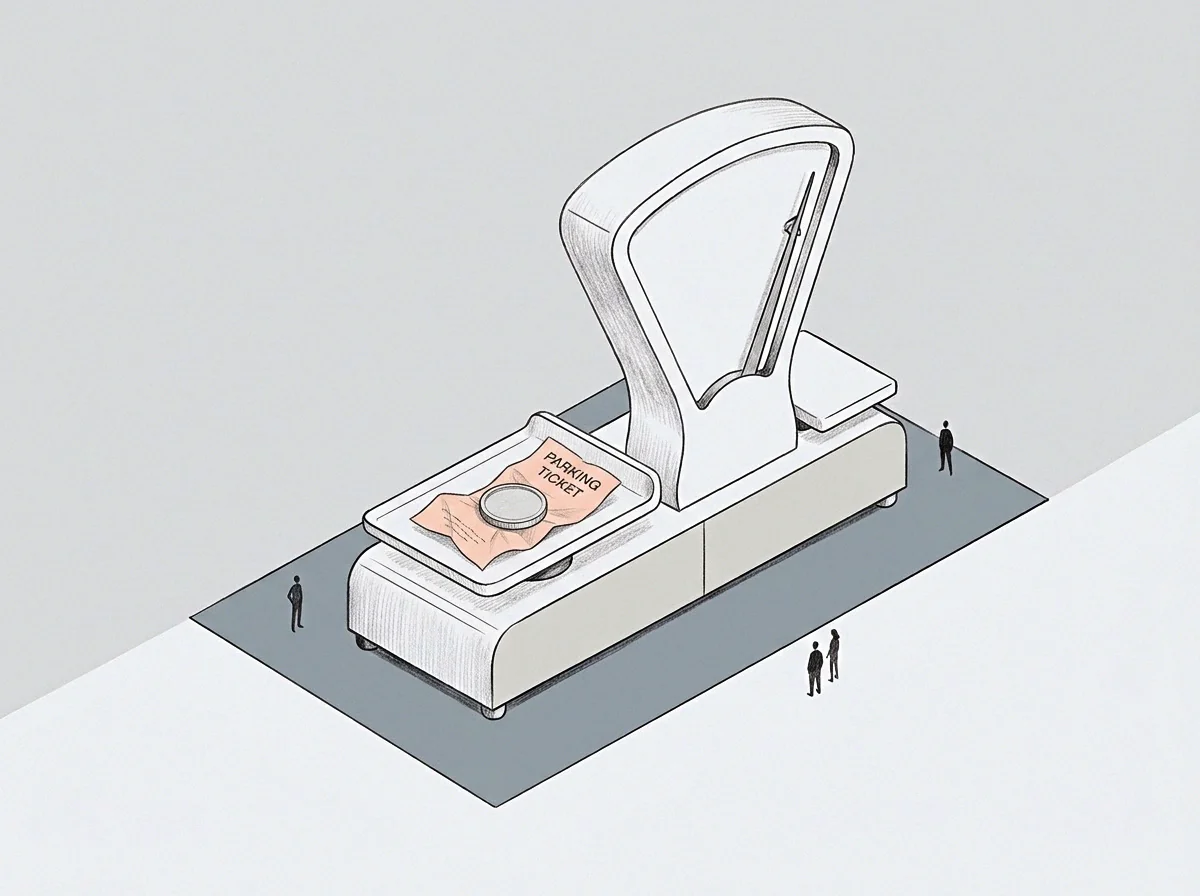
Financial and Capacity Impact of Transition Velocity
Consider an organization of sixty engineers split across eight product teams. Assumption A models an abrupt departure where the departing technical leader leaves within two weeks without documented design principles. Assumption B models a structured eight-week transition where the departing operator holds a defined advisory seat with explicit weekly hours allocated solely to architectural boundary reviews.
An unmanaged handover transfers structural decision costs directly onto engineering delivery schedules.
Under Assumption A, pull request resolution times increase by 45 percent over three months. Secondary refactoring escalations multiply, consuming 180 additional engineering hours per month in cross-team arbitration meetings. Uncertainty generates immediate cost.
The cost measured in diverted engineering compensation equals $42,000 monthly, alongside a 14 percent drop in quarterly feature output. Output drops sharply.
Under Assumption B, the departing leader receives a fixed advisory fee of $12,000 monthly for two months. Cross-team escalation meetings remain capped at four hours weekly. Pull request resolution times widen by 8 percent during the handover before stabilizing.
The structured seat retains core context, protecting platform yield while preventing localized architectural divergence.
The engineering organization cannot complete the core infrastructure migration until someone clarifies who owns final interface approvals.
Anchor
Stabilizing engineering velocity during executive succession depends on establishing explicit governance parameters before the outgoing leader vacates the seat. Relying on goodwill or informal consults leads to role strain and unmetered drag. The organization must convert worn tacit responsibilities into held contractual terms.
Formalizing Decision Rights and Boundary Limits
Formalizing a transition requires defining explicit decision rights that survive the leader’s departure. Clear terms stabilize work. Authority sits in clear statements.
This involves establishing temporary architectural review committees, defining strict blast-radius thresholds for single-approver changes, and publishing explicit escalation paths for contested service boundaries.
Stating explicit architectural boundary conditions eliminates reliance on informal executive coverage.
Limits protect engineering velocity. By converting unwritten executive prerogatives into documented organizational policy, the technical organization insulates ongoing feature delivery from the disruption of executive turnover.

Sequence for Establishing Interim Governance
Executing an orderly transfer of technical authority follows a structured operational order:
- Document all unwritten architectural exceptions currently active across production services.
- Assign temporary decision authority for cross-service interface modifications to a designated senior staff engineer.
- Institute mandatory architectural review thresholds based on blast radius rather than team hierarchy.
- Schedule bi-weekly system boundary audits until the incoming executive takes full operational control.
A formal transition agreement specifying architectural sign-off thresholds transfers final system authority to the senior engineering committee until the permanent successor assumes the role.