
Separating Technical Execution From Operational Supervision In Small Growing Firms
Separating technical work from operational supervision protects maker focus by moving queue pacing, triage, and schedule tracking to an independent seat.
Vise
Midnight arrives with two browser windows open side by side on a wide monitor. One window displays an uncompiled codebase with failing integration tests, while the other holds twelve unanswered production tickets and a vendor invoice awaiting authorization. The person at the keyboard spent four hours tracing a memory leak in the core worker pool that must ship to production by morning.
Meanwhile, three junior engineers stopped working at four in the afternoon because their task definitions lacked database migration specifications, and nobody reviewed their pull requests. The firm sells engineering velocity, yet every deliverable slows as headcount expands.
Growing firms hit this compression when technical execution and operational supervision fall to the same person. Technical execution demands long stretches of uninterrupted immersion: working out an architecture flaw, fabricating a tight-tolerance prototype, or drafting a complex brief requires holding systemic dependencies in active working memory. Operational supervision works on the inverse rhythm.
It requires rapid response times, queue management, ambient awareness of team throughput, and prompt triage of external blockers. When one person occupies both seats without structural boundaries, supervision feels like an assault on craft.
A maker forced to police queues treats every colleague interruption as an act of sabotage.
Role theory defines this compression as intra-sender role conflict, observed extensively in small technical enterprises where structural differentiation lags behind head count. The lead practitioner wants to build clean systems, while the firm needs someone to confirm that five other people build systems according to schedule. When those obligations collide, the practitioner defaults to the work they respect, supervision degrades into sporadic crisis interventions, and junior staff wait in silence while deadlines slip.
The operational deficit creates secondary waste across the shop. Without scheduled supervision, quality checks occur after full assembly rather than at intermediate inspection gates. The senior technician discovers downstream defects late, reacts with visible frustration, and seizes the tool to correct the error personally.
That intervention erases the supervisor seat entirely: the senior builder becomes an overpaid line worker repairing basic defects while the supervisor seat sits completely empty, and output per dollar drops instantly.
Rhythm
Time moves differently across the two functions. Production work operates on unbroken spans. Research on software engineers and precision machinists demonstrates that recovering context after an operational interruption consumes twenty-three minutes of cognitive reorientation.
A senior builder who answers three supervisory inquiries each morning loses their entire deep-work capacity before noon.
Operational supervision runs on cycle times, queue depths, and pacing signals. A supervisor monitors whether tasks clear workstations at expected velocity. When work stacks up at a testing station, the supervisor redirects upstream inputs or reassigns personnel.
This oversight does not require knowing how to execute every micro-step of the underlying task; it requires recognizing flow blockages, maintaining delivery accountability, and verifying conformance against documented criteria. Entangling the two rhythms destroys both disciplines.
Deep execution fractures whenever ambient queue monitoring occupies the same operational shift.
Small firms frequently attempt to resolve this tension through casual calendar partitioning. The senior practitioner blocks mornings for heads-down production and reserves afternoons for administrative check-ins. This intervention fails within two weeks.
An operational stoppage on the floor at nine in the morning does not wait for a scheduled two o’clock review; when the line halts, the maker abandons deep work to resolve the crisis, and the morning focus evaporates.
Structural Tensions Between Building And Overseeing
Separation requires recognizing that execution and supervision require incompatible operating postures. These divergences govern weekly throughput:
- Cognitive Horizon stretches across multiday arcs for direct fabrication, whereas supervisory monitoring recalibrates priorities every four hours based on active queue drift.
- Feedback Latency measures output quality at the component boundary, while operational oversight tracks cycle time variance across the entire client delivery chain.
- Intervention Threshold prompts the builder to eliminate every edge-case imperfection, whereas the supervisor releases work that matches the agreed acceptance threshold.
- Communication Density isolates the specialist in solitary problem solving, while supervisory oversight relies on frequent, structured touchpoints with multiple downstream stations.
When the firm leaves these tensions unaddressed, the lead technician begins to view junior team members as direct impediments to personal output. The work climate turns resentful: senior builders conclude nobody else works hard enough, while junior builders conclude their work is never adequate. Both conclusions mistake structural design for personal deficit, and the failure belongs entirely to the unseparated seats.
Stamp
Supervision cannot function without externalized inspection standards. In early-stage firms, quality criteria reside entirely inside the founder’s sensory intuition. The lead artisan knows immediately whether a joint is tight, whether code is maintainable, or whether an enterprise proposal reads persuasively; as long as that tacit knowledge remains unwritten, supervisory reviews turn into erratic exercises in mind-reading.
A junior technician submits work that satisfies the written brief, only for the senior practitioner to reject it because it fails an unstated aesthetic or architectural preference. When the junior builder asks what specific metric was missed, the senior builder replies that quality is self-evident to anyone with genuine professional standards. This dynamic paralyzes delegation.
Operational supervision requires an objective stamp: clear pass-fail rubrics, automated verification checks, and explicit acceptance criteria defined before work begins.
A standard that lives solely inside intuition cannot be supervised by anyone else.
Transforming tacit craftsmanship into explicit inspection rules reduces role ambiguity across the firm. When verification criteria are public, supervisory oversight decouples from technical supremacy. An operations coordinator who cannot write the firmware can still audit whether the firmware build passed automated unit tests, met memory footprints, and completed thermal profiling according to written protocol.
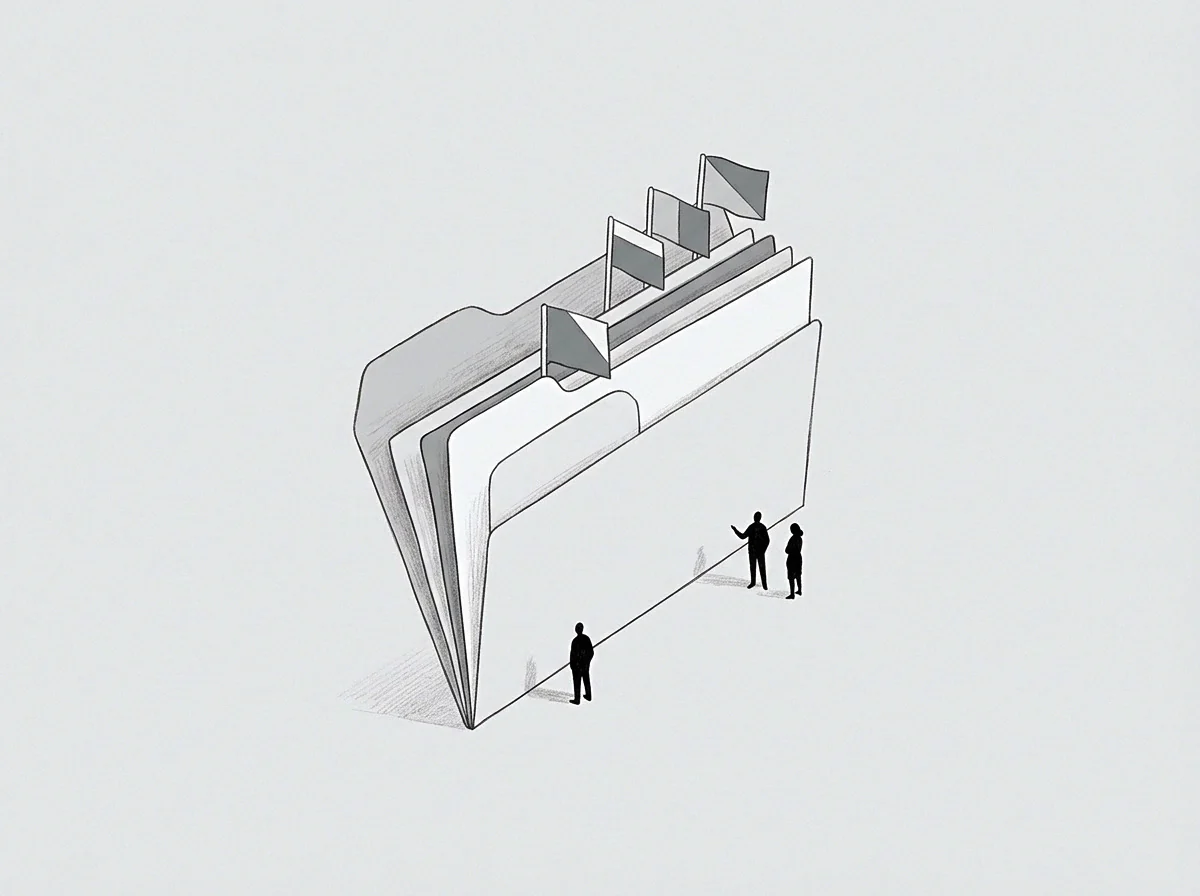
Where Does Supervisory Oversight Break Down First?
The earliest breakdown appears at intermediate work handoffs. In small enterprises, work transfers casually through ad-hoc chat channels or hallway comments. The lead builder assumes the recipient understood the full context.
Two days later, delivery stalls because necessary input artifacts were absent. Technical execution assumes professional empathy; operational supervision enforces clear gatekeeping.
| Dimension | Technical Execution Seat | Operational Supervision Seat |
|---|---|---|
| Primary Object | Artifact construction and code integrity | Throughput pace and queue integrity |
| Attentional Mode | Sustained, continuous, deep focus | Distributed, ambient, interruptible triage |
| Evaluation Standard | Technical precision and internal elegance | On-time delivery and adherence to spec |
| Intervention Action | Direct personal refactoring of flawed inputs | Work redirection, queue rebalancing, feedback loop |
| Failure Pattern | Over-engineering components beyond the scope | Tolerating bottlenecks until delivery dates slip |
A firm that documents these boundaries protects the lead technician from operational capture. When a defect occurs, the operational supervisor logs the discrepancy, returns the artifact to the author, and adjusts the project milestone calendar. The supervisor resists rewriting the component, because rewriting the component destroys accountability and hides training deficits.
A technician asked to deliver against an unstated standard cannot fulfill requirements that were never committed to paper before work began.
Switch
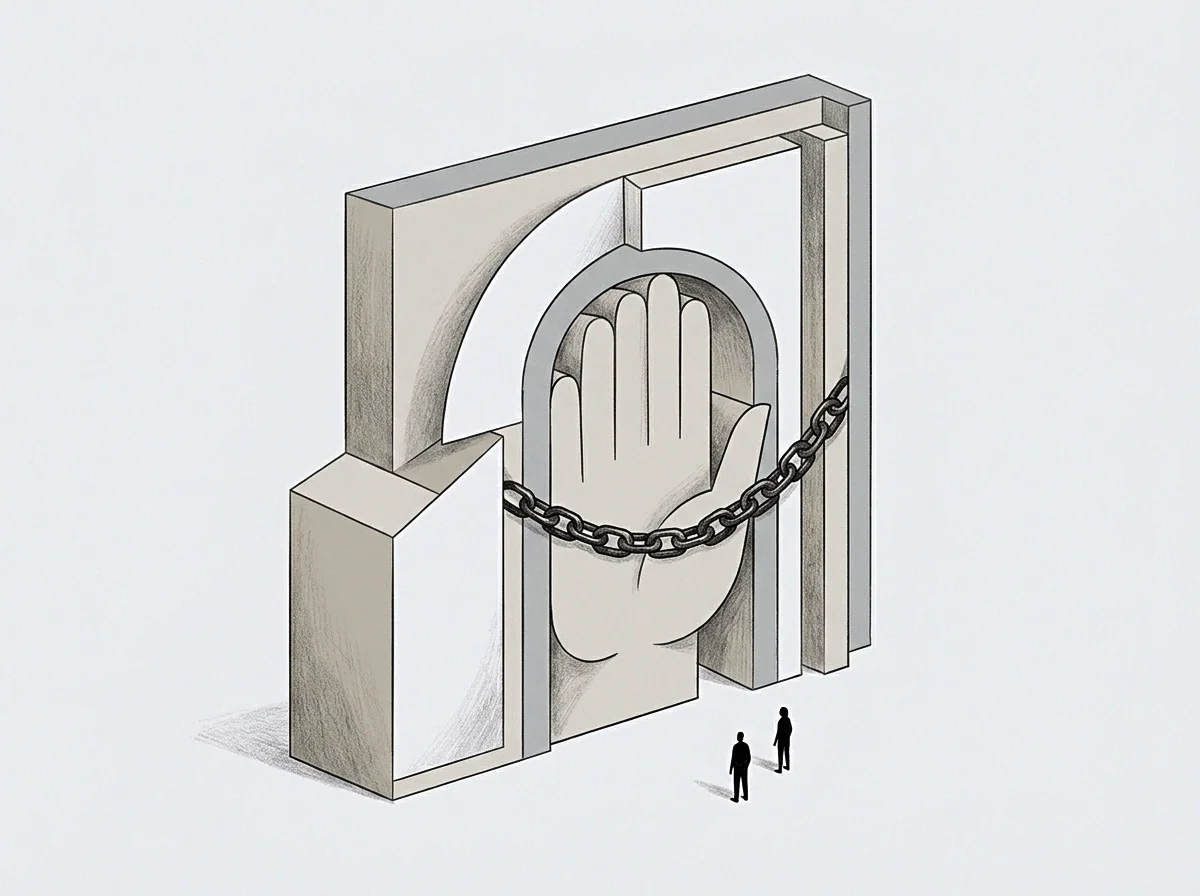
Decoupling the seats requires an explicit structural migration. The transition rarely happens overnight through wholesale reorganization, which risks organizational shock a small firm cannot afford before revenue supports an executive layer. The separation develops through a sequential redistribution of responsibilities across three discrete stages.
Assume a typical boutique consultancy scaling from five to eighteen full-time contributors. The lead engineer currently handles client architecture while running daily triage, staffing client projects, and checking deliverables. Delivery dates routinely drift by three weeks.
The firm implements a phased realignment across ninety calendar days:
- Define objective acceptance criteria for top production workflows, removing subjective founder approvals from eighty percent of routine tasks.
- Install a designated operations coordinator to manage task assignment queues, daily blockers, and schedule adherence, barring that coordinator from writing production code.
- Restrict the lead technician to technical review gates and complex system architecture, scheduling these activities into fixed, twice-weekly evaluation blocks.
Separating the seats preserves technical focus by making operational coordination someone else’s primary responsibility.
During this migration, the technical specialist often experiences an unexpected identity vacuum. Producing working components delivers immediate satisfaction, whereas checking whether tasks cleared a board does not. When the senior builder steps out of the supervisory loop, they often feel disconnected from the pulse of the firm and attempt to drift back into operational channels, answering scheduling questions and interfering with queue assignments.
The operations coordinator must repel these intrusions.
The contract governing this division states that the operations supervisor holds authority over task scheduling, queue assignments, and delivery accountability, while the lead technician holds authority over technical architecture and final specification standards.
Post
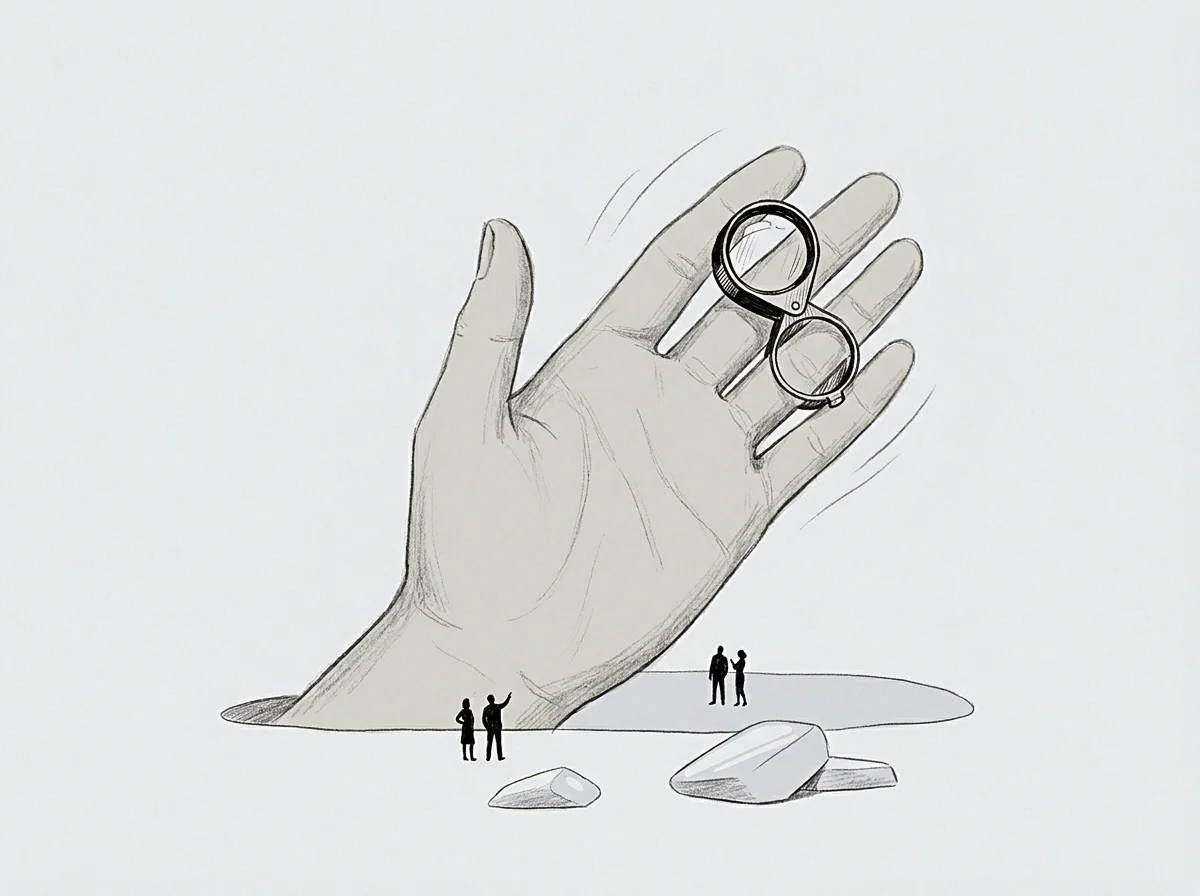
Once the separation hardens, the small firm operates with clean operational posture. The lead practitioner works inside protected, four-hour fabrication blocks. Work output from other builders routes through an operations desk that verifies conformance against explicit rubrics.
Delivery variances trigger immediate operational rebalancing rather than emotional outbursts from an overworked technical founder.
Consider the organizational mechanics of an industrial automation shop with fourteen technicians. In the unseparated configuration, the founder spent thirty hours a week modifying PLC code written by juniors while managing shipping containers and vendor parts shortages. Client deliveries routinely lagged by months.
Under structural separation, an operations manager monitors parts inventory, tracks wiring schedules, and runs morning triage. The founder sits at a dedicated design station for six hours daily, resolving core control algorithms. The firm produces thirty percent higher volume with zero additional engineers, and capacity stabilizes.
A quiet cost in team energy accompanies this structural maturity. Explicit operational supervision introduces formal process documentation, automated gating tools, and visible tracking mechanisms that feel bureaucratic to technicians who remember early improvisation. The informal camaraderie of five people shouting across one room disappears, replaced by a delivery system that trades spontaneous craft culture for reproducible throughput.
Whether an ambitious growing firm can sustain this operational discipline without losing the creative edge that generated its initial technical advantage remains a persistent dilemma for every expanding enterprise.