Meaning
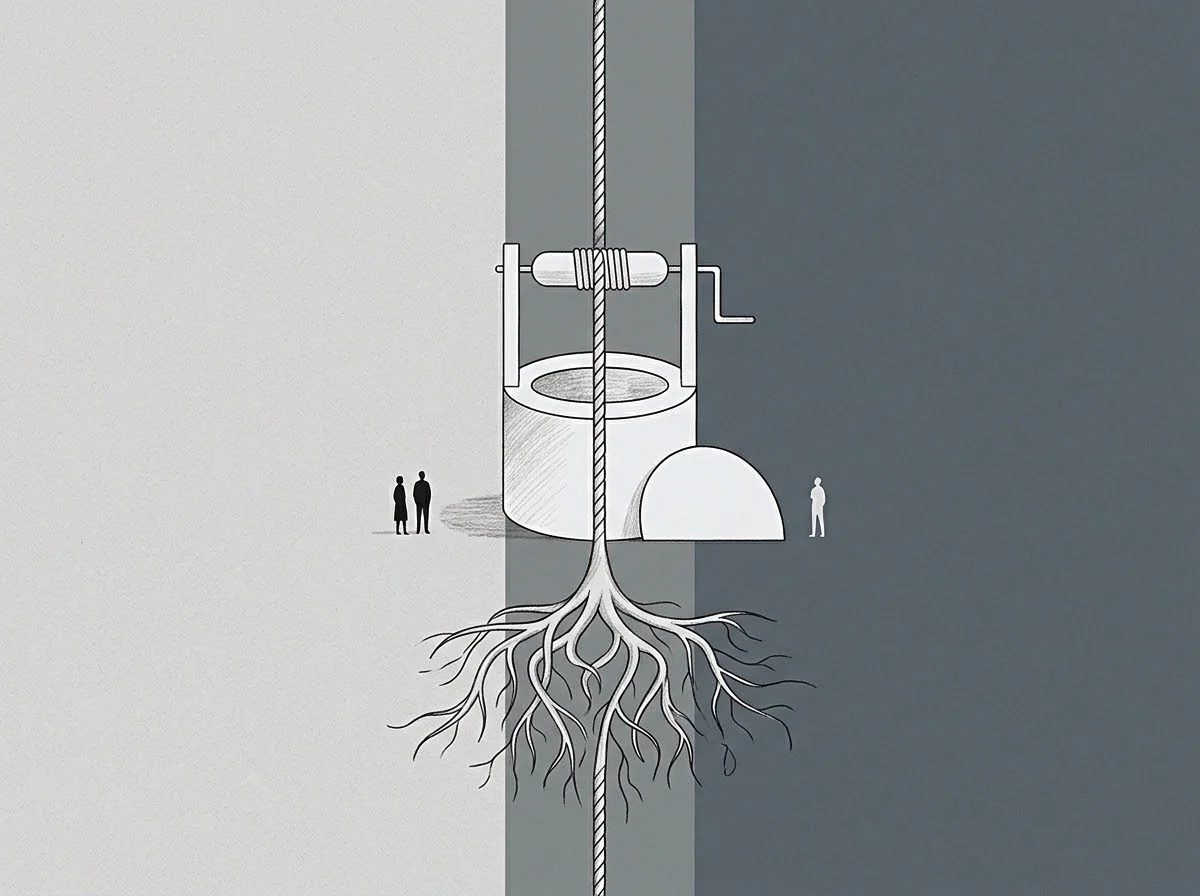
Hazard boundary sketching represents a defensive cartography process that isolates operational vulnerabilities before capital expenditure locks an enterprise into fragile architectures. Founders execute failure domain mapping by tracing cascading breakages across dependent technical and organizational subsystems until the furthest blast radius appears on paper. Every systemic fragility receives a quantified isolation boundary measured in hours of downtime and units of lost attention capacity.
Practitioners draw these topological limits to prevent localized software bugs or managerial misjudgments from disabling the entire operating entity.
Boundary Calculus
Mathematical decomposition of risk thresholds establishes the exact point where parallel redundancy ceases to provide stability. System architects calculate load limits by dividing peak operational stress by available recovery hours, yielding a numerical coefficient that exposes structural brittleness. Founders allocate finite cognitive attention to these calculations instead of chasing growth metrics, paying a high price in deferred product features to secure system isolation.
Software dependencies create hidden coupling loops that invalidate simple redundancy assumptions unless rigorous algebraic verification strips away optimistic projections.
Cascade Prevention
Structural firebreaks installed between operational modules stop localized anomalies from migrating into core revenue channels. Engineers isolate stateful databases from stateless application layers to ensure that a memory leak in one service never corrupts permanent records. Operational teams maintain strict interface contracts that reject malformed inputs before those inputs reach internal processing queues.
Financial reserves act as the final systemic firebreak, absorbing unexpected liability surges until technical operators patch the underlying architecture.
Systemic Resilience
Long term operational stability depends entirely on the disciplined maintenance of these precalculated isolation zones. Operators update dependency graphs continuously as software versions mutate and team structures evolve away from original designs. Unchecked organizational growth inevitably erodes separation boundaries unless founders enforce strict communication bottlenecks between distinct product squads.
Systemic recovery speed improves measurably when structural failure boundaries match the actual administrative jurisdiction of the team responsible for fixing them.