
Structural Mechanisms for Decoupling Technical Founders From System Execution Deficits Permanently
Decoupling technical founders from execution deficits requires formal operational partitioning, production access revocation, and intermediate technical leadership.

Fault
A technical founder sits at the keyboard at two in the morning because a production deployment failed, fixing database indexing logic that three line engineers wrote earlier that afternoon. The incident repeats a pattern established eighteen months prior: architectural decisions, code review exceptions, and release authorizations all converge on the person who also manages board governance, hiring quotas, and capital allocation. When throughput falters, early organizations default to personal absorption.
The engineer who wrote the original repository steps back into the debugging loop, fixing the immediate outage while taking hours away from executive governance.
This pattern reflects structural role compression. The technician seat, the manager seat, and the founder seat run on incompatible feedback cycles, distinct success metrics, and competing demands on attention. The technician seat operates in hours and commits, fixing defects through direct intervention.
The manager seat operates in weeks and resource allocations, establishing predictability across execution units. The founder seat operates across quarters and balance sheets, securing institutional direction. Combining all three in one person creates systemic vulnerability: the founder absorbs line deficits through personal labor, masking operational shortfalls while creating leadership delays.
A technical founder acting as the primary failure buffer conceals operational deficits from executive oversight until physical capacity gives out.
Execution deficits emerge when system complexity expands beyond what the original architect can hold in mind. Early on, tacit architectural knowledge lets a founding engineer outpace structured development teams through unwritten mental models. As codebases expand and transaction volume scales, that unwritten context becomes a liability.
Line engineers lack the background needed to navigate edge cases, leading to delayed pull requests, regression errors, and deployment stalls. The founder often interprets these delays as competence failures among engineering staff and steps in to fix defects. That direct intervention keeps the cycle going: line engineers step back from operational ownership, documentation goes unwritten, and throughput remains tied to the founder’s physical availability.
Breaking this pattern requires separating the individual from line operations using formal structural boundaries rather than self-restraint. When technical founders try to manage execution deficits through willpower alone, emergencies pull them straight back into the code. Lasting decoupling occurs only when authority, technical verification, and incident response paths are separated from the founder seat by organizational design.
When an organization fails to build structural boundaries around its founding engineer, strategy remains subordinate to daily maintenance.

Joint
Decoupling a technical founder from line execution begins with formal structural partitioning. The organization builds an operational interface between architectural governance and daily engineering delivery, separating long-range technical direction from immediate sprint work. This boundary replaces direct intervention with systemic verification, isolating the founder from daily incident response.
The transition requires explicit authority boundaries across operational layers:
- Architectural boundary definitions establish non-negotiable interface constraints, latency limits, and schema contracts, giving line engineering units autonomy within defined perimeters.
- Escalation filtering protocols direct system anomalies through tiered response teams, explicitly barring founder involvement in primary and secondary incident remediation.
- Verification gating routines enforce automated test suites, static analysis thresholds, and peer approval workflows, removing subjective founder sign-offs from release pipelines.
- Service ownership charters transfer end-to-end operational responsibility for specific subsystems to designated engineering leads, matching accountability with deployment authority.
This structural joint protects the founder from execution drag while shielding engineering teams from ad hoc executive interference. When a technical founder retains repository write access without boundaries, unannounced code modifications bypass team planning, undermining engineering leads and destabilizing sprint delivery.
Operational partitioning succeeds only when production deployment permissions are revoked for executive personnel.
Formal operational isolation introduces immediate friction. Release cycles often slow down during early rollout as line engineers navigate complex edge cases without executive intervention. This performance drop reflects the actual organizational baseline, exposing previously hidden documentation gaps, missing tests, and architectural ambiguities.
The operational joint forces the organization to fix execution deficits through tooling and process improvements rather than relying on executive heroics.
Unmonitored founder contributions often generate more operational disruption than deliberate technical debt.
Buffer
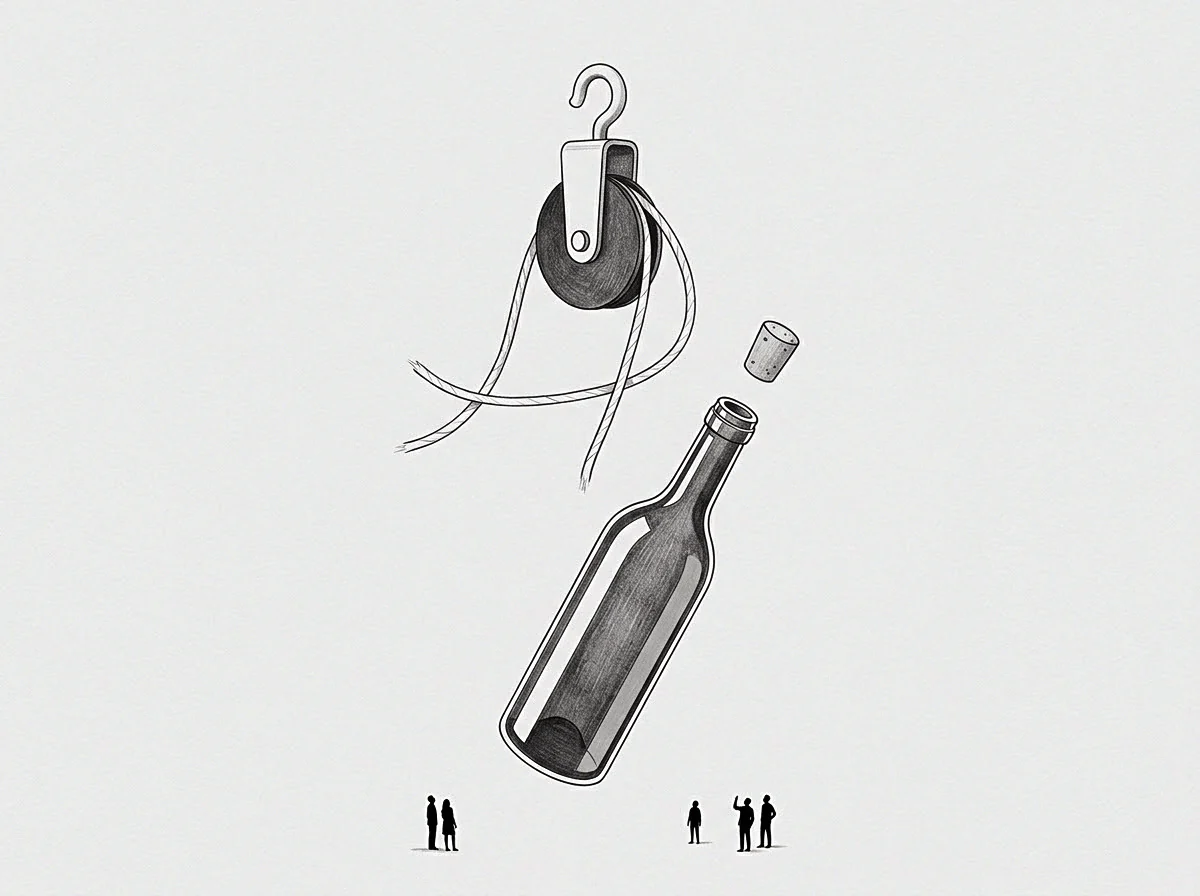
Structural decoupling requires an intermediate operational tier between executive governance and technical delivery. This layer absorbs execution deficits, translates strategic goals into technical roadmaps, and maintains engineering cadence without founder intervention. The primary component of this buffer is dedicated technical leadership, specifically an operating vice president of engineering or a chief technology officer who assumes line authority.
Organizations often face role ambiguity when introducing intermediate technical leadership. The structural comparison below outlines the operational boundaries between the governing technical founder and the operational engineering executive across primary functional domains.
| Operational Domain | Technical Founder Seat | Engineering Executive Seat | Decoupled Operational Interface |
|---|---|---|---|
| System Architecture | Defines multi-year architectural direction and core paradigm limits | Executes implementation architecture, refactoring cycles, and schema designs | Formal architectural review documentation with explicit veto thresholds |
| Incident Response | Receives post-incident summaries during monthly executive governance reviews | Maintains on-call incident command authority and remediation oversight | Automated alert routing excluding executive communication channels |
| Deployment Pipeline | Maintains zero direct repository write access and zero deployment credentials | Controls production release schedules, build pipelines, and rollback actions | Automated continuous integration tooling requiring peer approvals |
| Resource Allocation | Allocates engineering budget envelopes and sets organizational headcount limits | Assigns developers to specific features, maintenance tasks, and infrastructure work | Quarterly headcount and infrastructure capacity planning agreements |
| Performance Standards | Establishes enterprise availability and operational reliability expectations | Defines sprint velocity metrics, code quality guidelines, and promotion criteria | Standardized operational service level objectives and scorecard metrics |
Transferring operational authority requires revoking executive production access. As long as a founder retains administrative rights to production servers and primary repositories, organizational decoupling remains theoretical. Preserving access guarantees that during severe stress, the founder will bypass intermediate management structures and subvert established operational buffers.
Establishing an operational buffer requires capital investment and creates temporary organizational friction. Early engineering hires accustomed to direct founder access may feel displaced, while newly appointed technical leaders need operational autonomy to build authority. If executive leadership overrides intermediate management during early disputes, the buffer dissolves, restoring direct founder dependencies.
A governing founder who overrides intermediate engineering decisions dissolves management authority across the technical organization.
Relay
How Does Tacit Knowledge Transfer Without Founder Burnout?
The main barrier to permanent operational decoupling is the concentration of unwritten architectural context inside the founder’s head. When critical system mechanics, undocumented dependencies, and legacy edge cases reside in a single mind, execution stalls whenever unfamiliar operational conditions emerge. Resolving this requires a structured operational relay that extracts, codifies, and institutionalizes tacit knowledge.
Extracting tacit knowledge requires deliberate routines rather than passive documentation requests. Passive requests fail because founders prioritize immediate commercial survival over writing documentation. Structured extraction embeds codification directly into daily workflows:
- Asynchronous architectural rationale logs record context, rejected alternatives, and operational constraints governing major system decisions.
- Shadowed operational incident drills pair line engineers with the founder during scheduled maintenance, transferring diagnostic heuristics through direct observation.
- Rotational code base walkthroughs systematically examine legacy modules, identifying unstated assumptions and replacing custom patterns with standard protocols.
- Formal failure domain mapping diagrams system degradation paths and cascade vulnerabilities, establishing clear playbooks for on-call personnel.
Codification exposes existing architectural flaws. In many early codebases, complex logic compensates for initial design trade-offs. When teams examine these trade-offs during documentation cycles, they often find that custom implementations can be replaced with standardized open-source components or managed infrastructure services.
A technical architecture that requires direct founder interpretation to operate represents an unhedged operational liability.
Replacing bespoke, founder-built subsystems with standardized tooling reduces dependence on historical knowledge. While custom components may offer minor performance advantages, maintenance costs escalate once the original author steps away from daily development. Standardized architectures let new hires reach autonomy faster, reducing onboarding time and operational delays.
The operational relay is complete when system recovery protocols succeed during unscheduled outages without contacting the original author.
Brace
Permanent operational decoupling culminates in the formal separation of ownership rights from execution obligations. The founder transitions structurally into an owner seat or executive board chair, governing through corporate controls rather than direct technical supervision. This institutional brace establishes legal, financial, and organizational mechanisms that prevent backsliding during future crises.
The governance transition requires clear communication pathways and decision rights. Executive board members influence operational performance through budget approvals, executive appointments, and high-level targets. Direct intervention in daily engineering operations, sprint planning, or code reviews violates governance boundaries, creating conflicting authority that paralyzes leadership.
Long-term operational stability relies on aligning executive compensation and equity structures with organizational resilience rather than individual output. When equity vesting or incentive packages tie executive value to direct deliverables, founders are incentivized to maintain personal control over technical systems. Restructuring incentives around institutional autonomy, operational uptime, and leadership succession aligns economic interests with decoupling.
Physical distance reinforces structural boundaries. Relinquishing daily office proximity, internal messaging channels, and ticketing system access eliminates informal escalation routes. Engineering staff learn to resolve issues through established hierarchies rather than reaching out directly to executive leadership.
The structural brace transforms the enterprise from a founder-dependent workshop into an autonomous institution. Systems maintain continuity through established protocols, line leadership exercises execution authority, and the organization scales independently of any single individual’s physical capacity.
The transition agreement specifies that executive board authority operates exclusively through formal resolutions and senior leadership evaluations, ending individual intervention rights in daily operations.