
Building Account Governance Structures to Support Successor Transition Sequences
Account governance structures maintain transitional continuity by decoupling authorization rights from personal identity through progressive gating sequences.

Threshold
An enterprise account stalls when operational sign-offs stay linked to a departing executive’s credentials. At two in the morning after a major service interruption, an incoming account principal tries to authorize an emergency vendor override. The banking system rejects the digital signature because the authorization protocol requires approval from a founding partner who left the firm three months prior.
The customer experiences administrative paralysis while internal teams struggle with unassigned administrative controls.

Structural Friction at the Handover Boundary
Enterprise contracts often tie institutional trust to specific personal contacts instead of corporate entities. When leadership succession begins, account structures built during early growth phases reveal their structural fragility. The founder holds master administrative keys, direct access to client escalation routes, and informal signing rights.
Transferring title without migrating operational governance mechanisms creates immediate vulnerability.
Administrative credentials routinely outlive their initial assignments. When credential delegation remains informal, successor leads operate with fragmented authority, causing delays during contract modifications or urgent client queries.
Accounts store structural choices long after initial creators vacate administrative roles.

Client Perception and Operational Continuity
External stakeholders judge organizational transitions mainly by administrative speed and decision accuracy. If an incoming operator hesitates during contract renegotiations or lacks administrative clearance to alter service terms, client confidence erodes rapidly. Unclear administrative handovers convert routine customer interactions into governance hurdles.
Legal agreements drafted during early account formation often lack explicit succession triggers. Without structured account governance mechanisms, client transfers rely on personal goodwill rather than repeatable governance sequences. Unclear account governance costs firms up to twenty percent in extended transaction cycles and lost renewal options during transitional quarters.

Gate
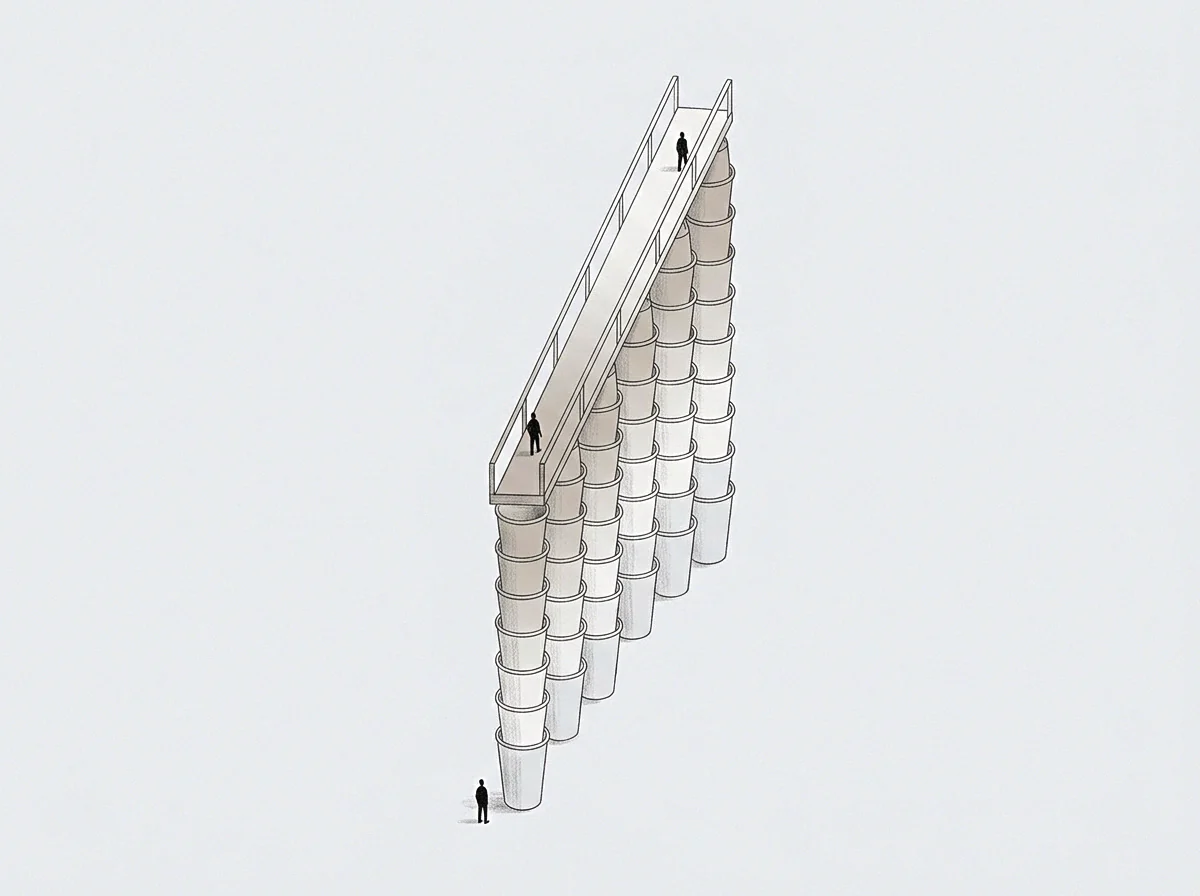
Progressive authorization protocols control administrative exposure while successors establish institutional credibility. Graduated entry sequences prevent operational disruption by matching account permissions to verified operator tenure. Governance mechanisms enforce administrative boundaries, keeping financial commitments within pre-approved parameters during transition stages.
Graduated Sign-off Mechanisms
Tiered administrative thresholds separate routine execution from binding financial commitments. Staged transition models balance risk mitigation against operational efficiency. The following sequence establishes explicit governance boundaries during account handovers:
- Initial Shadowing Phase Outgoing leads retain final approval over commitments while incoming operators log and review historical transaction context.
- Dual Signing Protocol Contract modifications exceeding baseline financial boundaries require approval from both incoming and outgoing account stewards.
- Autonomous Operational Window Successors exercise full signing control under real-time oversight metrics accessible to corporate risk officers.
- Complete Formal Transfer Institutional records update permanently to reflect the successor as sole authorized account principal.

Authority Allocation Across Transition Stages
Mapping corporate mandates against individual capabilities prevents administrative bottlenecks during leadership changes. When organizations formalize sign-off authority through explicit milestones, incoming operators navigate client expectations without exceeding internal limits.
A structured transition sequence links account authorization to objective performance metrics rather than arbitrary calendar dates. Early governance reviews evaluate contract execution accuracy, response times, and billing compliance. By linking access clearance to operational benchmarks, organizations isolate transitional risks while supporting successor autonomy.
Including an explicit dual-authorization clause reduces financial liability exposure by restricting unilateral commitments during the first sixty days.

Matrix
Comparing account management models in a structured way clarifies operational trade-offs for growing enterprises. Selecting a governance architecture requires balancing risk control against administrative speed. The trade-offs across common succession frameworks dictate how account control moves between outgoing and incoming personnel.

Comparing Governance Delegation Models
Organizational design choices determine how quickly incoming personnel gain operational autonomy without sacrificing control. Direct access transfers eliminate administrative delays but increase exposure to operational errors. Conversely, multi-tiered approval chains protect firm assets while introducing friction into customer communications.
| Model Type | Authority Latency | Risk Exposure | Explicit Codification Burden | Client Friction |
|---|---|---|---|---|
| Direct Transfer | Minimal | High | Low | Moderate |
| Dual-Control Staging | Moderate | Low | High | Low |
| Trigger-Based Ascension | Low | Low | High | Minimal |

Should account authority shift before validation completes?
Transferring sign-off rights before demonstrated operational mastery increases structural risk across key customer relationships. Operational validation requires observing an incoming lead during complex negotiations and unexpected service disruptions. Premature delegation forces corporate legal teams to intervene when unauthorized commitments occur.
Escalating account controls without clear verification stages risks institutional credibility. Structured transition periods protect the firm by creating observable decision checkpoints.
Dual authorization controls restrict financial commitment risks whenever successor tenure remains under ninety days.
Corporate procurement teams insist that signed master service agreements remain invalid until administrative documentation identifies one unambiguous account signatory.
Engine
Tactical account knowledge resists simple documentation, remaining tied to personal operational history. Standard operating manuals capture formal reporting lines and software access routines. Unspoken account dynamics, key client preferences, and past negotiation concessions stay stored in the outgoing manager’s operational memory.

Implicit Knowledge Retention and Codification Limits
Documenting procedural workflows leaves informal negotiation history and unwritten client expectations uncaptured. When an incoming lead relies solely on written documentation, minor account friction can escalate into formal contract disputes.
Uncodified account history forces incoming operators to renegotiate established boundaries during active client disputes.
The governance structure must accommodate uncodified operational realities through structured debriefing sessions and co-managed client reviews. Failure modes emerge when account handovers treat relationship management as a mere password transfer.
- Credential Retention Gaps Outgoing managers hold personal access tokens to critical administrative portals long after formal contractual severance.
- Informal Deal Memory Unwritten pricing compromises made during early business development fail to appear in corporate repositories.
- Asymmetric Client Relationships Key external decision-makers bypass formal organizational processes to contact departing executives directly during routine operational frictions.
- Undefined Oversight Metrics Corporate board members evaluate successor performance without explicit quantitative milestones established in advance.
The line where documented procedures end and uncodified commercial intuition takes over remains an ongoing point of friction in corporate handovers.

Rung
Stepping down from account control requires structured scaffold removal to prevent legacy operational dependence. Outgoing executives who remain accessible for routine account questions inadvertently slow successor integration, even as escrow secures critical domain keys. Establishing explicit exit boundaries forces the organization to rely on new governance pipelines.

Sequencing the Final Operational Severance
Terminating administrative fallbacks forces incoming managers to assume complete responsibility for account performance. When safety nets remain active indefinitely, incoming operators defer difficult decisions to departing founders, delaying full operational autonomy.
Systematically removing secondary sign-off channels signals to internal teams and external clients that authority resides entirely with the successor. The formal severance sequence requires closing shared communication channels and updating banking resolution forms.
Complete operational exit requires removing emergency fallback channels before client review cycles begin.

Scaffold Removal and Ownership Consolidation
Decommissioning secondary communication channels establishes clear organizational boundaries for external counterparties. Final operational decoupling occurs when external partners direct all commercial inquiries exclusively to the new account principal.
The exit design reaches completion when account governance operates independently of the individuals who originally constructed it. Institutionalizing governance workflows ensures enterprise continuity across successive leadership generations.
Transition sequences stabilize when incoming operators hold full decision rights before external contract renewals take place.