
Calculating Long Term Account Revenue Risk When Delegating Strategic Client Ownership To Successor Teams
Delegating strategic client ownership transfers uncodified authority, introducing relationship decay that degrades pricing integrity and long-term recurring account revenue.

Decay
An enterprise client generates stable recurring revenue until the person who structured the original arrangement moves out of the primary seat. In founder-led or principal-driven organizations, strategic accounts carry an implicit risk premium tied to the personal authority of the original dealmakers. When responsibility transfers to a successor team, revenue rarely drops instantly; it decays over a measurable half-life as personal trust turns into institutional process.
Calculating long-term account risk requires isolating the uncodified commercial concessions, informal executive access, and authority boundaries that standard contract metrics miss.
Revenue erosion follows distinct lines during an ownership transfer. The immediate risk is pricing erosion at renewal. Strategic clients routinely pay margin premiums to founders or senior principals for implied priority, fast decision-making, and direct escalation paths.
Successor teams operate within strict administrative guardrails and cannot grant custom scope adjustments on the fly. Client executives notice the shift in responsiveness and access, recalibrating contract terms downward to reflect an ordinary vendor relationship.
Secondary risk centers on stagnant account growth. Accounts typically expand through unscripted problem-solving, with original principals improvising custom solutions during routine operational discussions. Successor teams trained on fixed service catalogs rarely spot these expansion vectors.
The account stabilizes at baseline contractual minimums, losing the expansion velocity that once offset natural scope contraction across other business lines.
Account revenue erodes when personal executive authority transfers to administrative account oversight without matching scope flexibility.
A structured assessment identifies three sequential exposure phases following a seat transition.
- Authority Deficit Phase occurs immediately as the successor takes client meetings, revealing strict escalation boundaries to client decision-makers accustomed to direct operational overrides.
- Commercial Recalibration Phase emerges at the first major contract renewal, when client procurement teams reprice deliverables against standard market rates rather than principal advisory rates.
- Scope Compression Phase materializes over twenty-four months as client executive sponsors rotate out, leaving the successor team without high-level institutional ties to defend legacy account boundaries.
Quantifying these phases depends on evaluating how much baseline revenue rests on structural lock-in versus personal advocacy. If retention relies on individual executive relationships rather than deeply integrated operational workflows, revenue vulnerability scales exponentially with handover speed. Unplanned transitions exacerbate this trajectory, turning manageable yield adjustments into immediate cancellations.
Misreading relationship equity as contract permanence causes organizations to miscalculate multi-year enterprise value during transitions. Accounts that look healthy based on trailing twelve-month billing frequently collapse during second-generation renewals, forcing unexpected write-downs across formerly secure portfolios.

Lever
Transferring strategic client ownership requires moving specific operational levers rather than holding broad transitional conversations. Relationship equity consists of concrete decision seats, pricing discretion, and problem-resolution speed. When a founder or senior operator steps down, the structural levers holding gross margins intact must be systematically reassigned to the successor team.
Pricing discretion is the primary operational lever in retention. Clients stay through complex operational disruptions when an account owner has immediate authority to issue service credits, reallocate resource pods, or alter deliverables without internal committee approvals. Successors who must pause negotiation calls to seek internal approval signal a loss of authority to the client executive.
Perceived risk increases, prompting client leadership to diversify vendor exposure across competing providers.
Resource allocation priority is a second vital operational lever. Internal delivery teams naturally prioritize projects championed by firm owners over requests submitted by junior account managers. When an account transfers, delivery lead times often expand because the successor lacks organizational leverage to command cross-functional resources during crunches.
The client experiences this reprioritization as degraded service speed, corroding account stability long before contract terms come up for renegotiation.
- Executive Mapping Lever aligns senior firm leadership with client decision makers to maintain high-level communication channels outside daily operational touchpoints.
- Margin Guardrail Lever establishes explicit pre-approved pricing floors that allow successor managers to negotiate contract adjustments dynamically during live meetings.
- Operational Escalation Lever formalizes dedicated internal resource guarantees to protect account delivery standards during high-volume transition windows.
A transition plan that fails to codify these operational levers leaves the successor holding operational accountability without negotiation authority. The successor becomes an administrative message relay between client executives and internal approval chains. Clients quickly identify this disconnect, bypassing the successor entirely or seeking alternative vendors with more decisive account leadership.
Contract pricing drops when executive access yields to standard account management protocols.
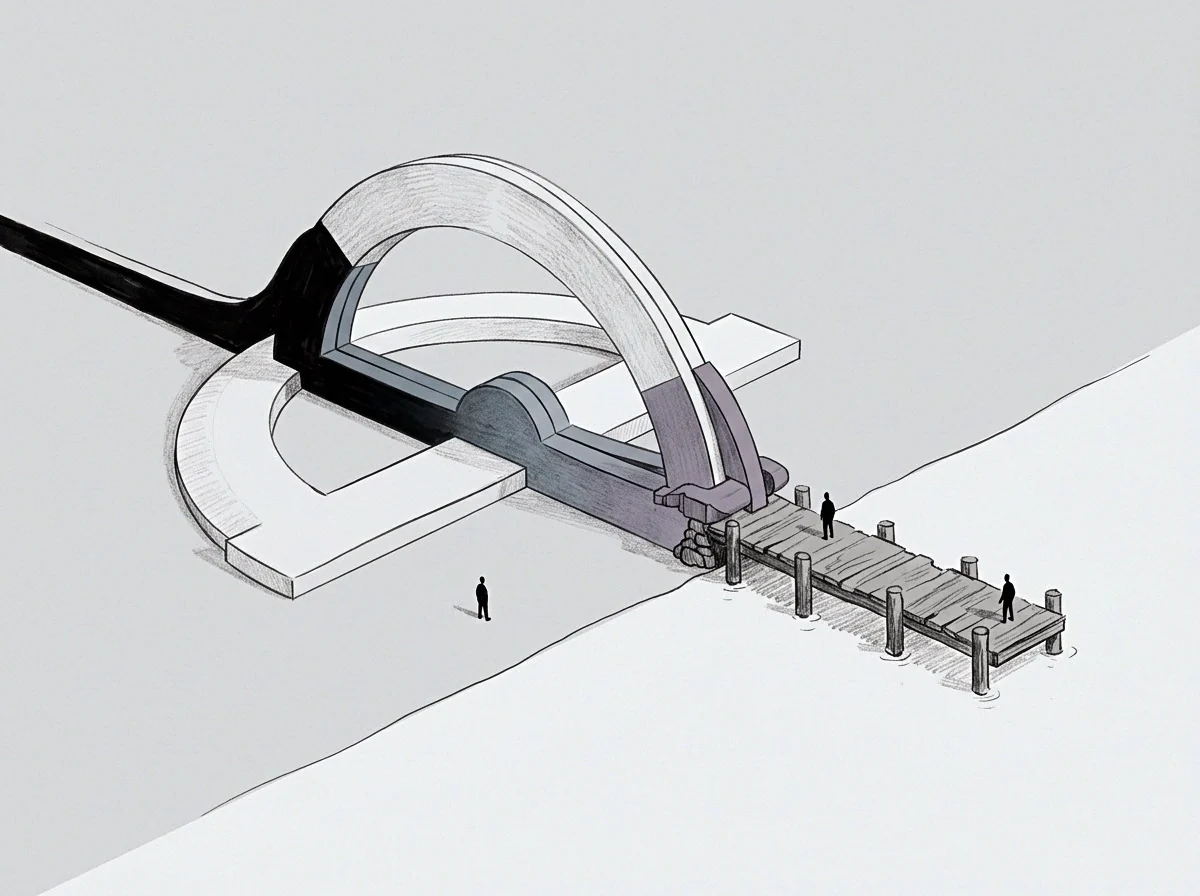
Metric
Calculating long-term account revenue risk requires quantitative models that incorporate relationship decay factors, authority deficits, and operational friction. Standard financial models rely on historical churn rates, which fail when applied to strategic account delegation. A dynamic account risk metric multiplies baseline contract values by decay coefficients derived from handover speed, successor seniority, and account complexity.

Which Variables Predict Early Revenue Decay Post Handover?
The account decay multiplier integrates three primary operational metrics measured during the first twelve months post-delegation. The first variable measures executive access frequency, calculated as the percentage change in direct executive-to-executive engagements between firm leadership and client stakeholders. The second variable tracks scope variance speed, measuring the time required for a successor team to draft, approve, and execute a scope adjustment against the legacy account owner’s baseline.
The third variable records client contact turnover, capturing internal staffing shifts within the client organization that break legacy trust networks.
Combining these factors yields an Expected Account Revenue model. Baseline projections are adjusted by discount rates assigned to transition structures. Phased transitions preserve margin resilience across longer timeframes, whereas rapid handovers introduce severe short-term volatility.
| Delegation Architecture | Pricing Integrity Retained | Churn Volatility Index | Time to Full Transfer | Revenue Decay Half-Life |
|---|---|---|---|---|
| Single-Owner Direct Transfer | 55 percent | High (0.42) | 3 Months | 14 Months |
| Dual-Coverage Shadowing | 78 percent | Moderate (0.21) | 9 Months | 32 Months |
| Phased Pod Succession | 91 percent | Low (0.08) | 18 Months | 58 Months |
The matrix illustrates that rapid, single-owner handovers degrade pricing integrity while increasing revenue volatility. Phased pod structures extend transition timelines but protect account equity by institutionalizing client contacts across multiple team members. The financial trade-off pits short-term operational savings against long-term capital preservation across key accounts.
A twelve-month handover sequence reduces multi-year revenue volatility by sixty-five percent compared to immediate seat transitions.
Financial risk modeling must reflect these structural decay curves rather than assuming steady-state renewals. Incorporating transition risk multipliers into annual recurring revenue forecasts exposes hidden portfolio vulnerabilities before contracts expire.
Applying a contractual transition-risk adjustment clause reduces baseline valuation projections until the successor team achieves verified client retention metrics across two consecutive renewal cycles.

Shield
Protecting account equity during team transitions demands structural safeguards that bridge authority gaps and codify tacit operational knowledge. Strategic relationships survive handovers when institutions install defensive scaffolds around client touchpoints, delivery execution, and commercial governance. These safeguards insulate revenue from individual personnel transitions while preserving high-margin service delivery.
Dual-coverage operational models provide immediate stability by pairing senior dealmakers with successor account leaders during ordinary client engagements. The senior owner retains overarching commercial responsibility while the successor assumes primary day-to-day operational control. Client teams acclimate to the successor’s leadership while maintaining confidence in the senior owner’s presence.
Over time, active participation tapers, leaving the successor as the recognized authority without triggering relationship shocks.
Codifying tacit knowledge serves as an essential secondary safeguard. Strategic accounts run on informal working agreements, unwritten preference matrices, and historical precedents that rarely appear in standard planning documents. Capturing these subtle operational parameters requires explicit documentation before initiating handover sequences.
Failing to document preferences creates operational friction, signaling to the client that new leadership lacks a deep understanding of their business context.
Handover documentation that omits unwritten client preference protocols increases early operational friction points.
Commercial boundary safeguards maintain margin integrity during delegation transitions. Clear contract guidelines prevent successor teams from granting unauthorized scope expansions or discounting core service tiers to build short-term rapport. Successors operate within defined negotiation bands backed by clear executive oversight pathways for non-standard client requests.
Establishing dual-coverage models supported by structured preference documentation protects multi-year account yields during senior leadership transitions.

Clause
Legal covenants, incentive frameworks, and transition agreements formalize account delegation while allocating residual financial risk between departing principals, successor managers, and the firm. Standard employment agreements fail to protect continuity when senior operators exit or reassign strategic relationships. Structuring explicit commercial clauses ensures alignment across all stakeholders throughout multi-year handover windows.
Earn-out and equity clawback provisions bind departing principals to long-term account health. Structuring variable compensation around post-handover retention metrics aligns the departing owner’s financial incentives with smooth knowledge transfer. When variable compensation depends on two-year account survival metrics, departing principals actively train successors, arrange executive introductions, and help resolve operational friction post-delegation.
Successor incentive structures require parallel alignment through performance bonuses linked to margin retention and scope expansion. Standard commission models reward initial contract signings but neglect long-term account defense. Successor compensation frameworks must incentivize account stability, rewarding team leaders who navigate complex renewal windows without granting margin concessions.
Incentive structures tied to two-year account retention metrics align departing principals with successor team performance.
Governance documents must articulate clear recourse procedures for account degradation resulting from inadequate handover efforts. Defining specific milestones for knowledge transfer, executive introductions, and joint client reviews creates clear operational standards. When performance metrics fall below agreed thresholds, transition payouts adjust automatically to offset revenue losses.
Whether contractual clawbacks can fully offset the long-term enterprise valuation loss from mismanaged transitions remains an open structural challenge for owner-operated firms.