
Codifying Tacit Commercial Risk Tolerance During Executive Succession Without Introducing Institutional Bureaucracy
Codifying tacit commercial risk tolerance during executive succession uses historical decision ledgers and paired reviews to preserve operational velocity without bureaucracy.
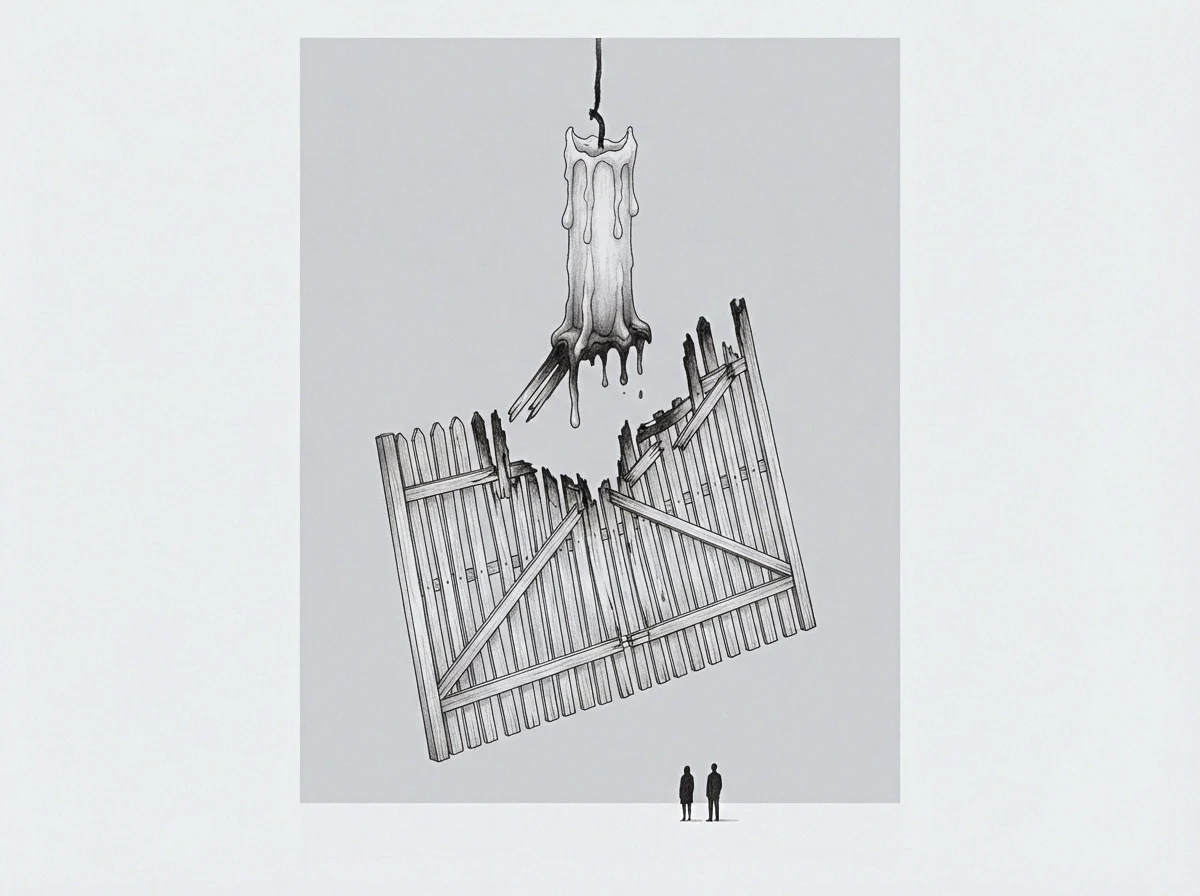
Room
A commercial deal sheet sits on a mahogany table at midnight, awaiting an executive sign-off on unhedged counterparty liability. The transaction represents twelve million dollars in gross margin, but carries an open-ended indemnification clause that standard legal templates reject. The outgoing executive would sign the contract within ten minutes, drawing on fifteen years of historical counterparty performance and an unwritten calculation of acceptable tail risk.
The incoming successor, facing the same document on their twenty-first day in the seat, delays execution to request a formal risk committee review. Capital sits unallocated. Counterparties read the delay.
Deal speed declines immediately.
Commercial risk tolerance in founder-led and closely held enterprises lives primarily in memory, pattern recognition, and unstated financial boundaries. When succession occurs, organizations attempt to capture this implicit discretion by introducing formal compliance matrices, dual-sign-off policies, and multi-layered approval committees. These institutional mechanisms convert tacit judgement into static bureaucracy, suppressing operational velocity while failing to transfer the underlying analytical model.
The incoming operator receives administrative restriction rather than commercial instinct.

Commercial Discretion at the Point of Transition
Take two operators managing a mid-sized logistics firm generating eighty million dollars in annual revenue, where forty percent of contract volume contains non-standard liability terms. The departing founder operates with an implicit rule: absorb counterparty indemnification up to two million dollars if the gross margin on the account exceeds thirty-two percent and the counterparty maintains an audited balance sheet. This rule exists nowhere in written policy.
The incoming chief executive, evaluated on downside capital preservation, defaults to total legal compliance when confronted with the first non-standard agreement. The contract stays unchanged. Legal fees accumulate as outside counsel drafts three rounds of revisions.
The client transfers the contract to a competitor six days later.
The seat holds the authority. Yet authority without documented risk parameters creates defensive execution. When an incoming leader lacks the specific boundaries of acceptable commercial loss, every non-standard decision presents symmetric personal career risk with asymmetric organizational upside.
Defensive play becomes the rational baseline. The governance layer hardens.
An incoming leader without explicit risk boundaries defaults to total legal compliance, stalling high-margin transactions to protect personal tenure.
Transferring implicit risk parameters without institutionalizing friction relies on isolating the specific conditions under which past commercial bets occurred. Rather than converting discretion into rigid rules, the transition process requires an explicit ledger of historical trade-offs. This record links specific contract concessions to financial outcomes, establishing an operational precedent that guides future choices without requiring committee consensus.
Omitting explicit commercial boundary exercises during handover leaves incoming executives reliant on defensive hesitation, converting calculated operational velocity into delayed execution.

Scaffold
Explicit risk matrices fail because commercial discretion relies on contextual patterns built through years of transaction history. Institutionalizing these patterns through static policy documents creates administrative overhang without transferring the underlying decision logic. A temporary operational structure permits the outgoing executive to make implicit parameters visible during live transactions, establishing decision boundaries before complete authority transfers.
The scaffold functions as a live calibration environment. During this phase, the incoming executive reviews live transactions alongside the predecessor, documenting the precise variables that justify taking non-standard exposure. This process extracts tacit thresholds into explicit reference points, avoiding the creation of permanent compliance sign-offs.

Structural Anchors for Implicit Loss Thresholds
Transferring unwritten risk appetites depends on paired evaluation of pending commercial agreements. The departing leader and successor review high-velocity opportunities concurrently, recording the specific factors that make a commercial hazard acceptable. This joint evaluation occurs over a bounded window, preventing long-term dependence on the predecessor while generating a corpus of calibrated trade-offs.
| Protocol | Velocity Impact | Codification Depth | Bureaucratic Overhead | Retention Post Exit |
|---|---|---|---|---|
| Committee Approval Gates | Severe Reduction | Low Precision | High Ongoing Overhead | Low Operational Memory |
| Static Policy Manuals | Moderate Reduction | Superficial | Moderate Static Overhead | Poor Application Rate |
| Paired Boundary Scaffolding | Temporary Latency | High Precision | Zero Post-Exit Overhead | High Successor Autonomy |
| Unstructured Verbal Handover | Zero Immediate Impact | Zero Codification | Zero Administrative Structure | Immediate Calibration Loss |
Unwritten rules govern velocity. When paired scaffolding replaces policy generation, the organization captures the logic of exception-making without establishing permanent bureaucracy. The incoming leader learns to identify which contract terms are negotiable assets and which constitute systemic hazards.
The portfolio loses margin.
Paired decision reviews transfer implicit loss thresholds when conducted on live transactions under tight time constraints.
The duration of the scaffolding phase must be defined before the transition begins. Extending the joint evaluation period beyond ninety days creates ambiguity regarding ultimate decision authority, encouraging the successor to treat the predecessor as a permanent safety net. Inserting a ninety-day paired discretion clause into the executive transition agreement shifts approval authority to the incoming operator while retaining advisory review on transactions exceeding five million dollars.

Boundary
Defining the range of acceptable transaction risk separates operational speed from systemic exposure. Organizations often confuse commercial discretion with arbitrary decision-making, leading to governance structures that treat every contract exception as a potential breach. Establishing explicit boundary bands preserves fast execution by clarifying which risks fall within routine executive authority and which require formal capitalization checks.
Risk transfers through repeated decisions. By defining clear boundaries based on historical loss absorption capacities, the enterprise provides the incoming executive with operational freedom inside safe parameters. These boundaries operate as clear lines rather than restrictive review processes.

Where Do Tacit Limit Tests Break Down?
Discrepancies in risk tolerance surface when extraordinary market conditions force immediate decisions on unhedged exposures. During executive succession, three distinct structural failure modes disrupt the transmission of commercial discretion:
- The departing executive authorizes exceptions verbally without recording the underlying margin calculations, leaving the successor without justification logic during subsequent audits.
- The organization reacts to early successor errors by introducing mandatory legal sign-offs across all non-standard commercial proposals.
- The incoming leader misinterprets historical tolerance for specific operational risks as a blanket permission to take unhedged balance sheet hazards.
- The board of directors enforces static compliance metrics that contradict the informal risk practices previously used to win market share.
The incoming operator hesitates. When parameters remain ambiguous, the successor either freezes commercial deal-making or accepts unquantified liabilities to demonstrate bold leadership. Both behaviors damage organizational value.
Clear boundary definition eliminates this binary failure pattern by establishing precise financial ceilings for autonomous executive action.
Commercial discretion documented as historical trade-offs prevents corporate legal teams from expanding oversight into routine deal approvals.
The construction of risk boundaries requires mapping past commercial exceptions against actual performance outcomes over a multi-year horizon. This analysis reveals the precise financial trade-offs the business can sustain without triggering distress. A commercial boundary documented through past trade rationales protects deal velocity better than an approval threshold enforced by committee.

Log
Capturing the rationale behind non-standard contract approvals provides incoming leaders with precedent rather than restriction. A decision log records the specific context, expected returns, and downside caps associated with accepted commercial risks. This historical record functions as an operational reference, allowing the successor to replicate past judgement patterns without seeking real-time guidance from the departing founder.
The record must remain lightweight to avoid transforming into a compliance document. Recording basic transaction metrics, identified hazards, and mitigating factors ensures the log serves as a practical guide rather than an administrative hurdle. The incoming executive uses this precedent to make fast, defensible decisions under uncertainty.

Decision Ledgers Without Governance Overhang
Documenting commercial trade-offs demands minimal administrative burden to prevent institutional inertia. The log operates as a simple repository of executed exceptions, providing clarity on how previous leaders balanced risk against margin opportunities.
- Scope Creep expands the decision log into a full corporate risk register, requiring formal risk assessments for standard commercial agreements.
- Precedent Rigidity treats past transaction rationales as mandatory legal requirements, preventing the successor from adapting risk appetites to changing market conditions.
- Ex Post Rationalization alters recorded decision factors after transaction outcomes are known, distorting the historical accuracy of the risk guidance.
- Oversight Expansion converts the reference log into a board-level monitoring tool, encouraging defensive documentation over deal velocity.
Counterparties read the delay. When decision logs remain internal reference points for operating executives, deal speed remains high because sign-off authority stays localized within the seat. The approval floor drops.
A tail-risk ledger that records accepted deal exceptions creates operational precedent without creating a multi-tiered approval committee.
Reviewing historical precedent enables the new leader to evaluate non-standard terms with confidence, maintaining commercial momentum during the transition period. The seller notes that while the initial terms were accepted, the new executive required three additional board reviews for a routine indemnification waiver that the predecessor approved in a single phone call.

Tenure
The final stage of executive succession occurs when the departing leader exits the decision path entirely. Removing temporary support structures tests whether the successor can navigate commercial ambiguity independently while maintaining the firm’s historical velocity. Complete transfer demands that full sign-off authority resides within the operating seat, unsupported by shadow oversight from the predecessor.
Long-term commercial performance depends on the successor’s ability to evolve risk boundaries as market conditions change. The initial scaffolding and historical logs provide a starting foundation, but the incoming executive must ultimately exercise independent judgment. The outgoing leader steps aside.

Complete Operational Scaffolding Extraction
Removing temporary decision supports demands clear operational milestones rather than arbitrary calendar dates. Scaffolding extraction occurs once the incoming leader demonstrates consistent alignment with established risk appetites across a predefined number of complex transactions.
Post-exit tenure succeeds when the organization maintains its competitive speed without accumulating administrative debt. By relying on historical precedent and explicit financial limits rather than multi-tiered review committees, the enterprise preserves its capacity for fast commercial execution. Autonomous decision-making stabilizes.
The executive seat holds complete operational authority.
Whether an organization can preserve aggressive commercial discretion through multiple generations of professional leadership without eventually defaulting to formal risk committees remains an open empirical question.