
Decoupling Executive Operational Authority From Founder Equity Ownership
Decoupling executive authority from founder equity isolates operational management inside formal delegation matrices while preserving economic share capital rights.

Seat
Equity ownership grants residual claim rights on enterprise assets and profit distributions, whereas executive authority conveys operational command, contract execution privileges, and direct control over staff. Confounding economic rights with operational authority creates structural confusion inside expanding companies, as capital allocation stays with equity holders while daily execution remains separate.
When an entrepreneur retains majority equity while stepping back from daily management, operational boundaries frequently blur. Legal ownership of voting shares conveys the power to elect board members and approve major corporate transactions, but that financial position carries no entitlement to negotiate customer contracts, direct project leads, or alter software deployment routines. Board oversight remains distinct from daily execution, taking on capital risk rather than operational control.
Corporate governance distinguishes between ultimate governance control and direct managerial command. Ultimate control rests with the board of directors and shareholders to set long-term strategic boundaries and capital structure changes. Direct managerial command sits within executive roles that govern procurement, payroll decisions, and team directives.
When a founding share owner issues direct instructions to staff without holding an active executive title, reporting lines collapse, forcing employees to choose between equity authority and managerial directions.
Executive authority operates through delegated daily decision parameters, provided board governance retains explicit oversight on capital expenditures.
Separating these domains protects operational integrity. An executive requires unambiguous signing authority to bind the enterprise to vendor agreements, employment contracts, and regulatory filings. If routine decisions face informal override by a non-executive owner, executive autonomy evaporates.
Professional managers brought in to scale operations find their authority curtailed by equity holders acting outside official board channels, draining operating momentum and confusing internal governance.
Confounding ownership rights with executive command creates operational paralysis, draining leadership attention and capacity while driving key management personnel away from the enterprise.

Split
Decoupling daily executive authority from shareholder equity demands explicit legal instruments. Corporate frameworks provide several methods to sever financial ownership from operational control, such as share class restructuring. Under dual-class share structures, founding owners retain high-vote shares for board control or dividend-heavy non-voting shares for capital distribution, delegating operational authority to professional executives who hold voting control over daily decisions.
Voting trust agreements offer another formal mechanism. An equity owner transfers voting power to a designated trustee or executive management committee for a set term, restricting the owner from voting on daily operational resolutions while leaving economic ownership intact. Written voting proxies insulate operational leaders by reallocating signing rights, keeping delegated power separate from reserved board matters.
| Instrument | Control Target | Capital Effect | Revocation Condition |
|---|---|---|---|
| Voting Trust Agreement | Shareholder Voting Rights | Economic Claims Preserved | Fixed Expiration Date or Specified Milestone |
| Dual-Class Capital Conversion | Board Election Power | Dividend Structure Preserved | Unilateral Shareholder Conversion Rights |
| Delegated Authority Matrix | Daily Expenditure Limits | No Financial Impact | Board Resolution Amendment |
| Executive Employment Contract | Operational Signing Power | Salary and Incentive Terms | Board Dismissal Clause Execution |
| Each instrument isolates operational control while maintaining shareholder economic equity positions. | |||
Executive employment agreements formally define operational authority parameters. When a founding entrepreneur transitions from chief executive to a pure shareholder or non-executive board chair, an employment contract reallocates signing rights, banking authorizations, and direct supervisory authority to incoming executives, establishing clear operational boundaries for the title.
A voting proxy coupled with operational delegation prevents strategic shareholder deadlocks when executive management transitions to professional operators.
Corporate board resolutions solidify this separation by establishing clear expenditure boundaries and managerial consent thresholds. The board formally assigns operational execution rights to officers while defining reserved matters—such as selling company assets, issuing capital shares, or altering core bylaws—that remain subject to shareholder consent. Routine vendor contracting, hiring, and operational investments fall strictly under executive oversight.
The board receives full operational authority to run the business, provided major capital expenditures and company sales remain subject to shareholder consent.

Paper
Formal governance instruments define the boundary between shareholder consent and executive execution. A primary mechanism for establishing this division is the delegation of authority matrix, which explicitly enumerates spending thresholds, contractual commitments, and operational approvals granted to specific executive roles. Non-executive shareholders retain no independent authority under this schedule, regardless of equity percentage.
Studies of governance documentation in closely held firms show that codified delegation schedules reduce operational bottlenecks when founders step down from chief executive roles. These empirical findings rest on longitudinal tracking of family-owned enterprise transitions from informal management to professional officer structures. The findings would shift if long-term tracking demonstrated equal operational continuity under non-binding verbal delegations.
Written delegation matrices clarify organizational permissions and shield incoming managers from shareholder interference.
Implementing formal governance shifts requires a deliberate sequence to prevent authority gaps and internal friction.
- Charter Amendment updates organizational charter documents to separate voting share rights from executive signing privileges.
- Matrix Execution formally adopts a delegation of authority matrix establishing explicit financial authorization tiers for operational personnel.
- Banking Re-authorization updates corporate financial profiles to restrict account access and check-signing privileges to current operational officers.
- Contractual Re-assignment assigns vendor contracting and employment authority exclusively to executive roles in writing.
- Board Reservation formally enumerates shareholder reserved matters to protect long-term capital assets without interfering with daily business operations.
Institutional governance relies on documented clarity to enforce operational delegation, distinguishing strategic vetoes from executive commands. When governance documents state that operational managers hold exclusive authority over routine commitments, individual shareholders lose the legal right to alter operational workflows. The enterprise gains legal stability, vendor confidence, and structural clarity.
Operational clarity improves when signing authority matches daily responsibility rather than share balance tables.
A fully executed delegation of authority schedule restricts unilateral founder signing powers to pre-approved operating limits, shifting all unlisted commercial contracts above those limits directly to executive board review.

Clock
Temporal phases govern how operational governance transitions from owner-operators to professional executives. The shift from owner-managed operations to professional governance rarely occurs instantaneously. Organizational researchers identify distinct developmental windows during operational transitions, from active control to non-executive board governance, where managing timeframes prevents sudden authority vacuums.
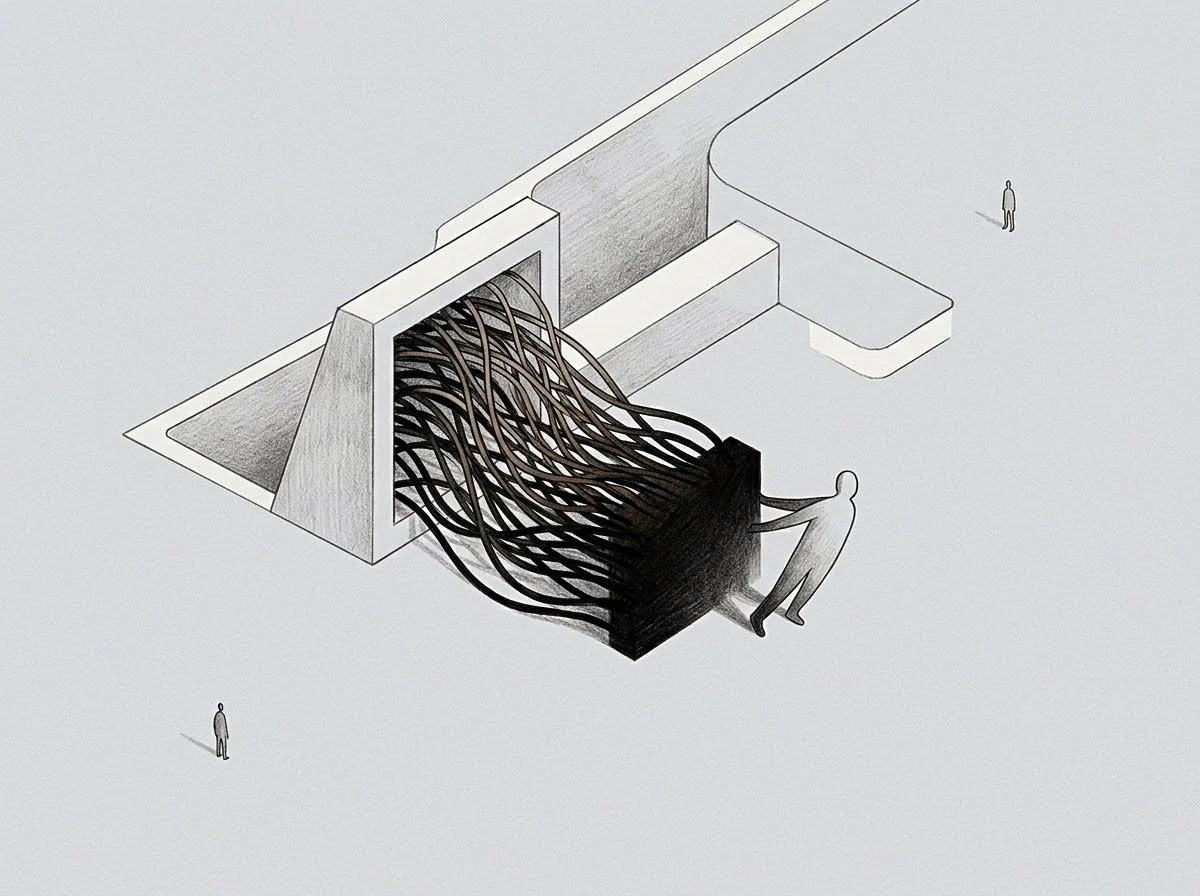
What occurs when operational vetoes outlive executive tenure?
When operational vetoes outlive an officer’s executive tenure, managerial paralysis increases rapidly. Research tracking tacit knowledge decay rates during leadership succession indicates that uncodified operating routines degrade when decision rights remain tied to departing leaders. These observational studies rest on tracking professionalized executive onboarding across mid-sized enterprises.
The finding would alter if replication studies in software firms with automated workflow logs showed that informal founder intervention maintained operational efficiency without degrading manager performance.
Transitioning operational command introduces specific friction points across distinct organizational phases.
- Authority Overlap happens when departing executive owners continue issuing direct commands to operational leads alongside incoming executive officers.
- Informal Bypass occurs when employees route procurement requests directly to equity owners to circumvent formal executive approvals.
- Shadow Governance develops when major operational decisions are made in informal shareholder meetings outside official board sessions.
- Execution Stalls arise when incoming officers delay strategic operational decisions due to ambiguous veto rights held by non-executive shareholders.
Managing operational detachment requires deliberate pacing. Friction occurs when an incoming executive holds official operational authority but struggles to exercise direct command due to lingering shareholder influence. Transitioning operational authority demands a firm timetable, where clean handovers restrict shareholder intervention early in the transition phase so incoming executives can establish credibility across the organization.
Transitioning operational command succeeds when authority transfers completely before veto rights begin to dissolve.

Engine
Tacit operational routines form the daily mechanism by which an organization generates enterprise value, encompassing customer negotiation heuristics, software deployment standards, product quality thresholds, and supplier relationships. While equity ownership easily transfers on share registers, tacit operational systems resist simple contractual reassignment, as equity grants financial returns rather than operational command.
Codifying operational knowledge represents an incomplete science. Much of an enterprise’s functional momentum resides in unwritten heuristics held by founding operators. When operational authority separates from equity ownership, incoming executives must construct alternative operational systems, since relying on legacy informal approvals creates fragility while official filings alone do not provide operational scaffolding.
Organizational studies confirm that explicit systems documentation partially captures operational routines, but uncodified operating taste remains bound to individual creators. Current research cannot fully defend an exact timeframe for how long uncodified decision heuristics retain institutional coherence after an owner’s exit. Given this uncertainty, prudent boards implement structured transition overlap periods combined with explicit performance metrics to evaluate executive autonomy.
Equity shares yield financial dividends regardless of whether the shareholder retains a desk inside the building.
When an owner-operator relinquishes operational command, personal taste must give way to systematic corporate policy. Incoming officers establish new operational routines, performance benchmarks, and communication cadences. Equity remains with the owner, but the operational engine transfers only when explicit authority, delegation schedules, and daily decision-making systems align within the professional executive team.
Whether professionalized managerial systems can fully replace the uncodified operating taste of an early creator remains an unresolved structural problem in corporate governance research.

Exit
Final operational departure transforms an active company creator into a pure asset investor. This transition demands a structural shift for both the individual and the enterprise. Holding equity without executive authority means relying on governance reports, quarterly financial statements, and board meetings to assess company performance, as the shareholder no longer maintains access to internal communications, software repositories, or operational team meetings.
Long-term corporate stability relies on enforcing non-executive boundaries. When an equity holder attempts to override executive commands or direct company staff, the board of directors must intervene to uphold executive autonomy. Shareholder rights are exercised through voting at annual shareholder meetings or directing board representatives during official governance sessions, allowing strategic vetoes to protect capital without undermining managerial authority.
Institutional memory decays without daily practice, and enterprise value relies on operational command residing with dedicated officers working within formal delegation matrices. By establishing clear legal structures, delegation schedules, and governance protocols, expanding companies decouple equity ownership from daily operations. The individual preserves financial equity value while the enterprise gains operational clarity, executive accountability, and scalable governance routines.
When corporate governance documents explicitly separate equity dividend rights from managerial command, the company operates cleanly without operational disruption on the day the creator leaves the office.