
Transferring Tacit Decision Authority to Professional Executive Leaders During Succession
Tacit authority transfers through structured observational co-judgment and incremental threshold expansion that shifts uncodified heuristics to incoming leaders.

Signal
An unwritten pricing exception granted at midnight reveals how founding authority operates in practice. Operating metrics captured in standard reporting software document revenue growth, customer acquisition expenditure, and quarterly net retention, yet these figures omit the perceptual filters that governed the decisions behind them. When an incoming chief executive officer assumes leadership during founder succession, the institutional knowledge recorded in policy manuals reflects only explicit governance rules.
The underlying mental models, implicit risk tolerances, and contextual pattern recognition that dictated founder choices remain entirely unmapped inside company databases.
Organizational behavior research demonstrates that tacit knowledge relies on intuitive mental schemas acquired through years of direct exposure to operational volatility. Founders process external inputs through proprietary historical reference frames. A sudden drop in supplier delivery speeds triggers an immediate shift in inventory buffering for an experienced creator, whereas a newly appointed executive interprets the same metric as a routine variance.
The gap between formal documentation and tacit execution explains why executive succession frequently founders during early decision sequences.

Uncodified Heuristics in Founding Leadership
Early decisions in an enterprise rely on rapid perceptual processing rather than exhaustive committee review. The founder acts as the single processing engine, integrating fragmented market indicators into immediate capital allocations. Over time, these cognitive shortcuts condense into internalized operational routines.
Because these routines operate automatically, the individual performing them rarely translates the underlying logic into written procedures.
When professional executive leaders step into a established operation, they encounter a complex web of unrecorded operating principles. The board of directors usually expects the incoming leader to execute strategy using explicit authority granted through corporate charters. The operational reality presents a different challenge: crucial vendor renegotiations, key talent retention choices, and product scope reductions depend on uncodified judgment calls.
Without access to the founder’s mental model, the professional manager substitutes generic corporate playbooks that frequently misalign with the firm’s historical advantage.
The transfer of decision authority stalls whenever tacit evaluative criteria remain invisible to incoming executive leadership.

The Structure of Non-Explicit Thresholds
Non-explicit thresholds govern how an organization evaluates risk without formal committee approvals. A founder knows precisely how much margin erosion to tolerate before intervention, or which customer complaints signal systemic product failure. These limits exist as subjective benchmarks calibrated by past crises.
These operational boundaries go unnoted in corporate filings and internal guides, surfacing only when an incoming executive unknowingly crosses them.
Research in knowledge management indicates that explicit codification captures at most fifteen percent of complex managerial judgment. The remaining eighty-five percent exists as tacit knowledge embedded in contextual practice. Successors who attempt to manage purely through codified financial reports routinely miss subtle environmental changes.
The organizational capacity to respond to market shifts declines when non-explicit thresholds fail to transfer along with title and compensation.
When an organization attempts to transfer decision making without making implicit evaluative criteria explicit, the incoming executive suffers repeated operational misalignments that destroy enterprise equity value.
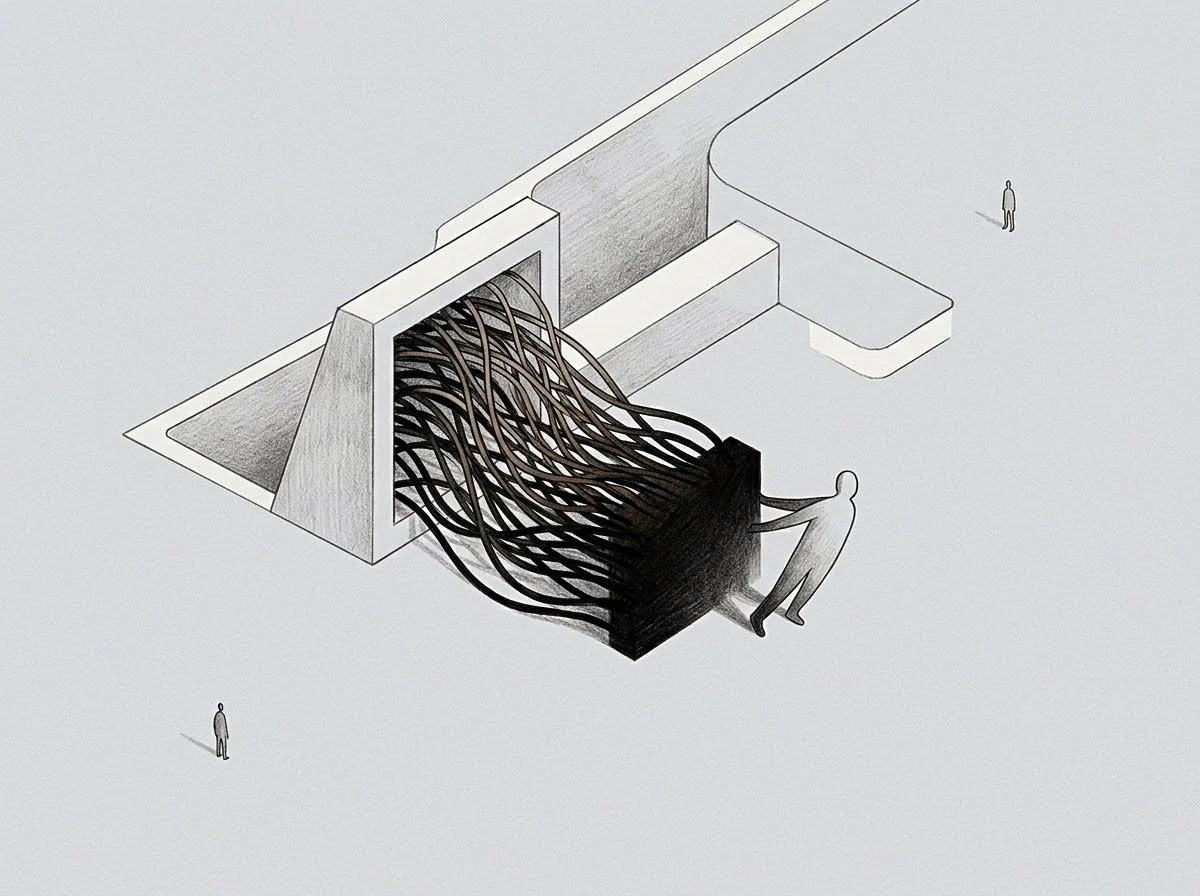
Joint
The interface between ownership governance and operational management represents the primary point of structural tension in executive transitions. Board seats and equity positions give founders persistent authority even after formal executive titles yield to professional successors. When operational choices conflict with historical preferences, the informal authority of the owner routinely overrides the formal mandate of the executive officer.
Role strain studies confirm that professional executives experience acute cognitive overload when formal governance documentation conflicts with covert owner oversight. The successor sits in the primary management chair, but decisions regarding executive hiring, major capital allocations, and strategic pivots remain anchored to owner consent. Establishing a functional interface demands clear structural boundaries between capital oversight and daily execution.

Architectural Boundaries Between Ownership and Operation
Clear division between equity control and management execution protects enterprise value during leadership handovers. When a founder transitions from chief executive officer to executive chairman, the boundary line between governance and daily operation grows thin. Without explicit boundary agreements, the incoming executive operates in a state of perpetual governance ambiguity.
Executive throughput stalls when ambiguous oversight forces managers to seek informal consensus before acting on formal responsibilities.
Effective handover structures separate strategic board consent from daily operational execution. Board oversight evaluates financial outcomes, risk management compliance, and corporate direction. Management execution maintains total discretion over operational processes, team composition, and tactical execution.
Crossing these boundary lines dilutes management accountability and paralyzes operational momentum.
| Dimension | Explicit Delegation | Tacit Authority Transfer |
|---|---|---|
| Governance Artifact | Corporate resolutions and job descriptions | Observational frameworks and paired judgment sessions |
| Evaluation Frequency | Quarterly board reviews and annual audits | Continuous real-time operational feedback loops |
| Error Tolerance | Defined variance limits on budget items | Qualitative assessment of strategic intent and logic |
| Cognitive Boundary | Codified operational rules and policies | Contextual pattern recognition and heuristic alignment |
| Succession Friction | Low administrative friction, high latent risk | High initial effort, high long-term operational stability |

Delegation Limits Across Unwritten Criteria
Formal delegation documents specify monetary approval thresholds, hiring authority limits, and contractual signature rights. These documents fail to capture the qualitative criteria used to evaluate decisions within those limits. An incoming leader may possess formal authority to approve contracts up to five hundred thousand dollars, yet face severe owner resistance when exercising that authority on non-traditional vendor relationships.
- Boundary Ambiguity occurs when formal authorization documents conflict with unwritten owner expectations during daily operations.
- Cognitive Overlap arises when both founder and successor simultaneously attempt to solve identical operational challenges without clear domain division.
- Intervention Relapse happens when former leaders re-engage in direct management during minor operational variances, undermining executive standing.
- Shadow Governance creates parallel communication channels where staff consult former leadership to validate current executive orders.
Written governance terms remain static while the operational friction between ownership and management continues to compound.
Ownership attributes operational drift to inadequate commercial instinct, whereas management attributes the friction to ongoing boundary interference from equity holders.

Relay
Transferring implicit authority demands a structured period of shared operational judgment rather than a sudden handoff date. Cognitive apprenticeship research demonstrates that complex expertise moves between individuals through observation, coaching, and progressive scaffold removal. The successor must observe the incumbent processing complex problems, articulate the implicit logic behind decisions, and gradually assume independent control under structured review.
Unspoken reservations during handover periods establish informal precedents that limit a successor’s practical decision range.
During early phase handovers, the incumbent leads decision processes while making cognitive heuristics explicit through verbal debriefs. In secondary phases, the incoming leader assumes primary decision responsibility while the predecessor provides real-time coaching and post-decision feedback. The final phase removes structural coaching entirely, leaving the executive with total operational authority.

When Does Tacit Authority Revert Under Market Stress?
Exogenous shocks frequently break executive handover protocols. When revenue drops, key personnel resign, or supply chains fracture, founding owners experience intense psychological pressure to resume direct control. This automatic reaction stems from years of personal crisis management during early venture development.
Informal executive overrides extract immediate organizational momentum and compromise future operational autonomy.
Intervening during operational stress destroys the credibility of the professional executive. Employees quickly perceive that ultimate authority remains anchored to the founder, reducing the new leader’s organizational influence. To prevent authority reversion, board members must establish clear governance protocols that limit founder interventions during market volatility.
A temporary crisis handled through founder override permanently damages the long-term legitimacy of incoming executive leadership.

Sequential Co-Judgment Mechanics
Building intuitive alignment requires systematic exposure to complex operational scenarios over time. The following numbered sequence defines the progressive steps for shifting non-explicit decision parameters during executive succession:
- Shadowing operational decisions across three full quarterly planning cycles to observe implicit founder evaluation patterns under varying market conditions.
- Debriefing key decisions immediately after executive meetings to articulate unwritten assumptions, risk weightings, and perceptual criteria used during negotiation.
- Assigning targeted operational domains to the incoming leader where full authority applies within agreed qualitative boundaries.
- Conducting joint post-mortem evaluations on domain decisions to align cognitive models and refine heuristic interpretation across both parties.
- Removing former leadership from daily operational channels while maintaining quarterly board governance oversight.
Practical alignment requires auditing decisions against operational facts rather than relying on presumed agreement.
Effective authority handovers progress through deliberate practice phases rather than arbitrary calendar dates.

Knot
Hidden structural traps repeatedly disrupt executive handovers despite well-intentioned succession plans. The primary trap arises from the grip stage, where a founder attempts to transfer operational workload while retaining final judgment over operational methods. The successor receives responsibility for financial metrics without the freedom to alter operational strategy, leading to rapid administrative paralysis.
Consider an enterprise generating thirty million dollars in annual revenue where the founding chief executive officer hires an outside successor. The board approves a six-month transition timeline. The assumptions include total operational handover by month four and board transition by month six.
By month three, the incoming executive changes the core sales distribution channel to improve customer diversification. The founder considers this move an unacceptable threat to historical client relationships and privately countermands the instruction to regional sales directors.

Friction Traps in Early Executive Authority
The countermanded instruction creates an immediate governance crisis within the senior leadership team. Department heads receive conflicting instructions from owner and executive, creating operational stagnation across mid-level staff. The executive’s formal authority collapses, while the founder asserts that the executive displayed poor strategic judgment.
Direct managerial reversals halt workflow across the operational core and paralyze strategic execution.
This scenario demonstrates the consequence of transferring responsibility without transferring evaluative heuristics. The founder evaluated the sales channel shift using historical relationship models, while the professional manager evaluated the shift using scalable revenue metrics. Neither party clarified their evaluative criteria prior to the transition, causing predictable structural friction.
The grip stage persists whenever an outgoing leader measures executive performance against personal habits rather than agreed enterprise metrics.

The Grip Stage and Shadow Interventions
Shadow interventions occur when former leaders interact directly with operational teams outside formal board structures. A casual comment made by a founder during an informal factory walk-through can overturn weeks of executive planning. Employees treat founder preferences as mandatory directives, bypassing the official management chain.
Staff habituation to founder authority persists long after formal reporting lines have shifted to a successor.
Research on succession failure modes shows that shadow governance increases executive turnover within the first eighteen months by over forty percent. Incoming leaders resign not from operational complexity, but from the impossibility of managing without definitive structural authority. Preventing shadow intervention demands strict governance agreements that prohibit direct founder communication with operational staff without explicit executive consent.
Corporate boards prevent shadow intervention by structuring binding governance provisions that separate equity oversight from operational management without compromising owner relations.

Draft
Formal legal instruments provide the ultimate structural scaffold for executive authority transfer. Transition contracts, updated corporate bylaws, and clear board charters translate tacit understandings into enforceable corporate rules. Relying on goodwill or verbal commitments without formal legal framing inevitably leads to governance disputes during performance downturns.
Operational mandate depends entirely on formal, enforceable documentation rather than informal understandings.
Legal agreements define exact parameters for executive authority, board consultation rights, and founder exit conditions. These contracts specify monetary approval limits, key personnel appointment rights, and strategic decision domains. Establishing precise contractual boundaries removes ambiguity and gives professional managers the legal protection required to execute strategy independently.

Formalizing Governance Boundaries in Transition Contracts
Effective transition contracts contain detailed governance schedules that outline the sequential transfer of specific decision rights. Rather than transferring all authority on a single date, contracts schedule domain handovers across operational, financial, and strategic tiers based on objective milestone achievements.
Drafted covenants formalize structural jurisdictions and limit informal owner interventions across operational units.
The governance contract must establish explicit non-interference clauses that legally bind founding owners to formal board channels. Direct operational intervention triggers contractual penalties or mandatory buyout provisions. Clear legal language transforms informal agreements into binding operational boundaries that protect both the enterprise and the incoming leader.
Strategic alignment contracts protect equity value by substituting clear legal limits for ambiguous personal trust.

Scaffold Removal and Final Exit Thresholds
The final phase of executive transfer involves the complete removal of transition scaffolding. Board members must establish unambiguous criteria for ending former leadership’s executive advisory roles. Retaining former leaders as paid consultants past the agreed transition window creates persistent governance confusion.
Ongoing advisory engagements maintain duplicate centers of authority and divide organizational focus.
Final exit thresholds depend on objective organizational indicators: independent executive leadership over two full budget planning cycles, sustained financial performance within target variances, and total operational communication shifting through official management chains. Meeting these criteria triggers the termination of advisory agreements and the full shift of executive authority to the professional leader.
An explicit non-interference covenant with clear equity repurchase triggers creates an immediate legal barrier against informal founder intervention during executive tenure.