
Evaluating Structural Capacity Constraints When Unwritten Vendor Authorization Protocols Fail During Executive Handover Sequences
Unwritten vendor approvals collapse when executives depart, diverting operating hours into emergency invoice verification and choking supply volume.

Stall
Invoices accumulate on the accounts desk thirty days into an executive transition. Physical freight carriers stop at warehouse gates, declining to unload raw materials because credit extensions expired with the prior director. The previous department head approved supplier disbursements through personal phone calls, text messages, and unrecorded exceptions to internal spending caps.
The replacement officer arrives to discover procurement lines frozen across twelve operational categories. The vendor accounts team refuses to release components without written authorization backed by audited bank references, which the internal purchasing database lacks. Finance personnel spend sixty hours each week fielding calls from irritated suppliers.
The operational floor slows down.

The Anatomy Of Broken Authorizations
Operational momentum depends upon unwritten agreements built over years of individual contact. When an executive steps down from a purchasing seat, those informal arrangements dissolve instantly. The incoming executive cannot replicate personal relationships on demand.
Suppliers treat the change in leadership as a commercial credit event. Unsigned invoices stop freight at loading docks.
A purchasing sequence unbacked by formal records halts the moment personal relationships vacate the seat.
The vendor accounts department demands cash in advance to resume deliveries. Internal staff scramble to locate historical contracts, discovering only blank order templates and verbal confirmations logged in personal notebooks. Every disputed purchase order demands executive intervention.
The replacement leader spends four hours every morning reviewing individual five-hundred-dollar line items. Direct vendor access stayed behind.
Suppliers state plainly that previous allowances belonged to the departed officer and new terms require immediate bank guarantees before trucks roll.

Valve
Procurement channels function as volume restrictors within an operating business. When informal permissions collapse, transactions reroute into standard compliance funnels that possess finite throughput. Administrative capacity contracts under the sudden weight of manual verifications.
A system designed to process twenty formal exceptions per quarter suddenly confronts hundreds of unvetted purchase requests every week. Processing times triple across the finance desk.

Tacit Spend Thresholds And Channel Friction
Every organization operates two parallel approval structures. The first structure lives in the employee handbook, defining rigid dollar caps and hierarchical sign-offs. The second structure exists entirely through tacit agreements, where department heads bypass documentation thresholds through private agreements with long-term suppliers.
Research into informal governance within transaction cost economics establishes that informal channels reduce transaction friction in stable teams. That finding rests on small-sample longitudinal observations of manufacturing firms with leadership tenures exceeding seven years; it breaks down when executive tenure drops below twenty-four months or when audit pressure forces sudden contractual standardization.
When informal spending channels evaporate, administrative pipelines choke on unvetted purchase requests.
When the unwritten channel disappears, the formal system bears the entire transactional load. The operational pipeline clogs because the accounting team lacks legal clearance to disburse funds without formal contracts. Discretionary spending limits revert to zero.
Warehouse throughput declines by half within days.
The Mechanics Of Institutional Memory
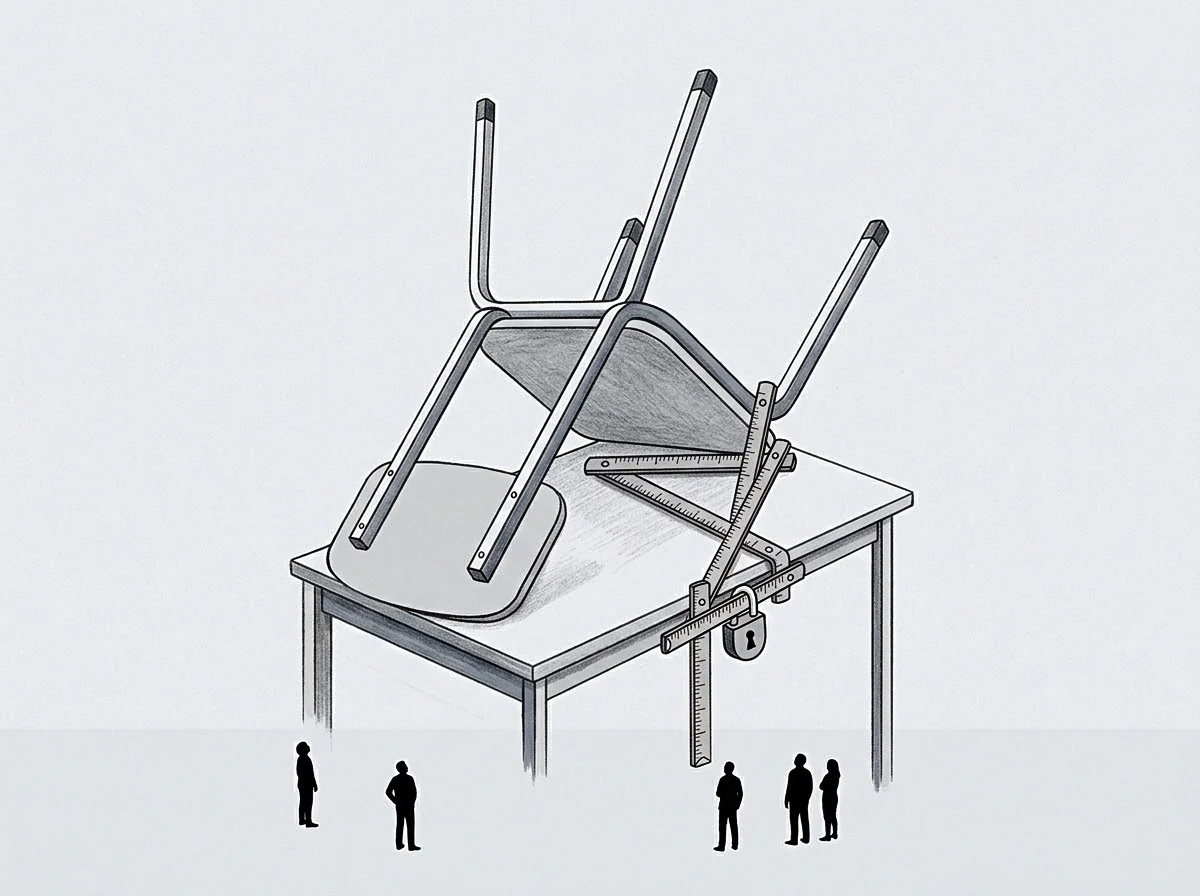
Knowledge of supplier quirks, discount structures, and undocumented credit arrangements resides in individual cognition. When an executive departs without codifying these working protocols, the enterprise forfeits that tacit operational buffer. The replacement executive operates in the grip stage, holding the title yet lacking the underlying procedural context to direct workflow smoothly.
The departing leader held twenty separate vendor concessions in memory. Those concessions vanished on the final day of handover.
Whether an incoming officer can ever rebuild undocumented vendor concessions without resetting contractual pricing remains uncertain across the supply chain.

Drag
Operational resistance accumulates in direct proportion to administrative delay. While executives renegotiate basic commercial terms, manufacturing schedules drift, project delivery deadlines slip, and client satisfaction collapses. The enterprise burns cash maintaining idle assembly shifts while freight carriers hold necessary components in bonded storage.
In severe cases, vendor credit lines drop to cash-on-delivery terms within forty-eight hours of a missed payment milestone.

Worked Model Of Operational Divergence
Assume an operating enterprise with twenty regional manufacturing facilities transitions its chief operating officer over a sixty-day sequence. Assume three primary freight carriers handle outbound shipments under an unwritten arrangement allowing thirty-day payment delays based on the departing officer’s personal assurance. Assume further that the formal vendor master agreement mandates payment within ten business days, a condition the company routinely bypassed for five consecutive years.
The outgoing officer surrenders corporate keys on day thirty. On day thirty-two, accounting receives invoices totaling four hundred thousand dollars across thirty freight runs. The accounts payable team, lacking the prior executive’s informal clearance, freezes disbursements to comply with standard audit controls.
On day thirty-four, the freight carriers halt all dispatches. Production stops when raw materials halt.
The incoming executive must address three competing disruptions at once:
- Cash balance diversion drains operational reserves by requiring four hundred thousand dollars in immediate wire transfers to release grounded trucks.
- Administrative labor reallocation pulls five financial controllers off quarterly reporting into manual invoice reconciliation for three weeks.
- Production capacity attrition idles two hundred factory workers for ninety-six operating hours while materials wait in freight depots.
A similar dynamic appears in municipal water works, where older utility engineers alone knew which physical street mains could tolerate pressure surges before digital telemetry existed. When those engineers retired without logging valve tolerances, field crews burst cast-iron distribution pipes during routine seasonal adjustments.

Which Procurement Channels Freeze First Under Transition?
Commercial relationships break along predictable fault lines during leadership transitions. Field studies in organizational role theory show that commercial partners renegotiate terms during leadership vacuums to capture lost margins. This outcome holds across middle-market distribution firms with single-source suppliers; it diminishes when buyers maintain diversified supplier networks with automated electronic data interchange ordering.
Unwritten vendor concessions turn into rigid commercial liabilities the day the executive departs.
Accounts payable freezes the weekly payment run. Suppliers demand immediate wire transfers instead. The enterprise absorbs substantial friction across distinct operating dimensions during the handover sequence, illustrated in the operational comparison below.
| Protocol Structure | Resolution Latency | Administrative Load | Vendor Continuity | Capacity Retention |
|---|---|---|---|---|
| Unwritten Executive Exceptions | Fourteen Business Days | Forty Hours Weekly | Immediate Suspension | Forty-Five Percent |
| Codified Delegation Schedule | Twenty-Four Hours | Four Hours Weekly | Uninterrupted Flow | Ninety-Two Percent |
| Dual-Custody Approvals | Forty-Eight Hours | Eight Hours Weekly | Conditional Continuity | Eighty-Four Percent |
| Ad-Hoc Successor Improvisation | Twenty-One Business Days | Fifty Hours Weekly | Contract Cancellation | Thirty Percent |
Failure to map informal purchasing rules creates a severe drop in production capacity that outlasts the executive search itself.
Remedy
Stabilizing an operational collapse demands formalizing undocumented arrangements before the outgoing executive vacates the seat. The organization initiates an immediate operational discovery sequence ninety days prior to the planned departure. The outgoing officer documents every active supplier exception, payment deviation, and informal credit line.
The enterprise constructs an explicit authorization register that substitutes institutional policy for individual handshakes.
Codification Schedules Before Executive Departure
Documentation succeeds only when conducted systematically alongside active purchasing workflows. The departing executive spends two hours daily sitting with internal procurement analysts, detailing the operational realities of active accounts. The analyst records the precise variances between written terms and operational realities.
- The departing executive lists every vendor operating outside formal purchase order guidelines.
- The finance team establishes temporary dual-custody authorization limits for the incoming executive.
- The legal department issues formal addenda to active supplier master agreements.
- The operational staff tests invoice routing through formal purchasing software before handover concludes.
Manual verification drains executive working hours. The replacement officer inherits zero operational context. Succession literature presents conflicting claims regarding whether outgoing executives can accurately articulate their own tacit operating methods.
A prudent board assumes that twenty percent of critical vendor exceptions will evade formal capture, budgeting contingency reserves to absorb transitional price shocks.
A handover protocol without explicit vendor contracts guarantees an operational stoppage.

Staged Dual Signatures During Grip Periods
The incoming leader enters the seat forty-five days before the predecessor departs. Both individuals review all supplier purchase orders exceeding five thousand dollars. The outgoing leader explains the commercial basis for every line-item approval, transferring context directly through working transactions.
Credit terms lapse into cash on delivery.
Weekly billing disputes consume forty hours. The supplier suspends shipment without formal notice. Shared review prevents operational blind spots from triggering supplier account freezes.
The strength of a transition plan depends on the weakest unwritten vendor exception.

Pact
Executive employment agreements must treat purchasing documentation as an enforceable closing deliverable. Boards of directors and business owners protect company capacity by tying executive separation agreements to verified knowledge transfer milestones. An executive exit remains incomplete until the organization audits every vendor account for compliance with written purchasing rules.

Structural Covenants In Executive Exit Design
A structured handover sequence treats vendor authorizations as core company assets rather than personal prerogatives. The transition agreement obligates the departing executive to complete a formal vendor audit register thirty days prior to equity vesting or separation pay disbursements. This formal register lists all negotiated payment timelines, volume rebate structures, credit lines, and material supply dependencies.
The incoming executive confirms receipt of every vendor contact, account history, and active billing exception in writing. Independent auditors review the vendor master file against bank statements to ensure zero unauthorized payments occurred under informal arrangements. The enterprise establishes clear institutional controls that outlast individual tenures.
The executive separation agreement withholds final severance disbursements until independent auditors certify that all vendor payment terms reside within verified corporate accounting systems.