
Executive Exit Preparation And Early Knowledge Transfer Protocols
Executive exit preparation transfers operational control by decoupling institutional workflows from individual heuristics through structured early codification.
Signal
Early preparation for an executive departure begins long before any official announcement reaches the board room or the public press. Executive work leaves quiet gaps long before formal departure dates appear on public calendars. Operational mapping begins by tracking the invisible communications, informal escalations, and unwritten authorization paths that standard organizational charts omit entirely.
When an executive occupies a seat for multiple years, daily operational routine weaves personal heuristics into institutional workflows. Disentangling those threads requires early diagnostic protocols that run quietly in parallel with regular business operations.
Mapping Tacit Dependencies Months Before Departure
Silent dependencies stall executive transitions. Standard job descriptions document explicit duties like budget sign-offs, committee oversight, and board reporting schedules. They consistently fail to capture the shadow interactions that keep critical projects moving through bureaucratic choke points.
An outgoing officer frequently relies on long-standing personal networks across regulatory agencies, key client contacts, or internal engineering leads to resolve operational friction without formal escalation.
Audit protocols must evaluate real-time calendars and messaging flows to identify these unmapped nodes. Tracking email metadata and calendar attendance over a trailing ninety-day period isolates recurring low-visibility interactions. Where an executive spends twelve hours a week resolving technical mismatches between product and legal teams, an unwritten operational bridge exists.
Recognizing these bridges early prevents post-departure operational paralysis.
Executive work leaves quiet gaps long before formal departure dates appear on public calendars.
Unwritten Routing and Hidden Operational Single Points
The operational calendar reveals hidden operational single points. Every senior role accumulates customized shortcuts designed to bypass structural inefficiency. These shortcuts become systemic risks when only one individual holds the context governing their application.
Early transfer preparation cataloging identifies every vendor contract negotiated under informal terms, every internal exception granted outside standard compliance policies, and every proprietary modeling spreadsheet maintained on local drives. Documenting these elements early provides the incoming officer with a complete operational map rather than a sanitized legal overview.
The operational decisions stopped moving through the desk six weeks before anyone announced the transition.

Shelf
Repository design determines whether captured executive knowledge remains useful or becomes dead archival memory. The impulse during an executive departure is to generate voluminous written manuals, recorded video walkthroughs, and categorized cloud folders. Most of this material remains unread by incoming leadership because it lacks situational context.
Structured codification protocols anchor static documentation directly to active operational triggers, building an accessible archive rather than a static paper trail.
Codification Architectures and Shadow Repositories
Information repository structure determines adoption speed. Explicit knowledge transfers cleanly through standardized operational playbooks, financial models, and governance registries. Tacit knowledge, which comprises personal judgment, historical context, and relationship nuances, requires structured categorization anchored to specific business events.
Building a usable knowledge archive involves structuring information into three distinct operational tiers. The first tier contains core operational mechanics, including legal agreements, direct report performance evaluations, and recurring reporting schedules. The second tier captures historical context, documenting why past strategic shifts occurred and which failed initiatives should not be repeated.
The third tier outlines relational dynamics, detailing communication preferences, board member expectations, and key partner negotiation styles.
Shadow workflows create governance debt. When executives maintain parallel documentation systems outside enterprise repositories, institutional continuity breaks during transitions. Early transfer protocols require consolidating personal notes, offline decision logs, and private draft directories into shared corporate structures long before the physical exit occurs.
Documentation produced without live execution validation retains less than twenty percent of operational utility.

Where Does Tacit Heuristic Transfer Fail During Transitions?
Tacit knowledge resists standard documentation. Converting executive intuition into structured protocols encounters structural limits when complex market variables dictate decision-making. Operational failures during transitions consistently track back to specific codification mistakes made during document preparation.
- Unanchored process logs record bare transactional steps while omitting the contextual conditions that alter decision thresholds.
- Ad hoc repository splits fragment critical governance files across unindexed personal cloud directories.
- Static decision matrices fail to capture real-time trade-off calculations applied during high-volatility events.
Execution logs reveal hidden dependencies. To capture high-level heuristic decision-making, transfer protocols implement daily decision logging during the preparation window. The departing officer records every non-routine decision made across a thirty-day window, explicitly noting the inputs evaluated, the alternatives rejected, and the underlying risk tolerance applied.
This log exposes the implicit logic governing executive choice, transforming abstract intuition into concrete analytical frameworks for successor review.
A repository written entirely in isolation yields tools that the incoming team abandons during its first crisis.
Stage
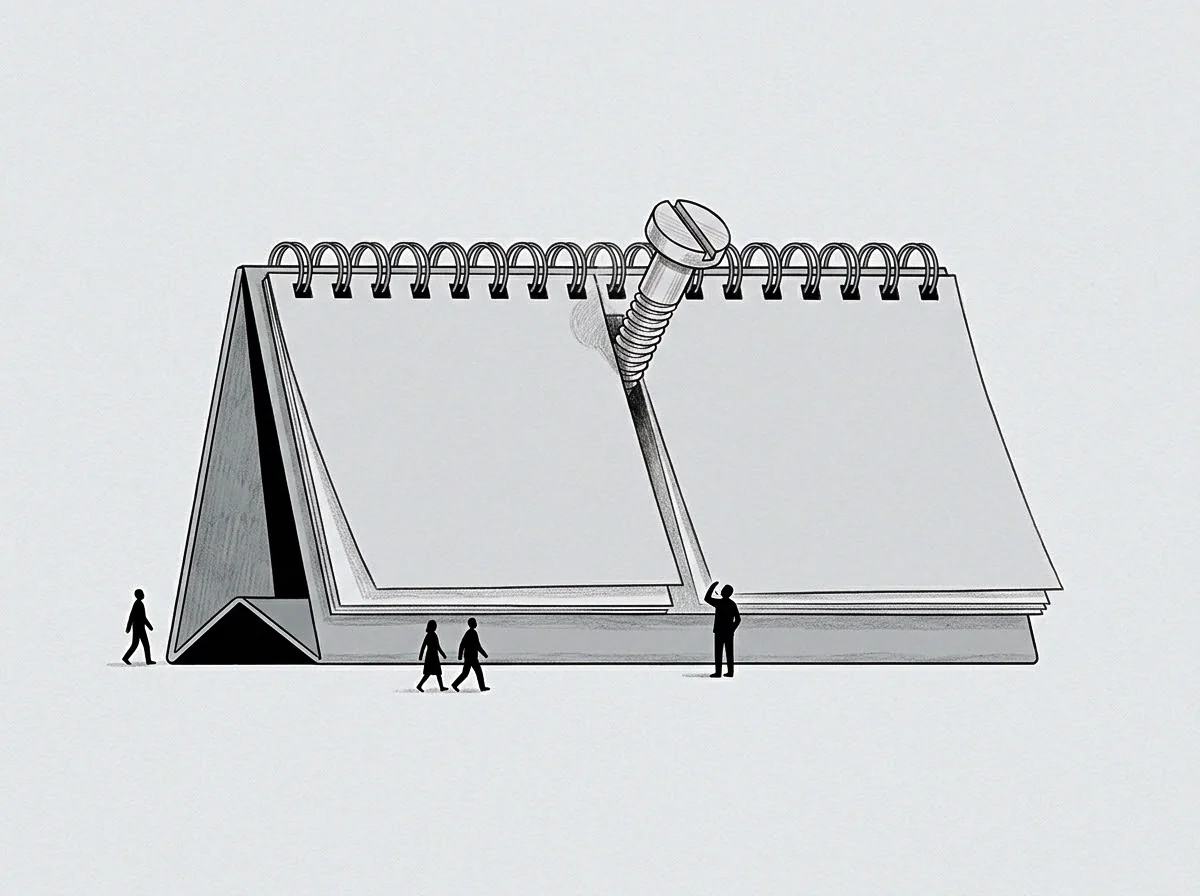
Phased exit execution structures the systematic transfer of operational control from the departing officer to incoming leadership. Transferring executive authority rapidly creates systemic instability, while prolonging the transition dilutes managerial accountability. A structured four-phase sequence establishes explicit boundaries, balancing operational continuity with clear governance shifts.

The Four Phase Transfer Sequence
Phased execution prevents operational shock. The transfer timeline divides into four distinct operational windows, each carrying specific risk controls and authority assignments.
- The outgoing officer logs all recurring non-standard interventions across thirty operating days.
- The incoming leader executes routine workflows while the predecessor remains present solely to evaluate outcomes.
- The predecessor steps back from live meetings, receiving post-hoc briefings to spot systemic omissions.
- The organization severs approval escalation paths to the departing officer prior to the formal last day.
Authority shifts before physical departure. The second phase establishes co-working protocols where the incoming officer shadow-operates active accounts and internal initiatives. During this period, the outgoing executive transitions from primary decision-maker to active observer, providing immediate feedback on execution choices while building successor confidence.
Scaffold removal succeeds only when authority transfers before the outgoing executive vacates the building.

Managing the Grip Period Without Authority Drift
The grip period exposes gaps. This phase occurs when the successor holds nominal authority but the organization continues escalating operational questions to the departing executive. Overcoming authority drift requires strict organizational signaling and public operational boundaries.
During the final two phases of the transition timeline, the departing officer steps entirely out of daily operational communication channels. Internal teams must direct all escalations, approvals, and strategic queries to the incoming officer. If team members bypass the new leader, the departing executive forwards the inquiry without inline comment, reinforcing the new reporting architecture.
This firm boundary forces the organization to adapt to new leadership while the outgoing executive remains available in the background for private strategic debriefs.
The hard cutoff clause in the transition agreement terminates informal advisory channels, forcing internal teams to resolve operational exceptions through the new reporting structure.

Sieve
Separating transferable operational machinery from non-transferable executive talent forms the core task of exit design. Organizations frequently mistake individual executive style for institutional process. When an executive leaves, the operational machinery built around their personal habits often collapses unless systematically decoupled from individual identity.

Separating Systemic Operations From Individual He heuristics
Written procedures obscure tacit judgment. Institutionalizing executive performance requires evaluating which operational outcomes stem from repeatable corporate systems and which rely on unique individual capabilities. Transferable systems can be codified, measured, and assigned to replacement personnel.
Non-transferable heuristics depend on individual temperament, personal industry networks, or long-standing reputation, requiring structural mitigation rather than simple documentation.
Unwritten rules govern daily approvals. Diagnostic evaluation categorizes executive responsibilities across structural dimensions, isolating transferable workflows from personal talent.
| Evaluation Criterion | Transferable Operational Systems | Non-Transferable Executive Heuristics |
|---|---|---|
| Codification Capacity | High; easily documented through workflows, software tools, and standard metrics. | Low; dependent on personal intuition, historical memory, and subjective taste. |
| Transfer Mechanism | Direct instruction, standard operating procedures, and platform training. | Longitudinal observation, scenario simulations, and executive coaching. |
| Successor Adoption Barrier | Minimal; requires functional literacy and basic domain competence. | Substantial; requires deep industry tenure and high ambiguity tolerance. |
| Organizational Failure Mode | Process breakdown due to missing documentation or tool access errors. | Strategic misalignment, poor negotiation outcomes, and loss of partner trust. |
Unanchored systems fail under stress. Where operational success relies heavily on non-transferable heuristics, exit protocols must redistribute those responsibilities across specialized teams rather than expecting a single successor to replicate individual executive performance.
Attempting to document individual intuition creates manuals that obscure clear operational pathways.
Evaluating Residual Capacity and Governance Skew
Governance balance requires constant calibration during leadership changes. When a long-tenured executive departs, the governance structure experiences temporary skew as remaining board members and senior peers absorb leftover oversight duties. Identifying residual capacity across the executive team prevents operational overload during the transition window.
Rebalancing oversight involves auditing executive committee seats, board reporting commitments, and subsidiary governance roles held by the departing officer. Redistributing these roles across the broader leadership team prevents power consolidation and ensures operational oversight remains functional throughout the succession process.
Premature withdrawal of informal guidance leaves successor leadership with rigid manuals that fail during unscripted commercial friction.

Transit
Clean exits preserve institutional clarity. The final phase of executive preparation establishes legal, operational, and psychological detachment between the departing leader and the organization. Clear post-exit boundaries prevent administrative confusion, secure intellectual property, and allow incoming leadership to establish independent authority without shadow governance interference.
Post Exit Boundaries and Non Intervention Rules
Establishing explicit non-intervention parameters ensures long-term transition stability. Once the formal departure date passes, legal contracts must define exact interaction boundaries. Retaining departing executives as ongoing external consultants frequently creates governance friction, tempting internal teams to bypass new management during operational stress.
Where advisory agreements exist, terms must strictly limit consultancies to specific, non-operational strategic queries initiated exclusively by the new chief executive officer. Departing officers must hold no direct communication channels with junior personnel, line managers, or external partners regarding daily corporate performance. Cutting informal backchannels protects the incoming leader’s autonomy and enforces clean organizational reporting lines.
Clean operational exits require complete digital and physical access revocation on the scheduled departure date. Automated credential deactivation, system access transfer, and corporate repository archival mark the formal conclusion of executive tenure. Completing these security protocols protects corporate assets while providing the departing executive with an unambiguous operational stop point.
Whether organizations can construct durable operational memory without retaining departing executive leaders as permanent external advisors remains unresolved.