
Extracting Founder Heuristics During Executive Succession Transitions
Executive heuristic extraction captures latent founder decision rules through critical incident analysis and live operational shadowing during succession transitions.
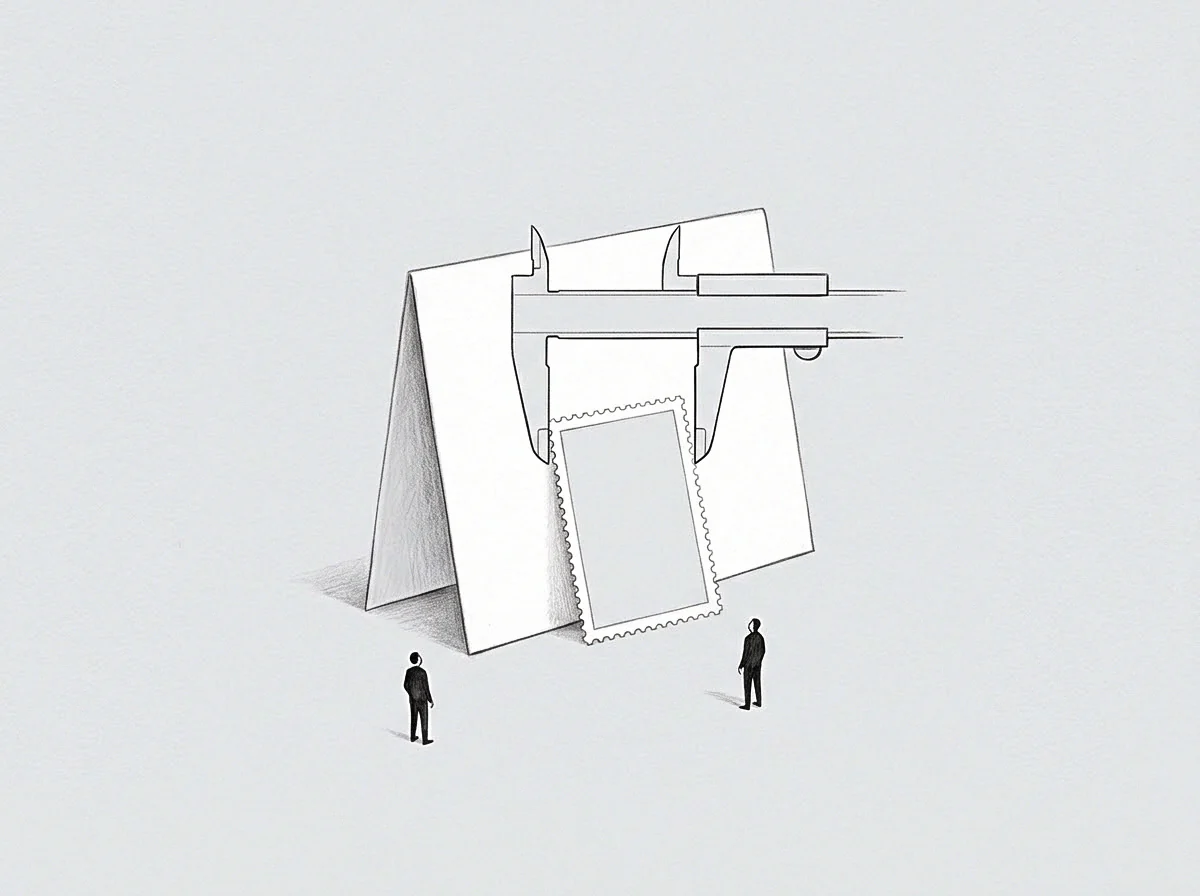
Probe
The outgoing chief executive signs the regulatory filing, closes the laptop, and leaves behind thirty-four pages of operational documentation that nobody will consult after November. The binder records reporting lines, committee charters, and capital expenditure approval thresholds. It omits the operational instinct that rejected an enterprise customer when three contract amendments arrived before the initial pilot payment cleared, just as it omits the informal margin buffer applied whenever a freight vendor quotes transit times during quarterly maintenance windows.
The formal succession package captures the visible machinery of the role. The operating instincts that preserved cash through two supply chain contractions remain locked inside the departing executive, out of reach for the incoming operator who now carries statutory accountability for the enterprise.
Heuristics are compressed decision rules formed through repeated exposure to asymmetric operational outcomes. In an owner-managed enterprise, these rules develop under direct financial and reputational liability. The founder accumulated them through acute stress events: early payroll shortfalls, partner defections, and sudden client concentration collapses.
Extracting this implicit logic during a succession requires surfacing these decision bounds before the departing executive leaves the company.
A decision rule extracted without its underlying catastrophic failure condition leads a successor to apply it recklessly during normal operational variance.
Direct interrogation rarely uncovers these rules. Asking an executive how pricing decisions are made yields a tidy explanation of margin targets and competitive positioning—a rationalization shaped by corporate convention rather than actual behavior. Extraction works best when anchored to historical trade-offs where organizational priorities directly collided.
The protocol focuses on anomalies, exceptions, and moments where official policy was bypassed to protect an outcome.
This extraction relies on critical incident analysis. The departing executive evaluates four specific enterprise events: the largest commercial loss, the swiftest contract cancellation, the hire that disrupted internal stability, and the capital expenditure that failed to return cash. Each scenario requires the executive to reconstruct the operational indicators observed seventy-two hours before the event.
The goal is to identify the subtle cues that triggered an intervention before accounting dashboards registered variance.
A successor documents the divergence between formal policy and these localized rules of thumb.

Bench
Testing requires observing live decisions side by side rather than conducting retrospective interviews in private conference rooms. The incoming executive pairs with the incumbent during actual operations, working together through active supplier renegotiations, key personnel reviews, and balance sheet stress tests.
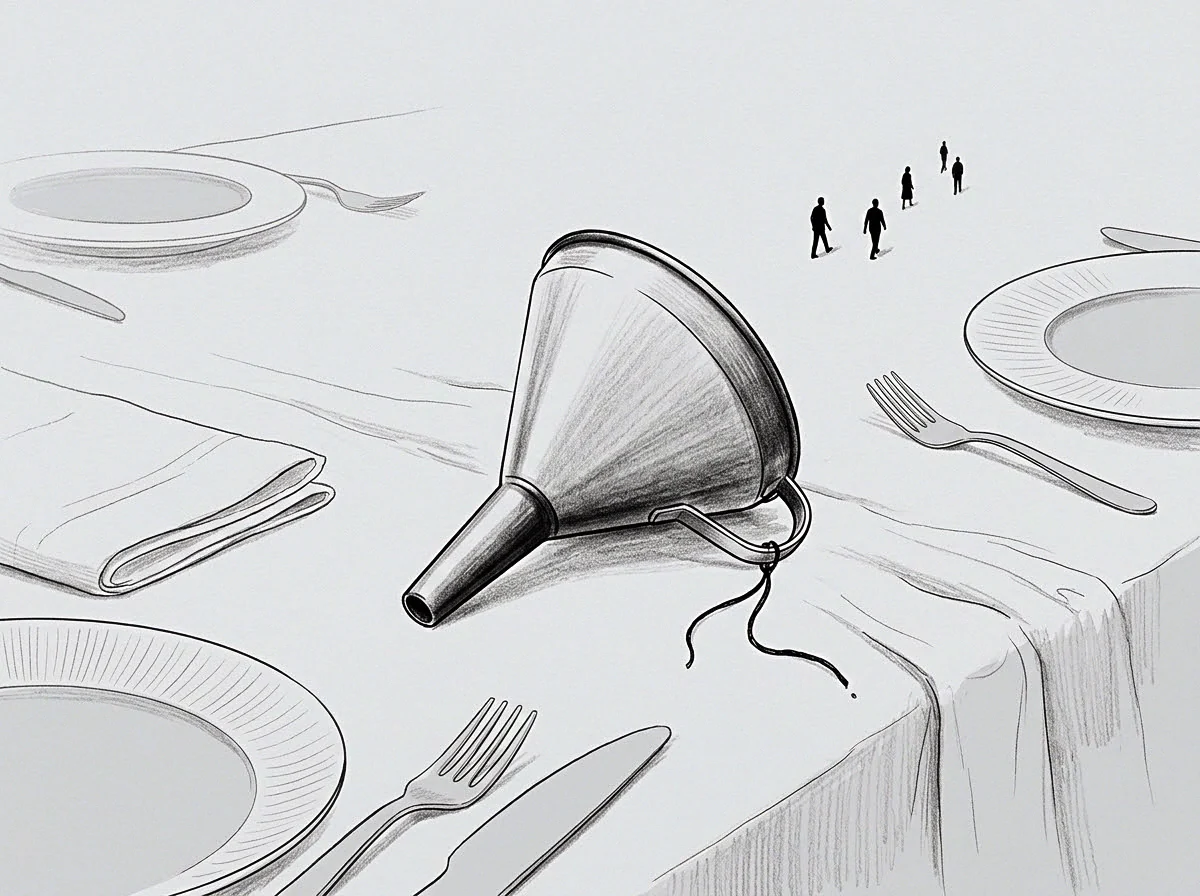
Shadowing During Active Operational Strain
Tacit operating knowledge transfers during active execution. The incoming executive sits beside the incumbent during unexpected delivery stoppages, debt covenant negotiations, or product defects, noting the exact variables tracked before making a call. During a sudden liquidity squeeze, the incumbent ignores the fifty-page cash projection model and focuses on four specific line items: merchant processing settlement holds, freight clearing delays, open accounts payable aging past forty days, and daily recurring wage outflows.
The extraction partner catalogs these behavioral filters into explicit decision matrices, isolating the observed operational indicator, the latent rule applied, and the catastrophic risk the rule prevents.
| Operational Domain | Observed Triggering Cue | Latent Operating Rule | Catastrophic Risk Shielded |
|---|---|---|---|
| Enterprise Sales | Prospect requests custom billing cycles and indemnification caps exceeding contract value. | Terminate negotiations immediately if legal redlines exceed standard margin tolerances on first delivery. | Uncapped administrative drag and delayed cash realization. |
| Working Capital | Receivables exceed thirty days past due from an account holding fifteen percent revenue concentration. | Halt ongoing engineering deployments until fifty percent of past due balance wires into operating accounts. | Permanent write-off and vendor payroll contagion. |
| Talent Retention | Department head demands retention equity following operational delivery failure. | Initiate immediate redundancy planning without offering counter-incentives or extended negotiation windows. | Cultural extortion and systemic operational paralysis. |
| Vendor Contracting | Sole-source supplier introduces tiered volume minimums tied to annual commitments. | Qualify secondary regional supplier even at an eight percent unit cost penalty. | Production line shutdown during seasonal demand spikes. |
The matrix reveals executive intuition as structured pattern recognition acquired through prior missteps. The incoming leader studies it to understand why the enterprise relies on conservative baselines that might seem irrational in standard management textbooks. The outgoing leader established those protections after surviving specific structural failures.
An operational boundary written into a contract matters less than the observed threshold that leads an executive to walk away from a deal.
Observation without interrogation keeps the incumbent from offering sanitized explanations. By documenting what was rejected, ignored, or escalated, the extraction partner builds the baseline inventory of operational heuristics needed for institutional continuity.
Once the observation window concludes, the extraction partner synthesizes these rules into concrete test environments.

Syntax
Codifying operational rules of thumb requires precise structure. General advice offers little help during an acute commercial crisis: telling a leader to hire carefully does nothing when an engineering department loses three senior architects during a system migration. A codified heuristic establishes clear conditional logic: under conditions alpha and beta, execute gamma, because failing to intervene yields catastrophic consequence delta.
Codification converts implicit founder judgement into explicit institutional policy. This transition strips away personal idiosyncrasy while preserving core risk mitigations. An incoming chief executive cannot replicate a founder’s personal influence, but can adopt the founder’s defensive balance sheet parameters.

Formal Heuristic Construction Protocols
Operational heuristics follow a distinct structure designed for quick retrieval under stress:
- Boundary Condition Specifications establish the precise operational metrics, balance sheet signals, or organizational thresholds that trigger heuristic activation, preventing misapplication during standard corporate stability.
- Permitted Variance Bands define the narrow zone where operating executives exercise local discretion without requiring board notification or full executive committee concurrence.
- Mandatory Halt Signals identify non-negotiable operational conditions that stop an enterprise initiative dead, regardless of sunk capital or strategic alignment.
- Secondary Confirmation Checks dictate which alternative diagnostic data points the successor reviews before authorizing permanent interventions.
Consider an enterprise software company where the founder consistently underwrote deals using custom service agreements. A successor might assume growth was driven by flexible payment terms, but codification reveals the actual heuristic: the founder accepted custom terms only when customer gross margins exceeded eighty-two percent and upfront cash covered eighteen months of service delivery expenses. The rule was not commercial flexibility—it was balance sheet insulation disguised as customer accommodation.
Heuristics codified with clear boundary parameters allow the incoming management team to make consistent decisions without consulting the departed leader. The new leadership team then tests these rules through staged autonomy.
Without precise operational boundaries, codified principles decay into corporate slogans that staff acknowledge but ignore when margin pressures rise.

Torque
Stress reveals whether a decision rule has moved from individual intuition into organizational structure. Simulated strain allows the succession committee to assess whether a successor can deploy extracted heuristics under acute commercial pressure, subjecting the leadership team to historical distress events without the incumbent in the room.
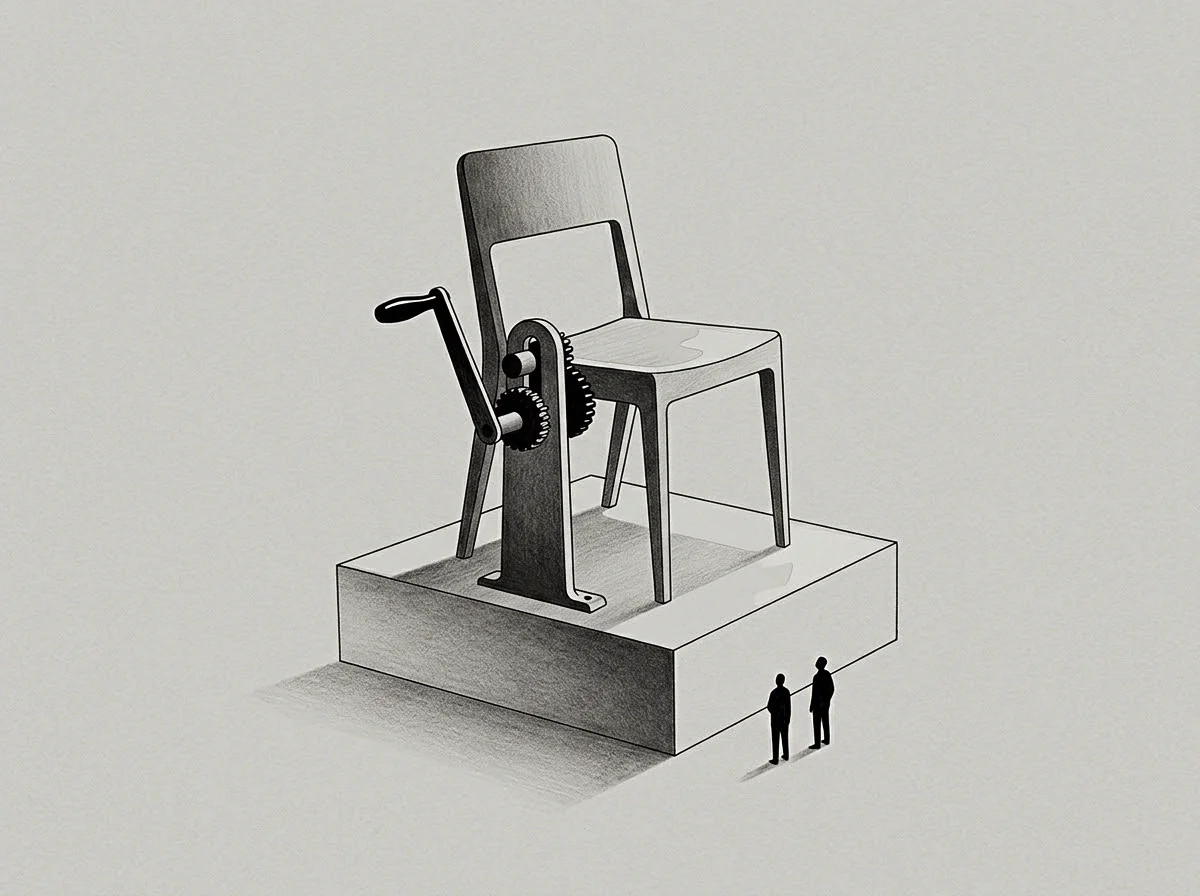
How Does the Transferred Rule Withstand Live Operational Friction?
The succession committee presents the incoming executive with an unresolved legacy crisis: an enterprise contract negotiation stalls over intellectual property indemnification, while the firm simultaneously discovers a five hundred thousand dollar inventory discrepancy in a primary European distribution hub. The incoming leader holds the codified heuristics, the financial records, and full operational authority.
The incoming leader must act within forty-eight hours. The board monitors whether the executive leans on consensus-building or executes the defensive heuristics extracted from the founder’s historical playbook. If the leader convenes four exploratory committees to assess the inventory variance while offering compromise language on indemnification, the extraction process has failed.
The heuristic required immediate supply chain containment and zero indemnity concessions on standard service packages.
Transferring heuristics does not turn the incoming operator into a copy of their predecessor. Operational environments shift and technological foundations change. A heuristic designed during high-interest-rate periods might choke growth during liquidity expansions.
The successor must understand the economic context that shaped the rule to know when to retire it.
A heuristic transferred without its original context turns into dogma that strangles the enterprise when underlying capital realities shift.
The main risk during this phase is surface mimicry. A successor may repeat the founder’s phrases without knowing when a scenario sits outside the heuristic’s original design bounds. True transfer requires the successor to state not just what choice the predecessor would make, but the exact metric shift that would invalidate that choice.
The incoming operator either demonstrates autonomous pattern recognition or remains dependent on informal validation from the departed founder.

Shelf
Executive succession finishes when residual dependence ends. At this stage, the enterprise inventories what was captured, what was deliberately discarded, and what permanently departs with the outgoing leader. Knowledge capture is never total.
Attempting to document every micro-judgment creates an unwieldy manual that stifles managerial initiative and slows organizational response.
The enterprise divides extracted heuristics into two operational categories: institutional policies and transitional guides. Institutional policies integrate directly into corporate governance, credit approvals, and product release gates. Transitional guides serve as blueprints for the executive committee during the first twenty-four months after the transition.
What remains on the shelf is the distilled operating philosophy that allowed the enterprise to survive its initial growth.
What remains with the departing leader is their private emotional tolerance for operational failure.
No interview, shadowing sequence, or governance matrix captures individual tolerance for catastrophic financial risk. The outgoing founder could pledge personal real estate to guarantee credit facilities due to a unique appetite for acute risk. The incoming executive operates as an agent rather than an absolute owner, relying on balance sheet liquidity, contractual terms, and governance to withstand similar pressures.
Succession succeeds not by creating a copy of the founder, but by equipping an executive with the heuristics needed to safeguard what was built.
When the transition concludes, the founder leaves the corporate suite. The seat is filled by an operator who understands the hidden architecture behind the firm’s decisions, working with clear visibility, bounded rules, and autonomous judgment.
The legal release of claims takes effect on the final day of the handover window, ending all consulting stipends and freeing the board seat for an independent director.