
Measuring Operational Delay and Authority Delegation Metrics in Leadership Succession
Operational delay measures the temporal lag between a successor's decision and organizational execution caused by lingering predecessor authorization pathways.

Clock
An invoice for twenty-four thousand dollars sits in an administrative queue at eleven o’clock on a Tuesday evening. The purchase order matches the project budget approved six weeks earlier, the vendor has met every milestone deliverable, and the incoming chief operating officer holds the nominal title required to sign the disbursement. Execution stalls because banking software retains a secondary signature rule set seven years prior, requiring the founder’s physical token to clear any transfer exceeding twenty thousand dollars.
The founder is traveling in another time zone, unreachable for sixteen hours. The vendor halts shipment of critical technical components, idling an entire engineering team for two days while full wages accrue.
This operational delay rarely appears in succession accounting. Standard transition planning tracks equity transfers, title modifications, board resolutions, and legal filings, while ignoring the temporal friction that accumulates in daily operations. When an outgoing leader vacates an executive seat, authority does not flow instantly into the receiver’s hands.
An invisible lag opens between the formal assignment of responsibility and the functional capacity to execute decisions without secondary validation. Operational delay measures the elapsed hours or days between a successor’s decision and the organization’s execution of that decision.
The gap stems from persistent, informal review loops. Over years of operation, an organization constructs internal pathways tuned to the founding executive’s habits, risk tolerances, and personal relationships. Staff learn which decisions require verbal sign-offs, which vendors receive accelerated processing, and which expenditures trigger secondary scrutiny.
When a new leader takes the seat, these neural pathways of the firm do not reconfigure automatically. Subordinates continue to seek tacit confirmation from the departing founder, vendors request double signatures, and bank permissions remain unadjusted.
Operational delay multiplies when approval thresholds remain anchored to the founder’s personal review cap during a leadership transition.
Quantifying operational delay demands tracking decision execution across distinct functional categories. Financial authorizations, personnel hires, contract adjustments, and strategic redirections each carry specific baseline cycle times. During a stable leadership period, a capital expenditure under fifty thousand dollars might require forty-eight hours from initiation to payment processing.
During a succession sequence, that same authorization often extends to eighteen days, driven by repeated informational requests and shadow review cycles, as unstated boundaries produce approval paralysis.
Measuring this lag requires evaluating the specific operational delay metrics that surface during transition windows:
- Approval Latency measures the time elapsed from when a successor submits a formal authorization request to the final clearance of that action by administrative systems or governance personnel.
- Decision Queue Stacking tracks the total volume of pending operational authorizations holding in administrative suspense due to ambiguous signing thresholds or dual-authorization mandates.
- Escalation Bounce measures the proportion of decisions made by the successor that are subsequently referred to the predecessor by third parties seeking redundant confirmation.
- Threshold Clamping calculates the artificial reduction in spending or commitment limits imposed on a seat during handover, forcing routine operational items into executive board review.
When an organization fails to calibrate authority delegation metrics during succession, operational velocity collapses before the transition is officially completed. Successors spend their initial quarters clearing administrative bottlenecks rather than executing strategic initiatives, while staff members learn that the nominal handover carries no functional weight. The financial cost appears in idle vendor time, missed market entry windows, and degraded customer response cycles.
The cost of unmeasured operational delay falls directly on the operating margin of the enterprise, eroding the value of the seat before the handover completes.

Scale
Measuring the transfer of authority requires precise metrics rather than subjective evaluations of confidence or readiness. Organizations frequently rely on qualitative statements regarding a successor’s readiness to take the seat, neglecting the quantifiable metrics that reveal whether authority has actually moved. A structural assessment of delegation relies on four quantitative indicators: the Authority Horizon Index, the Reversion Rate, the Escalation Bounce Time, and the Delegate Execution Lag.
These metrics convert the dynamic of leadership handover into measurable temporal and financial data.
The Authority Horizon Index defines the maximum financial or operational commitment a successor can execute without obtaining external approval or predecessor validation. At the inception of a succession sequence, this threshold is often set artificially low, forcing minor operational adjustments through multi-tiered review steps. As the transition advances, the metric tracks the expansion of this boundary over time.
A healthy delegation trajectory demonstrates a planned, stepped increase in the financial limit across successive operating quarters, expanding from routine operational baseline limits to full capital allocation authority.
| Delegation Model | Authority Horizon Limit | Median Approval Latency | Target Reversion Rate | Operational Drag Index |
|---|---|---|---|---|
| Founder Centric Baseline | Under $10,000 | 144 Hours | Above 45 Percent | 8.4 / 10.0 |
| Transitional Scaffold Model | $10,000 to $50,000 | 48 Hours | 15 to 25 Percent | 4.2 / 10.0 |
| Delegated Boundary Model | $50,000 to $250,000 | 12 Hours | 5 to 10 Percent | 1.8 / 10.0 |
| Autonomous Execution State | Above $250,000 | Under 4 Hours | Below 2 Percent | 0.3 / 10.0 |
The Reversion Rate isolates the frequency with which authority nominally granted to a successor flips back to the predecessor. This phenomenon occurs through two distinct pathways: the successor voluntarily relinquishing the decision due to ambiguous risk parameters, or internal staff bypassing the new leader to obtain direct confirmation from the former authority figure. A high Reversion Rate indicates that nominal delegation has occurred without structural backing.
Tracking Escalation Bounce Time provides visibility into the operational friction caused by shadow oversight structures. When a subordinate or vendor receives authorization from the incoming leader but delays execution until the predecessor offers secondary validation, the resulting delay constitutes escalation bounce. Measuring the duration between initial successor sign-off and final operational execution isolates the exact time cost of redundant authority structures.
An elevated decision reversion rate signals that nominal delegation has occurred without corresponding boundary authority.
The Delegate Execution Lag combines these values into a single systemic measurement. This metric records the temporal interval between a successor identifying an operational requirement and the realization of that action within operating software or financial ledgers. By mapping Delegate Execution Lag across successive stages of the handover, governance boards identify systemic bottlenecks before operational drag degrades enterprise throughput.
When governance structures insert mandatory double-signature clauses for contracts exceeding fifty thousand dollars without establishing an expiration timeline, the operational drag score remains elevated past the twelve-month transition boundary.

Desk
Authority delegation breaks down most frequently at the physical and administrative touchpoints where daily work is authorized. While corporate governance documents describe high-level duties, the operational reality of leadership succession is determined by who controls software permissions, banking access tokens, payroll sign-offs, and vendor authorization channels. When an outgoing leader retains access to these instruments, shadow validation becomes the standard operating pattern of the enterprise.
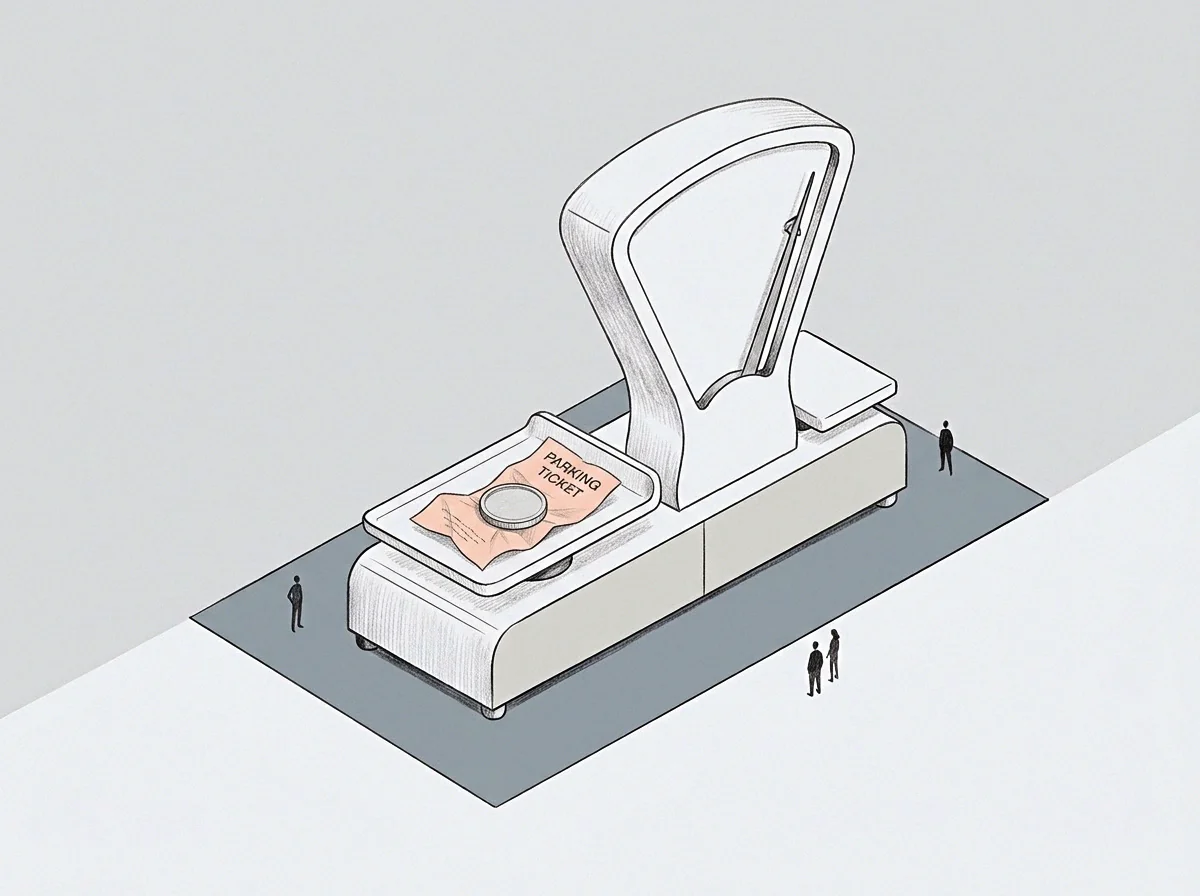
How Does Shadow Validation Prolong Approval Latency?
Shadow validation occurs when an outgoing founder or executive continues to review, edit, or approve operational actions behind the scenes, despite an official announcement that leadership has transferred. Subordinates quickly identify that real power resides with the reviewer rather than the nominal title holder. Consequently, staff members submit draft approvals to the predecessor through informal messaging channels, side conversations, or home email accounts before presenting the formal document to the successor’s desk.
This informal review architecture creates an unrecorded, parallel administration that inflates approval lag while systematically undermining the successor’s standing. The incoming leader receives pre-vetted proposals without knowing they have already passed through the predecessor’s filter, creating a false impression of alignment while masking underlying divergence in operational style or strategic priority. The successor effectively acts as an administrative clerk signing off on choices shaped entirely by the outgoing figure.
The time an outgoing leader spends reviewing completed decisions mirrors the shadow latency imposed on the incoming successor.
Eliminating shadow validation requires a systematic audit of administrative infrastructure. Physical security tokens, enterprise resource planning permissions, software administrator rights, and legal signatory cards must be reassigned strictly according to a published timeline. Retaining dual access permissions past the initial handover window invites informal intervention, increasing operational friction, as the outgoing leader’s unrecorded vetoes linger until credentials are revoked completely.
An incoming leader must make every decision twice if the outgoing partner holds the keys to the banking portal.

Proof
To examine the structural impact of authority delegation frameworks on operational latency, consider a worked situation involving two middle-market technology service providers undergoing executive succession over an eighteen-month observation window. Both enterprises operate with approximately two hundred employee heads, generate forty million dollars in annual top-line revenue, and are transitioning leadership from a founding chief executive officer to an recruited successor. Operating conditions, capital structures, and market exposures are statistically equivalent at the start of the succession timeline.
Company A implements an implicit delegation structure without clear temporal or financial metrics. The founding executive retains unlimited financial approval authority while granting the successor an unspecified operational oversight role. Governance documents state that the successor will take over day-to-day decisions as confidence is established, without defining quantitative benchmarks for authority expansion or automated scaffold removal.
Company B establishes a metric-driven authority transfer protocol on day one. Financial thresholds are partitioned into four distinct bands: tier-one authorizations up to twenty-five thousand dollars transfer immediately to the successor; tier-two authorizations up to one hundred thousand dollars transfer at day ninety, contingent on maintaining a Reversion Rate below ten percent; tier-three limits up to five hundred thousand dollars transfer at month six; and full capital allocation power clears at month twelve. Administrative permissions, software sign-offs, and banking credentials migrate automatically at each benchmark date.
Unclear expenditure limits force routine vendor approvals into executive queue stalls.
By month six, operational data reveals substantial divergence between the two organizations. Company A exhibits an average Approval Latency of nine days for standard vendor agreements, driven by staff submitting contracts to both the founder and the successor. The Reversion Rate at Company A sits at thirty-eight percent, with the founder actively intervening in routine staffing decisions and client pricing models.
The total Operational Drag Index reaches seven point two out of ten, resulting in a fifteen percent drop in quarterly client onboarding speed and three major vendor contract defaults due to payment processing delays.
At Company B, measured Approval Latency drops to six hours by month six. The Reversion Rate stabilizes at four point two percent, well beneath the required ten percent maximum threshold, triggering the automatic phase-in of tier-three financial authority. Because administrative permissions were systematically revoked from the founder according to the published protocol, staff members routed all operational actions exclusively through the successor’s seat.
Vendor onboarding speed increases by twelve percent over pre-succession baselines, while executive decision queues decline by sixty-four percent.
The structured implementation sequence that governed Company B follows a specific progression:
- Map all operational authorization loops across departments to identify every existing approval node and informal review habit.
- Establish explicit dollar caps and binding authority limits mapped directly to calendar dates and performance metrics.
- Migrate software credentials, banking tokens, and administrative rights on published transition dates without exception.
- Monitor Reversion Rates weekly to isolate areas where subordinates or third parties attempt shadow escalation.
- Revoke the predecessor’s administrative oversight access entirely upon reaching the target authority horizon benchmark.
The performance differential demonstrates that operational velocity relies on structural boundaries rather than personal goodwill during a leadership handover. Company A incurred significant financial drag and organizational confusion by permitting ambiguous approval lines to persist. Company B maintained operational speed by enforcing quantitative metrics, explicit financial limits, and automated scaffold removal.
Delegation expands only as fast as administrative permissions move.

Lock
Achieving clean operational handovers requires terminating the scaffold mechanisms constructed to support the transition. Scaffolding, including shadow reviews, co-signing mandates, and dual-reporting structures, provides safety during early transition stages. However, if left in place past its operational utility, that same scaffolding becomes a structural impediment to corporate velocity.
Ending a transition requires enforcing a clear, unyielding exit milestone. At this predetermined juncture, all residual oversight privileges terminate, secondary approval pathways close, and the predecessor vacates administrative visibility entirely. The incoming leader takes full, unmediated control of the operational machinery, accepting complete responsibility for performance outcomes without a safety net or redundant validation requirement.
When governance structures fail to enforce this final severance, the enterprise enters a state of perpetual succession, characterized by stagnant decision-making, divided employee loyalty, and persistent operational lag. The organization loses the agility required to compete effectively, trapped in a continuous loop of internal validation and administrative hedging. Measuring operational delay and authority delegation metrics provides the empirical backing necessary to declare the handover complete, clearing the way for focused operational execution.
What structural mechanism ensures the outgoing leader does not re-establish informal authorization channels after formal system access is revoked?