
Measuring Tacit Service Quality Expectations During Executive Account Management Succession Sequences
Enterprise account succession requires measuring tacit quality expectations through critical incident interviews and staged dual run shadowing protocols.

Gauge
When an enterprise account changes hands, the loss of business rarely traces back to a broken contract. Master service agreements capture service levels, tiered pricing, and quarterly milestones, but they record none of the working tolerances built over years: how quickly an executive picks up during an off-hours incident, or which informal check-in keeps a sponsor calm.
Leadership handovers bring out the gap between what is written down and what the client actually expects day to day. Outgoing executives operate on personal habits formed with individual counterparts: one sponsor expects a direct call during the monthly close instead of an email digest, while another needs an informal draft two days before a board meeting. If an incoming manager takes the account without learning these habits, the working relationship falters even as every contractual metric is met.

Explicit Service Agreements and Implicit Psychological Contracts
Service contracts cover delivery obligations, but client retention is largely governed by an unwritten psychological contract. This secondary layer consists of mutual expectations around how fast questions are answered, who takes direct ownership of a mistake, and how easily an executive can be reached. Legal terms prevent default; the informal agreement governs whether the account renews or expands.
Incoming leads tend to track account health through formal metrics, responding when an indicator turns red on a dashboard. But client friction usually starts in areas no dashboard tracks. An unanswered message on a Saturday during an operational disruption breaks an implicit standard, even if the formal SLA gives the vendor forty-eight hours to log a ticket.
Relying only on explicit indicators leaves a manager blind to early client disengagement.
When account ownership transitions without codifying implicit communication cadences, client perceived quality drops rapidly even if contractual deliverables meet specifications.

Anatomy of Account Decay During Leadership Handover
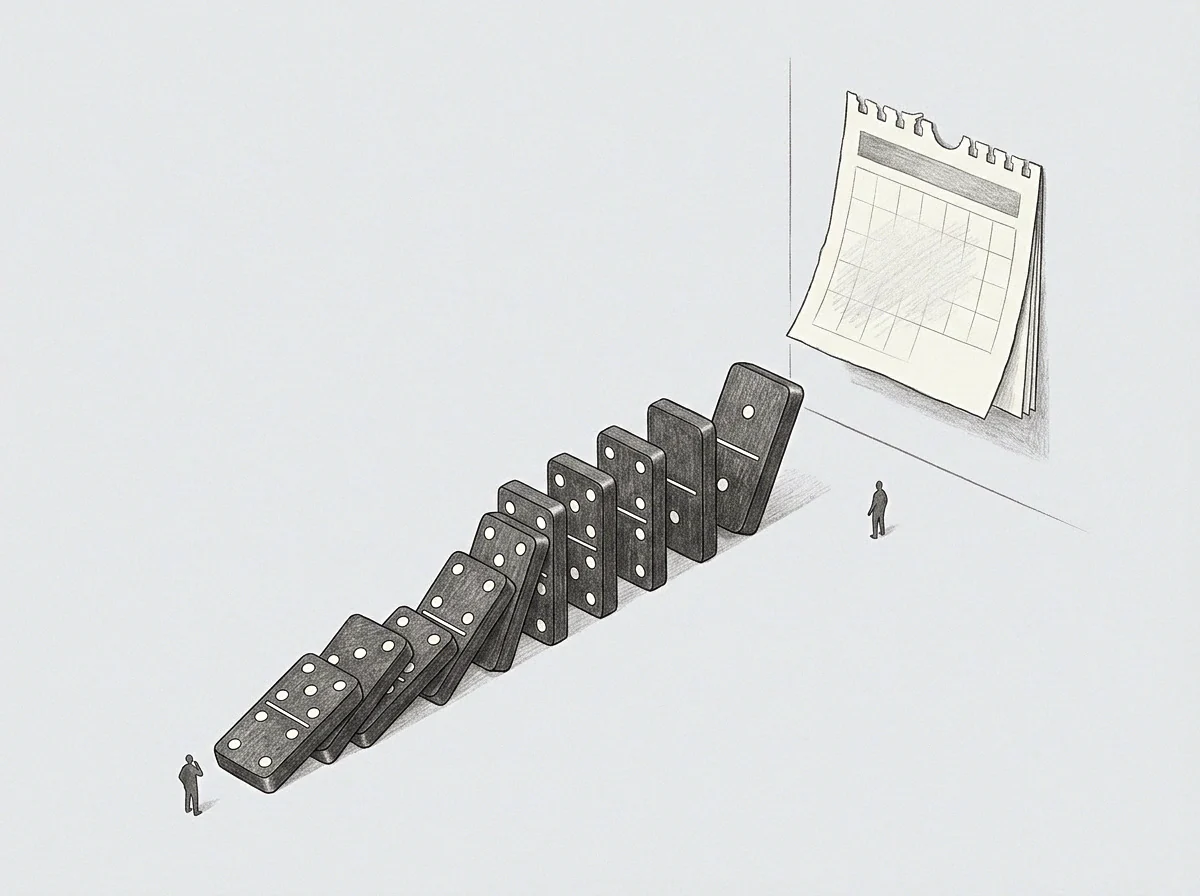
Account decay following a leadership handover often follows a distinct pattern, even when delivery milestones are met on schedule. The friction typically surfaces within the first four weeks, as the departing manager steps away and the new lead assumes primary contact.
Operational friction points compound quietly across the initial succession phases:
Early interactions are judged immediately against the predecessor’s working style. The client expects established routines, such as informal briefing notes or quick escalation by phone. When a successor replaces those calls with standard ticketing procedures or intake forms, the client interprets the procedural shift as a drop in responsiveness and attention.
A period of quiet withdrawal follows. The client shares less informal context, moves phone discussions onto formal email threads, and drops routine check-ins from the calendar. A new account lead often mistakes this quiet period for stability, while the client is quietly building operational workarounds or reviewing competing vendors.
Formal conflict marks the final stage. Delivery delays that were once handled with a quick phone call now trigger procurement notices and audit requests. The client retreats to strict contract terms because the personal goodwill built by the former lead has lapsed.
Without intervention, an account that ran profitably for years can become an acute renewal risk in two quarters.
Draft
Surfacing tacit expectations requires observing daily routines rather than asking for an exit summary. Departing account managers rarely articulate their own adjustments accurately; years of habit turn custom concessions and workarounds into second nature. Asked directly, most managers fall back on broad generalities about responsiveness and trust.
A successful handover relies on auditing these working habits before the departure is complete. Breaking unwritten practices down into clear categories lets an incoming lead map what individual stakeholders expect in practice.

Taxonomy of Tacit Quality Indicators
Enterprise accounts judge vendors by operational behaviors that sit below formal contract language. Four categories define this unwritten layer in account management:
- Latency tolerance thresholds define the maximum acceptable delay between a client inquiry and an executive response across different communication channels and operational situations.
- Informal escalation pathways establish unwritten rules governing when and how an account manager bypasses standard support ticketing systems to resolve urgent client challenges directly.
- Decision validation cadences dictate the degree of pre-alignment and informal review required before presenting formal strategy proposals or operational scope changes to key decision makers.
- Tone and communication register govern the expected level of formality, analytical depth, and personal rapport during routine status updates and unexpected crisis debriefs.
Assessing these habits works best through operational records rather than personal recall. Reviewing past email threads shows actual response times under pressure, while calendar archives reveal how many informal check-ins occurred ahead of each steering committee.

Psychological Contracts in Key Account Architecture
Unwritten mutual assumptions dictate how executives work together through operational disruptions. Standard account plans document org charts, sign-off limits, and active project streams, but they leave out the working habits that protect the relationship when deliveries falter.
The table below compares explicit service level agreement parameters with the corresponding tacit service quality expectations that govern executive account management during succession sequences.
| Operational Domain | Explicit SLA Parameter | Tacit Service Quality Expectation | Succession Measurement Metric |
|---|---|---|---|
| Crisis Escalation | Four-hour response window for severe system outages | Immediate direct mobile outreach from account executive within fifteen minutes | Historical timestamp gap between alert and informal executive call |
| Governance Reviews | Quarterly formal business performance presentation | Bi-weekly informal alignment calls prior to internal executive meetings | Frequency and length of unscripted calendar meetings |
| Deliverable Revision | Two formal revision cycles per functional specification document | Real-time collaborative drafting in shared documents before formal submissions | Ratio of informal draft reviews to formal submission sign-offs |
| Scope Management | Formal change request submittal for out-of-scope work | Informal trade-offs absorbing minor adjustments without administrative friction | Volume of undocumented minor feature updates or advisory hours |
The gap between contract terms and actual working habits is a primary point of vulnerability during a transition. When a successor adheres strictly to contract boundaries without understanding established flexibilities, the client perceives an immediate drop in service. The previous lead understood, for instance, that urgent financial summaries required a quick call rather than a report upload.
Scale
Managing unwritten norms requires turning everyday observations into concrete baseline data. Establishing these reference points calls for focused review methods during the handover itself.
Incident analysis offers a reliable way to uncover these expectations. Reviewing past account emergencies highlights the exact operational interventions that kept client relationships intact when deliveries slipped.
Critical Incident Elicitation Protocols
Retrospective interviews with outgoing managers work best when tied to specific events. Rather than discussing client preferences in the abstract, the incoming lead and transition team examine past incidents where client confidence was directly tested.
The elicitation sequence walks through three operational phases:
The process begins with incident identification. The departing manager selects three severe delivery challenges from the past twenty-four months, such as outage recoveries, scope disputes, or missed project deadlines.
Next comes behavioral reconstruction. The interviewer examines the practical handling of each situation: who received the initial phone call, what informal commitments were made on the spot, and which resources were reassigned without formal ticketing.
Finally, baseline extraction isolates the expectation that action created. If the outgoing manager waived fees for emergency engineering support during a crunch, the client will expect that level of unbilled assistance as standard practice during future incidents.
Capturing historical account anomalies prior to handover reduces successor ramp time while preserving client trust through operational changes.

How Do Successors Capture Unspoken Client Preferences?
Observing daily operations alongside the departing manager surfaces friction points that interviews miss. Outgoing leads routinely understate informal concessions and custom routines built over time to keep a client satisfied.
A structured shadowing period closes this gap. Working jointly during a transition window lets the incoming manager observe firsthand how the client reacts to updates, requests, and operational discussions.
Attention should be paid to which agenda items generate direct engagement and which draw disinterest. Side conversations right before or after formal presentations often indicate the actual priorities of senior stakeholders far better than the meeting agenda.
Analytical preferences also need to be logged. While one executive asks for raw data and operational logs, another wants a single-page brief centered on budget outcomes. Documenting these preferences early prevents friction in the first solo reviews.
Incorporating a mandatory thirty-day dual-run observation period into transition plans ensures the new manager adopts verified communication patterns.

Sentry
Protecting client relationships during a handover requires guardrails that catch disengagement early. Handovers fail when treated as a single administrative date. A sound transition plan divides the transfer into distinct phases, confirming alignment on working habits before the successor takes full control.
A phased transfer allows the incoming executive to absorb informal account nuances while the outgoing lead maintains stability.
Staged Scaffolding and Shadowing Transitions
Transferring account responsibilities in stages prevents sharp breaks in day-to-day interactions. Each stage maintains distinct operational boundaries:
- Outgoing account executives lead primary communications while incoming managers record implicit client feedback triggers during joint operational reviews.
- Incoming managers assume active meeting facilitation while departing leaders observe and document subtle friction points in real time.
- Departing executives transition to background advisory seats, stepping in only when tacit communication norms face distortion.
- Full account ownership transfers once the incoming lead demonstrates independent alignment with client implicit operational standards.
Advancing through these stages depends on clear validation points. The incoming manager needs to anticipate client reactions to operational developments accurately and navigate informal communication channels without friction.
Account retention depends more on matching client informal communication styles than on delivering static quarterly reports.

Signals of Tacit Misalignment
Early signs of strain appear in response patterns long before churn shows up in financial data. Tracking these behavioral shifts allows leadership to intervene before dissatisfaction leads to contract cancellation.
Response time serves as a dependable indicator. If an executive who routinely replied within two hours begins taking two days, relationship alignment has slipped. That delay usually reflects deprioritization or dissatisfaction with the incoming manager.
Attendance patterns tell a similar story. Skipping standing reviews or delegating steering committee seats to junior staff signals declining engagement. Clients pull senior presence when meetings cease to deliver practical value.
A shift in informal information sharing is equally telling. Healthy accounts feature steady exchanges of organizational context, internal budget movements, and competitive pressures. When communications narrow strictly to project milestones and deliverables, the informal working relationship has degraded.
Moving routine discussions entirely to formal written channels indicates that the transition has lost alignment.

Anchor
Capturing working account intelligence in central systems preserves knowledge that otherwise remains trapped in personal memory. When an executive leaves, that accumulated familiarity departs with them unless deliberate mechanisms exist to record it.
Retaining institutional memory requires maintaining qualitative profiles of client behavior alongside standard transaction and pipeline records.
Institutionalizing Tacit Account Knowledge
Translating relationship habits into structured records prevents repeated knowledge loss across personnel changes. Account management systems need to document operational preferences alongside pipeline stages and revenue forecasts.
Profiles should record preferred contact channels, key professional priorities, internal pressures, and past sensitivities. They should also detail historical operational disruptions that left lasting impressions, along with presentation formats favored by individual executives.
Structured debriefs help solidify the handover. Sixty days after the transfer, the incoming manager and account director assess how accurately the captured habits matched reality, document unrecorded expectations that emerged during solo management, and update account records for future transitions.
Enterprise client satisfaction reflects the alignment between unstated operational expectations and daily service delivery.

Long Term Account Equity Protection
Long-term account health requires continuous adjustment between client priorities and team execution. A transition provides a natural opportunity to re-examine working habits and uncover neglected client priorities. By tracking unwritten service expectations systematically, an organization reduces handover risk and identifies new opportunities for expansion.
Safeguarding account equity requires oversight well beyond the transition window. Account directors should run quarterly reviews comparing client communication rhythms against baseline patterns established during the handover. Catching behavioral drift early lets teams adjust delivery before friction shows up in revenue.
Whether organizational systems can ever fully capture interpersonal rapport without continuous personal relationships remains an open question in account governance.