
Owner Operator Handover Sequence and Procedural Knowledge Codification
Owner operator handover transfers procedural execution through phased scaffolding, isolating tacit judgment from explicit rules to ensure enterprise continuity.

Page
An owner sits alone past midnight writing instructions into an eighty-page document that will sit untouched inside an archived drive. The impulse to write everything down arrives whenever a departure becomes real. A founder often assumes that thorough documentation allows a competent replacement to duplicate their output, but that assumption fails in practice.
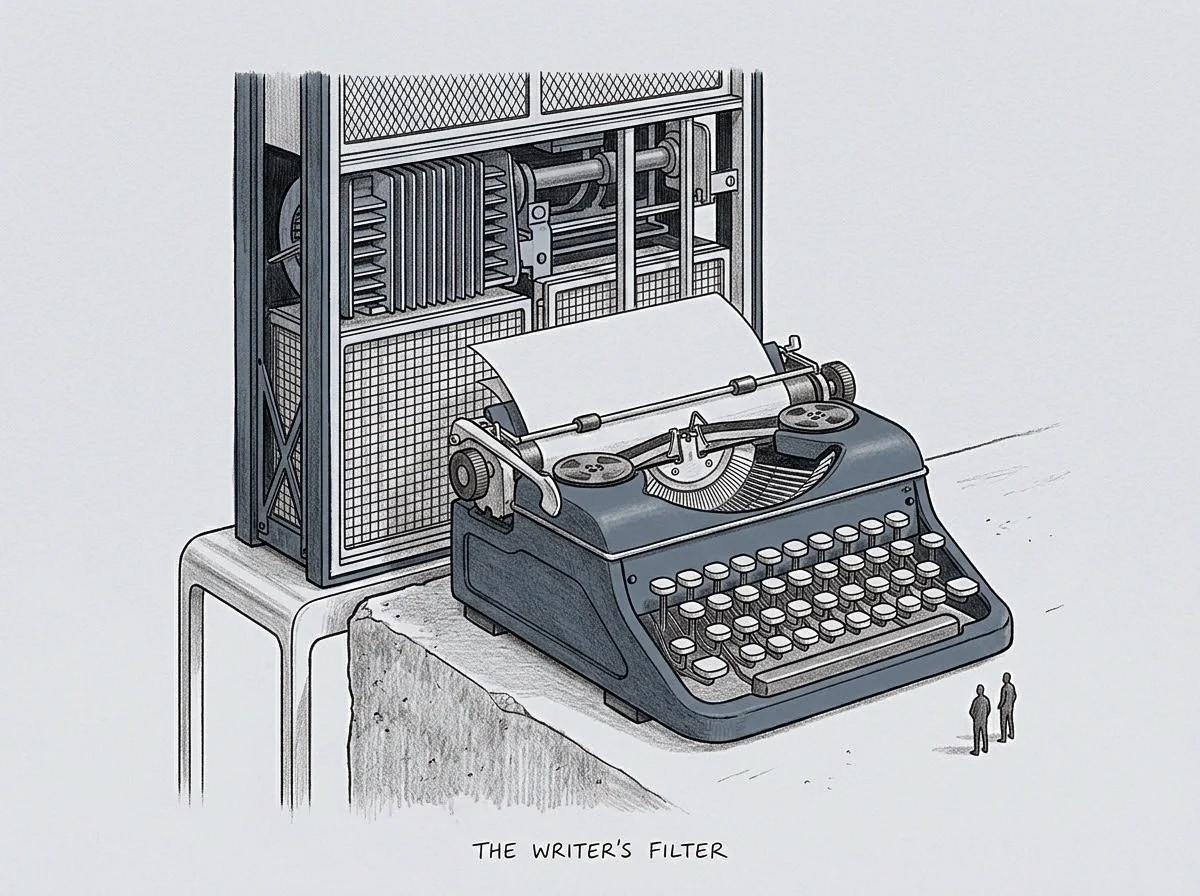
Codified text captures discrete tasks with precision, but tacit skill resists static recording. An operating binder records routine steps while remaining silent on the non-standard choices that protect customer relationships and supplier goodwill during a crisis.
Procedural documentation acts as a record of past actions; it cannot anticipate every variation in a live enterprise. Organisational research distinguishes explicit procedural directions from the tacit heuristics an experienced operator applies without conscious thought. Over a decade of trading, a founder accumulates thousands of subtle operational patterns governing inventory adjustments, credit terms, and staffing changes.
When translated into text, this knowledge loses the context that made it effective.
A detailed operating manual left in an empty office rarely survives the first quarter without the author present to interpret it.
Written instructions decay quickly. Software updates arrive, supplier terms shift, and client expectations diverge from codified standards within weeks. An incoming manager reads the binder, finds an initial discrepancy, and abandons the manual entirely.
Codification often creates a false sense of readiness that covers up operational vulnerability. The business remains dependent on the departing owner because the manual captures the mechanical artifact of the work rather than the contextual discretion directing the enterprise.
When an organization substitutes heavy documentation for direct procedural handover, the resulting operational paralysis frequently drags the departing owner back into daily management to prevent customer defection.
Staging

Four Phases of Operational Succession
Handing over command of an enterprise requires reducing founder involvement in distinct stages. The process begins with passive observation and moves through active execution until the successor runs the enterprise independently. Removing support too quickly destabilizes operations; retaining support too long stifles the successor.
The transition moves across four sequential phases, each requiring defined operational milestones before the next phase begins.
- The incoming operator shadows the outgoing owner across routine tasks and strategic interactions, observing client discussions, vendor negotiations, and emergency troubleshooting without operational authority.
- The incoming operator assumes direct execution of core routines while the outgoing owner stays present in the room to step in during critical procedural failures.
- The successor directs daily operations independently while the predecessor observes from an adjacent desk, running daily operational reviews and debriefs after business hours.
- The successor holds full operational authority and handles standard escalations independently, calling on the predecessor only within agreed contractual boundaries.
The sequence relies on progressive scaffold removal. In developmental psychology, the zone of proximal development describes tasks a learner performs with guidance before executing them unaided. The scaffold carries the weight while the foundation cures.
Removing it prematurely drops the operational load onto an unprepared successor, causing service delays and staff demoralization. Maintaining the scaffold indefinitely prevents the successor from establishing organizational authority.
When an owner transfers final signoff before the successor demonstrates two consecutive unprompted cycle completions, procedural error rates triple.
The transfer stalls without rehearsal. The incoming operator must make consequential decisions while the outgoing owner remains available to absorb severe errors. This trial period tests codification directly against commercial pressures.
| Transition Phase | Primary Seat Holder | Authority Boundary | Observed Failure Mode |
|---|---|---|---|
| Direct Shadowing | Predecessor | Zero independent spending or client commitment | Successor remains a passive observer |
| Assisted Delivery | Successor | Minor operational spending under pre-set limits | Predecessor interrupts execution prematurely |
| Monitored Autonomy | Successor | Standard capital and employment decisions | Predecessor receives unofficial staff escalations |
| Independent Command | Successor | Full executive discretion per enterprise mandate | Predecessor second-guesses outcomes from afar |
The transition agreement establishes a financial clawback tied to operational continuity metrics during the monitored autonomy phase, preventing early departure.
Friction

Can Tacit Knowledge Survive Written Directives?
Codifying operational knowledge reveals structural friction between established habits and formal rules. The outgoing owner works through intuition refined by years of direct feedback, while the successor relies on analytical rules learned from documents and briefings. This contrast generates immediate resistance.
Unwritten habits govern the floor. When an unusual vendor dispute arises, written manuals may dictate formal contract enforcement, whereas the departing owner knows that granting leniency protects a critical supply channel during peak trading.
Uncovering this embedded knowledge requires targeted diagnostic questioning during live work. Asking an operator how they run the company usually yields generic answers. Real rules emerge only when an active problem forces a trade-off between competing priorities.
Practitioners must observe decisions as they unfold on the commercial floor.
Documentation captures the predictable core while operational survival depends on the unwritten handling of exceptions.
Procedural extraction encounters four persistent failure states when capturing specialized founder capabilities:
- Context collapse strips situational qualifiers from established rules, causing the successor to apply standard policies to atypical commercial arrangements.
- Premature abstraction turns concrete physical tasks into generalized mission statements that provide no tactical direction to the replacement operator.
- Heuristic concealment occurs when the outgoing owner protects operational significance by declaring complex trade decisions to be pure instinct.
- Relational divergence emerges when long-standing trade vendors reject the replacement operator because informal social credit failed to transfer alongside formal titles.
Shadowing reveals hidden decision trees. In complex craft manufacturing and specialized trade services, apprentices build capability by watching master technicians correct subtle errors rather than reading technical specifications. The successor absorbs the craft through exposure to non-standard events.
The engine of the business—the blend of customer curation, pricing discipline, and delivery standards—resides within these non-standard responses. Written procedures capture the administrative shell, but the commercial margin lives inside unwritten exceptions.
The manual explains every routine transaction, yet no single passage explains how to negotiate with the sole supplier who provides eighty percent of the enterprise’s materials when shipments arrive three weeks late.

Clock

Capacity Limits and Decision Latency
A transition demands substantial operational capacity from both parties. The departing owner must run the business while explaining how it functions. Teaching an operational seat takes twice the time of occupying it.
The founder spends forty hours maintaining standard operations and another twenty hours explaining choices, reviewing successor drafts, and updating records. Fatigue builds rapidly across both roles, leaving the successor to hesitate under the initial weight of full operational responsibility.
In aerospace maintenance protocols, technicians decouple routine servicing from structural overhaul to prevent cognitive exhaustion from causing oversights. Small-firm succession requires identical boundaries. If a handover attempts to transfer technical production, executive finance, customer relations, and regulatory compliance at the same time, the successor experiences cognitive overload.
Decision latency lengthens from hours to days, customers notice the hesitation, and sales pipelines contract during the leadership gap.
An unpriced advisory retainership creates operational drag by inviting the departing operator back into weekly decisions.
The successor struggles through the initial adjustment period. They occupy the seat, hold legal titles, and work at the terminal, but lack the operational reflexes that make execution fluid. Every vendor invoice requires deliberate verification, and every customer inquiry demands consulting the manual.
Capital absorbs early mistakes. A company with healthy cash reserves survives the productivity dip that accompanies this phase, whereas an undercapitalized enterprise faces immediate liquidity pressure as operational velocity slows.
Does the organization possess sufficient working capital reserves to absorb a thirty percent reduction in operational velocity while the successor builds decision confidence?
Covenant
The final stage of an operational transfer requires clear structural separation. The predecessor cannot remain in the office, answering informal staff questions and second-guessing the new manager. Once the agreed transition timeline ends, the predecessor surrenders all digital credentials, vacates the main office, and redirects operational correspondence to the successor.
The desk is cleared, silence replaces weekly check-ins, and the enterprise relies entirely on its documented systems and the trained capabilities of the new leadership team.
A lingering founder weakens the successor’s authority. Staff members bypass the new manager to seek informal rulings from the former owner whenever unpopular operational changes occur. This informal communication line sabotages the succession.
The formal exit contract must set clear communication boundaries, limiting future owner involvement to quarterly governance reviews or emergency interventions triggered only by severe commercial events.
Documentation requires ongoing maintenance. The successor must treat inherited operating manuals as living operational assets rather than static documents. The incoming operator rewrites procedures to match their operational style and current market demands.
The business runs independently. What leaves with the founder is gone permanently; what remains is a durable procedural baseline built through structured sequencing, deliberate staging, and disciplined execution.
A clean separation requires the predecessor to stay away from the building even when the new operator makes obvious operational errors that carry manageable financial costs.