
Resolving Governance Deadlocks Between Founder Protective Provisions And Incoming Institutional Capital Controls
Governance deadlocks resolve through contractually mandated independent tie-breakers and operational safe harbors that separate capital controls from management.

Wedge
An unsigned board consent sits beside an open ledger forty-eight hours before a biweekly payroll run. The common shares carry an absolute veto over indebtedness exceeding five hundred thousand dollars, drafted three years earlier when the enterprise occupied a single rented room. The Series B term sheet introduces a mandatory credit facility requirement alongside standard institutional covenants that block unbudgeted disbursements over fifty thousand dollars.
Neither party signs. The enterprise halts while cash reserves deplete in plain view of both benches.
This confrontation exposes a divergence between ownership defense and administrative authority. Early corporate formations rely on class voting rights to preserve the originator’s strategic vision against future dilution. Institutional preferred stock instruments introduce negative controls to restrict downside variance and preserve liquidation preferences.
When an operating crisis requires immediate capital, these two protective structures lock into each other. The statutory power to manage corporate affairs formally rests with the board of directors, yet contractual vetoes held by individual share classes circumvent board discretion.
A class veto operating outside board oversight converts routine cash management into a binary structural negotiation.
The resulting gridlock originates in conflicting legal instruments rather than personal friction. Corporate charters under Delaware General Corporation Law section 151 grant broad latitude for separate series voting rights. Simultaneously, investor rights agreements create contractual negative covenants enforceable by specific performance.
When an institutional investor refuses to approve a senior secured bridge note, and the early shareholder vetoes an equity dilutive bridge round, the legal architecture provides no organic resolution. The company enters operational insolvency with liquid assets still pledged on the balance sheet.
Litigation rarely offers timely salvation. Delaware Chancery jurisprudence repeatedly affirms that preferred stockholders may exercise contractual negative covenants purely in self-interest. Preferred directors owe fiduciary duties to the common equity, yet preferred investors acting solely as stockholders owe no duties to protect the enterprise from liquidity depletion.
A common holder relying on class protective provisions occupies the exact same defensive position. Both parties exercise lawful contractual rights while the operational company suffocates. Prolonged legal confrontation expends the enterprise treasury in legal retainers while technical staff disperse to liquid competitors.
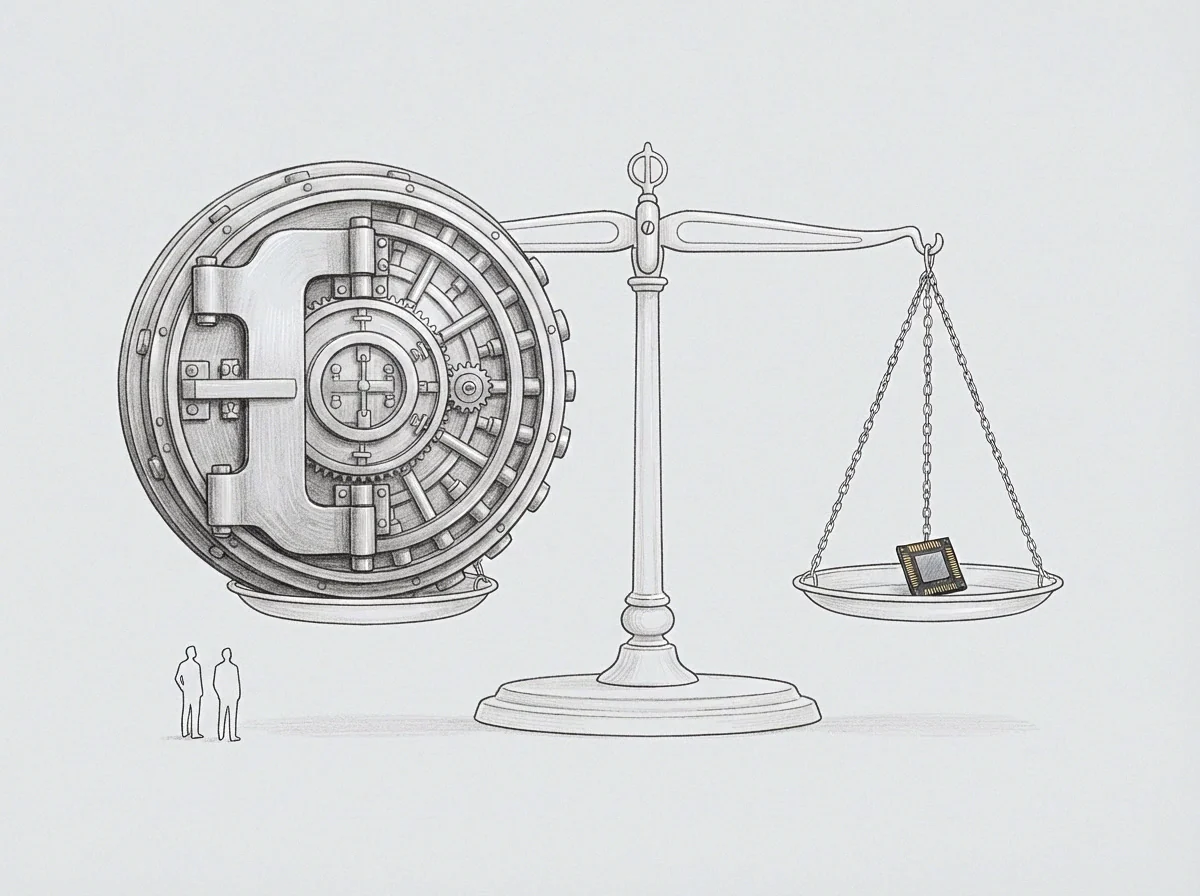
Covenants

Conflicting Veto Boundaries
The dispute centers on overlapping zones of operational authority. Institutional capital introduces negative covenants to prevent equity value destruction, senior leverage accumulation, or unauthorized executive compensation. Early equity documentation installs negative covenants to prevent hostile dilutive issuances, forced corporate sales, or involuntary alterations to charter rights.
When both layers govern the same transaction, executive initiative stops entirely.
| Corporate Action | Common Class Veto | Institutional Investor Control | Structural Impasse Manifestation |
|---|---|---|---|
| Senior Venture Debt Facility | Negative covenant on debt exceeding fixed dollar thresholds | Negative covenant on encumbering enterprise intellectual property | Debt term sheet expires while parties dispute collateral priority |
| Down Round Equity Financing | Supermajority common vote for charter amendments altering par value | Weighted average antidilution adjustment and series approval rights | Pay-to-play recapitalization blocked by minority common interest |
| Chief Executive Succession | Specified common appointment rights under voting agreements | Compensation committee approval and investor director veto | Executive seat remains vacant during critical commercial expansion |
| Annual Operating Budget | Negative covenant against unilateral expenditure limits | Mandatory board approval for variances exceeding ten percent | Enterprise operates on stale trailing budget during inflation |
| Conditions assume standard Delaware corporate forms containing both protective provisions and investor rights agreements. | |||
Institutional controls operate through negative assertion. Investors avoid taking operational control because direct operational management creates potential fiduciary exposure under controlling stockholder doctrines. By exercising a negative covenant, the preferred holder stops an action without ordering an alternative.
The operator holds the legal obligation to steer the company but lacks the legal authority to sign the necessary commercial papers.

Capital Calls And Protective Dilution
Distressed bridge financings accelerate these friction points. When external capital markets freeze, existing sponsors propose inside rounds conditioned on aggressive restructuring terms. These transactions routinely require the cancellation of common class vetoes as a prerequisite for cash delivery.
The mechanical execution of these transactions follows an identifiable progression:
- Staged Emergency Advances deliver minimal capital tranches linked to governance concessions, stripping class rights sequentially as runway shrinks.
- Recapitalization Waivers condition participation in senior liquidation tiers upon common consent to eliminate founder protective provisions.
- Exchange Offers convert compliant equity into subordinated preference tiers, stranding uncooperative common shares in unmarketable classes.
Protective provisions drafted without financial sunburst clauses transform ordinary liquidity shortfalls into forced equity surrenders.
Capital partners view these maneuvers as risk mitigation rather than hostile expropriation. When the original performance models collapse, preferred classes decline to fund equity cushions beneath common holders who contribute no fresh liquidity. From the institutional perspective, protective terms that block survival financing violate the implicit commercial compact of risk capital.
The enterprise cannot consume corporate covenants to settle payroll obligations.

Circuit

Dispute De-escalation Sequences
Breaking a structural deadlock demands predetermined contractual pathways rather than impromptu courtroom motions. Once a negative covenant blocks a vital corporate action, informal diplomacy yields negligible progress. The governing instruments must supply operational release valves.
A functional corporate charter installs sequential circuits. The initial tier mandates structured executive conferences between designated representatives within forty-eight hours of a registered negative vote. If discussions fail, the dispute shifts to an independent party endowed with binding proxy authority over the contested measure.
A contractually bound independent director prevents class vetoes from extinguishing corporate solvency.
Drafting precise definitions for deadlock events remains demanding. A deadlock exists when a corporate action endorsed by a majority of the board of directors remains blocked for twenty consecutive business days solely through the exercise of class-based protective provisions. Without this clear chronological standard, parties dispute whether an impasse truly exists while cash burns.

Who Holds The Tie Breaking Seat?
Board composition determines the operational viability of any governance structure. Early capital rounds often establish a balanced board containing two common designees, two preferred investor designees, and a mutually selected independent director. This mutual appointment becomes the primary fault line during an impasse.
When the independent seat falls vacant or sides systematically with capital providers, the deadlock shifts toward liquidation. Experienced corporate counsel construct the independent seat with non-affiliated technical qualifications. The individual occupying this seat cannot hold personal investments in any venture fund participating in the syndicate, nor can they hold common equity options subject to accelerated vesting upon an executive termination.
The decisive contractual clause mandates specific performance of an independent expert determination regarding distressed financing transactions, stripping both classes of unilateral blocking rights once cash reserves cross below three months of historical operational expenses.
Carveout

Operational Safe Harbors
To avoid structural paralysis, sophisticated agreements construct objective operational safe harbors. These provisions detach survival activities from class vetoes through explicit monetary and situational boundaries. An incoming investment instrument may hold negative covenants over major acquisitions or intellectual property sales, but emergency liquidity facilities below established caps pass automatically through pure board majorities.
Thresholds preserve functional momentum. By tying negative controls to percentage variances from an approved business plan rather than absolute dollar metrics, the operating team retains flexibility during periods of commercial acceleration. When unexpected supply chain dislocations require short-term debt, the management board accesses pre-approved lines without soliciting series approvals.
The documentation structures these parameters through precise numerical exclusions:
- Emergency Runway Facilities permit debt issuances up to twenty-four weeks of audited operating expenses without preferred series approval during negative cash positions.
- Materiality Baskets allow unbudgeted commercial expenditures below fifteen percent of gross quarterly revenue before negative controls trigger.
- Key Talent Replacement authorises management to fill vacated non-executive operational seats at market compensation rates without investor board committee approvals.
Drafting precise safe harbors demands rigorous balance sheet definitions. If the operational basket calculates liquidity using gross accounts receivable rather than net cash collections, the enterprise enters technical default during standard payment cycles. The safe harbor must link to verified deposits held in commercial operating accounts.
Clear monetary limits protect autonomy better than disputed goodwill.

Partition
Long-term resolution decouples economic liquidation protection from administrative control. A common class protective provision frequently attempts to control three unrelated variables: equity ownership retention, strategic corporate trajectory, and personal tenure in an executive seat. Incoming capital controls similarly attempt to control asset recovery, operational execution, and downside risk.
By disaggregating these elements into separate instruments, the structural impasse dissolves.
The exit from an operational deadlock often involves transferring executive authority while locking in non-dilutive economic floors. The originator yields the managerial veto over future debt and equity rounds. In return, the incoming preferred investors concede structured redemption floors, non-waivable information rights, and antidilution protections that insulate historical common value from predatory down-round recapitalizations.
The individual steps away from the operating desk while the enterprise survives as a capitalized legal entity.
This separation leaves an essential structural puzzle unresolved: when early equity holders permanently trade managerial vetoes for passive balance sheet protections, does the resulting corporate entity retain the distinctive technical velocity that justified its initial capitalization?