
Tacit Judgment Extraction Across Operational Leadership Transition in Small Firms
Tacit judgment extraction converts unwritten executive trade-offs into structured case libraries and boundary rules before operational leadership departs.

Seat
A spreadsheet tracks fifteen accounts receivable entries at midnight while an incoming operations director reviews an outdated process binder. The binder documents invoice creation, software login credentials, and payment schedules, but omits the rule governing when to waive a late fee for an erratic supplier of critical fabrication machinery. That decision lives in the nervous system of the person who built the firm.
When that person leaves the building, the rule goes with them. Operational handovers in owner-managed firms stumble against this unwritten policy; standard documentation records routine steps, but leaves behind the judgment calls that dictate when to break them.
Every operational role runs on a mix of explicit mechanics and uncodified discretion. Mechanics cover task sequences, account ownership, tooling interfaces, and regular reporting schedules. Discretion governs margin trade-offs, staffing tweaks during volume spikes, and client risk decisions.
In firms with fewer than fifty employees, administrative documentation routinely lags actual execution. The founder acts as a shock absorber, resolving anomalies through personal precedent. Successors inherit the formal framework without the internal compass for exceptional choices, creating operational drag whenever a new leader either pauses work to ask for guidance or makes decisions that erode unpriced goodwill.
The incoming operator inherits documented routines while unstated variance thresholds remain with the departing executive.
Transition plans usually assume that shadowing transfers operational competence. A successor watches the incumbent run quarterly vendor reviews, attend dispatch scrums, and balance workloads, but exposure alone fails to convey the underlying evaluative framework. Cognitive psychologists distinguish declarative information from tacit knowledge, demonstrating that expertise builds on complex pattern matching developed across years of experience.
The incumbent picks up on signals invisible to a novice—a subtle shift in a supplier representative’s tone indicating a delayed delivery, or a sudden drop in scrap metal prices signaling changing margins. Because the outgoing leader sorts these variables automatically, they rarely explain them, leaving the successor to observe the action without grasping what triggered it.

Unstated Tradeoffs in Daily Dispatch
Dispatch operations reveal this information gap immediately. An incumbent balances driver fatigue, client delivery commitments, and vehicle maintenance intervals at the same time. The formal manual states that deliveries follow chronological booking order.
In practice, the incumbent diverts a refrigerated truck to a secondary account because that client pays within ten days rather than forty-five. On paper, the diversion looks like an error, even though the commercial balance of the business depends on it. If the successor follows the written rulebook strictly, working capital contracts within sixty days.
Extracting this discretionary layer requires structured confrontation with atypical situations. Rather than asking how an operation functions in general, the successor brings real operational friction points to the table. The inquiry centers on exceptions and anomalies: why one project received an unbilled revision while another faced an immediate stoppage, or what specific supplier behavior triggers a request for an alternative quote.
Forcing the articulation of boundary conditions converts personal history into organizational policy.
As a rule of thumb, an undocumented operational exception repeated three times constitutes company policy.
Probe
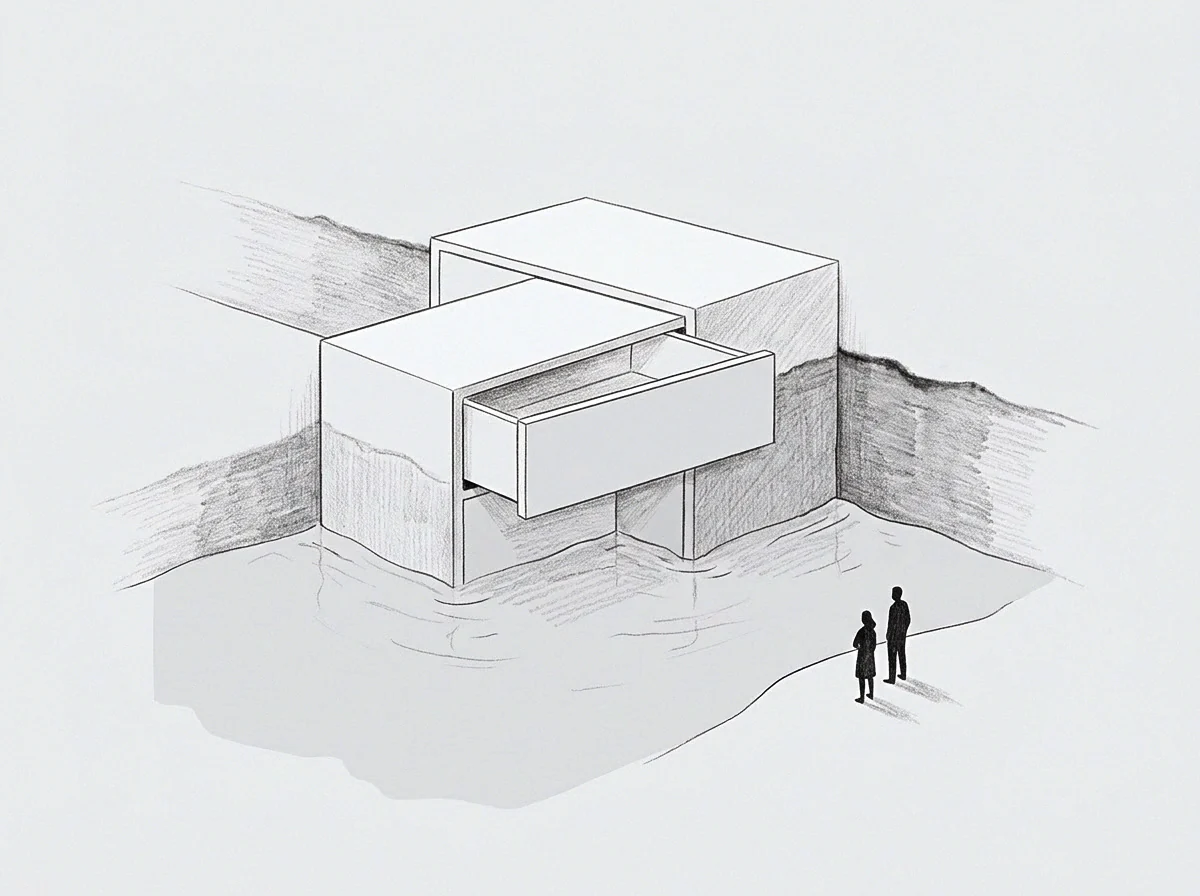
Uncovering latent operating heuristics demands structured elicitation protocols rather than passive observation. Cognitive task analysis offers methods designed to surface unspoken decision criteria from specialists. The critical decision technique structures this inquiry by walking through non-routine incidents that tested operating capacity.
The interviewer isolates the moment an operator chose one path over another, probing the environmental cues present during the decision window: what information was accessible, which options faced immediate rejection, and what prior experience guided the ultimate selection.
Observation alone creates a false sense of understanding. A novice watches an expert resolve a supplier dispute and assumes the process was linear. Applied cognitive research shows that domain experts compress information into perceptual chunks, skipping intermediate analytical steps.
When asked to explain their decisions after the fact, experts often construct logical rationalizations that fail to reflect their actual real-time mental steps. Effective extraction skips generic questions about philosophy and interrogates concrete, historical deviations from documented standards.
- Scenario simulation runs present the incoming leader with historical enterprise anomalies to compare proposed actions against previous executive interventions.
- Cognitive incident audits deconstruct the three costliest operational delivery failures from the preceding twenty-four months to map missing early warning signs.
- Shadowing interrogation logs capture daily executive interventions by requiring the incumbent to state the specific operational trigger within fifteen minutes of acting.
- Decision boundary mapping isolates exact spending thresholds and quality variance limits where subordinate discretion terminates and executive review begins.
These extraction sessions demand real executive focus, and both leaders face mental fatigue as implicit operational models are exposed to scrutiny. The incumbent often feels defensive when long-held intuitive choices are dissected into conditional logic. The organization must protect this inquiry time from daily operational interruptions; if routine client escalations bleed into extraction meetings, the transition defaults to superficial administrative reviews, leaving core operational machinery unexamined.
Executive capacity spent parsing historical operational exceptions directly determines whether uncodified discretion transfers intact.
When extraction fails to capture these implicit trade-offs, the successor defaults to rigid adherence to generic industry norms, steadily eroding the specialized operational advantages that protected company margins.

Shelf
Codifying operational discretion requires distinct repositories matched to information volatility. Fast-moving operating conditions render static operational manuals obsolete within quarters. An organization must separate stable technical protocols from volatile evaluative guidelines.
The table below delineates the structural homes required for different tiers of firm knowledge, establishing how unwritten intuition converts into accessible operational infrastructure.
| Knowledge Tier | Underlying Information Type | Storage Medium | Obsolescence Velocity | Validation Protocol |
|---|---|---|---|---|
| Routine Procedural | Explicit administrative tasks and system paths | Standard operating manuals | Low: biennial updates | Task execution audit |
| Diagnostic Intuitive | Evaluative heuristics and pattern matching | Annotated case libraries | Moderate: annual revision | Paired incident review |
| Strategic Relational | Client nuance and unwritten contract limits | Account risk ledgers | High: monthly adjustment | Joint client negotiations |
| Systemic Contingency | Crisis response and emergency prioritization | Decision escalation trees | Low: quarterly stress testing | Simulated outage exercise |
An annotated case library serves as the primary instrument for preserving tacit heuristics. Rather than generating broad policy statements, the firm archives specific historical disputes, client accommodations, and production bottlenecks. Each entry details the baseline situation, the departure from standard policy, the incoming data evaluated, and the commercial outcome.
The successor references these narratives when encountering novel operating friction, treating the archive as institutional case law.
What Remains Unwritten After Operational Leadership Handover?
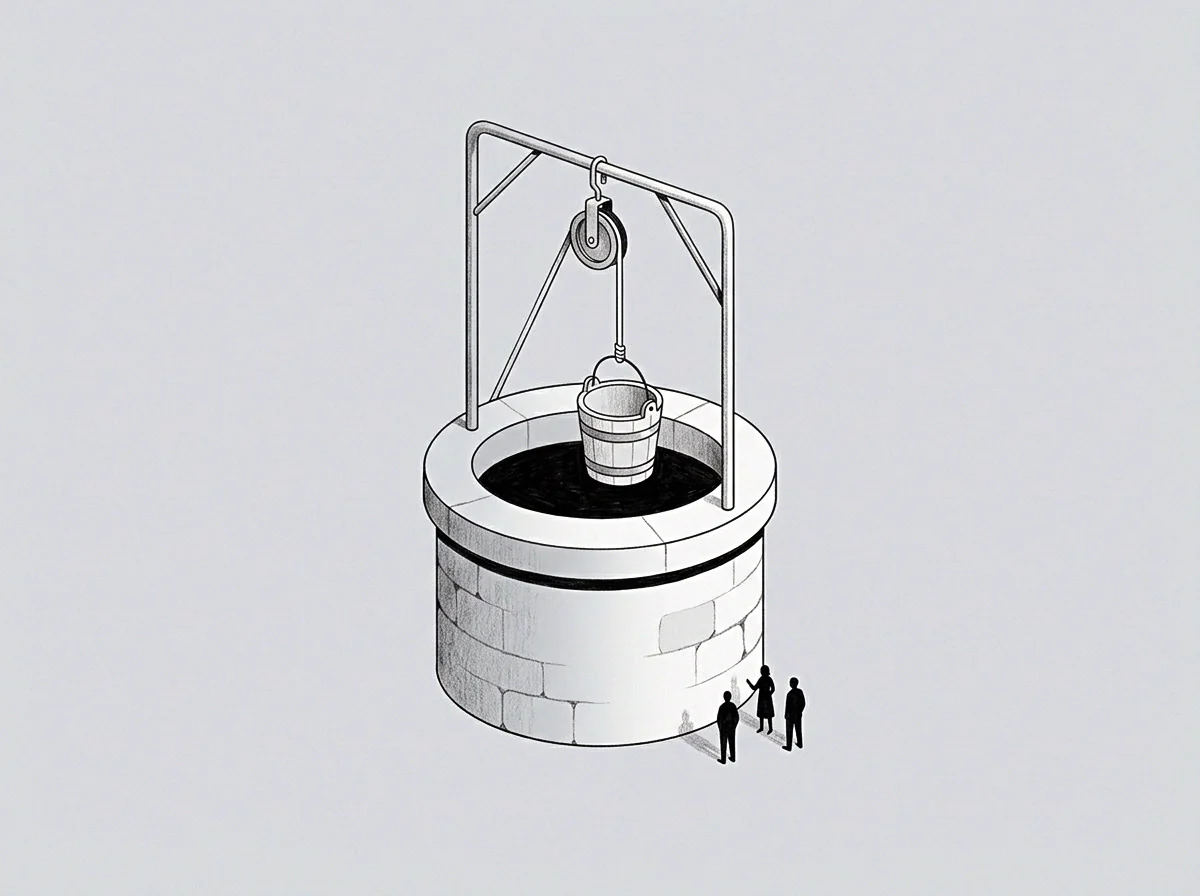
No repository captures the entire operational reality of an owner-led enterprise. Subtle perceptual cues resist linguistic codification entirely: an experienced plant manager senses machine wear through vibrations transmitted through the shop concrete, while an agency founder gauges project viability through interpersonal friction in a kickoff phone call. These sensory cues demand physical immersion and extended deliberate practice.
Extraction protocols capture ninety percent of operational rules, yet the residual ten percent governs extreme enterprise survival scenarios.
The firm mitigates this residual risk through structured consulting agreements that bind the outgoing executive to specific advisory windows. The contract defines access parameters, response timelines, and hourly remuneration for non-scheduled interventions. This arrangement acts as an operational insurance policy, providing the successor with an escalation path when ambiguous operational patterns exceed documented precedent.
A structured advisory retainer converts open-ended founder dependence into a bounded, fee-for-service contingency mechanism.
A written agreement specifying twelve months of quarterly incident reviews and a forty-eight-hour advisory response window ensures that edge-case exceptions receive experienced calibration without stalling current operational momentum.

Tension
Power dynamics during operational transitions distort the extraction process. The outgoing leader often derives identity and status from being the irreplaceable problem solver, making the surrender of tacit heuristics feel like a loss of organizational relevance. Conversely, the incoming leader experiences pressure to demonstrate autonomy, frequently dismissing institutional memory as outdated conservatism.
This interpersonal friction shuts down the vulnerability necessary to acknowledge operational ambiguity.
Consider a typical precision manufacturing firm with thirty-five machinists and eight million dollars in revenue. The founder built the client base over two decades, managing client expectations personally. An incoming chief operating officer enters the seat with an MBA and corporate supply chain background, then attempts to standardize quoting procedures using software formulas.
The founder rejects the quotes as blind to client idiosyncrasies, yet hesitates to define the parameters missing from the model. The successor views the founder as arbitrary; the founder views the successor as naive.
The friction resolves only when the financial cost of that ambiguity is laid bare. By tracking bid win rates across both methodologies over six months, the firm isolates the unpriced variables: the founder was factoring in machine tooling wear rates and seasonal labor volatility that the software model ignored. Once the incoming leader incorporates those factors into the algorithm, the founder concedes that manual review becomes redundant.
The process demands emotional discipline. The successor must tolerate periods of operational awkwardness, admitting where their mental model falls short. The outgoing leader must accept that the successor will execute decisions differently, occasionally sustaining calculated losses to establish independent operational judgment.
Without this mutual tolerance, the transition degenerates into passive resistance, with operational staff bypassing the successor to seek informal rulings from the departing founder.
An enterprise often seeks modern operating systems while remaining dependent on a departing leader’s private intuition.
Departure
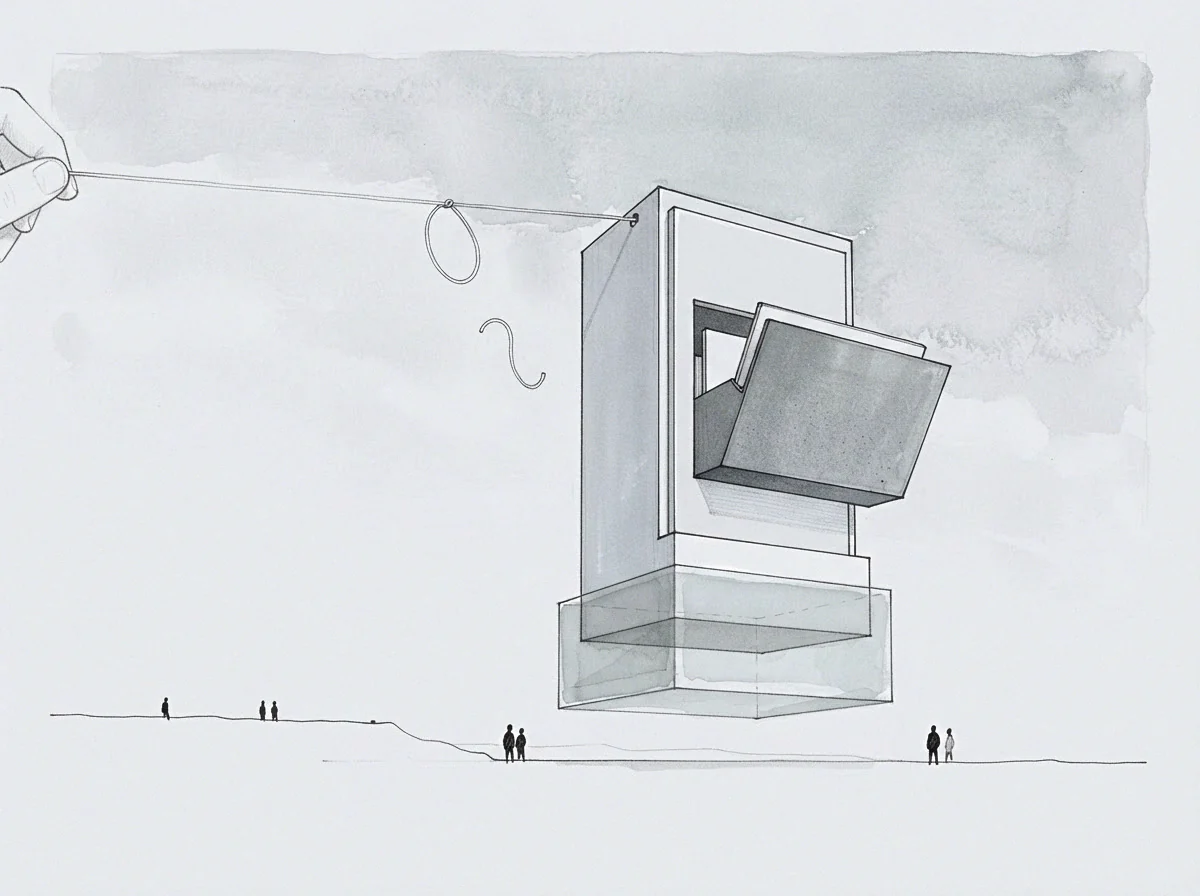
The final phase of operational succession requires intentional withdrawal of cognitive support. In developmental psychology, scaffolding represents the temporary assistance provided to a learner to master complex tasks, which must be systematically dismantled as competence develops. In small firm transitions, incumbents frequently maintain operational scaffolds indefinitely, intervening at the first sign of distress.
This constant rescue cycle prevents the successor from experiencing the true cognitive load of the operational leadership seat.
A clean transition enforces progressive boundary lines. During the initial quarter, the incumbent leads while the successor observes and debriefs. In the second quarter, the successor leads while the incumbent sits in the room as an advisor.
By the third quarter, the incumbent leaves the room entirely, reviewing outcomes only during scheduled weekly debriefs. The fourth quarter terminates informal debriefs, moving contact strictly to formal board-level governance. Each boundary shift transfers real enterprise accountability.
Operational extraction completes not when every judgment is written down, but when the successor exhibits the capacity to make sound operational trade-offs amid novel, undocumented uncertainty. The enterprise transitions from relying on the memories of an individual to relying on an empirical learning culture. The departure of the founder marks the boundary where history stops serving as an oracle and begins serving as a reference point for autonomous executive action.
The unresolved question remains whether an enterprise can fully divorce its operational efficiency from the idiosyncratic personality of its founder without sacrificing the speed and intuitive adaptability that permitted it to survive its earliest years.