
Decoupling Owner Decision Rights From Operating Seat Responsibilities In Early Firms
Decoupling owner decision rights from operating seats isolates capital governance from daily management, protecting operational autonomy during executive transitions.

Mandate
Early-stage companies routinely assign day-to-day operations and long-term capital allocation to the same individuals without defining where one role ends and the other begins. Equity distribution becomes an informal shorthand for operational command. Founders and large shareholders tend to assume their equity percentage grants direct oversight of daily expenditures, vendor selection, and hiring.
When corporate filings and bylaws fail to separate shareholder voting rights from management seats, operational friction builds quickly as headcount expands.

Authority Drift in Early Governance
Initial equity allocations often generate an unexamined assumption that share volume dictates everyday priorities, vendor relationships, and hiring decisions. Operating without formal board charters, founders confuse fiduciary shareholder rights with day-to-day line authority. A fifty-percent equity holder frequently assumes the right to override decisions made by an executive who holds no shares.
This confusion stems directly from relying on informal governance to manage daily operations.
Operational boundaries erode whenever decision rights go unspecified. A shareholder retains statutory rights covering board representation, share issuance, major asset sales, and dissolution. By contrast, an operating role holds authority over tactical work, day-to-day team oversight, and budget execution.
Blurring the two pushes operational questions into shareholder meetings, which stalls tactical work and confuses staff. Without a formal split, routine operational choices degenerate into informal consensus negotiations among owners.

Operational Veto Versus Capital Veto
Corporate governance draws a clear line between shareholder consent on equity issuance and managerial discretion over operational expenditure. Equity confers long-term voting rights at shareholder meetings and a claim on enterprise profits. An operating position carries the temporary authority to direct daily tasks within an agreed budget.
When shareholders retain an operational veto over daily decisions, operating managers lose the ability to execute strategy effectively.
Consider an early venture where two equity holders own equal share packages, but only one occupies an executive operating seat. Similarly, take two equity owners who built an enterprise for three years without formal job descriptions, where one owner holds sixty percent equity while the other acts as chief operating officer with forty percent equity. Assume the chief operating officer negotiates a vendor contract valued at fifty thousand dollars within the board-approved annual budget.
The majority shareholder attempts to cancel the contract based on share proportion rather than formal board authorization. That dispute reveals the structural confusion of un-decoupled roles. The operational manager holds administrative responsibility, yet the equity owner uses share volume to override daily execution.
Unclear boundaries between share ownership and operational execution result in administrative paralysis, manager departures, and reduced enterprise valuation.

Split
Dividing shareholder voting rights from executive functions requires explicit structural boundaries in the governance paperwork. Corporate charters and shareholder agreements must articulate where capital control stops and where managerial execution begins. That formal separation requires a board of directors that mediates between equity shareholders and executive managers, establishing clear financial thresholds for operational decisions.

Constructing Dual Tier Decision Architecture
A dual-tier governance model draws a firm line between capital rights and daily execution. The board of directors acts as the formal buffer between shareholders and daily operations. Shareholder consent remains restricted to statutory reservations, while operational authority rests fully with executive officers.
Silence in contracts creates administrative friction. To formalize this division, early firms establish explicit decision matrices. The table below outlines the structural division of decision authority between equity owner rights and executive seat responsibilities.
| Governance Metric | Owner Decision Rights | Operating Seat Responsibilities |
|---|---|---|
| Primary Source of Authority | Share capital and legal equity ownership | Board delegation and executive employment contract |
| Decision Scope | Statutory approvals, board election, charter amendments | Tactical execution, team management, operational spend |
| Financial Thresholds | Capital increases, debt above corporate limits, asset sales | Operating budgets, vendor agreements within approved limits |
| Performance Metrics | Return on invested capital, enterprise valuation growth | Key performance indicators, project delivery timelines |
| Dispute Resolution | Shareholder voting, buy-sell provisions, mediation | Executive escalation, board review, management replacement |
| Formal separation preserves executive operational autonomy while safeguarding shareholder equity protections. | ||
The structure outlined above prevents equity holders from interfering in day-to-day operations while preserving their fundamental rights as asset owners. Operating managers execute strategy without requiring shareholder approval for routine decisions.
Equity ownership grants claims on enterprise value, whereas operational seats grant authority over daily resource execution.
Failing to establish a dual-tier decision architecture introduces direct operational vulnerabilities. Founders frequently confuse owning an asset with running it. The breakdown typically surfaces in several common patterns when owner rights remain coupled to operating seats:
- Informal operational overrides occur when a majority equity owner cancels executive directives without board authorization, undermining manager credibility across the workforce.
- Capital allocation gridlock arises when operating decisions require unanimous shareholder approval, delaying time-sensitive market decisions.
- Executive seat atrophy develops when professional managers realize equity owners retain operational veto power, leading to reduced executive initiative and high managerial turnover.
- Governance ambiguity appears during client or vendor negotiations when third parties cannot determine whether an executive officer holds true binding authority.
A delegated operational expenditure threshold clause transfers vendor commitment authority to the chief executive while restricting shareholder intervention to annual capital budgets.

Wire
Formal reporting infrastructure stops owners from disrupting operational management through casual inquiries. Information channels must follow governance reporting lines rather than ownership proportions. When shareholders bypass executive channels to request operational data directly from junior staff, executive authority erodes and reporting discipline collapses.

Information Channels and Governance Reporting
Structuring corporate communications requires defined boundaries around information rights. Shareholders possess statutory entitlements to audited financial statements, annual reports, and major corporate disclosures. They do not possess statutory rights to daily Slack channels, internal project management boards, or raw operational data streams.
Restricting information access to formalized board updates protects managerial focus and prevents shareholder micromanagement.
When shareholders gain unrestricted access to operational information channels, informal authority lines emerge. Junior employees receive direction from major equity holders who hold no operational title, while managers find their operational directives questioned by owners relying on incomplete operational data. Establishing formal information wires ensures data moves upwards through executive reports to the board, where shareholder representatives evaluate enterprise health without disrupting daily execution.
Operational reporting follows board governance channels rather than informal equity owner communications.

Where does operational veto end under voting control?
Shareholder consent rights apply to fundamental corporate actions rather than daily supplier contracts. When equity owners hold majority voting control on the board, the boundary between owner oversight and operational veto grows fragile. Operating directors require clear parameters defining where board oversight ends and executive autonomy begins.
To preserve operational momentum, early companies implement formal delegation agreements. These documents specify that board members, including major equity holders, evaluate operational performance during scheduled board meetings rather than intervening in daily execution. Operational veto ends at the boundary of the board-approved annual strategy and spending budget.
Once the board approves a strategy and budget, the executive officer retains complete execution authority. If the board loses confidence in executive execution, its recourse is replacing the officer through formal governance procedures, not countermanding daily operational decisions.
An operational director requires explicit operational autonomy to make spending decisions without answering informal shareholder inquiries outside scheduled board reviews.

Chair
Transitioning daily leadership from a founding shareholder to an external manager requires detaching operational decisions from equity ownership. The physical seat of leadership demands full execution rights. Succession dynamics in early companies frequently fail because founding operators step down from executive titles while retaining informal veto power through equity holdings.
Successful handovers formalize the transition through explicit contractual sequences.

Succession Dynamics and Operator Handover
Replacing founding operators with hired executives demands formal protocols that transfer operational context alongside decision authority. The outgoing founder-operator must vacate operational communication channels, surrender direct line-management authority, and transition all operational relationships to the incoming executive. The handover sequence below outlines the step-by-step structural transition required during operator succession:
- Define executive seat scope, authority limits, and performance metrics within a written employment contract prior to recruitment.
- Establish board-approved operational expenditure limits that grant the new executive independent spending authority up to specified monetary thresholds.
- Publish an explicit corporate communications protocol notifying employees, vendors, and clients that operational authority rests exclusively with the incoming executive officer.
- Remove outgoing founding operators from operational management tools, internal communications systems, and daily approval workflows.
- Transition all direct operational reports to the new executive, rerouting daily approvals away from founding equity owners.
- Establish structured monthly board reviews as the sole formal venue for founding equity owners to evaluate operational performance.
Following this progression eliminates structural ambiguity throughout executive transitions. Handovers fail when steps are skipped or when founding owners maintain informal backchannels with staff. Executive authority demands clear structural boundaries.
Operational authority transfers completely when founding equity holders restrict governance intervention strictly to formal board meetings.
During the initial months of transition, an incoming executive enters a grip stage where operational authority is tested. Employees may attempt to escalate tactical decisions to founding equity owners. If founding owners entertain these escalations, the incoming executive loses authority and operational clarity breaks down.
Decoupled governance structures ensure that shareholder owners direct employee inquiries back to the incoming executive officer, reinforcing formal lines of reporting.
Operational seats retain authority through clear accountability metrics rather than founder equity proportions.

Residue
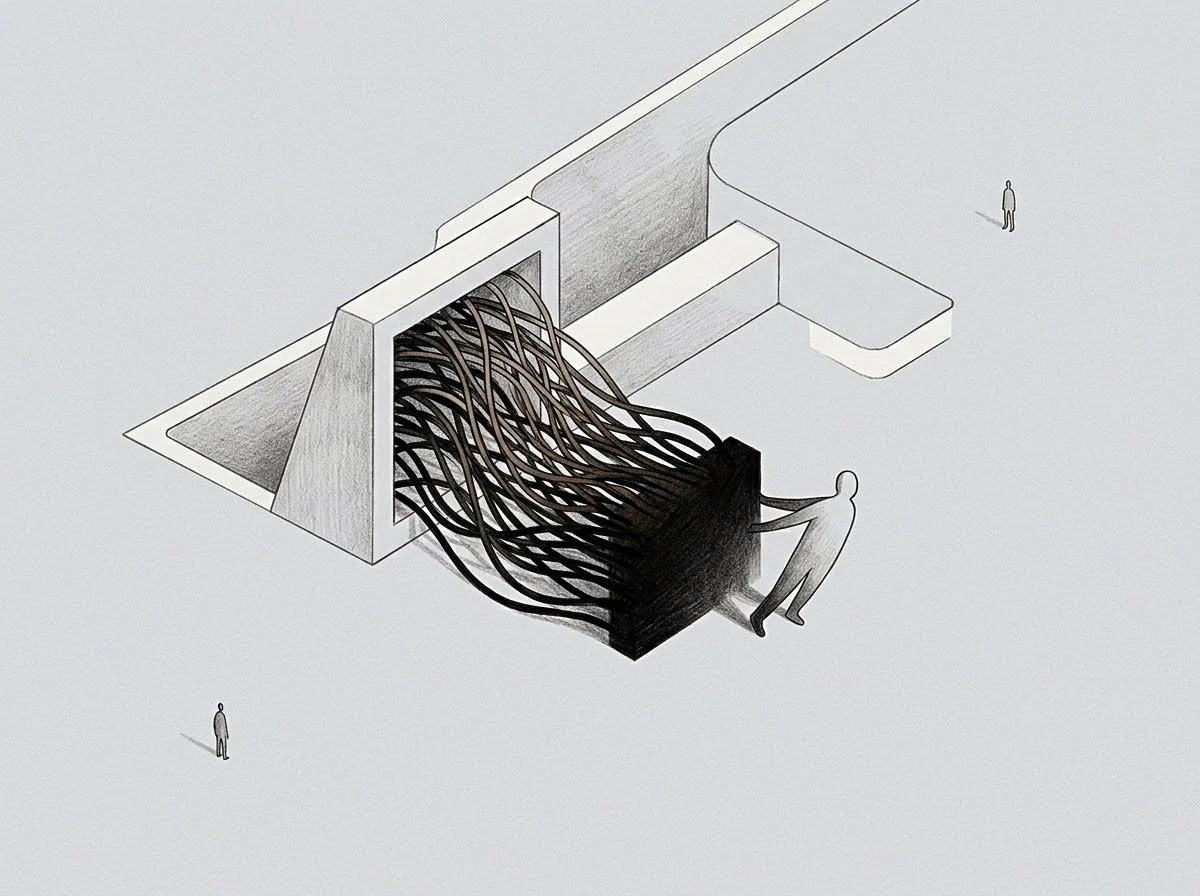
Transferring executive seats leaves informal relationship networks and unwritten procedural knowledge behind inside the organization. Founding operators accumulate deep tacit knowledge across early corporate development. When a founding operator vacates an executive seat to assume a non-executive board role, significant operational context remains un-codified, creating operational vulnerability for the incoming executive.
Un-Codified Tacit Knowledge in Equity Exit
Founding operators possess implicit operational know-how that resists manual documentation. Tacit knowledge includes deep historical context regarding early client negotiations, informal vendor arrangements, and intuitive problem-solving routines. When a founding operator departs daily execution, this unwritten knowledge stays with the individual rather than the organizational seat.
Firms attempting executive handovers often assume that operational documentation compensates for tacit knowledge loss. Written manuals capture explicit processes, such as software workflows or financial approval procedures. They fail to capture nuance, relational leverage, and historical memory.
The residue left behind requires structured knowledge transfer periods where incoming executives shadow outgoing founders during real operational situations rather than relying exclusively on procedural documentation.
Tacit operational knowledge remains with departing founders unless deliberately transferred through structured shadowing periods.

Retention of Founder Influence After Operational Departure
Departing executives who remain major equity holders exert informal power across enterprise culture. Even when corporate documentation formalizes the decoupling of owner rights and operating seats, social dynamics can undermine formal structures. Staff members who built early products alongside founding owners may continue seeking informal approval from non-operating shareholders.
This dynamic creates shadow governance. The incoming executive holds formal title and legal authority, yet informal influence remains anchored to founding equity holders. Mitigating shadow governance requires non-operating equity holders to actively decline operational intervention and publicly reinforce the sole authority of the operating executive.
Capital ownership reflects financial interest rather than management capability. Over time, enterprise culture shifts as the new executive establishes an operational track record and operational authority aligns fully with the official seat.
The degree to which an early firm can maintain client trust after a founding operator leaves daily management without destroying shareholder equity value remains an open structural question.