
Tacit Knowledge Codification Velocity During Owner Operator Leadership Succession
Tacit knowledge codification velocity measures the rate at which implicit founder heuristics convert into external scaffolding without losing operational fidelity.
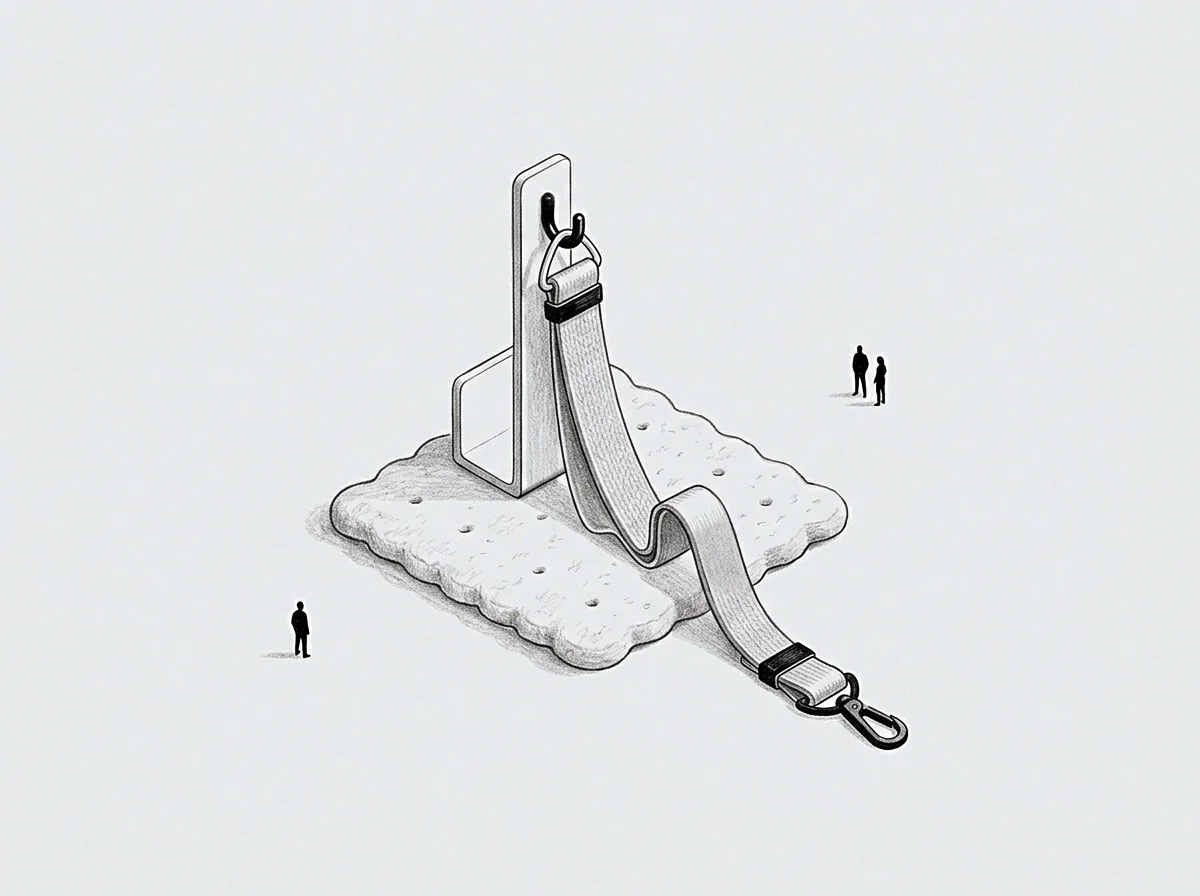
Friction
Procedural documentation captures static workflows, while codifying tacit knowledge extracts the unwritten decision rules governing choices under operational uncertainty. In owner-operator businesses, performance relies on condensed heuristics developed through years of direct risk exposure. During leadership succession, the objective is transferring these implicit habits to an incoming operator before the owner departs.
The speed of this transfer hits a ceiling imposed by cognitive processing limits, feedback loops, and situational complexity.

Procedural Mapping Versus Heuristic Extraction
Procedures list concrete actions in linear order, whereas heuristics dictate choices when inputs are incomplete, contradictory, or volatile. An owner-operator often applies these judgments without conscious articulation, treating complex pattern recognition as plain common sense. Converting that pattern recognition into explicit instruction requires drawing out steps that occur almost instantaneously inside an operator’s mind.
Attempts to accelerate this extraction by rapidly interviewing an owner yield fragmented rules that fail under novel operating conditions.
When succession timelines are compressed into short windows, the codification process routinely defaults to gathering static tasks rather than decision architectures. The incoming executive receives exhaustive checklists regarding daily routines, while the diagnostic criteria used to evaluate systemic risk remain locked within the founder’s instincts. The resulting gap creates operational vulnerability the moment unscripted market conditions force the successor to make high-stakes judgment calls without a documented decision scaffold.
Codification velocity reaches a structural barrier when implicit heuristics are forced into linear documentation without real-time operational validation.
The Velocity Ceiling in Knowledge Conversion
The rate at which tacit understanding converts into transferable schemas depends on how often diverse operational events occur during the transition period. Knowledge conversion cannot move faster than the business conditions that trigger specific heuristics. If a rare supply chain disruption occurs once every three years, the heuristic governing that event stays dormant, resisting extraction during a six-month handover window.
Attempts to simulate complex crises produce theoretical guidelines rather than tested operational capability.
Observational bandwidth also sets a hard limit on transfer speed. A successor sitting beside an owner absorbs subtle cues regarding vendor negotiations, tone adjustments, and risk tolerance. Processing these inputs requires cognitive space and immediate repetition.
Compressing this exposure into brief, intensive training blocks results in cognitive overload, where the successor retains verbal descriptions of behavior but loses the underlying conditional logic. Rushing this conversion phase systematically creates brittle leadership, where a successor executes documented instructions perfectly yet fails when operational variables deviate from recorded scripts.

Script
Translating implicit judgment into executable operational structures requires specific codification artifacts designed to bridge the gap between observation and independent authority. Rather than relying on unstructured shadowing or passive manual writing, effective knowledge transfer uses active diagnostic scaffolds. These tools force the outgoing owner to externalize internal criteria while prompting the incoming leader to apply those criteria under direct supervision.

Scaffolding Mechanisms for Implicit Decision Rules
A primary artifact in high-velocity transfer is the real-time decision log. During active operations, the incoming leader records every non-routine decision made by the owner, along with observed variables, stated options, and the ultimate choice. At the end of each operational day, the owner reviews this log to insert unstated variables: the subtle tone in a client’s voice, historical vendor reliability, or liquidity reserves not visible on the balance sheet.
This structured debriefing shifts tacit pattern recognition into explicit conditional statements, systematically constructing an actionable decision model.
As transfer progresses, the scaffold reverses direction through paired execution. The incoming leader assumes decision-making responsibility for defined operational areas while the outgoing owner observes in silence, intervening only when actions exceed pre-established risk thresholds. This paired framework exposes discrepancies between documented rules and actual practice, revealing where the successor misinterprets written guidance or where the founder’s implicit preferences contradict official manuals.
Scaffolding structures transfer decision authority by systematically forcing the externalization of unstated operational variables during live operations.

Extraction Failure Modes
Systematic failures occur during knowledge extraction when formalization attempts strip operational context from implicit routines or attempt to automate dynamic judgment. The following breakdown details how extraction efforts collapse during high-pressure succession windows.
- Diagnostic abstraction gap occurs when written runbooks document surface-level administrative tasks while omitting the underlying diagnostic criteria required to evaluate operational anomalies.
- Over-codification of dynamic variables converts flexible owner judgment into rigid organizational protocols, reducing strategic adaptability in changing market conditions.
- Implicit context suppression strips historical relationship nuances and unwritten governance agreements from operational manuals, leading to critical missteps by incoming leadership.
- Asymmetric feedback distortion arises when outgoing owners approve successor decisions during passive reviews but intervene behind the scenes to rectify emerging errors.
An extraction strategy must balance formalization with operational adaptability. Where an owner insists on documenting every minor variation, the succession process stalls under administrative weight. Where documentation remains excessively broad, the successor faces authority paralysis.
The active decision protocol clause defines the precise boundary conditions under which explicit written rules override owner discretion, preventing ongoing subjective intervention by departing leadership.

Folder
Operational artifacts form the tangible residue of the codification process. Manuals, shared directories, decision trees, and process logs sit on desks and server drives, representing the formal effort to institutionalize owner capability. However, completed documentation often creates a false sense of security during the transitional phase known as the grip stage, where the successor holds formal responsibility but lacks deep implicit fluency.

Operational Artifacts and the Grip Stage
During the grip stage, the physical or digital folder containing operational protocols becomes the primary crutch. Successors rely on these written artifacts to navigate unfamiliar situations. When written guidance fails to account for a novel operational edge case, the successor either pauses operations to consult the departing founder or makes an unguided decision that breaches implicit organizational boundaries.
The efficacy of transfer artifacts varies sharply based on the codification method selected during succession. The following comparison details four distinct transfer mechanisms across core operational metrics.
| Codification Method | Transfer Velocity | Tacit Retention Rate | Operational Disruption | Cognitive Strain |
|---|---|---|---|---|
| Explicit Runbooks | High | Low | Low | Low |
| Scaffolding Protocols | Moderate | High | Moderate | High |
| Shadow Execution | Low | Moderate | High | Moderate |
| Direct Observation | Very Low | High | Low | Very High |
The comparative data illustrates a fundamental trade-off. Standard explicit runbooks achieve high velocity and low disruption, but fail to retain high-value tacit knowledge. Scaffolding protocols demand significant cognitive strain and induce moderate operational disruption, yet deliver superior tacit knowledge retention across complex operational domains.
High codification velocity achieved purely through explicit runbooks produces brittle operational continuity that collapses under novel environmental stress.
Reliance on static folders without active application creates passive compliance rather than operational mastery. The departing owner sees completed manuals and assumes capability exists, while the successor holds documents explaining past actions without clarifying how to adapt them tomorrow. The incoming operator finds that while the folder specifies every system setting, it omits the rationale behind those configuration choices.
Tempo
Transfer velocity must be governed by capacity arithmetic rather than arbitrary calendar dates. An owner-operator possesses finite cognitive bandwidth during a transition, split between running daily operations and externalizing implicit knowledge. At the same time, the incoming leader operates under heavy cognitive load, absorbing enterprise culture, industry nuances, team dynamics, and operational mechanics.
Attempting to force full knowledge transfer into a condensed window risks structural failure.
Capacity Arithmetic of the Succession Phase
Managing the tempo of knowledge codification requires a strict allocation of weekly capacity. An owner spending eighty percent of working hours on direct client service or production troubleshooting retains zero capacity for systematic debriefing or scaffolding creation. The succession timeline must explicitly mandate a progressive reduction in operational duties, converting those freed hours directly into structured transfer sessions.
The structured timeline moves through discrete operational phases, each demanding distinct capacity investments from both outgoing and incoming leaders.
- Establish baseline operational mapping through direct observation, spending twenty percent of transition capacity on explicit documentation while maintaining full operational continuity.
- Initiate structured scaffolding protocols, reallocating fifty percent of owner capacity toward supervised decision-making and daily decision-log debriefs.
- Execute full operational shadow management, transferring eighty percent of primary authority to the successor while maintaining owner presence solely as an emergency backstop.
- Withdraw owner presence completely, leaving defined communication protocols for off-site escalation during the final validation period.
Pacing the transfer sequence prevents burnout and enables cognitive consolidation. Accelerating through these stages without meeting explicit performance criteria introduces severe operational risks. If stage two is truncated due to external time pressure, the successor takes full authority without having validated implicit heuristics under supervision.
A succession timeline governed by fixed calendar dates rather than empirical decision-competence metrics guarantees unmitigated operational risk exposure.
Successful execution requires measuring transfer velocity by verified heuristic absorption rather than elapsed weeks. Progression through the sequence demands that the successor independently execute dynamic decisions within an acceptable error margin. Transition tempo balances operational stability against transfer depth, ensuring leadership remains firm under new management.
Residue
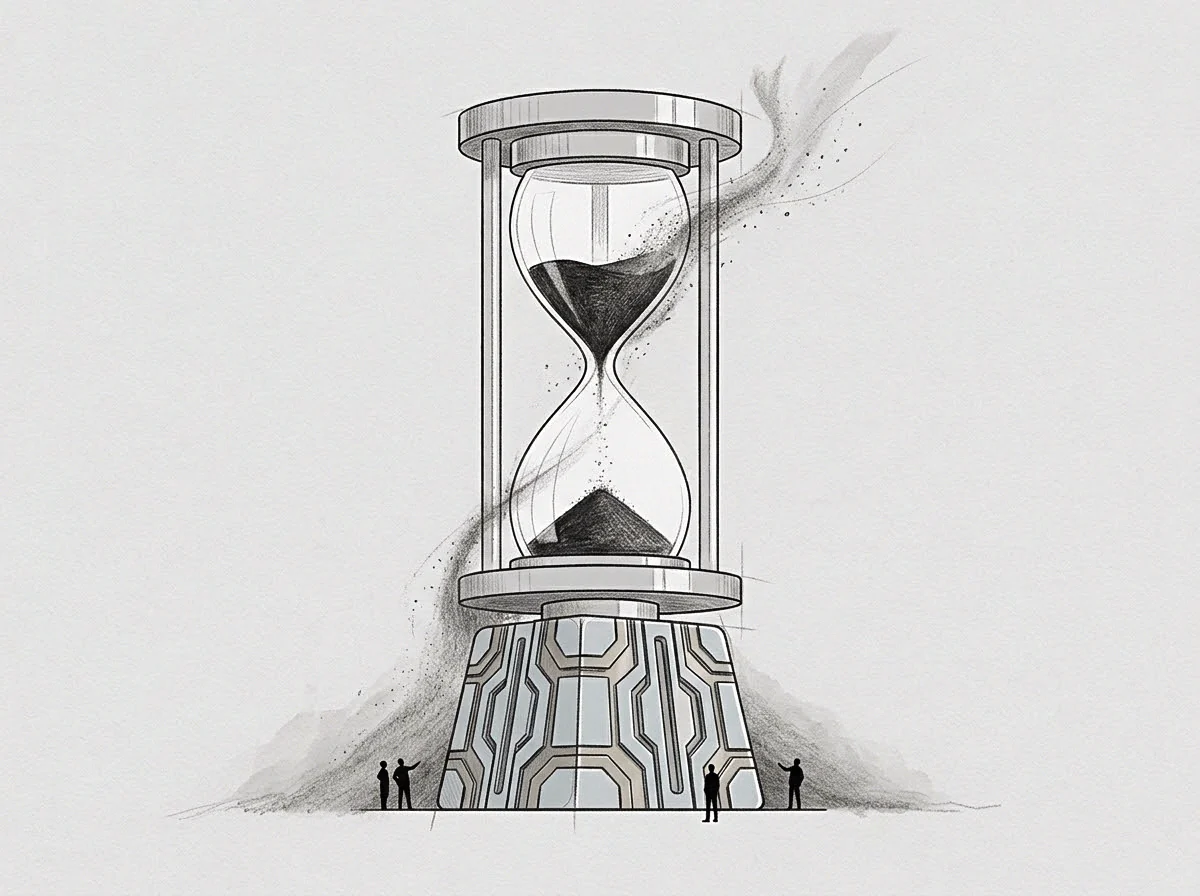
Regardless of the duration, resources, or scaffolding models applied during succession, a distinct portion of owner-operator capability remains uncodifiable. This non-transferable residue consists of deeply internalized taste, long-term personal trust networks, subjective aesthetic judgment, and idiosyncratic risk appetites forged through decades of personal exposure. Systems cannot capture this residue because it does not exist as logical rules or repeatable steps.
Non-Transferable Implicit Taste
Strategic intuition often operates below the level of conscious thought. An owner-operator senses an impending market shift based on subtle, aggregate signals across decades of industry exposure that cannot be synthesized into a software dashboard or training manual. When the owner exits, this early-warning radar leaves the room.
Organizations that expect new leadership to replicate founder intuition precisely experience disappointment, as the successor’s choices stem from different experiences and cognitive models.
Personal relationships between an owner-operator and key stakeholders also contain tacit commitments that resist formalization. Key suppliers, major clients, and primary lenders often hold informal arrangements built on personal trust rather than corporate legal contracts. Transferring these networks requires direct socialization rather than explicit documentation.
The successor cannot simply inherit these ties through a client folder; relational trust must be re-earned through performance over time.
Does Full Codification Destroy the Owner Operational Edge?
An enduring dispute in organizational governance centers on whether hyper-formalizing owner-operator judgment inherently neutralizes a firm’s competitive advantage. Standardizing implicit heuristics into explicit rules can eliminate the speed, agility, and non-standard problem-solving that defined the founder’s market success. By transforming fluid, intuitive responses into fixed workflows, the enterprise risks converting its core capability into a commoditized operational manual that competitors can imitate.
The challenge lies in determining which elements of owner judgment require systematic codification and which must be allowed to evolve or expire. Attempting to capture every nuanced preference leads to organizational rigidity, where incoming leaders become caretakers of historic habits rather than dynamic operators capable of driving future growth. Designing the exit demands clear recognition that the successor will not operate as an identical clone of the founder.
The enterprise must accept the permanent loss of non-transferable residue, granting the incoming leader authority to establish new heuristics suited to evolving market conditions.
The succession sequence finishes when the scaffold is entirely dismantled, leaving the new operator with sole accountability for the enterprise’s trajectory. What remains unwritten becomes the space where new leadership establishes its own operational identity, proving that the enterprise has transitioned from an owner-dependent structure into an institutional asset.