
Pre Existing Intellectual Property Reverse Vesting Rights
Reverse vesting subjects stock issued for contributed assets to company repurchase options triggered when operational service terminates prematurely.

Contribution
Equity issued for past creation differs from equity issued for future labor. When an engineer brings a completed software engine, trained statistical weights, or a patented physical mechanism into an enterprise, that asset exists prior to incorporation. Legal formation requires transferring title from the individual to the corporate entity through an intellectual property assignment agreement.
Corporate attorneys representing incoming venture capital routinely bundle this assigned property with future operational obligations, attaching a restricted stock purchase agreement across the entire position and subjecting all shares to four-year time-based vesting. The transaction converts an outright purchase of proprietary property into conditional compensation for future employment.
Title transfers the moment signatures dry on the contribution contract, placing ownership of the patents, repositories, and trade secrets directly with the company. In exchange, the technical creator receives restricted shares subject to repurchase rights. If that person departs after twelve months, the standard arrangement permits the company to claw back seventy-five percent of those shares at par value, which is usually a fraction of a penny.
The company retains one hundred percent of the contributed technology, while the creator leaves without three-quarters of the equity payment and without the technology that originated the enterprise.
A transfer of proprietary property establishes corporate title immediately while standard reverse vesting delays the consideration for that property across years of future labor.

Assignment Versus Restrictive Covenants
Transfer instruments define the boundary between personal holdings and corporate capital. A clean intellectual property transfer document requires explicit schedules identifying every repository, domain name, architecture diagram, and patent filing transferred into corporate custody. Incoming capital requires unencumbered title so that third-party claims cannot cloud valuation or licensing capabilities later.
When corporate counsel insists on placing all equity under a single vesting schedule, they conflate two distinct corporate actions: buying an existing asset, and securing future labor through retention hooks.
Separating these transactions requires distinct documentation. A corporate entity can purchase pre-existing intellectual property using fully vested common stock, promissory notes, or preferred instruments designated specifically as consideration for the transfer. Future executive or engineering work is then governed separately by an employment agreement or restricted stock agreement carrying standard vesting schedules.
Mixing both purposes inside one restricted stock purchase agreement exposes the creator to structural forfeiture, because once the assignment instrument is executed, title remains with the company regardless of executive tenure.

Stock Purchase Agreements At Formation
Formation paper establishes the legal mechanics of share ownership and forfeiture. When restricted stock purchase agreements include pre-existing intellectual property under standard repurchase schedules, they create an asymmetric exchange. An engineer delivers tangible software code on day one, while the enterprise grants promissory control over shares that mature month by month.
If interpersonal friction or governance disputes force an early resignation, the corporate entity exercises its repurchase option against all unvested equity.
The enterprise justifies this arrangement by asserting that early-stage technology holds nominal enterprise value without continuous operational execution. From this perspective, the code repository is an unfinished raw material whose utility depends on years of active maintenance. Yet assigning absolute title strips the original creator of defensive alternatives: the builder can neither fork the project nor license the architecture elsewhere.
The company keeps the software foundation without satisfying the economic purchase price originally calculated for its acquisition.
Every dollar of equity granted at formation carries an obligation of continuous physical attendance under standard venture documents.

Seat
Holding equity as an asset owner is distinct from occupying an executive station. An owner seat reflects capital, assets, or property delivered permanently to the corporate balance sheet. The operator seat demands sixty hours every week managing staff, answering customer tickets, and writing production code.
When an individual occupies both seats simultaneously, corporate documents frequently blur the boundary between them. Reverse vesting functions as a governance leash designed to bind the operator to the daily tasks of the enterprise.
By signing the repurchase agreement, the operator binds asset-owner standing to day-to-day employment status. If the board of directors terminates the executive, the termination event immediately cascades into the capitalization table. The unvested equity tied to the initial intellectual property contribution is cancelled or repurchased at par value for pennies.
The enterprise extracts the operational labor while retaining the underlying technical property.
The person who supplies the foundational machine pays for operational conflict with the ownership of that machine.
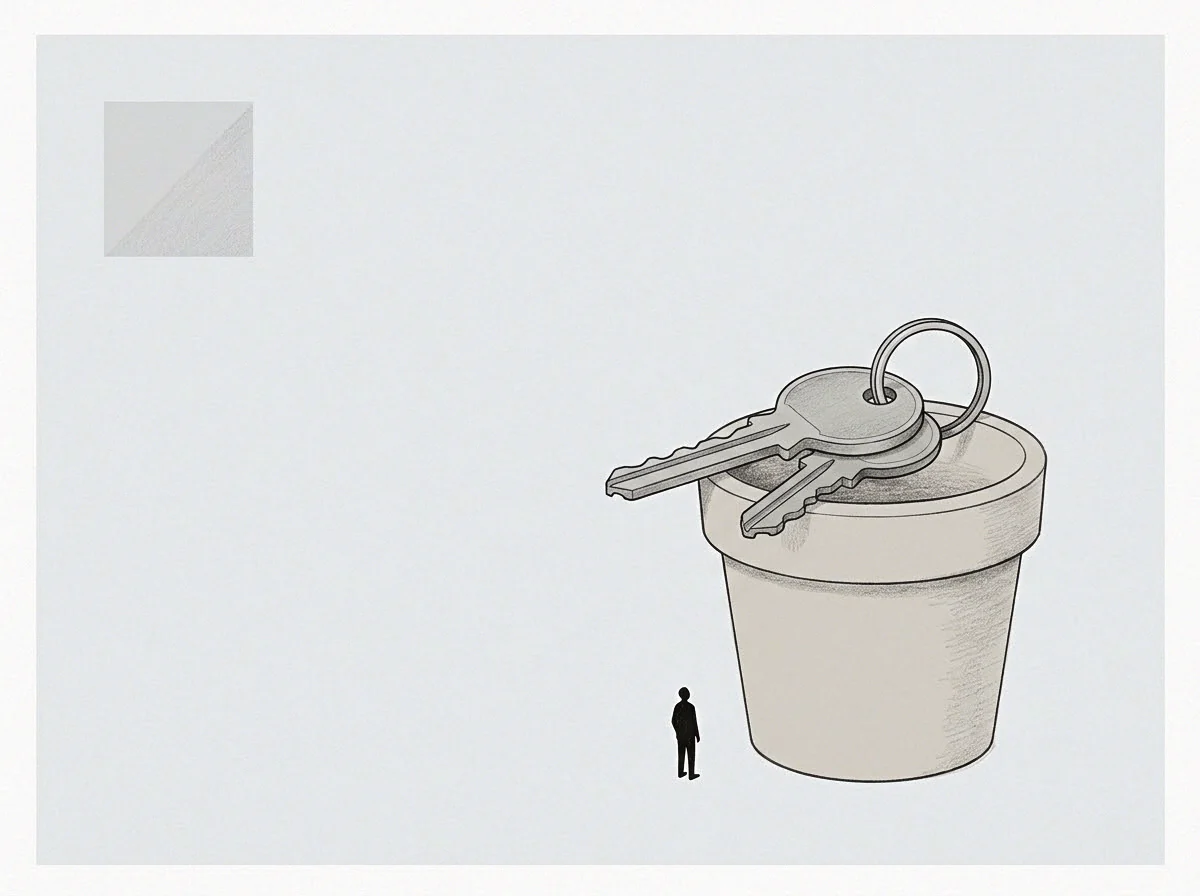
Division Between Creator And Executive
Treating technical originators solely as replaceable employees destabilizes founding teams. When an engineer delivers proprietary assets, the fair market value of those assets represents an upfront contribution to company capital. If the enterprise had bought those assets from an external supplier, the vendor invoice would demand immediate settlement via cash or unrestricted securities.
No corporate buyer expects a third-party vendor to forfeit payment if that vendor refuses to accept an executive employment contract following the sale.
The corporate structure imposes this burden almost exclusively on founders. The technical founder signs standard papers containing automatic repurchase options because corporate conventions mandate four-year retention locks. A founder who understands the difference between the owner seat and the operator seat negotiates distinct paper for each function:
- Vested Asset Common represents permanent, non-forfeitable shares issued strictly as payment for assigning pre-existing intellectual property, protected from repurchase upon operational departure.
- Restricted Incentive Shares constitute the unvested portion of equity reserved for future technical execution, subject to typical four-year vesting and one-year cliff conditions.
- Perpetual Commercial Licenses remain in reserve as an alternative path where the creator licenses the pre-existing code to the entity rather than executing a total title transfer.

Capital Allocations For Prior Work
Valuing code written before incorporation requires practical assessment. Teams frequently disagree on what percentage of the initial capitalization table should reflect pre-existing assets versus future labor. An engineer who spent three years building an enterprise-grade compiler brings substantially more balance-sheet value than an operator who spent two weekends drafting a presentation deck.
If both receive equal common equity splits subject to identical four-year reverse vesting, the mechanical contribution of the engineer is subordinated to the future labor schedule.
When identical vesting schedules govern unequal prior contributions, the partner providing purely future operational work gains an unearned advantage over the partner who provided completed property. If both exit after twelve months, both retain twenty-five percent of their shares. The partner who contributed only twelve months of management effort walks away with a quarter of the business, while the engineer who contributed three years of engineering plus twelve months of management walks away with identical equity.
The prior work was consumed without economic protection.
Equity granted for property delivered on day one stays immune from calendar-based forfeiture.

Forfeiture
Repurchase terms take effect the day an operational relationship breaks down. When a technical founder departs or is removed by board vote, the restricted stock purchase agreement governs how unvested shares are recovered. The enterprise exercises an option to repurchase unvested shares at the lower of original purchase price or fair market value.
Because original purchase price at incorporation is typically 0.0001 dollars per share, the company recaptures substantial equity ownership for negligible cash outlay, leaving the creator with zero residual license.
The creator leaves the enterprise stripped of both stock and tooling while the company enforces nominal repurchase options. The proprietary intellectual property remains locked inside the corporate balance sheet, shielded by the assignment contract executed at formation. The creator cannot reuse the software architecture, cannot access proprietary codebases, and cannot build adjacent products without risking copyright and trade secret litigation from the very entity they created.
A standard corporate repurchase clause extinguishes equity compensation while preserving absolute title over contributed property.

Which Repurchase Terms Strip The Underlying Asset?
The definition of separation terms dictates whether an individual keeps anything from foundational work. Restricted stock purchase agreements establish distinct treatment based on whether an executive departs voluntarily, faces termination without cause, or is discharged for cause. In hostile board environments, the boundary between these categories becomes a legal dispute.
If a technical creator is ousted over product roadmap disputes, aggressive company counsel often characterizes the separation to trigger maximal equity forfeiture.
Vested percentages stay with departing personnel while unvested shares return to the corporate treasury. The table below illustrates how different legal arrangements treat pre-existing intellectual property when an operator departs two years into a four-year reverse vesting arrangement.
| Arrangement Type | Contributed IP Ownership | Retained Equity Share | Residual Operational Rights |
|---|---|---|---|
| Standard Universal Reverse Vesting | One hundred percent company owned | Fifty percent of total grant | Zero rights to code or architecture |
| Bifurcated Grant With Upfront Vested Pool | One hundred percent company owned | Seventy-five percent of total grant | Zero rights to code or architecture |
| Assignment With Springing Exclusive License | Company owned during enterprise solvency | Fifty percent of total grant | Exclusive commercial license reverts to creator |
| Perpetual Non-Exclusive Commercial License | One hundred percent creator owned | Fifty percent of incentive grant | Creator can deploy core engine in other ventures |
The assignment survives operational resignation. Under universal reverse vesting, the enterprise holds all advantages: it retains the operational asset, eliminates half the capitalization liability, and prevents the creator from competing in the market using their own inventions.

Mechanical Loss Of Proprietary Code
Corporate records show little mercy to departing technical architects. When restricted stock agreements lack carveouts for prior intellectual property, the loss is total. The engineer signs away rights to foundational algorithms, repository commit history, and technical designs.
In extreme situations, the engineer cannot even reference design schematics drafted prior to corporate formation, as these materials were folded into the omnibus assignment exhibit.
This dynamic shifts leverage entirely toward non-technical co-founders and early investors during disagreements. When an operator recognizes that resignation forfeits unvested equity while leaving the core asset behind, the seat becomes untenable. Remaining incurs mounting operational strain, while leaving surrenders years of accumulated inventions for near-zero compensation.
Failing to protect contributed assets at formation leaves the creator with neither equity nor the legal right to work on their own inventions after termination.

Reversion
Protective deal structuring introduces contractual mechanisms that pull property back to the inventor upon separation. Instead of accepting universal four-year reverse vesting across all shares, experienced founders insist on conditional assignment structures. These legal mechanisms establish that if the company terminates the founder without cause or repurchases unvested shares, the intellectual property assignment alters its legal character.
The company either pays a predefined fair market balance or returns technical usage rights to the originating engineer.
The company receives commercial rights during the founder tenure. When that tenure ends prematurely, specific contractual remedies can activate automatically. These terms are negotiated inside the initial asset contribution agreement before investor capital enters the bank, because institutional investors uniformly resist any encumbrance on corporate technology assets once funding is completed.
A reversion term converts an unconditional property transfer into a bilateral exchange that binds corporate retention to fair compensation.

Springing Exclusive Licenses Upon Separation
A springing license alters corporate intellectual property ownership based on defined operational triggers. Under this arrangement, the founder assigns the pre-existing code to the corporation at formation. The transfer contract states that if the corporation exercises its reverse vesting repurchase option against unvested shares, the corporation automatically grants a worldwide, perpetual, royalty-free license back to the founder for the underlying software.
This license allows the founder to deploy the architecture in distinct commercial fields.
This structure protects both parties during the early lifecycle of the business. The enterprise maintains unrestricted freedom to operate, develop products, and raise venture capital without clouding asset ownership. If the relationship remains intact through the full vesting period, the springing license expires entirely, leaving the corporation with absolute, permanent ownership.
Implementing this structure requires three distinct drafting safeguards:
- Field-Of-Use Restrictions separate company markets from the founder future pursuits, ensuring the reverted license cannot be used to compete directly against the primary enterprise.
- Solvency Prerequisites mandate that springing rights take precedence over general creditor claims only to the extent permitted by applicable bankruptcy statutes.
- Trigger Verification Timelines establish explicit thirty-day notice windows before unvested stock repurchases trigger automatic license execution.

Carveout Provisions For Inventions
A simpler alternative relies on bifurcating equity consideration at incorporation. The founder assigns the pre-existing intellectual property in exchange for an upfront tranche of fully vested common stock representing thirty to forty percent of their total allocation. The remaining sixty to seventy percent of equity is designated as restricted operational stock subject to a standard four-year schedule with a one-year cliff, tying unvested equity directly to continuous service.
The upfront vested shares compensate the founder for the tangible property delivered to the corporate entity on day one, while the restricted vesting shares incentivize continuous technical and executive labor. If the founder departs after eighteen months, the enterprise repurchases only the unvested portion of the operational grant. The founder retains both earned operational shares and the entirety of the property-purchase shares.
The corporate balance sheet maintains clean, unencumbered ownership of the technology, satisfying subsequent investor due diligence without exposing the inventor to complete loss.
The assignment agreement stipulates that repurchase of unvested shares leaves fully vested intellectual property consideration shares untouched in the founder possession.

Release
Separation negotiations present the final point where intellectual property claims and reverse vesting schedules can be untangled. When an executive or technical creator separates from a corporate entity, the parties execute a formal separation and release agreement. This document supersedes earlier operational contracts, settles outstanding wage claims, and defines the final capitalization posture of the business.
In many instances, the departure agreement modifies the rigid terms of the original restricted stock purchase contract.
Founders routinely surrender prior software patents to secure clean releases from non-compete clauses, non-disparagement covenants, and restrictive intellectual property claims. If the technical creator departs under contentious circumstances, company leadership often uses the threat of intellectual property litigation to extract the founder remaining vested equity. The departing builder evaluates the real commercial value of retaining a minority non-voting stake against the freedom to deploy technical capabilities in a new venture.

Terminal Separation Agreements
Final documentation can release company claims over non-core technical components. While an enterprise will not release title to its central commercial engine, secondary tooling, internal developer utilities, and tangential algorithms created prior to incorporation can be carved back to the departing engineer. A negotiated separation agreement can assign these peripheral repositories back to the founder in exchange for surrendering disputed shares or agreeing to accelerated repurchase timelines on unvested stock.
This trade offers tangible value to both participants. The enterprise reclaims equity pool capacity to recruit a replacement engineering executive, while the departing founder walks away with functional tooling that accelerates their next venture without infringing on corporate rights. The transaction transforms a punitive reverse vesting repurchase into an orderly division of property.
Founders who fail to negotiate these points during departure leave their inventions behind and hold minority shares that may never reach liquidity.
A corporate entity loses enterprise value when foundational technology is permanently alienated from the engineering talent that created it.