
Allocating Founder Hours Across Early Stage Technical Roles
Early stage technical performance depends on isolating deep development blocks from operational management, preventing context switching from eroding platform architecture.
Hours
Early stage technical execution requires a precise inventory of time rather than a vague commitment to effort. When one person manages system design, feature development, and engineering administration simultaneously, weekly availability splits across distinct working modes. The primary technical seats occupied in this phase comprise individual software contribution, engineering operations management, and platform architecture design.
Each seat demands a distinct cognitive orientation and temporal structure.
An individual contributor seat demands extended, uninterrupted blocks of deep focus. Writing production code, debugging kernel drivers, or implementing complex algorithm pipelines cannot occur in fifteen-minute intervals between operational syncs. Conversely, the engineering manager seat functions through active communication, sprint prioritization, pull request reviews, and external team alignment.
The platform architect seat operates on systems evaluation, security posture planning, vendor selection, and long term technical positioning. Unmeasured mixing of these responsibilities produces continuous cognitive disruption.
A technical seat allocated in scattered fragments functions as an interruption rather than capacity.
Time tracking data across early software builds reveals that context switching carries a compound operational penalty. Transitioning from high-level architecture decisions to micro-level syntax fixations drains working memory. The cognitive recovery period following an operational interruption averages twenty-three minutes before deep concentration resumes.
A weekly schedule fragmented by frequent context switches reduces total output capacity by thirty to forty percent.

The Tripartite Division of Technical Capacity
Effective weekly distribution separates the schedule into dedicated focus days and operational windows. Individual engineering tasks cluster into full-day or half-day blocks free from synchronous messaging. System architecture evaluation occurs during quiet windows, while managerial syncs, code reviews, and vendor discussions consolidate into dense, scheduled intervals.
This structure preserves cognitive continuity for primary development tasks.
A functional operational split assigns fixed percentages of weekly capacity based on team composition. In a two-person founding engineering setup, individual technical contribution demands sixty percent of weekly effort. Architectural direction consumes twenty percent, leaving twenty percent for administrative and operational coordination.
As non-founder engineers join the team, the allocation shifts systematically toward architectural governance and engineering operations.

Context Switching and the Fractional Hour Penalty
Dividing a single workday across three different technical seats creates fractional hours that yield negligible progress. A sixty-minute block wedged between team standups and client calls rarely produces clean production code. Instead, these fragmented hours accumulate into hidden fatigue while primary features stall.
Establishing clear daily boundaries protects high-value execution blocks.
The operational cadence must align with technical milestones rather than immediate external requests. Responding to routine alerts or minor pull requests during core development windows destroys momentum. Successful schedule allocation treats deep development time as an unalterable operational commitment.
A schedule dividing technical effort among competing priorities without explicit block boundaries defaults to reactive triage.

Forge
Building core features directly tests early engineering decisions against real runtime constraints. The immediate demand to deliver working software often forces trade-offs between rapid feature deployment and sound structural design. When individual coding responsibilities consume all available energy, system architecture becomes an afterthought.
Technical debt accumulates silently beneath rapid feature delivery.
Writing production code generates direct feedback through compilation passes, unit testing, and deployment verification. This immediate feedback loop makes software construction deeply engaging compared to abstract architectural planning or organizational management. Consequently, technical contributors naturally gravitate toward immediate coding tasks, neglecting broader system boundaries and long term maintainability.

Production Code and Long Term System Boundaries
Architectural decisions made during early feature development establish permanent operational boundaries for the software platform. Database schema selections, API contract formats, and asynchronous processing choices dictate system scalability for years. Neglecting these foundational choices to meet arbitrary short-term feature goals introduces severe structural fragility.
A technical lead who remains entirely absorbed in daily feature tickets loses sight of overall system performance. Platform components become tightly coupled, microservices proliferate unnecessarily, and testing harnesses degrade. Balancing execution with architectural oversight requires deliberate scheduled exits from daily bug lists.
When immediate features consume available engineering capacity, long term architectural decisions collapse into reactive corrections.

Structural Failure Modes in Technical Execution
Unbalanced focus across engineering roles exposes the codebase to specific recurring operational pathologies. Identifying these patterns early allows technical leaders to reallocate focus before major system failures occur.
- The Maintenance Trap describes a state where legacy bug fixes and minor patches consume total weekly availability, leaving zero capacity for new platform capabilities.
- The Architecture Vacuum occurs when continuous rapid feature coding proceeds without unified system design standards, resulting in duplicate services and inconsistent data schemas.
- The Local Maxima Bias manifests when a developer spends weeks optimizing isolated subroutines while ignoring massive infrastructure inefficiencies sitting higher in the stack.
- The Review Bottleneck arises when a single engineer insists on personally inspecting every line of code without establishing clear review delegates or automated linting gates.
System stability requires continuous alignment between daily pull requests and overarching platform guidelines. Continuous automated testing, explicit API documentation, and weekly architecture reviews prevent small implementation shortcuts from destabilizing the broader application.
The code repository reflects the exact distribution of hours spent designing system boundaries versus patching immediate symptoms.

Desk
Administrative engineering duties accumulate quietly alongside daily feature development. Managing continuous integration pipelines, reviewing third-party pull requests, triaging error logs, and coordinating staging deployments represent substantial operational effort. This labor often remains invisible because it occurs between major milestone deliverables.
Engineering operations demand active structure to prevent administrative work from dominating weekly routines. Without explicit limits, triaging non-critical bug reports can easily absorb an entire morning. Establishing clear protocols for issue prioritization protects core development hours from continuous erosion.
Tacit Engineering Operations and Uncounted Labor
Uncounted operational labor represents a primary source of schedule collapse in early technical teams. Onboarding new tools, updating dependencies, managing cloud access permissions, and investigating intermittent test failures consume hours that never appear on product roadmaps. Acknowledging this invisible workload is essential for setting realistic engineering velocity targets.
The table below summarizes how working capacity, context switching overhead, and administrative demands vary across the three primary technical positions occupied during early platform builds.
| Technical Seat | Primary Work Governed | Switching Penalty Level | Tacit Labor Footprint | Failure Signature |
|---|---|---|---|---|
| Individual Contributor | Feature development, bug remediation, unit test creation | Severe (20-30 min focus loss per interruption) | Low (primarily dependency updates and build fixes) | Unfinished feature branches and incomplete test suites |
| Engineering Manager | Sprint planning, code reviews, developer onboarding, process logistics | Moderate (frequent minor context pivots) | High (continuous triage, access management, ticket hygiene) | Delayed code reviews and team communication bottlenecks |
| Technical Architect | Database modeling, security infrastructure, vendor evaluation, system topology | High (requires deep multi-hour synthesis blocks) | Medium (documentation, vendor vendor negotiations, standards) | Brittle system couplings and scaling bottlenecks |
When Does Technical Execution Prevent Product Delivery?
Concentrating exclusively on internal code perfection can actively delay commercial release. Engineering teams frequently over-engineer backend infrastructure to support non-existent scale, adding months of unneeded development. Technical choices must serve near-term operational objectives rather than hypothetical performance targets.
A technical seat that remains unpriced in weekly capacity statements converts tacit engineering labor into unexplained fatigue.
Pragmatic engineering sets explicit standards for acceptable code quality, automated coverage, and architectural complexity. Refactoring clean, functional modules simply to implement novel design patterns drains vital engineering capacity without adding product value.
Stating an explicit upper cap on weekly administrative triage hours limits operational expansion and forces immediate delegation of routine infrastructure tasks.
Cost
Role strain emerges when a single engineer attempts to hold conflicting operational responsibilities simultaneously. The individual contributor seat demands deep concentration, minimal interruption, and local optimization. The engineering management seat demands immediate responsiveness, task distribution, and broad coordination.
Operating in both modes simultaneously induces severe cognitive fatigue and reduces overall efficiency.
Consider a typical early-stage technical environment built around two co-founders over an eighteen-month development cycle. Assume the platform involves a distributed cloud system with real-time data ingestion requirements. In standard operations without explicit role boundaries, the lead technical founder spends forty hours weekly on immediate feature tickets, fifteen hours on reactive infrastructure triage, and ten hours on team alignment and vendor management.
Total working time reaches sixty-five hours weekly, yet long-term architectural planning receives zero dedicated blocks.
Contrast this with a structured allocation model applied to the same scenario. The technical lead establishes an explicit thirty-five hour weekly limit on direct feature implementation, schedules ten dedicated hours for architectural design and infrastructure planning, allocates ten hours for engineering management and code reviews, and reserves five hours for emergency triage. Total weekly commitment drops to sixty hours while strategic system architecture receives consistent, uninterrupted focus.
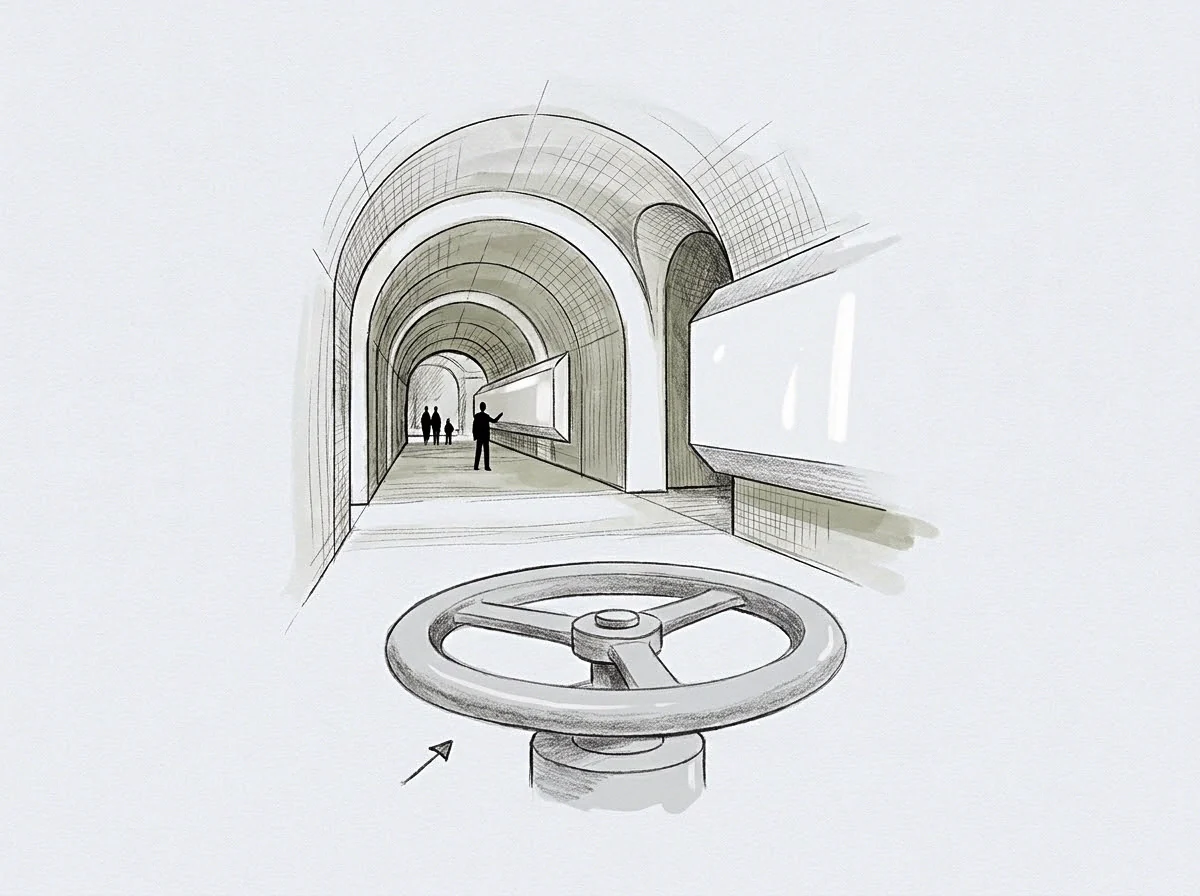
Role Strain and Capacity Debt Calculations
Capacity debt accumulates when strategic technical decisions are deferred to meet short-term execution demands. Much like financial debt, capacity debt incurs compounding interest in the form of increased emergency maintenance, complex bug workarounds, and painful refactoring cycles. Resolving capacity debt requires spending high-value engineering hours undoing rushed implementation choices.
An engineering schedule built on residual hours produces system architecture that mirrors immediate fatigue rather than long term design.
Measuring the real expense of role strain involves tracking task completion delays, code churn rates, and personal exhaustion metrics. When context switching frequency rises, defect rates in production code scale proportionally. The steps below illustrate the sequential escalation of capacity debt within an unmanaged engineering schedule.
- Continuous context switching fragments daily focus into non-productive operational slivers.
- Uninterrupted development blocks vanish, forcing feature construction into late-night working sessions.
- Architectural review stops entirely, allowing inconsistent design patterns to spread across multiple services.
- System instability increases, triggering frequent production incidents that interrupt scheduled feature development.
- Emergency patching absorbs total engineering availability, creating a permanent reactive cycle.

A Worked Comparison of Engineering Capacity Splits
Evaluating working schedules across multiple early software projects shows that structured focus blocks outperform continuous unstructured effort. Engineers who isolate feature development from administrative coordination produce cleaner code with fifty percent fewer regression bugs. Explicit schedule boundaries directly improve platform stability.
A technical lead who continuously absorbs operational overhead without setting capacity boundaries risks complete burnout within twelve to eighteen months. The loss of a primary technical contributor due to unmanaged role strain imposes catastrophic delays on product development.
Failing to cap weekly operational overhead forces technical debt into core system architecture, causing long-term platform instability and severe engineering burnout.

Hold
Transitioning from an all-encompassing technical operator to a structured engineering leader requires relinquishing direct control over daily feature implementations. Handing off primary code bases to hired engineers demands clear technical documentation, comprehensive test coverage, and established coding standards. Without these structural foundations, relinquishing individual contribution creates process anxiety and quality regression.
Holding a technical seat explicitly means defining its precise scope, expected deliverables, and time allocations before work begins. When bringing on non-founder software engineers, the technical founder must shift from writing primary features to defining system interfaces, reviewing pull requests, and providing architectural oversight. This transition protects the founder’s capacity for strategic platform planning.
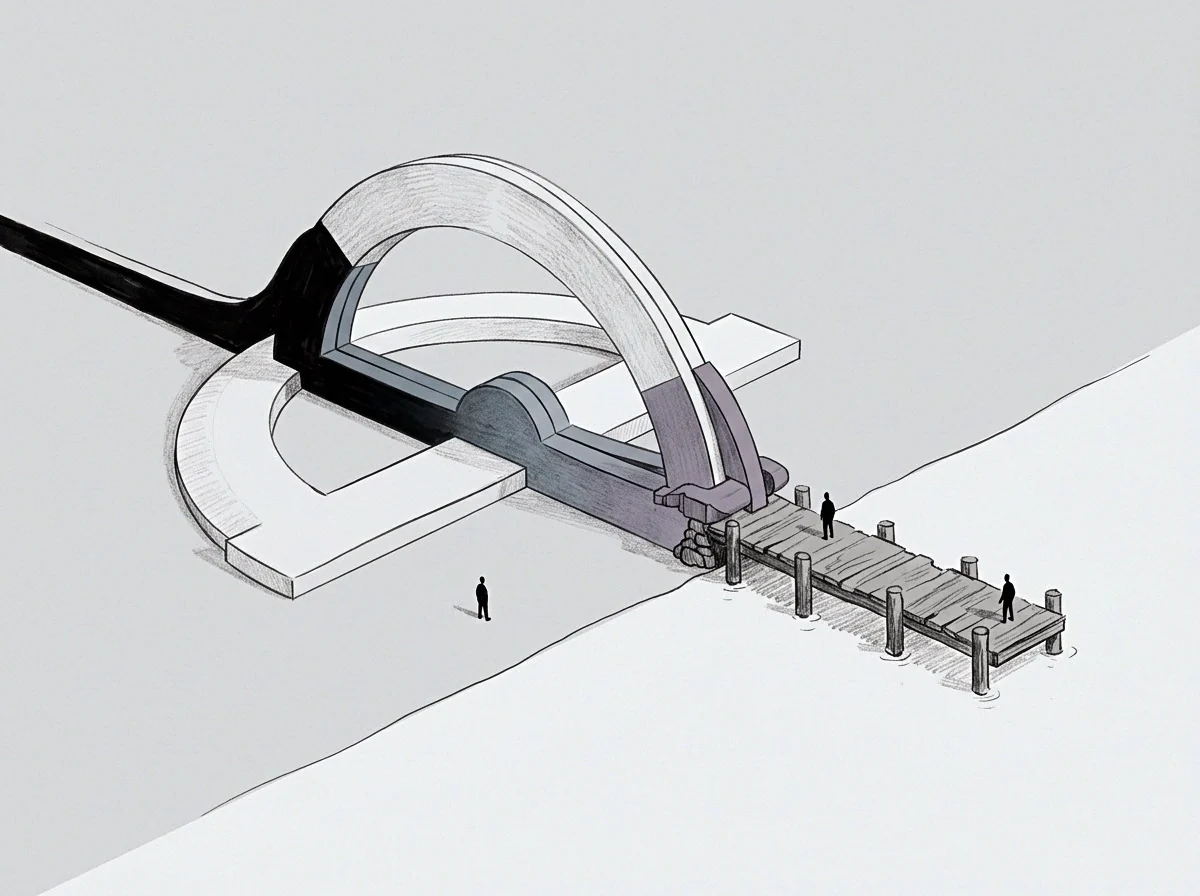
Stating Terms for Technical Handover
A successful technical handover requires explicit agreements regarding code ownership, deployment authority, and system monitoring responsibilities. Transferring primary maintainership of a repository should follow a structured progression: initial pair programming, co-reviewing pull requests, supervised independent execution, and final autonomous maintainership. Rushing this sequence creates system vulnerabilities and developer confusion.
Clear architectural documentation serves as the essential foundation for engineering delegation. Written design specifications, data models, and API definitions allow non-founder engineers to build features autonomously without requiring continuous verbal instructions. Investing time in documentation during early builds yields exponential returns during team scaling.
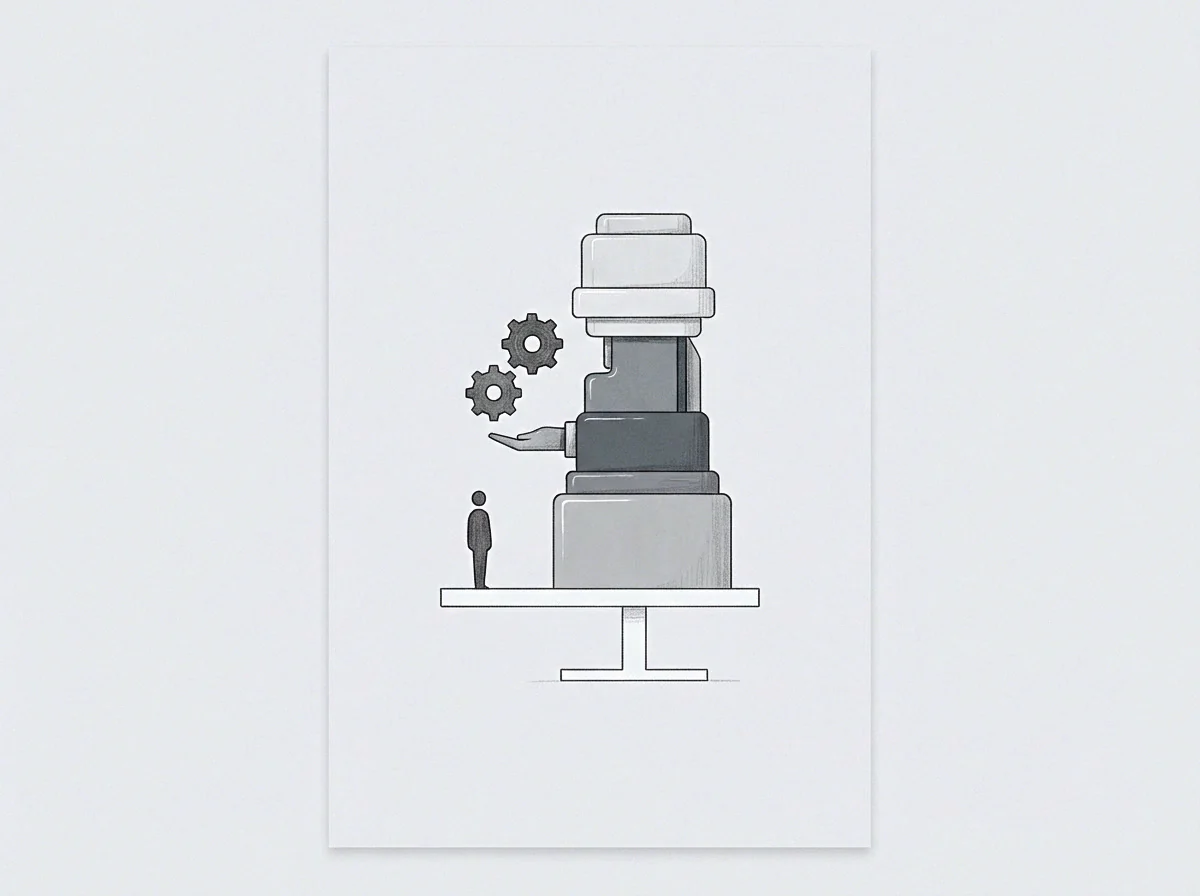
The Boundary Between Architectural Oversight and Operative Control
Maintaining effective architectural governance without micro-managing daily engineering execution represents a delicate balance. Technical founders must establish clear boundaries: dictate what interfaces and performance standards the system must satisfy, but allow hired engineers autonomy over internal algorithm implementation details. Micro-management stifles developer autonomy and reclaims the founder’s time back into micro-level details.
As the engineering organization matures, the technical founder’s primary seat shifts permanently toward platform vision, security standards, and technical hiring strategy. Stepping away from daily ticket resolution marks a milestone in scaling engineering operations successfully.
How far can an engineering leader step back from daily codebase updates before losing the intuitive system context required to make critical platform architecture decisions?