
Contractual Transition Mechanics For Founding Operators Vacating Technical Production Seats
Contractual extraction unbundles technical production seats from equity ownership through formal separation agreements, access escrow, and governance restructuring.
Bench
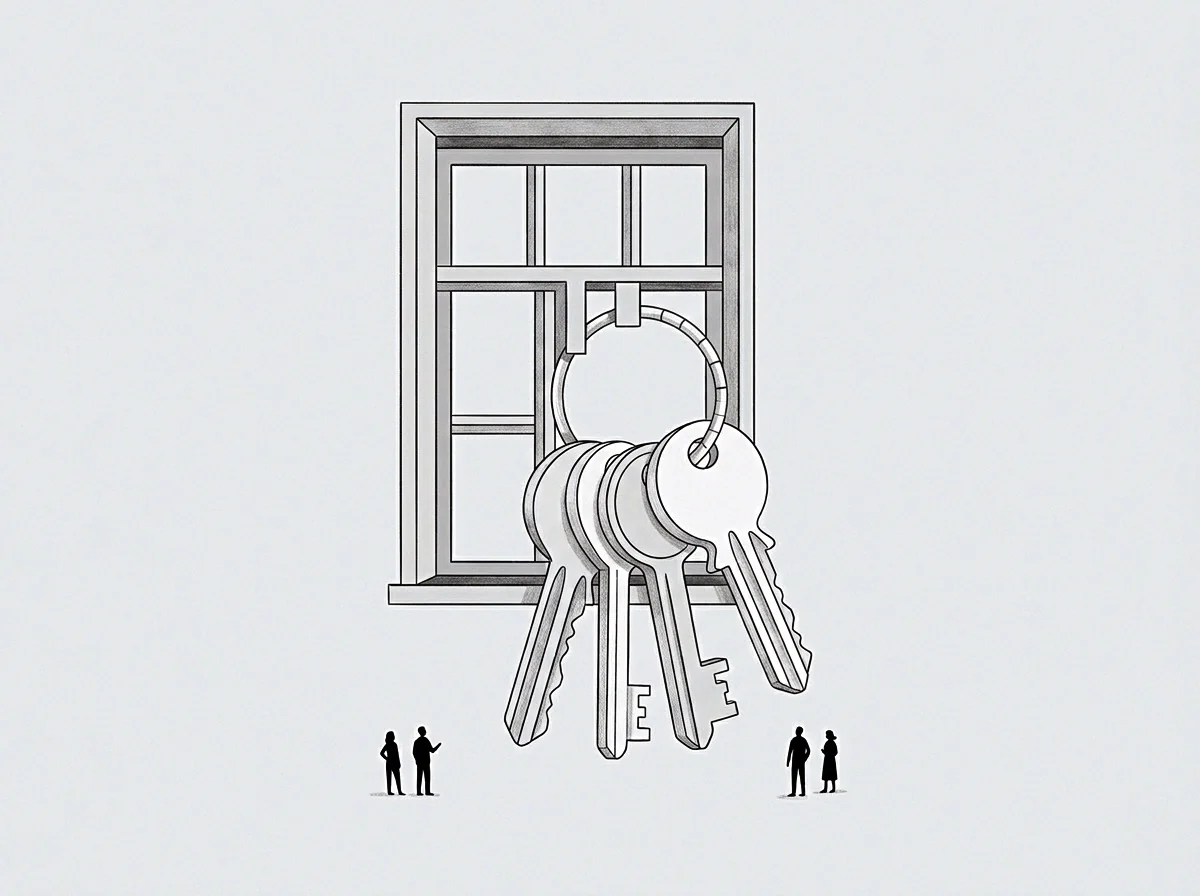
The git commit log shows forty-two merges completed between two and five in the morning across November, all signed with the personal key of the primary equity holder. Production access remains bound to a private machine sitting on a kitchen table. The company employs twelve engineers who submit tickets to a queue, yet the architecture diagram exists as uncommitted whiteboard photos stored on a single phone.
The desk belongs to someone who built the core database engine, wrote the initial API endpoints, and now signs vendor agreements between production incident remediations. Every operational dependency routes through one set of hands.
An operator in this position handles three distinct roles at once. The technical seat covers infrastructure, deployment scripts, and bug fixes. The managerial side handles sprint schedules, hiring, and salary reviews.
Meanwhile, the founder role carries voting equity, board representation, and statutory officer liabilities. When scaling accelerates, technical troubleshooting swallows the daylight hours governance requires. Code reviews push out capital planning, and database shard maintenance crowds out commercial negotiation.
Directly fixing production errors becomes a habit that creates organizational deadlock, where delegating feels like negligence.
A technician holding voting control treats an automated deployment failure as a physical emergency.
Leaving this production post requires formal contractual separation between employment labor and corporate governance. The engineering team cannot mature while an equity owner holds root credentials outside company access monitoring. Technical staff hesitate to refactor brittle code when the original author holds corporate power over their jobs.
The technical production role needs an explicit employment agreement with defined deliverables, set hours, and clear performance standards, separate from share capitalization schedules.
Formalizing the transition starts with an audit of unwritten interventions. For twenty-one working days, the founder logs every manual server access, use of private credentials, and undocumented architectural approval. The inventory shows how much production speed relies on individual reflex rather than repeatable procedure.

Decomposition Of Production Entanglements
Physical production work must be separated from executive authority through written agreements. The operational seat covers three primary clusters: source code development, live systems administration, and production escalation response. As a founder steps back from these functions, each activity moves to designated incoming staff under explicit delegation schedules.
Retaining the production seat past operational scale builds compounding organizational debt. Replacing a founder-technician with salaried engineers exposes documentation gaps previously covered by individual intuition. The company must hire external labor to replace work once handled during late nights without line-item budgets.
Because the original team built the entire telemetry stack without external libraries, any replacement hire will spend six months just learning the variable naming conventions.
Severance
Separating operational production from legal ownership requires restructuring the founder’s core contracts. An operating partner often mistakes stepping away from daily technical work for total corporate abdication. Legal ownership gives governance authority through board votes and shareholder resolutions, while production labor operates under an employment agreement or contractor contract.
Separating these rights prevents technical disputes from triggering deadlocks over ownership.
The main document driving this separation is the modified employment separation agreement. It ends the founder’s daily obligation to write production code while preserving vested equity positions. The agreement lays out specific terms for ongoing compensation, intellectual property assignments, and the end of operational authority over engineering.

Structural Elements Of Production Extraction
Separating the builder from operational mechanics requires a coordinated legal sequence.
- Vesting acceleration waiver surrenders claims to unvested, production-contingent shares while establishing clear title to earned holdings.
- Proprietary information release confirms that local source repositories, architectural notes, and deployment scripts belong entirely to the company.
- Operational power resignation ends executive officer titles and relinquishes administrative control over CI servers and domain registrars.
- Consulting retainer schedule sets limited weekly advisory hours for answering questions about historical code, without authoring rights.
Unvested equity creates sharp friction during founder transitions. Standard vesting schedules tie stock accrual directly to ongoing employment. If a founder leaves the technical seat before hitting a four-year cliff or completing monthly vesting, co-founders and investors expect unearned shares to return to the option pool.
Holding onto unvested stock after leaving production work shifts the burden onto replacement engineers, who will need equity compensation to take the job.
Canceling unvested equity without adjusting governance rights leaves behind an hostile shareholder who knows every technical vulnerability in the system.
The separation agreement must set a firm boundary on equity accrual. Unvested tranches cancel on the effective separation date. Vested shares convert to non-voting common stock or go into a voting trust run by the remaining executive committee, keeping commercial operations clear of technical disputes.

Vested Capital And Ongoing Liabilities
Holding substantial equity while stepping down from production creates fiduciary risk. The outgoing technician stays bound by corporate opportunity doctrines and non-compete covenants. If the founder starts building a related software tool, the company could claim ownership of the new code by pointing to historical overlap.
A clean technical release must draw explicit boundaries around future development.
Failing to draw clear contractual boundaries between past internal architecture and future projects risks prolonged litigation that can freeze both the company and the operator’s next venture.
Escrow
Transferring custody of technical infrastructure requires mechanical verification rather than personal trust. Founders routinely hold root keys, service accounts, and domain access under personal email addresses created during early incorporation. Handing over the seat takes a transitional escrow mechanism that moves all operational keys under audited corporate control.
A technical escrow process runs alongside contractual milestones. Administrative credentials, signing keys, database encryption certificates, and hosting accounts sit in an isolated secret manager during the transition. Independent legal counsel or a technical auditor verifies every asset before severance payments or final equity vesting can be released.
A credential handover is complete only when an automated pipeline builds and deploys cleanly without relying on founder credentials.
The table below outlines how technical responsibilities shift from the informal founder setup to a structured operational agreement.
| Operational Domain | Informal Production Seat | Transitional Escrow Stage | Contracted Post-Production Seat |
|---|---|---|---|
| Code Commit Access | Unrestricted direct push to production branches | Mandatory peer-reviewed pull requests with audit logs | Read-only repository access restricted to documentation |
| Cloud Infrastructure | Root credential held on personal hardware | Multi-factor enterprise identity with key rotation | Zero console access; identity fully revoked |
| Production Escalation | Primary responder on midnight telemetry pages | Secondary advisory contact during business hours | Excluded from on-call rotations and pager groups |
| Architecture Decisions | Unilateral structural revisions executed directly | Written architectural RFCs submitted to committee | Quarterly advisory review without veto authority |
The technical transition needs strict time limits. Leaving the handover open-ended stretches out operational confusion, as junior engineers keep leaning on the founder for emergency fixes instead of building internal capability. A ninety-day escrow schedule forces institutional maturity by scaling back access permissions on fixed calendar dates.

Credential Deposition And Verification Stages
Transferring credentials follows a four-step sequence designed to avoid downtime.
- The engineering lead sets up enterprise directory accounts separated from founder identities.
- The outgoing operator reassigns billing and domain registrations to corporate entities.
- All hardware authentication keys move into physical company custody in dual-access safe storage.
- The operations team rotates all database secrets, cloud provider tokens, and third-party API credentials at the same time.
During step three, operations teams routinely uncover hidden dependencies—legacy monitoring agents, payment webhooks, or automated backup scripts tied to personal credentials. Catching these while the founder is legally bound to the transition prevents outages down the line.
Section 4.2 of the transitional services agreement ties the final severance payment to written confirmation from the incoming technical officer that all root accounts have been rotated without operational disruption.
Covenant
Stepping down from production rarely resolves role conflict overnight. A founder watching new staff make different technical choices often feels compelled to reach out through backchannels, which undermines new engineering leadership. Non-interference covenants must block operational intervention while safeguarding the founder’s financial stake in the company’s growth.
A non-interference covenant establishes strict boundaries on contacting the engineering team. The departing technician agrees to direct technical questions, architectural observations, and operational feedback only to the incoming VP of Engineering or the CEO. Contacting former subordinates about code standards, project timelines, or workplace satisfaction counts as a material breach, triggering the forfeiture of advisory fees.
Engineers tend to defer to founding authority unless explicit contracts prohibit informal founder intervention.
The intellectual property covenant demands equal precision. In software companies, the line between personal engineering knowledge and proprietary corporate IP blurs fast. A technical founder departs with intimate knowledge of the codebase, database queries, and system failure modes.
The IP assignment agreement must explicitly list excluded technology. Without an exhibit detailing prior inventions and personal open-source projects, any software written by the operator over the next three years remains open to company ownership claims.

Advisory Boundary Enforcement
Moving into an advisory role carries distinct operational risks. Advisory agreements often disguise an inability to cut ties cleanly. Without specific deliverables, the firm pays for nominal loyalty while the founder stays tied to day-to-day production.
A effective advisory contract sets a monthly cap on hours, a firm expiration date, and narrow advisory topics. Acceptable scope includes historical codebase context, technical declarations for patents, and key vendor introductions. Real-time architectural reviews and code refactoring are off-limits.
If the company asks for help during a critical outage, the agreement charges premium emergency rates to deter unnecessary reliance on the former operator.
In a machine shop, when a master fabricator moves from the lathe to the front office, an apprentice takes over the machine. Leaning over their shoulder to adjust the slide ruins the part and breaks the tool. Software teams run on the same dynamic.
An advisory contract without strict time caps turns expert counsel into an open-ended support line for indecisive leadership.
Charter
Governance realignment is the final stage of extracting a founder from production. Once the technical post is surrendered, the founder’s role shifts to the board or simplifies to equity holder. Keeping a voting seat while leaving daily execution takes discipline: board members evaluate management rather than picking databases, frameworks, or sprint tools.
Corporate charters and voting agreements usually need amending when an operator steps back. Venture deals often allocate specific board seats to founder-operators. When the founder stops operating, investors typically insist that the seat convert to an independent technical director or move to the new executive.
Resisting this transition creates governance friction that can halt executive hiring.
Board Rights Versus Operational Meddling
Moving an executive director to a non-executive role requires changing their access to information. On the floor, the founder had direct access to code repositories, uptime dashboards, and internal messaging. As a non-executive director, information arrives through board decks, financial statements, and executive briefings.
Contracts must formally define this boundary.
This shift forces a hard realization: company valuation often grows faster once custom execution gives way to standardized procedures. The habits that got the initial codebase built under tight constraints become bottlenecks as customer scale expands. Surrendering technical control is the cost of protecting equity value.
This dynamic leaves an open structural question: can a company maintain its initial momentum when contracts strip production authority from the person who built the core architecture?